



Five Signs of a Well Made Rug
A well made rug shows itself in five places: straight, firm edges, an even pile, a clean back, a fresh wool smell and a rug that lies flat. You can check all five in ten minutes on the day it arrives, with nothing more than your hands and a torch.
In short
- Five signs of a well made rug are firm straight edges, an even pile height, a neat back, a clean wool smell and a rug that lies flat after unrolling.
- Small colour variation, slight size tolerance and some early shedding are normal in handmade wool rugs and are not signs of poor quality.
- Check a new rug in daylight on a clean floor, run your hand both ways across the pile and look at the back at each corner.
- Rugberry makes rugs by hand in several constructions, from handloom Grain to hand tufted Cabella and hand knotted Stratum, and each has its own signs of good work.
How do you check a rug's quality at delivery?
Unroll it on a clean, dry floor in daylight and give it an hour to relax. Then walk through the five checks below, in order, before you place furniture on it.

Do the checks with the delivery papers to hand, and photograph anything that worries you. A rug that passes all five will reward you for years.
If anything looks wrong, share clear photographs and the order number with Rugberry while the rug is still new, so the question can be looked at quickly.
Sign one: are the edges straight and firm?
Good edges run straight and feel firm along their whole length. Sight down each long side from one end, as you would check a plank of wood, and look for waves or a pull in the middle.


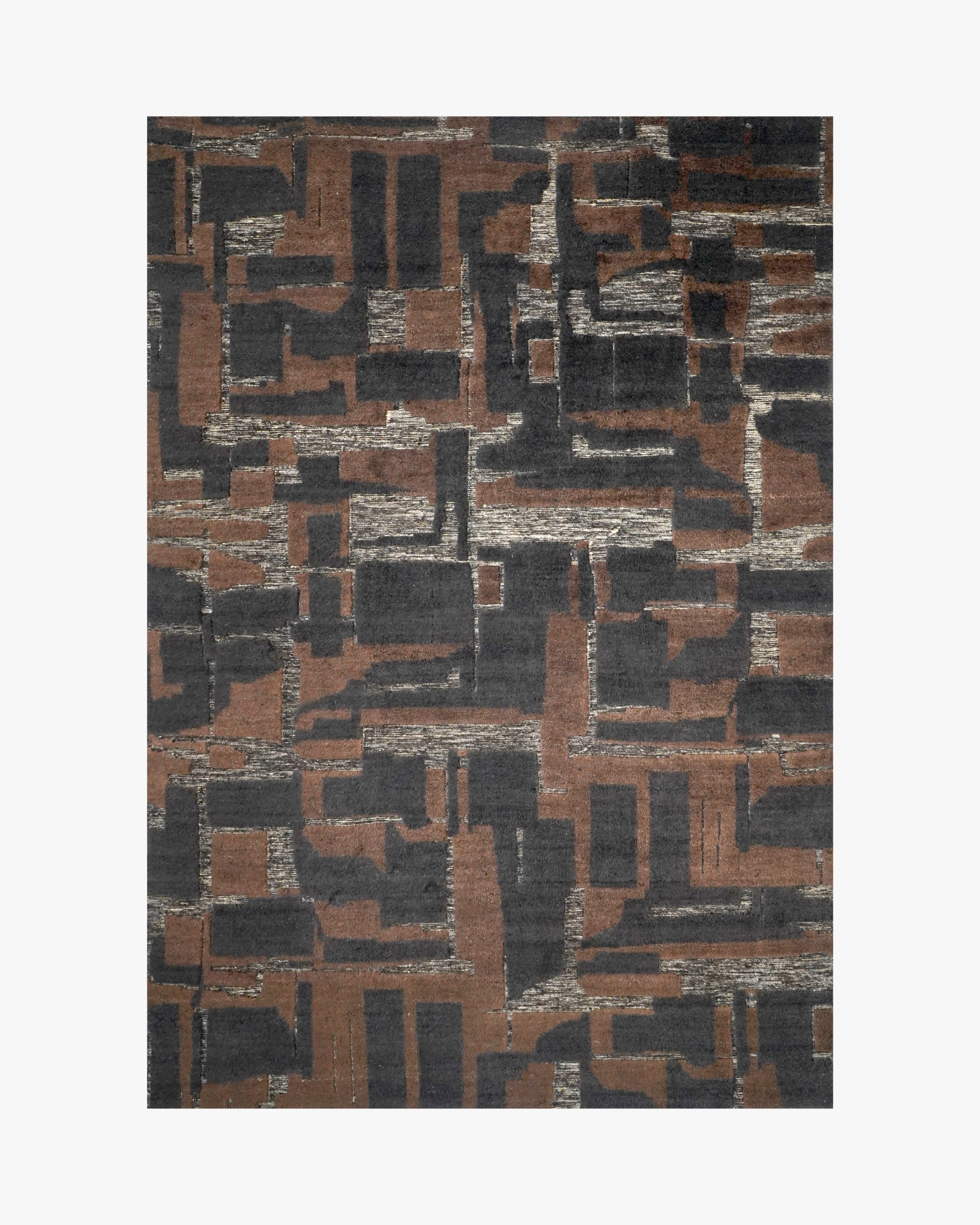
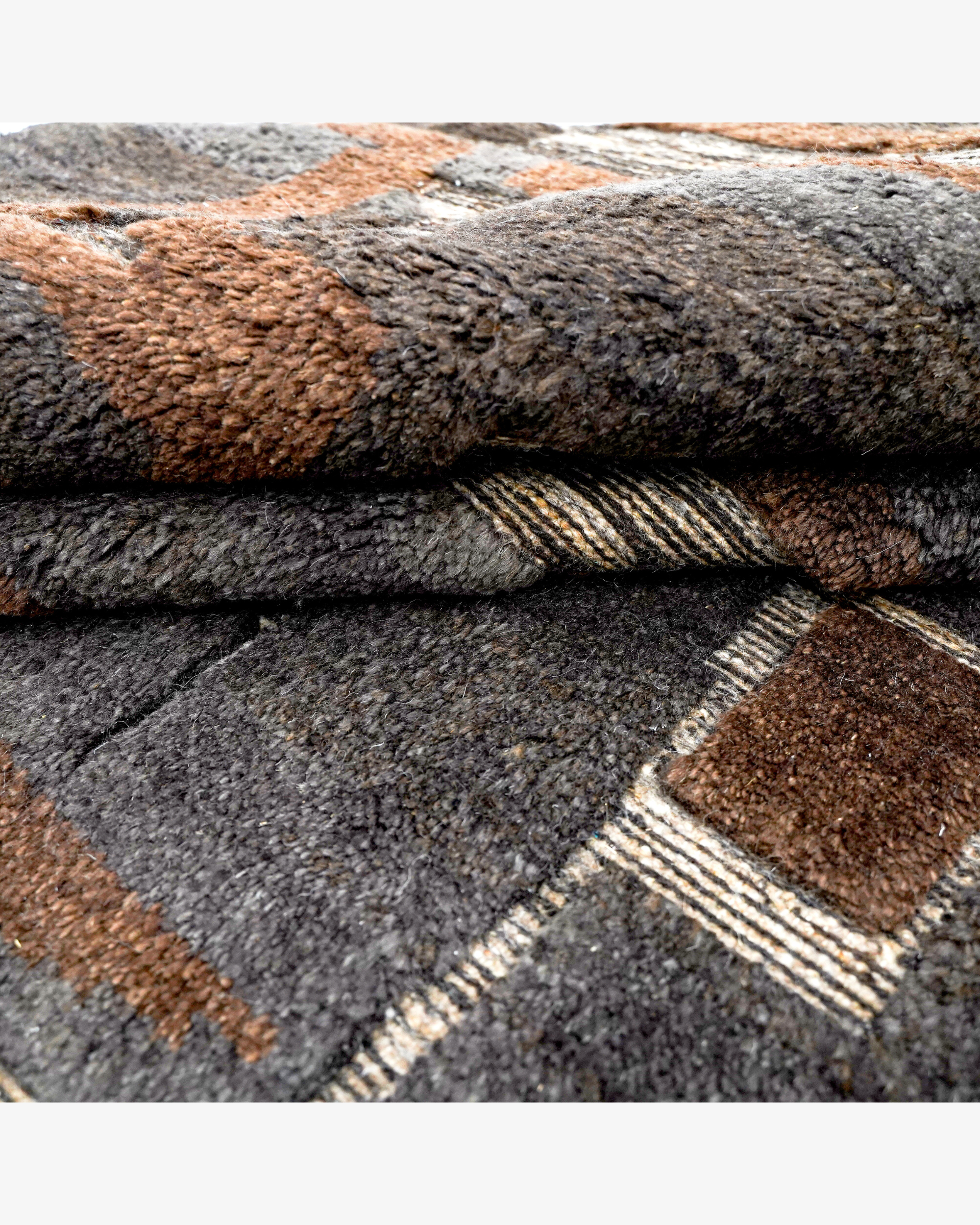
Then pinch the edge. The binding or overcast yarn should be tight and even, with no loose loops or gaps where the base shows through. On a handloom rug such as the Rugberry Grain Wool Rug in russet, the woven edge should be firm without pulling the rug narrower at any point.
Sign two: is the pile even?
An even pile means the surface has been sheared to one height. Shine a torch low across the rug from the side, and any high tufts or low patches will throw shadows.

Run your palm both ways across the surface. One way will feel smoother than the other; this is pile direction and is normal. What you should not feel is a ridge, a dip or a hard lump.
On a wool and silk rug such as the Cabella Wool & Silk Rug in mink, the Botanical Silk may sit a little higher or catch light differently. That is the design, not unevenness.
Sign three: what should the back look like?
The back should be neat and suited to the construction. A hand knotted rug shows every knot as a small bump, and the pattern is visible on the back almost as clearly as on the front.


A hand tufted rug has a fabric cloth over a latex layer, which should be stitched or bound firmly at every edge with no lifting corners. A handloom rug shows its weave, and the warp should run straight from end to end.
Turn over a corner. The back of a rug tells you more about the work than the front.
The Stratum Knotted Rug in cinder is hand knotted in New Zealand wool, dense and fine. On a rug like this, a close, regular grid of knots on the back is the clearest sign of care.
Sign four: how should a new rug smell?
A new wool rug should smell faintly of wool and nothing harsher. A light, earthy smell is normal and fades within a short time with good airflow and an open window.
A strong chemical smell that does not fade, or a musty, damp smell, is worth raising. Musty usually means the rug was packed while damp, which matters more in Indian monsoon months. Our note on new rug smell explains what to expect.
Sign five: does the rug lie flat?
A well made rug relaxes flat on the floor after unrolling. A little curl at the ends from the roll is normal and eases when you roll it the other way briefly or lay a few books on the corners overnight.

A ripple that runs across the middle and will not settle, or a corner that keeps lifting after a few days, points to uneven tension. On marble and vitrified tiles, a pad also helps the rug stay flat and safe underfoot.
What is normal in a handmade rug?
Some things look like faults but are the marks of hand work. Knowing them saves worry.

- Shedding: new wool rugs release loose fibre for the first weeks of use. It settles with regular vacuuming.
- Colour variation: slight shifts in tone between yarn batches, called abrash in knotted rugs, are part of hand dyeing.
- Size tolerance: a handmade rug can be a little off its stated size, as no two rugs are measured off a machine.
Frequently asked questions
Is shedding a sign of a poor quality rug?
No. Shedding is normal in new wool rugs, because loose fibres from the shearing work their way out during the first weeks. It reduces steadily with regular vacuuming.
How can I tell if a rug is hand knotted?
Turn it over. A hand knotted rug shows individual knots on the back and the pattern almost as clearly as on the front, with no fabric backing or glue.
Should a new rug be perfectly square?
A handmade rug may be slightly off square or a little off its stated size. Small variation is normal, but a clear wave along an edge or a ripple that does not settle is worth raising.
Edges, pile, back, smell, flatness. Check all five and trust your hands. Material first.


Leave a comment
This site is protected by hCaptcha and the hCaptcha Privacy Policy and Terms of Service apply.