


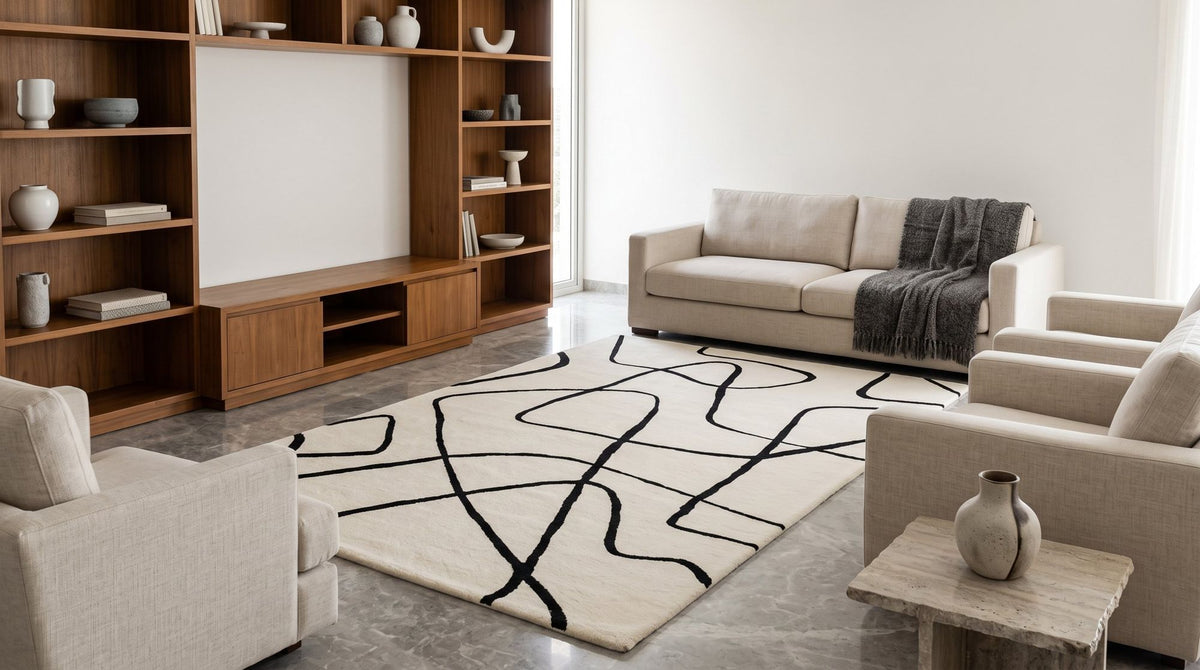
Patterned or Plain Rug: How to Decide
If your room already has two or more strong patterns, choose a plain or textured rug; if it has one or none, a quiet pattern can pull the room together. The decision rests on what is already in the room, not on the rug alone.
In short
- A room with patterned upholstery, a printed curtain and busy art usually needs a plain or textured rug, so the eye has somewhere to rest.
- A quiet pattern, with low contrast or small marks on a calm field, suits a room of plain sofas and walls that feels flat.
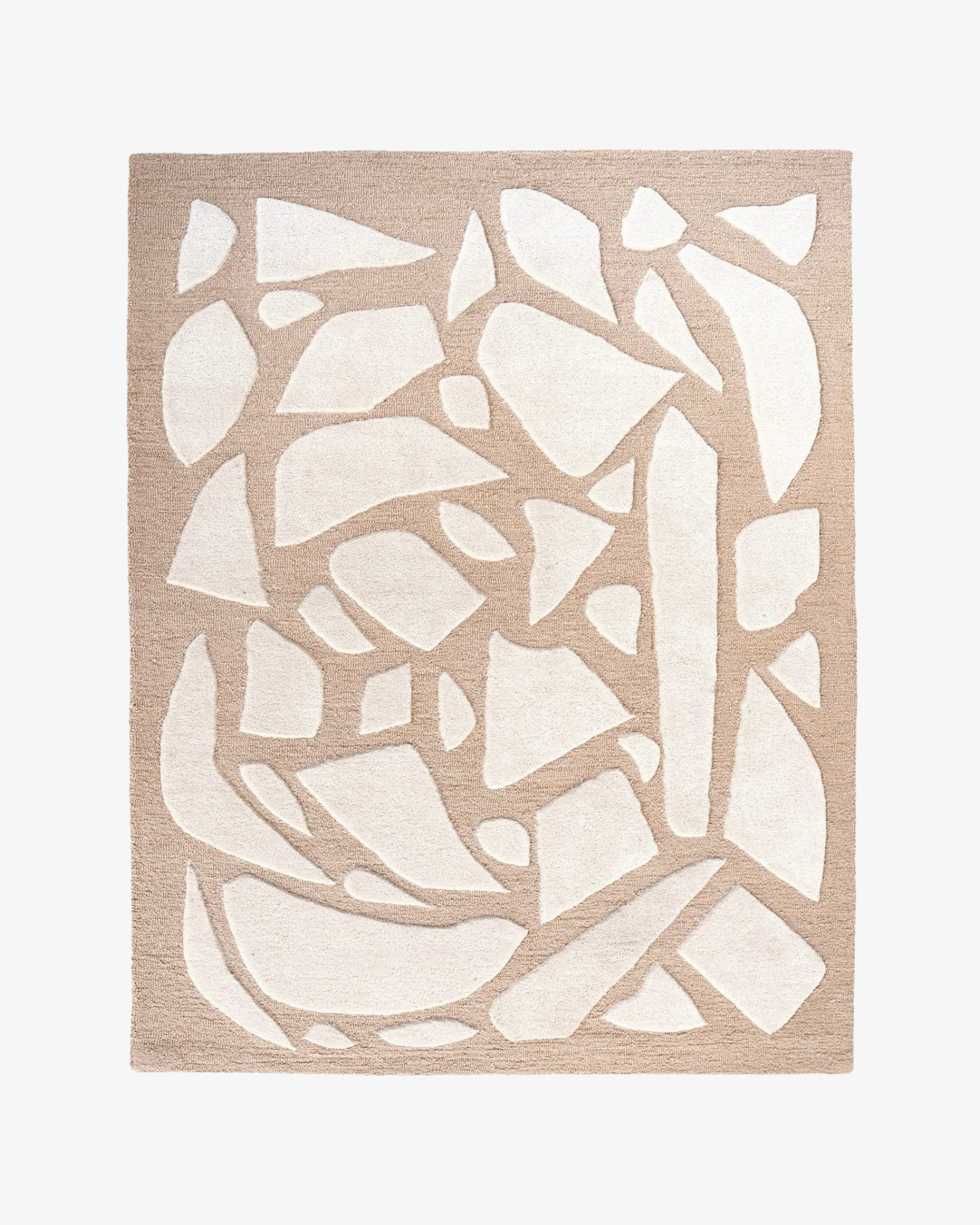
- The Rugberry Grain Wool Rug is a handloom textured solid, and the Rugberry Tinker Wool Rug is a hand tufted quiet pattern of small deliberate marks.
- A pattern can make everyday marks less obvious, but no pattern hides every stain.
Should I choose a patterned or a plain rug?
Choose by counting the patterns already in the room. Look at the sofa fabric, the cushions, the curtains, the art, and the floor itself, since Indian marble and patterned tiles carry their own veining and motifs.

If you count two or more strong patterns, a plain or textured rug will calm the room. If you count one or none, a patterned rug adds the interest the room is missing.
This is a starting rule, not a law. Scale and contrast matter as much as the count, and the rest of this guide explains how to read them.
What makes a room feel busy?
A room feels busy when several patterns compete at the same scale and the same strength. Two bold prints of similar size fight; a bold print and a fine texture sit together easily.

- Upholstery: a printed or ikat sofa is the loudest pattern in most living rooms, simply because of its size.
- Cushions and throws: festive brights and block prints are usually small, so they read as texture from across the room.
- Art and wall finishes: a large canvas or a textured wall counts as pattern too.
- The floor: strongly veined marble or patterned tiles add a layer many people forget to count.
Stand at the doorway and squint. Whatever still stands out with your eyes half closed is a strong pattern; whatever blurs into colour is texture.
When is a plain rug the right call?
A plain rug is right when the room already has a strong focal point, whether that is a printed sofa, a large painting or a carved wooden swing. It lets that piece lead.


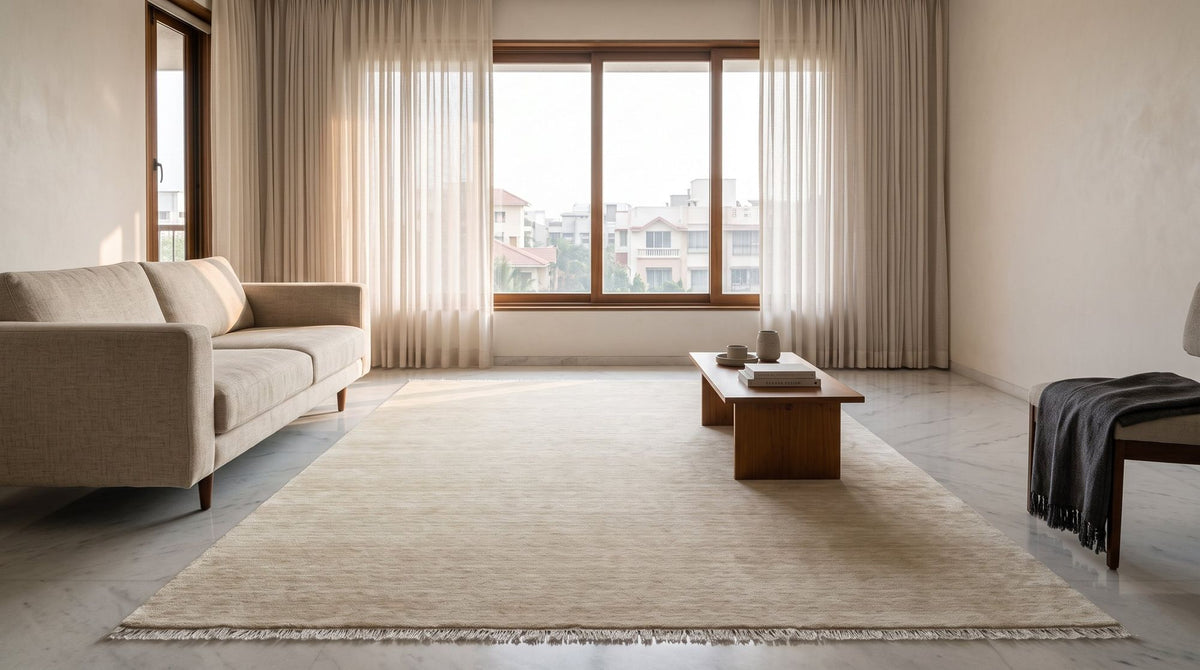
Plain does not have to mean flat. The Grain Wool Rug in flax is handloom woven in New Zealand wool with a low, closely textured surface, and the weave gives it a fine, visible grain that changes with the light. A textured solid adds depth without adding another pattern.
Plain rugs also suit rooms that change with the seasons. If cushions and throws are swapped for Diwali or for summer, a solid rug works with all of them. The Textures and Solids collection holds the plain and tonal options.
When does a pattern work better?
A pattern works better when the room is mostly solid: plain sofas, plain curtains, pale walls. In that room, a patterned rug becomes the one considered piece of design, and it stops the space from looking unfinished.

A pattern also helps define a zone. In an open plan flat where the living and dining areas run together, a patterned rug under the seating marks the living area more clearly than a plain one does.
For a room with a plain sofa and pale walls, choose a pattern over a solid, because the rug is the only place left to add rhythm.
Count the patterns already in the room. Two or more, go plain. One or none, a quiet pattern can lead.
What is a quiet pattern?
A quiet pattern has low contrast, a limited palette or a small mark repeated across a calm field. It reads as texture from across the room and as design up close.


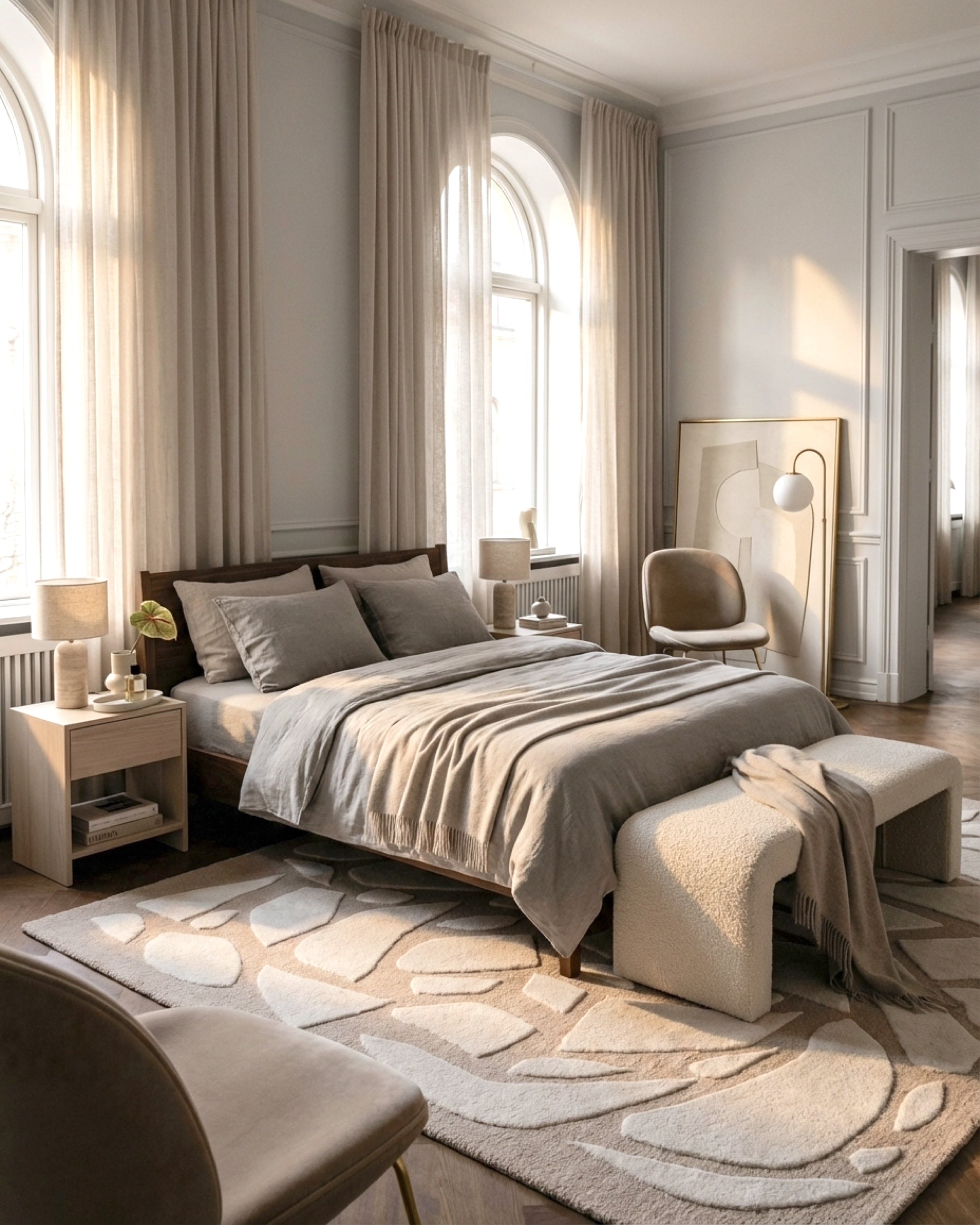
The Tinker Wool Rug is hand tufted in New Zealand wool and worked with small deliberate marks across a plain field. It adds movement to a solid room without competing with a printed cushion. The Bergamo Rug, hand tufted in New Zealand wool in camel and ivory, is drawn with a soft geometry that reads differently from across a room, which suits large halls where the rug is seen from a distance.
When choosing a quiet pattern, take one colour from the rug and find it once elsewhere in the room, in a cushion or a vase. That single echo is enough to connect them. The Pattern Rugs collection shows the full range.
Does a patterned rug hide stains?
A pattern makes small everyday marks less obvious, but it does not hide them all. A drop of tea on a mid tone with fine marks is easier to miss than the same drop on a plain ivory field.
A large stain, though, shows on any rug, and a pattern can make a cleaning patch look odd if the colours bleed. In a home with young children or frequent guests, a mid tone matters more than a pattern; a plain rug in tan or umber will forgive more than a high contrast black and ivory pattern.
How can you test a rug choice at home?
- Photograph the room from the doorway and turn the photo to greyscale. Strong patterns stand out as high contrast; that shows you what the rug must sit beside.
- Lay a swatch on the floor beside the sofa and look at it from standing height, not from your hand.
- Check it in daylight and again under your evening lighting, since warm bulbs shift colours.
Our guide on choosing a rug for a patterned sofa goes deeper into that one case.

Frequently asked questions
Should a rug match the sofa?
A rug should relate to the sofa, not match it. Pick a rug whose main colour is a shade lighter or darker than the sofa, or that repeats one accent colour, so the two connect without blending into one block.
Is a plain rug boring in a large living room?
Not if it has texture. A handloom or textured solid such as the Rugberry Grain Wool Rug has a visible weave that adds depth, so a large plain rug still looks considered.
Can I use a patterned rug with patterned curtains?
Yes, if the two patterns differ in scale. A large curtain print sits well with a small, quiet rug pattern, while two bold patterns of similar size tend to compete.
Which is easier to live with, a patterned or a plain rug?
A mid tone rug with a quiet pattern is usually the easiest, because it carries small marks and suits changing cushions. A very pale plain rug shows the most, and a high contrast pattern can tire the eye.
Read the room first, then let the rug answer it. Material first.



Leave a comment
This site is protected by hCaptcha and the hCaptcha Privacy Policy and Terms of Service apply.