

Cashmere Rugs: Inside the Rugberry Cashmere Collection
The Rugberry Cashmere Collection is three handloom woven rugs in a wool and cashmere blend: Salt, Natural and Taupe. They are made for rooms where you walk barefoot, and they are among the softest rugs in the range, from about ₹54,000.
In short
- The Rugberry Cashmere Collection is three handloom rugs in a wool and cashmere blend: Salt, Natural and Taupe.
- Rugberry Cashmere Blend rugs start from about ₹54,000 and come in 5x8, 6x9, 8x10, 9x12, 10x14 and 12x15 ft, or any size to order.
- A cashmere blend rug belongs in a bedroom or dressing room, not in an entrance or dining room.
- Vacuum a cashmere blend rug on suction only, and blot spills rather than rubbing them.
They are a blend, not pure cashmere, and that is deliberate.
What is a cashmere blend rug?
A cashmere blend rug combines two fibres in the yarn. Wool gives structure: its natural wave lets the pile spring back after it is stepped on. Cashmere gives the hand: a very fine fibre that makes the surface feel softer and denser under the palm and the foot.

Cashmere on its own is too fine and too delicate to make a floor rug that lasts under daily feet. Blended with wool, it keeps much of its softness while the wool carries the wear. That is why the collection is labelled Wool and Cashmere blend on every product page, and why we describe it that way.
Why handloom
The cashmere rugs are handloom woven: the weaver works the loom by hand and foot, beating each row of weft into place. Handloom suits a fine, soft yarn, because the loom lets the weaver build a dense, fine surface row by row at the pace the yarn needs. The result is a rug that is fine, dense and very soft underfoot, which is exactly how the product pages describe it.
Which colours does the Cashmere Collection come in?
The Rugberry Cashmere Collection comes in three colours: Salt, the palest, Natural, the middle tone, and Taupe, the deepest.


Salt
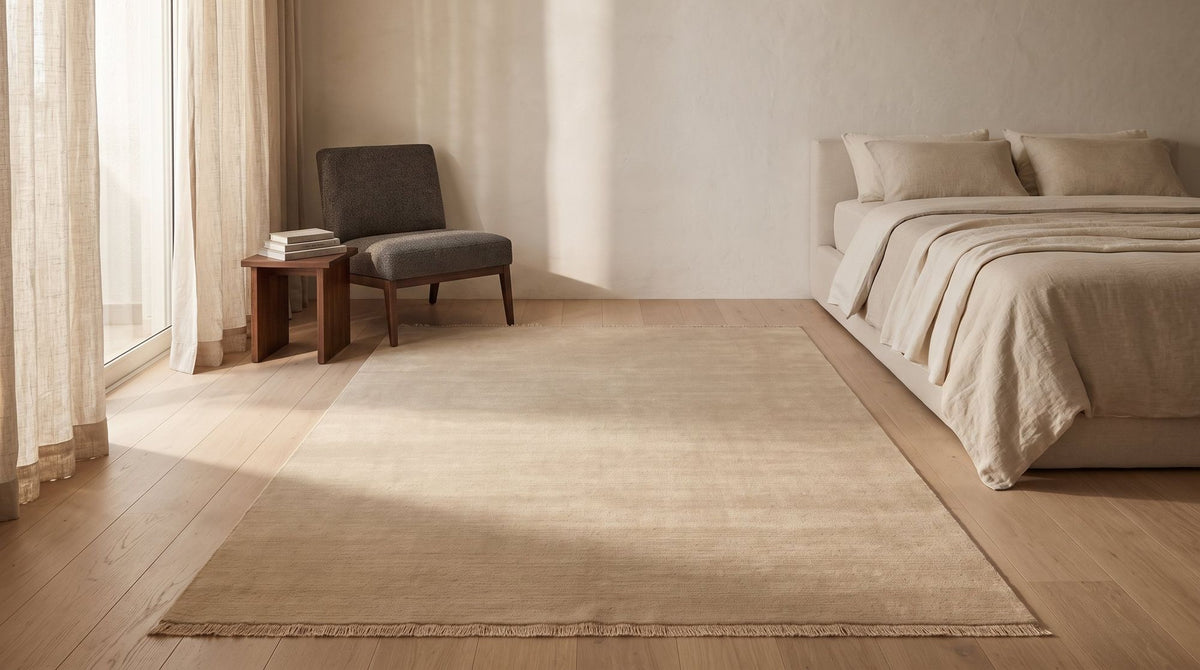
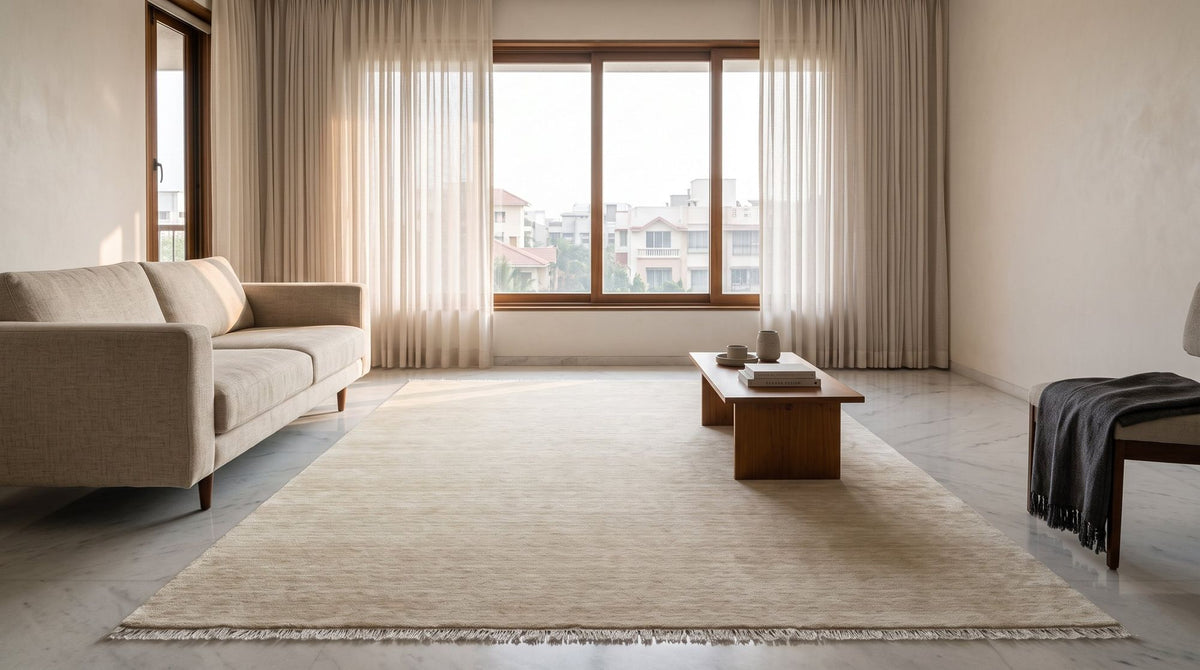
The Cashmere Blend Rug in salt is the palest of the three, an ivory. It brightens a north-facing bedroom and sits well against white or pale wood furniture. It is also the one that will show the most, so it belongs in a room where shoes stay at the door.
Natural
The Cashmere Blend Rug in natural sits between the other two in depth of tone. It is the easiest to place: it works with teak, walnut, cane and the warm floors common in older Indian homes, and it forgives more than Salt.
Taupe
The Cashmere Blend Rug in taupe is the deepest of the three, a grey brown that grounds a room. It suits darker floors, grey vitrified tile and rooms with strong colour in the furnishings, and it hides daily marks best.
All three come in six stock sizes, from 5x8 ft to 12x15 ft, and can be made to any size or colour to order. See them together in the Cashmere Collection.
Where should a cashmere blend rug go?
A cashmere blend rug belongs where feet are bare and traffic is light, above all in the master bedroom.

- The master bedroom. The first step out of bed, every morning. This is the room the collection is made for.
- A dressing room or walk-in wardrobe. Bare feet, little traffic, no food.
- A reading corner or a quiet upstairs sitting room. Where the family sits on the floor with a book rather than eats there.
- A guest bedroom kept for family visits. Light use, and the softness is noticed by everyone who stays.
It is not the rug for an entrance, a dining room, or a living room where the whole family and guests move through in outdoor shoes. For those rooms, a hand-tufted or handloom wool rug works harder.
Blended with wool, cashmere keeps its softness while the wool carries the wear.
What size cashmere rug for a bedroom?
Because this collection lives mostly in bedrooms, size it to the bed. Under an Indian queen bed of 60x78 in, a 6x9 ft or 8x10 ft rug laid sideways leaves a soft margin on both sides.
Under a king of 72x78 in, start at 8x10 ft, and go to 9x12 ft if the headboard wall is 14 ft or longer. In a compact room, a 5x8 ft rug across the foot of the bed gives you the feel where you dress, at a lower cost than a rug under the whole bed.
How can you test a rug for softness?
Test softness with your hand, your thumb and your bare feet, since product photos cannot show it. Compare samples this way:


- Run the back of your hand across the surface, which is more sensitive than the palm.
- Press down with your thumb and let go. A good pile fills the dent back in slowly.
- Stand on it barefoot for a minute, on a hard floor. The softness should still be there once your weight has settled.
How do you care for a cashmere blend rug?
Care for a cashmere blend rug gently, with suction-only vacuuming, blotting, shade and airing. Fine fibres need a gentler routine than a standard wool rug.
- Vacuum on suction only. A rotating brush roughens fine fibres. Our guide to vacuuming a fine area rug covers technique.
- Expect light shedding at first. Short fibres work loose in the first weeks. Gentle, regular vacuuming clears them.
- Blot, never rub. Rubbing a fine pile can leave a fuzzy patch. Blot with a white cloth and cold water, and call a specialist for anything larger.
- Keep it out of harsh sun. Draw sheer curtains on west-facing windows in summer afternoons.
- Air it in the monsoon. Keep air moving in the room on humid days and do not lay it on a damp floor.
- Turn it every few months so that light and wear fall evenly.
Is a cashmere blend rug worth it?
For a bedroom you use every day, choose a cashmere blend over standard wool, because you feel the extra softness every morning.
A cashmere blend rug costs more than most of the wool range because the yarn is finer. It does not wear harder than wool; it feels softer. If the rug is for a bedroom you use every day, that difference is felt every morning.
If it is for a busy family room, put the money into a good wool rug instead. For the wider top of the range, see premium rugs and our piece on fine rugs.
Frequently asked questions
Are these rugs pure cashmere?
No. They are a wool and cashmere blend. The wool gives the rug structure and resilience on the floor, and the cashmere gives it its softness.
Which colour hides marks best?
Taupe, followed by Natural. Salt is the palest and suits rooms with little traffic.
Can I order a cashmere blend rug in a custom size?
Yes. All three colours can be made to any size, and custom colours are available on request.
Soft is a material, not an adjective. Material first.



Leave a comment
This site is protected by hCaptcha and the hCaptcha Privacy Policy and Terms of Service apply.