

How Custom Rug Colours Are Matched
A custom rug colour is matched with dyed yarn poms, small balls of real wool or silk, compared against your paint or fabric in daylight. The aim is a close, harmonious match, because yarn, paint and cloth never hold colour in quite the same way.
In short
- A custom rug colour is matched by comparing numbered colour poms of dyed yarn against a physical reference, such as fabric or a painted board.
- A rug will rarely match paint exactly, because wool, silk and paint each reflect light differently, so the goal is a close match that sits well in the room.
- For a custom rug colour match, send a physical sample rather than a screen image or a paint code alone.
- Approve rug colours by looking at the pom next to the reference in daylight, in the room where the rug will go.
Many Rugberry rugs can be made in custom colours, and the process is the same whether you are matching a sofa fabric in Pune or a painted wall in Hyderabad.
Can a rug be matched to a paint or fabric colour?
Yes, a rug can be matched closely to a paint or fabric colour, but not identically. The match is judged by eye in real light, against a real sample.


Paint is a flat film. Fabric has a weave. A rug has a pile of thousands of yarn ends, each throwing a small shadow. The same dye will look a shade deeper in a rug than on a painted wall, and a shade richer in a cut pile than in a flat weave. Good matching allows for that from the start.
What is a colour pom and how is it used?
A colour pom is a small tuft of dyed yarn, numbered and kept in a box or on a card. It shows a colour in the actual fibre, which is the only honest way to judge it.


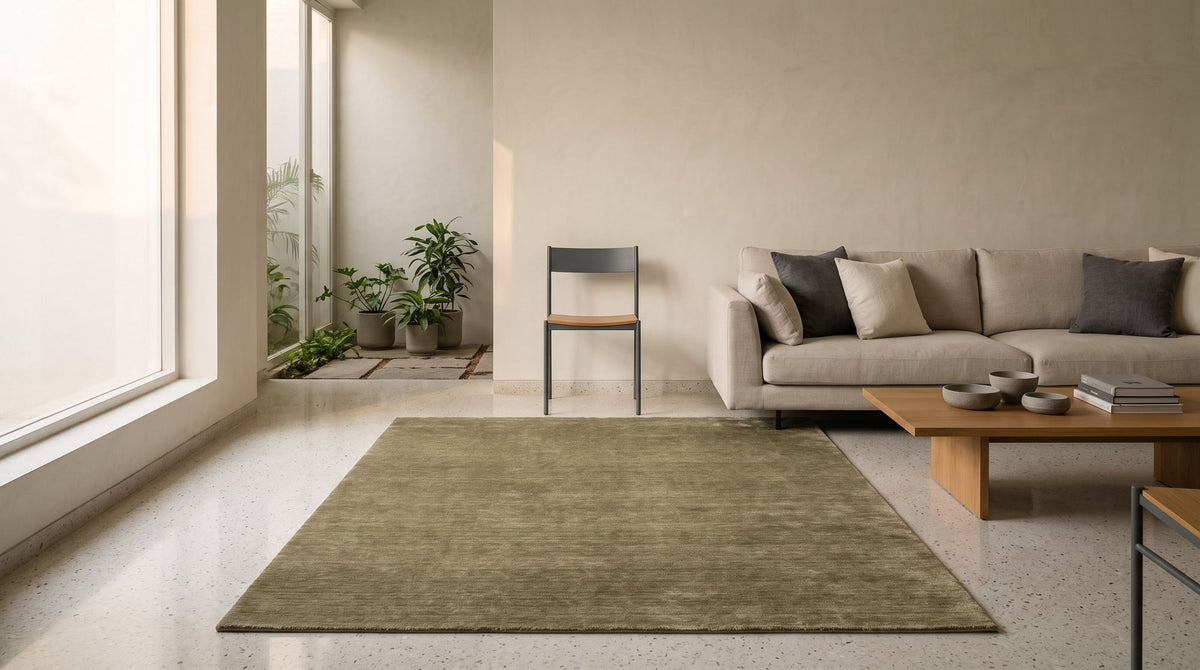
When you ask for a custom colour, a set of poms near your reference is chosen and compared. You then pick the closest, or ask for a shade between two. The Grain Wool Rug in Sage, handloom New Zealand wool from about ₹37,000, shows how a soft green reads in a low, closely worked weave. The same green poms in a deep pile would look darker.
What should you send when you want a match?
Send a physical reference: a fabric cutting, a painted board, a tile or a cushion cover. A photo or a paint code alone is not enough, because screens and printers shift colour.
- A fabric or painted sample. Paint a board the size of an A4 sheet with two coats, since a paint chip is too small to read.
- The room's light. Note whether the room faces north or south, and whether it has warm or cool lamps. A west facing Chennai room in late afternoon turns everything warmer.
- The floor. White marble, grey vitrified tile and teak each change how a rug colour reads.
- Your priority. Say whether the rug should match, tone with or contrast against the reference.
If you are choosing from the range rather than matching, order swatches first and see them on your floor.
Why does the same colour look different in wool, silk and paint?
The same colour looks different because each material handles light differently. Wool scatters light and looks soft and slightly deeper, silk reflects it and looks brighter, and paint sits flat.


Match the rug to the room, not to the paint chip. A close match in daylight is a good match.
The Plush Wool Rug in Copper, handloom New Zealand wool with a deep pile from about ₹40,000, shows this well. Deep pile copper looks richer at floor level and lighter where the pile leans toward a window. A copper paint on the wall beside it will always look flatter.
In a wool and silk rug, the two fibres take the same dye differently, so the silk areas look lighter and brighter even in one colour. Our piece on rug colour variation explains the effect in more detail.
How do approvals work on a custom colour?
Approvals work in steps: you approve poms first, then, where the project needs it, a small sample in the real construction. Each step is signed off before the next begins.

- Pom selection. You approve the closest poms against your reference, in daylight.
- Sample. For larger or multi colour rugs, a small piece in the chosen construction shows how the colours sit together.
- Final approval. Your written sign off fixes the colours for the full rug.
Every dye batch, called a dye lot, can vary slightly. If you need two rugs to match, say so at the start, so they can be planned from the same lot.
What should you expect from the finished rug?
Expect a rug that sits close to the approved pom and works with your room. Do not expect a laboratory match with your paint.

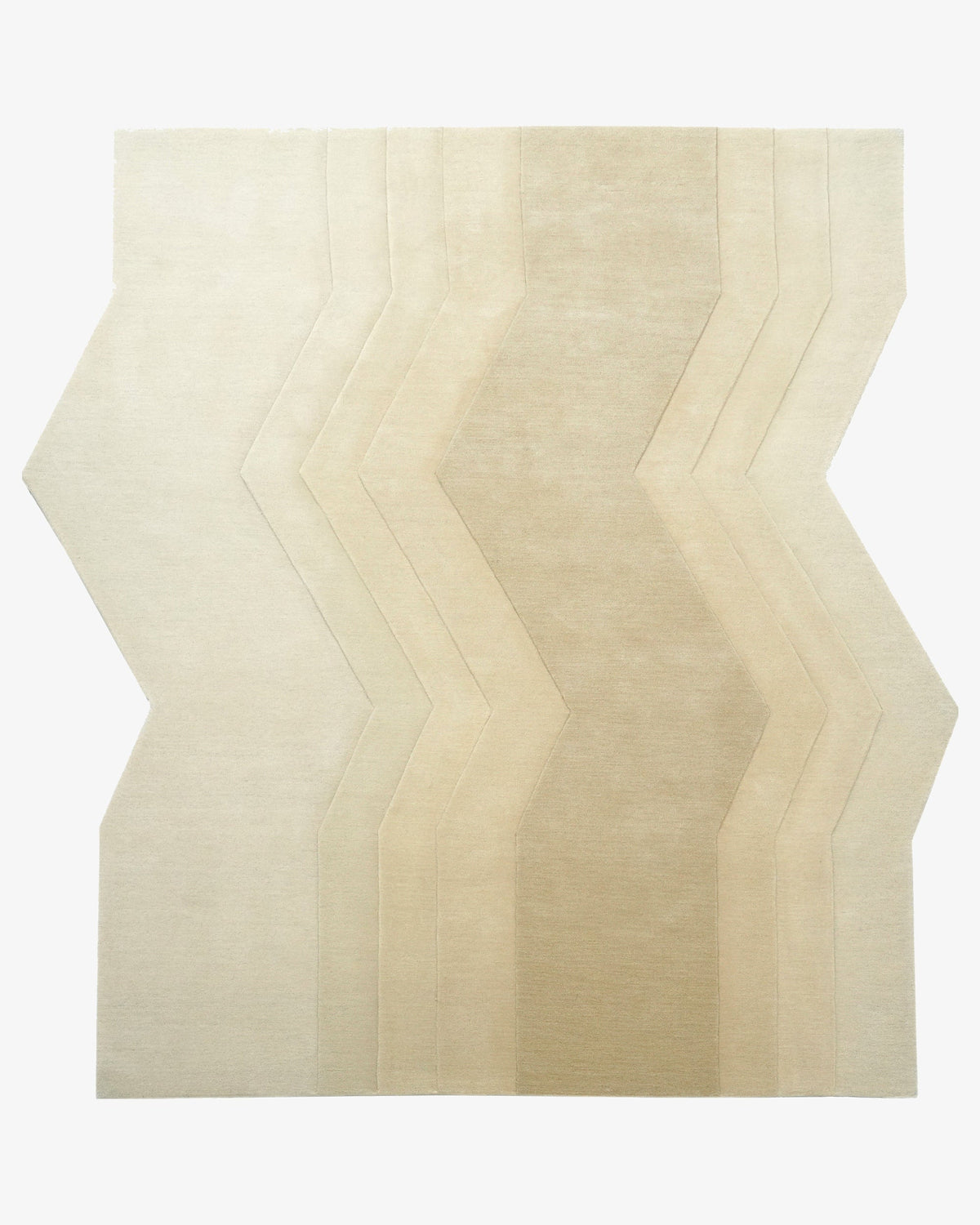
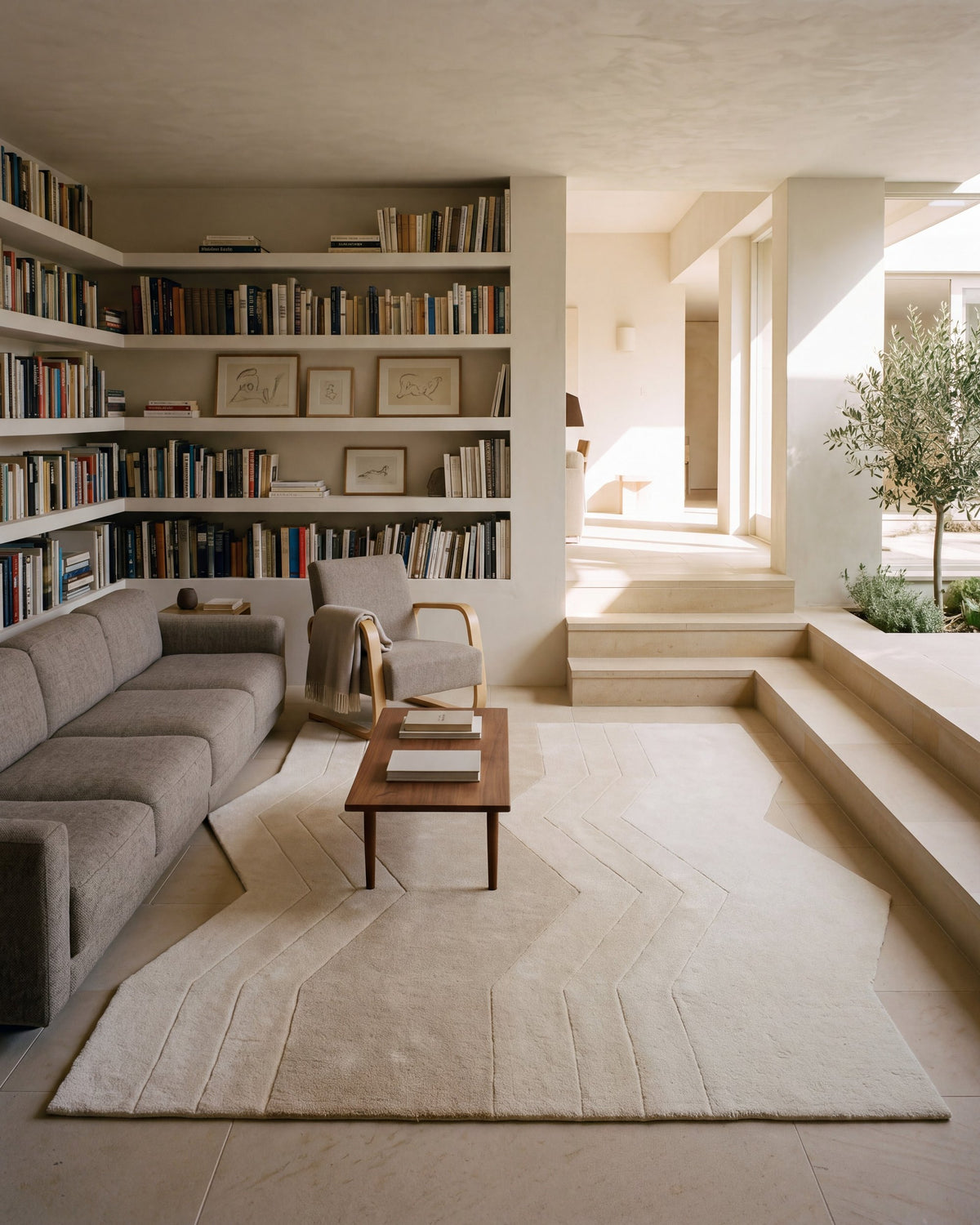
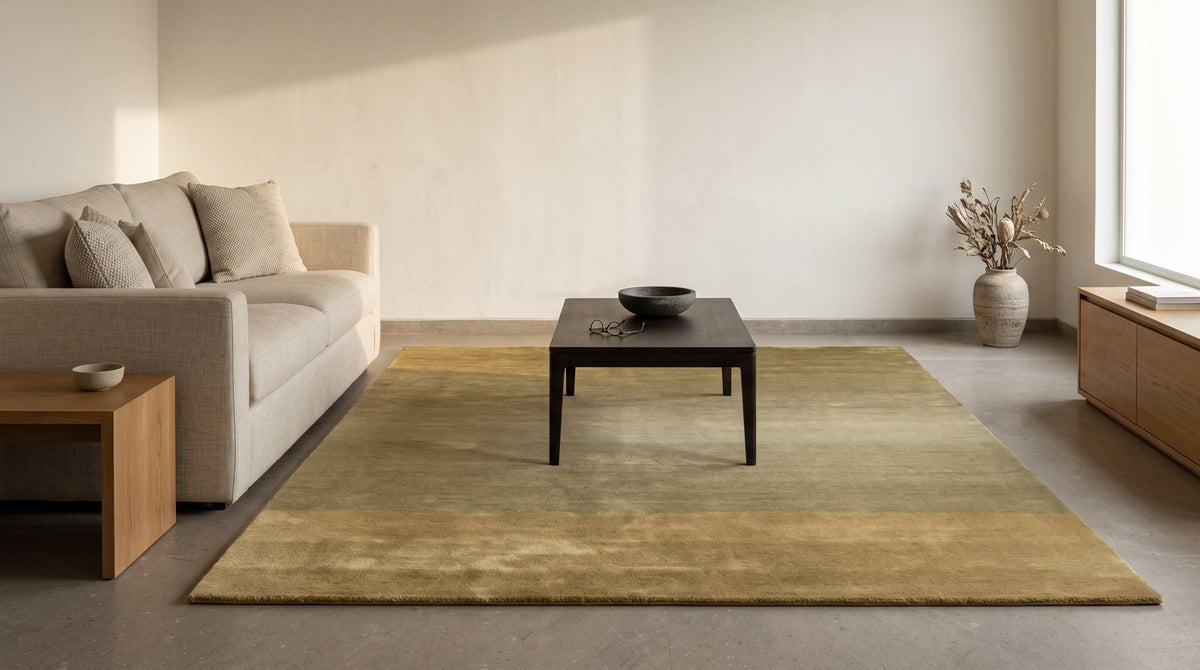
A rug with stepped tones, such as the Cadence Wool Rug, hand-tufted New Zealand wool from about ₹40,000, will look slightly different from each end of the room, because pile catches light at an angle. That is how wool behaves, and it is part of why a rug feels alive rather than printed. Browse customisable rugs to see which Rugberry designs take custom colours.
Frequently asked questions
Can Rugberry match my rug exactly to my wall paint?
A rug can be matched closely to paint but not exactly, because dyed wool and paint reflect light differently. The best results come from approving a yarn pom against a painted board in your own room.
Why does my approved colour look darker on the full rug?
A large area of pile looks deeper than a small pom, because thousands of yarn ends throw small shadows. Judging the pom at floor distance in daylight helps you allow for this.
Can two custom rugs be made in the same colour for different rooms?
Yes. Ask for both at the same time, so they can come from the same dye lot, which keeps the colour as close as possible between the two rugs.
Colour is a material, so judge it in the material. Material first.



Leave a comment
This site is protected by hCaptcha and the hCaptcha Privacy Policy and Terms of Service apply.