

How Ombre Gradients Are Made in Wool
In a hand tufted rug, an ombre gradient is usually built by laying a series of yarn shades side by side, each a step lighter or darker than the last, and softening the line between them. From a few feet away the steps disappear and the eye reads one slow change of tone.
In short
- An ombre rug changes colour gradually across its length or width, and in hand tufted rugs that gradient is commonly built from several yarn shades placed in sequence.
- Blending the boundary between neighbouring shades, for example by tufting two shades together, softens each step so the gradient reads as continuous.
- The Rugberry Ombré Meadow, Mystique and Pristine rugs are all hand tufted in New Zealand wool, and each moves through a different range of tone.
- The more shades in a gradient sequence, the smoother an ombre rug looks up close.
What is an ombre rug?
An ombre rug moves from one tone to another across its surface, with no hard line where the change happens. The word comes from the French for shaded, and the same idea appears as a gradient in the glossary.


Most gradients run along the length, light at one end and dark at the other. Some run across the width or from the centre out, and the range can be tight, two shades of ivory, or wide, from deep blue to pale grey.
How is a gradient built from yarn shades in tufting?
In tufting, a gradient is usually built from bands of yarn, each a slightly different shade, laid down in order across the rug. The more shades in the series, the smoother the change.


A tufter works from a design drawn full size on the backing cloth, with each zone marked for its yarn shade. The zones step from light to dark in order, like the rungs of a ladder.
At each boundary the shades can be mixed rather than simply butted together. Running two neighbouring shades through the tufting tool at once, or drawing the boundary as an uneven, interlocking line, softens the step so the eye sees a slope instead of a staircase.
| Way to build a gradient | How it works | What you see |
|---|---|---|
| Stepped shades | Separate zones in a sequence of yarn colours | Soft bands up close, smooth from across the room |
| Blended boundaries | Two neighbouring shades tufted together at each edge | Gentler steps, a more continuous slope |
| Graded yarn | Yarn dyed in graded lengths before use | A very fine, irregular gradient |
For a gradient that looks smooth both up close and across the room, choose a rug built from many closely spaced shades over one built from a few wide bands. Rugberry describes its ombré rugs as a slow gradation, and if a particular method matters to you, ask about the specific design.
How do the three Rugberry ombre rugs differ?
The three differ in their range of tone rather than their build: all are hand tufted in New Zealand wool, soft and even underfoot, from about ₹44,000 in 5x8 ft.


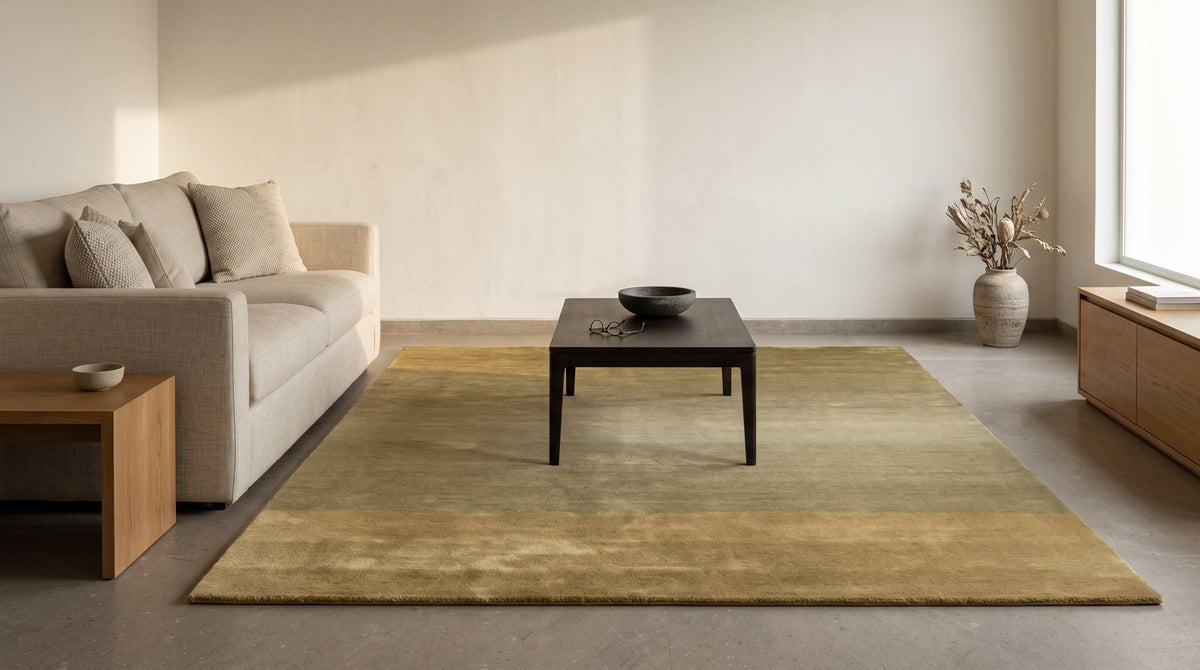
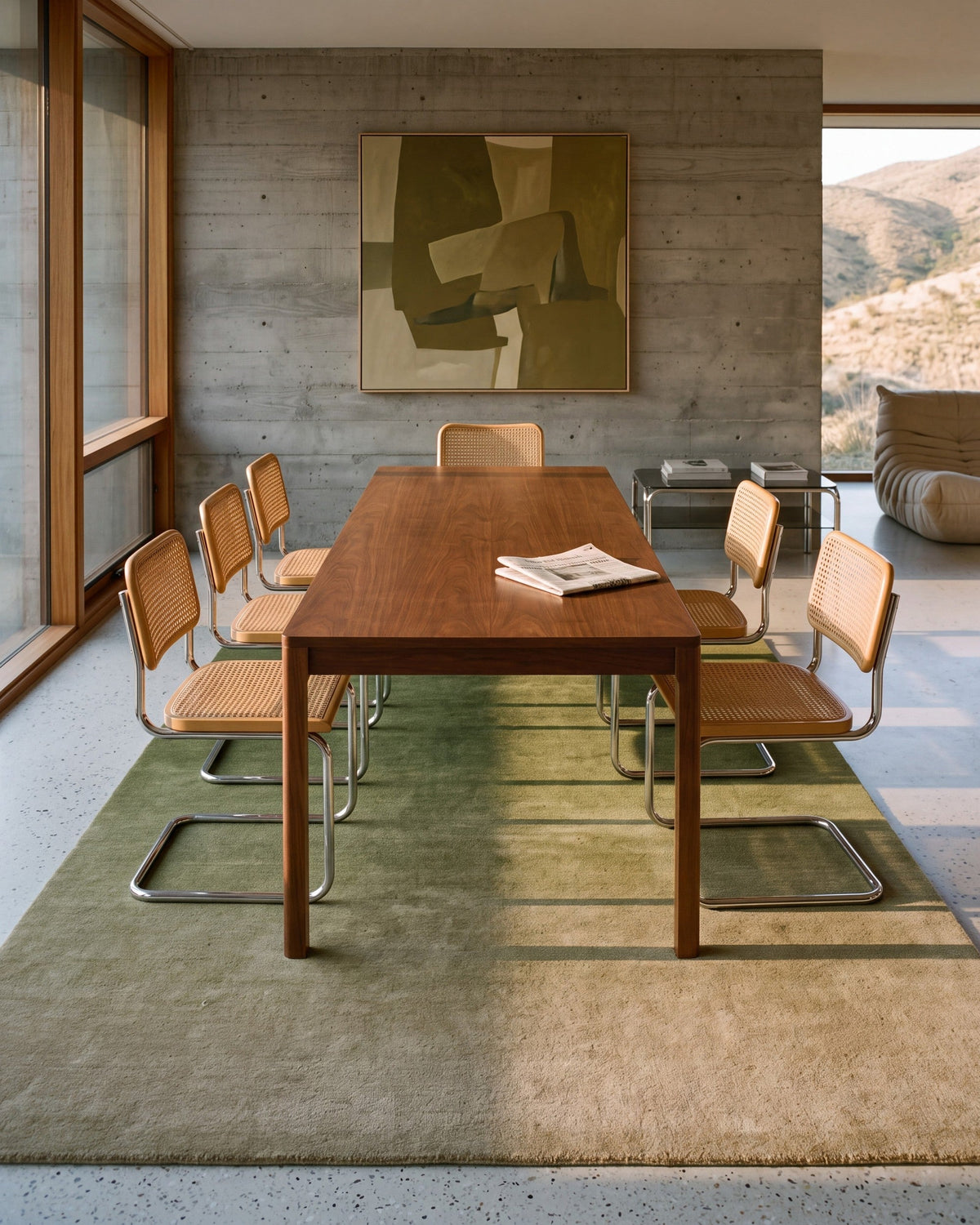
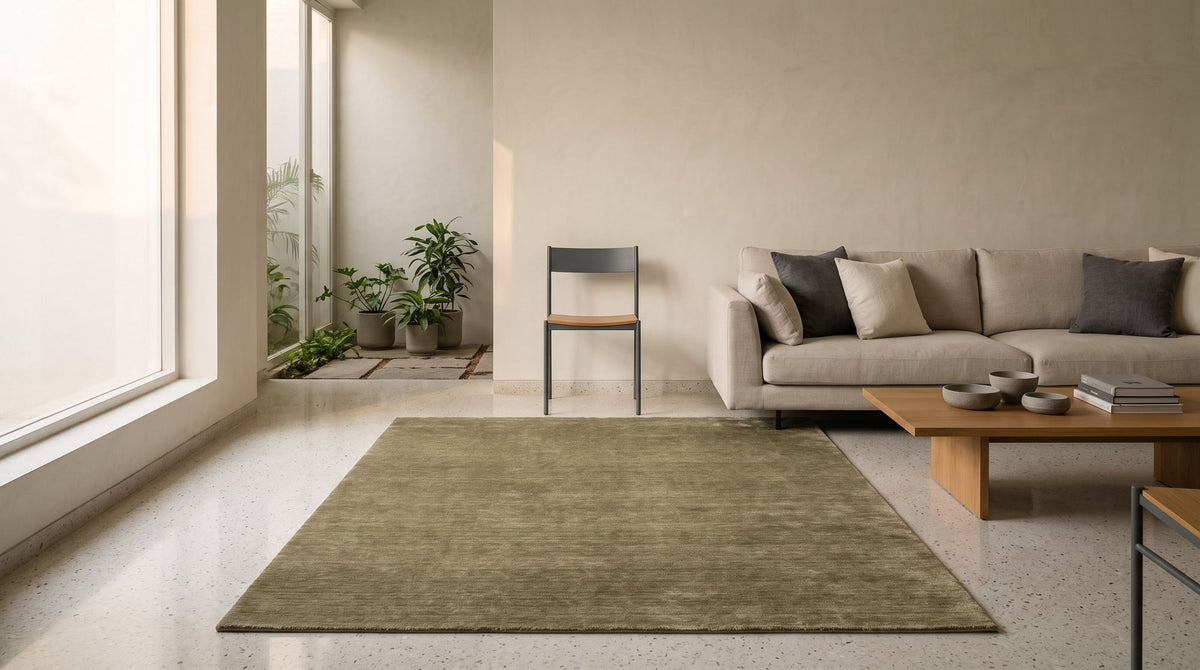
- Ombré Meadow Rug: a slow gradation through soft greens and warm neutrals, at home with plants, cane and teak.
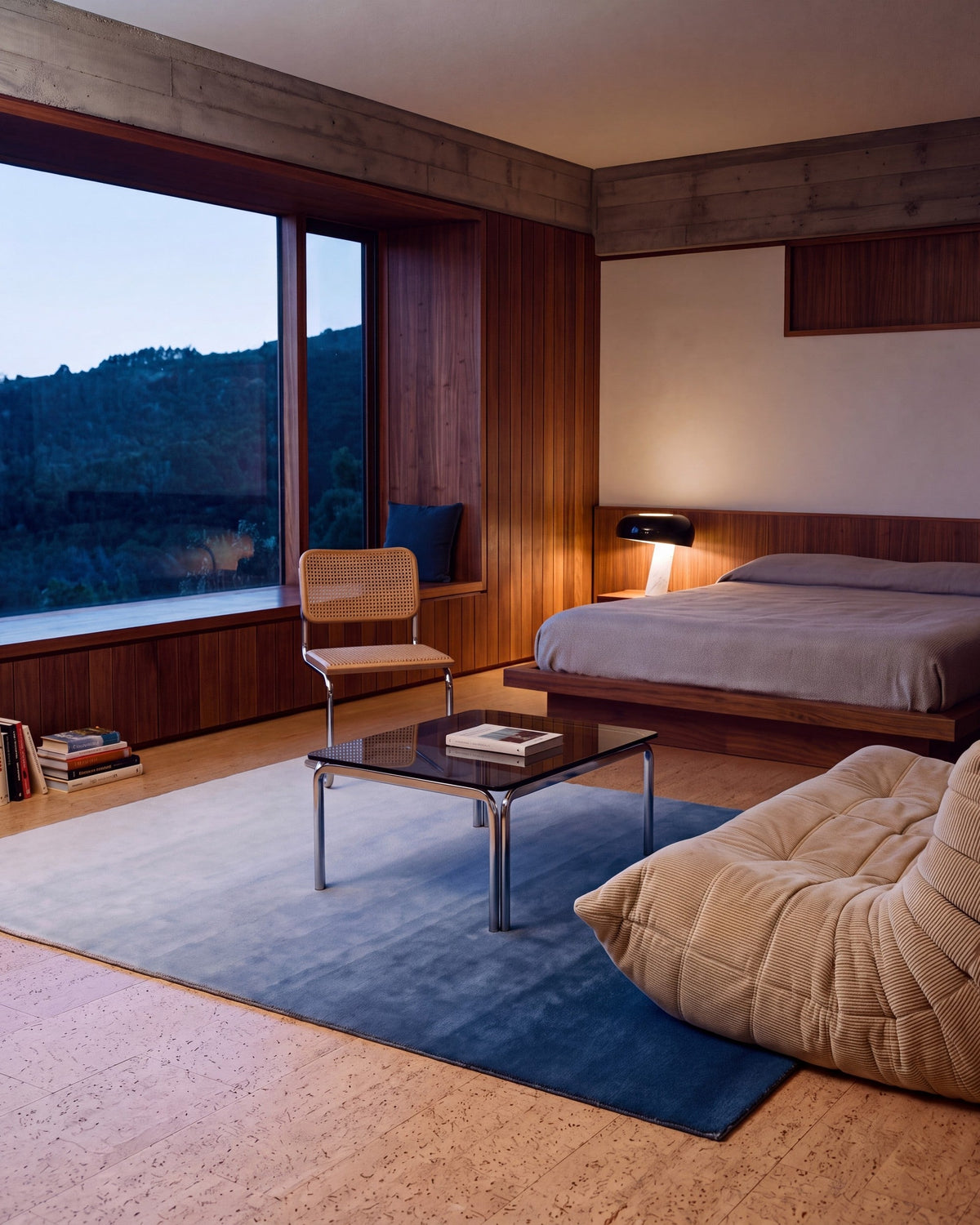
- Ombré Mystique Rug: a gradation into shadow, darkest where the light leaves, in blue tones that give a room a deep end and a light end.
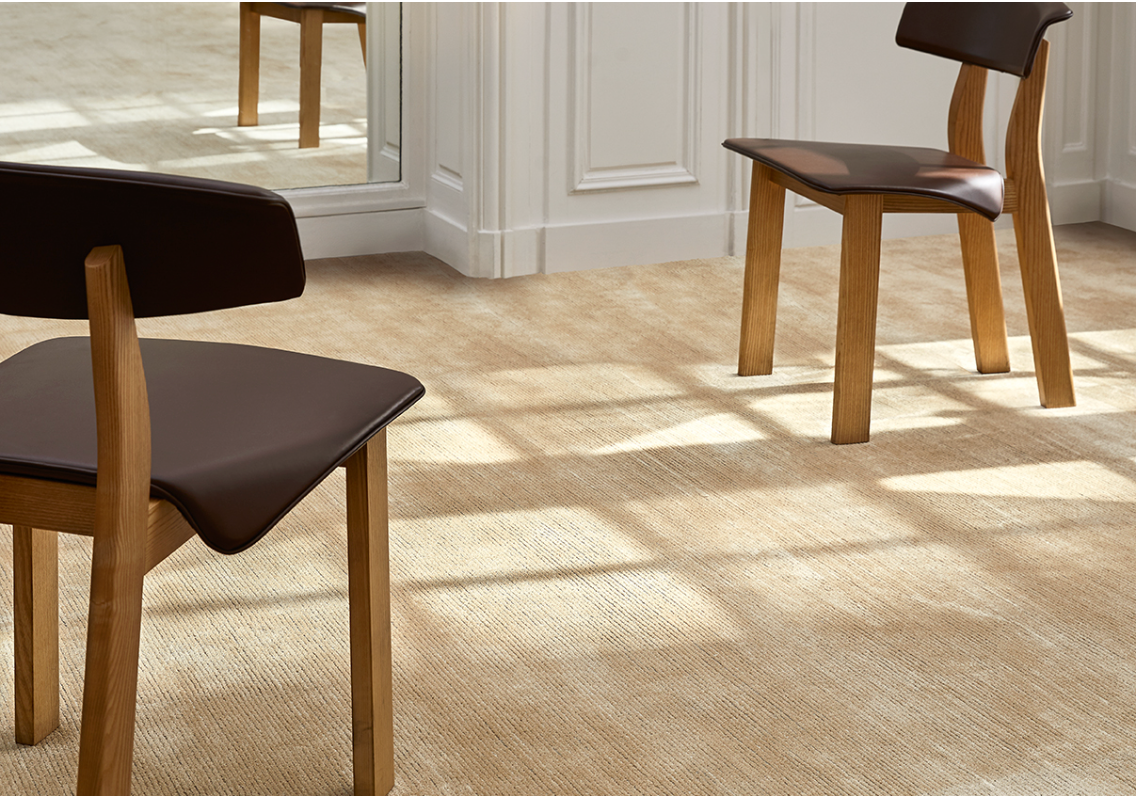
- Ombré Pristine Rug: a gradation held within the palest range of tones, close to a solid ivory rug, with movement that shows mainly in low light.
A gradient is a sequence of yarn shades. The more steps in the sequence, the quieter the change.
How should you place an ombre rug?
Place an ombre rug so its gradient works with the light and the layout of the room, usually with the darker end where the room is heavier or busier.


- Dark end toward the door. The darker end takes the most shoes and shows dust least, which matters in homes where the main door opens straight into the living room.
- Light end toward the window. The pale end catches daylight and makes the room feel more open.
- Under a bed. Run the darker end under the headboard so the bed feels anchored, with the lighter end where you step out.
- Two rugs in one space. In an open plan room, run both gradients the same way, or the floor will seem to tilt.
A long gradient needs length to show. In 5x8 ft the change is quick, while in 9x12 ft it unfolds slowly, which is where most ombre designs look calmest.
Can an ombre rug be made in custom colours?
Yes. Rugberry lists its ombré rugs with custom colours on request and any size to order, so a gradient can be planned around your room.

Choose the two end shades first, then the steps between them. Our guide to custom rug colour matching explains how shades are chosen and approved.
Judge a gradient against your own floor and walls before approving it, because a slow change of tone is far easier to read in real light than on a screen.
Frequently asked questions
Is an ombre rug dyed after it is made?
Usually not. In hand tufted rugs the gradient is commonly built from yarns already dyed in a sequence of shades, though methods vary by maker and design.
Does an ombre rug show dirt more at the light end?
Yes, the lighter end shows marks sooner, as any light rug does. Place it away from the door and vacuum that end a little more often.
Will the gradient fade unevenly in sun?
Strong direct sun can fade any dyed wool over time, and uneven fading can shift the balance of a gradient. Turn the rug occasionally and draw curtains in the harshest afternoon light.
A good gradient asks for space. See the full ombré collection. Material first.





Leave a comment
This site is protected by hCaptcha and the hCaptcha Privacy Policy and Terms of Service apply.