

Custom Rugs in India: How Rugberry Makes Yours
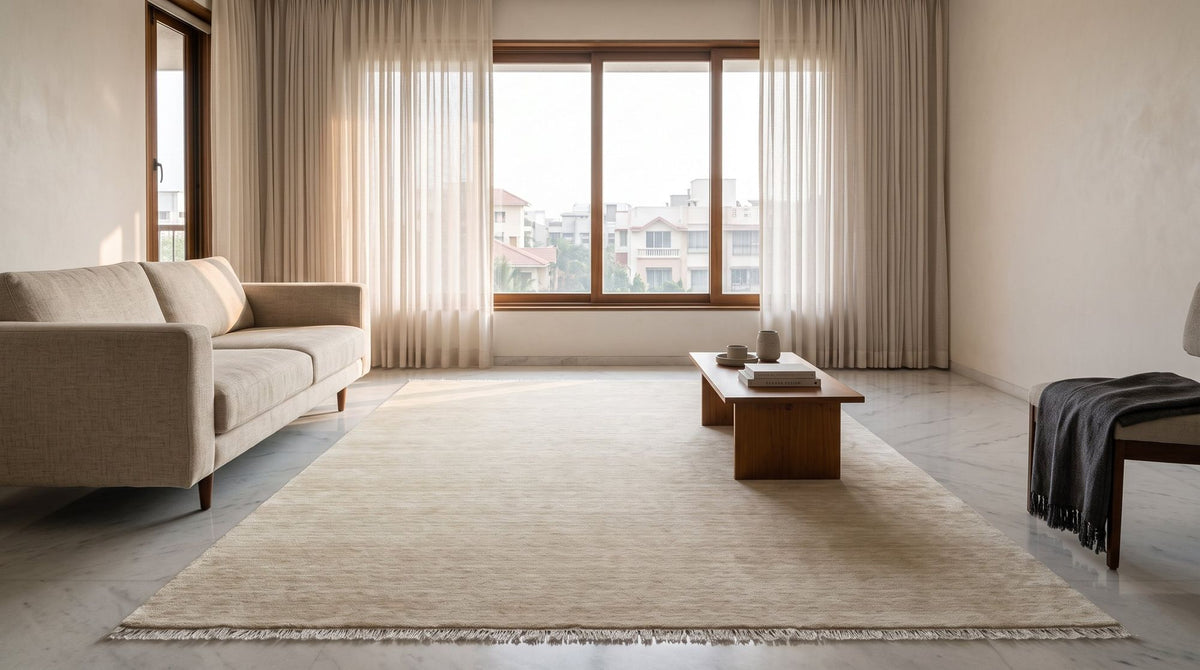
Most Rugberry rugs can be made to any size and in any colour. You start from an existing design, give us the dimensions your room actually needs, choose the colour, and the rug is made to that measure.
In short
- Most Rugberry rugs can be made to any size and any colour, starting from an existing Rugberry design.
- A custom rug is worth it when no stock size comes within about six inches of what the room needs.
- Approve a custom rug colour from a colour pom or swatch in your own light, never from a screen.
- Rugberry's Quick Custom Program covers the Grain and Plush handloom wool rugs, the Meraki jute and silk rugs and the Cashmere Blend rugs.
Stock rugs remain the quickest way to a rug; custom is the route for rooms that do not fit the six standard sizes, which in Indian homes is often.
When is a custom rug worth it?
A custom rug is worth it when no stock size fits the room, which is common in Indian homes. Custom earns its place when:

- A hall is long and narrow, say 10x20 ft, and no stock rug fills the seating area without blocking a doorway.
- A pillar, a built-in diwan or a pooja alcove takes a bite out of the floor.
- Two rugs must sit side by side in one open plan room and need to match.
- A corridor or a dressing area needs a runner of a length no stock size gives.
- The colour must answer something fixed in the room: a stone floor, a wall panel, a family heirloom sofa.
If the nearest stock size is within six inches of what you need, a stock rug is usually the better choice. Look at the customisable rugs to see which designs are open to change.
Step 1: Measure properly
A custom rug is only as good as the measurement behind it. Measure after the flooring, skirting and furniture are in place, not from a drawing.
- Mark the rug's outline on the floor with masking tape, at the size you think you want.
- Open every door that swings over the area. Wooden doors in Indian homes often clear the floor by less than an inch, and a deep pile will catch.
- Check that chairs pulled back from a dining table still sit on the rug, which usually means 2 to 2.5 ft beyond the table edge on every side.
- Leave the tape down for a few days. Walk around it, sit at it, and only then write down the final size in feet and inches.
A custom rug is only as good as the measurement behind it.
Step 2: Choose a base design
A custom rug starts from a Rugberry design, which fixes the construction and fibre. That choice sets the feel and how the rug will wear, so make it before thinking about colour.


Handloom textures
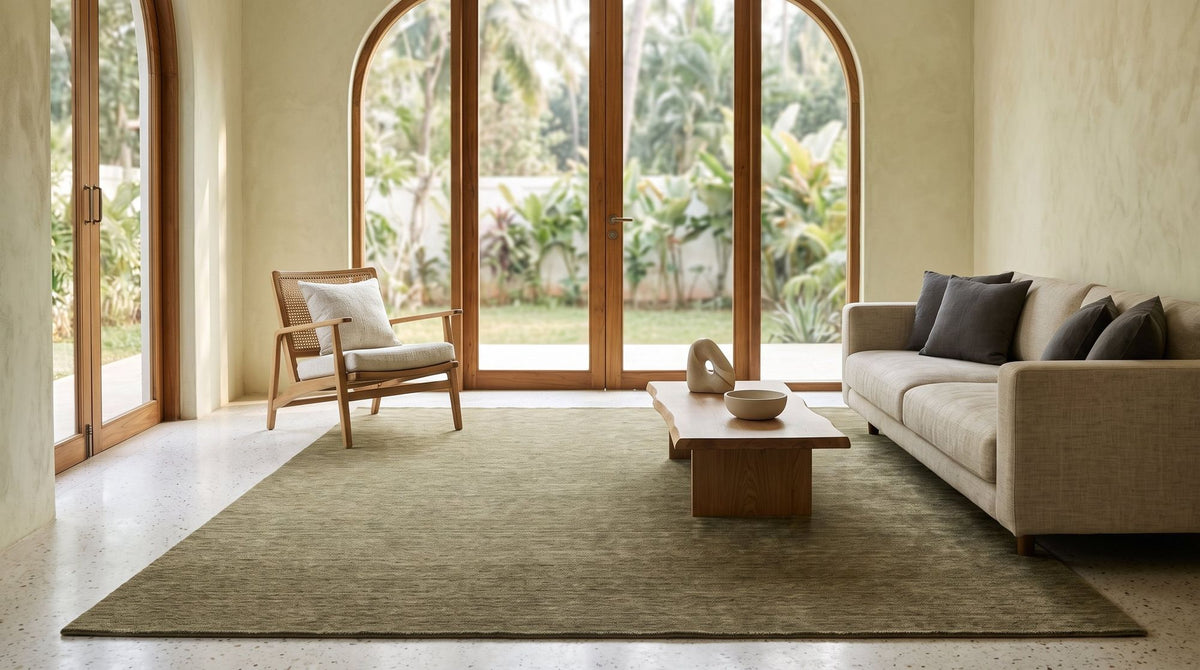
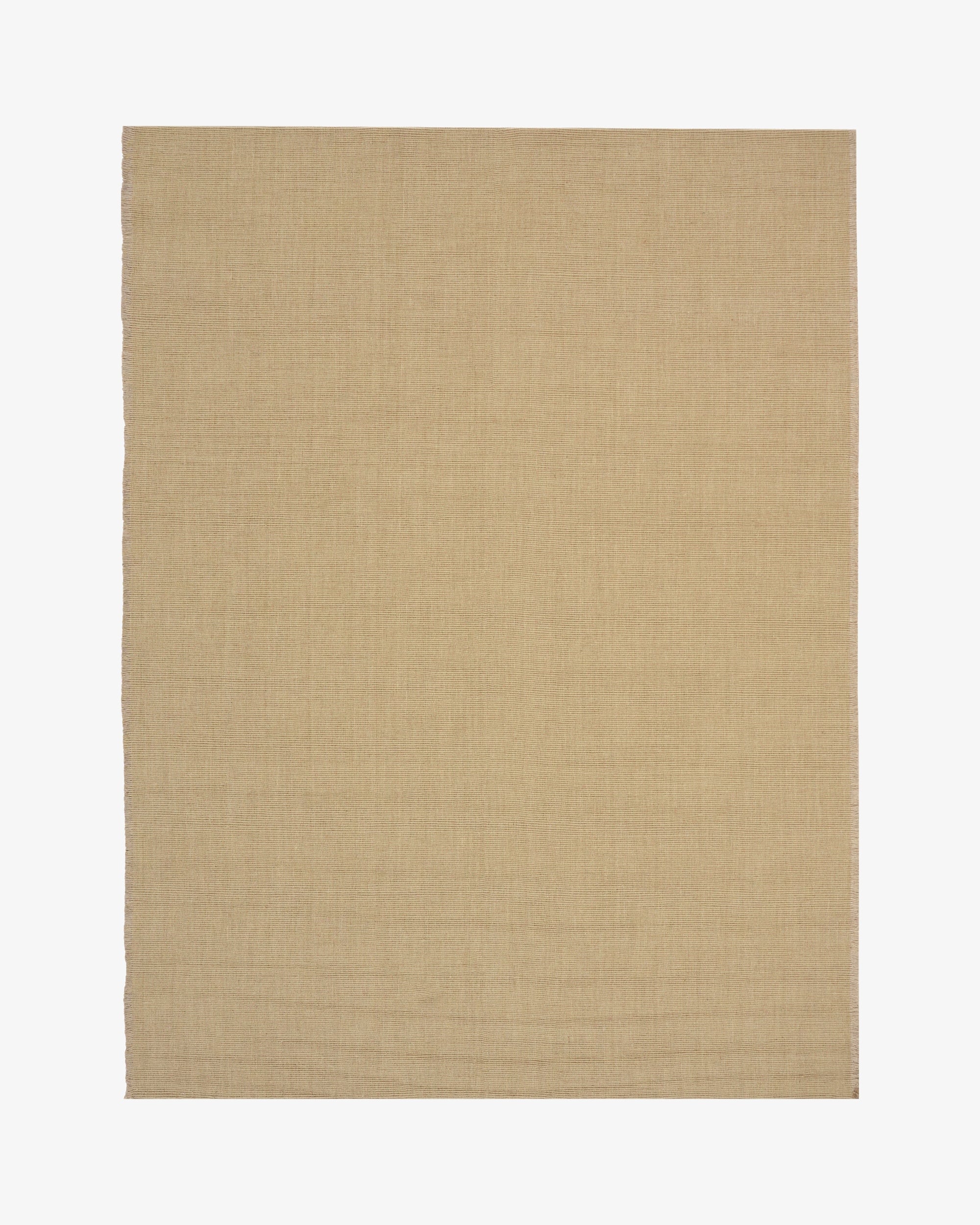
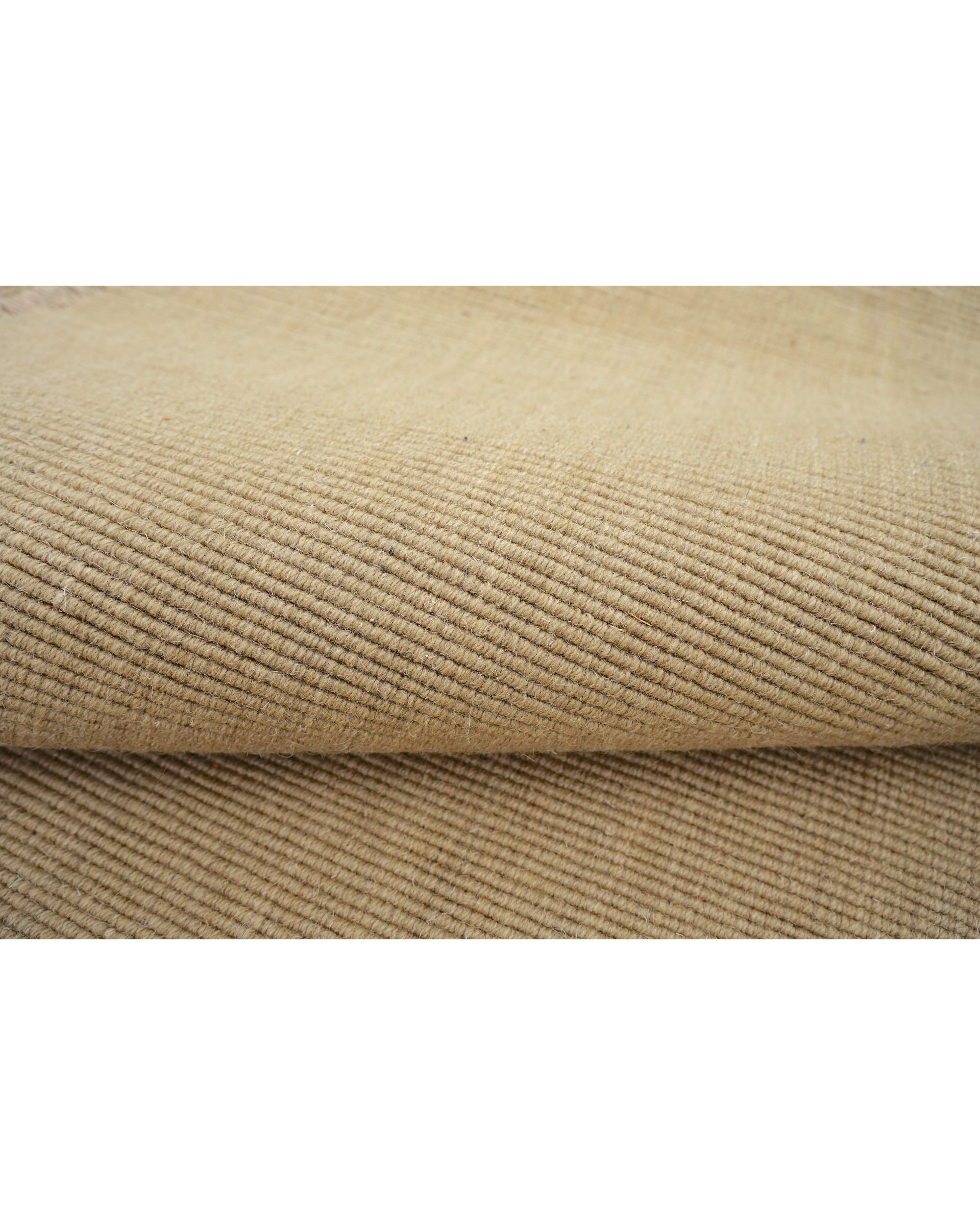
The Grain Wool Rug in sage is handloom woven New Zealand wool with a low, closely worked surface, from about ₹37,000 in its smallest stock size. The Plush Wool Rug in copper is handloom too, with a deep, quiet pile, from about ₹40,000. Both suit made to measure orders because their plain surfaces stretch to any shape without the pattern needing redrawing.
Drawn designs
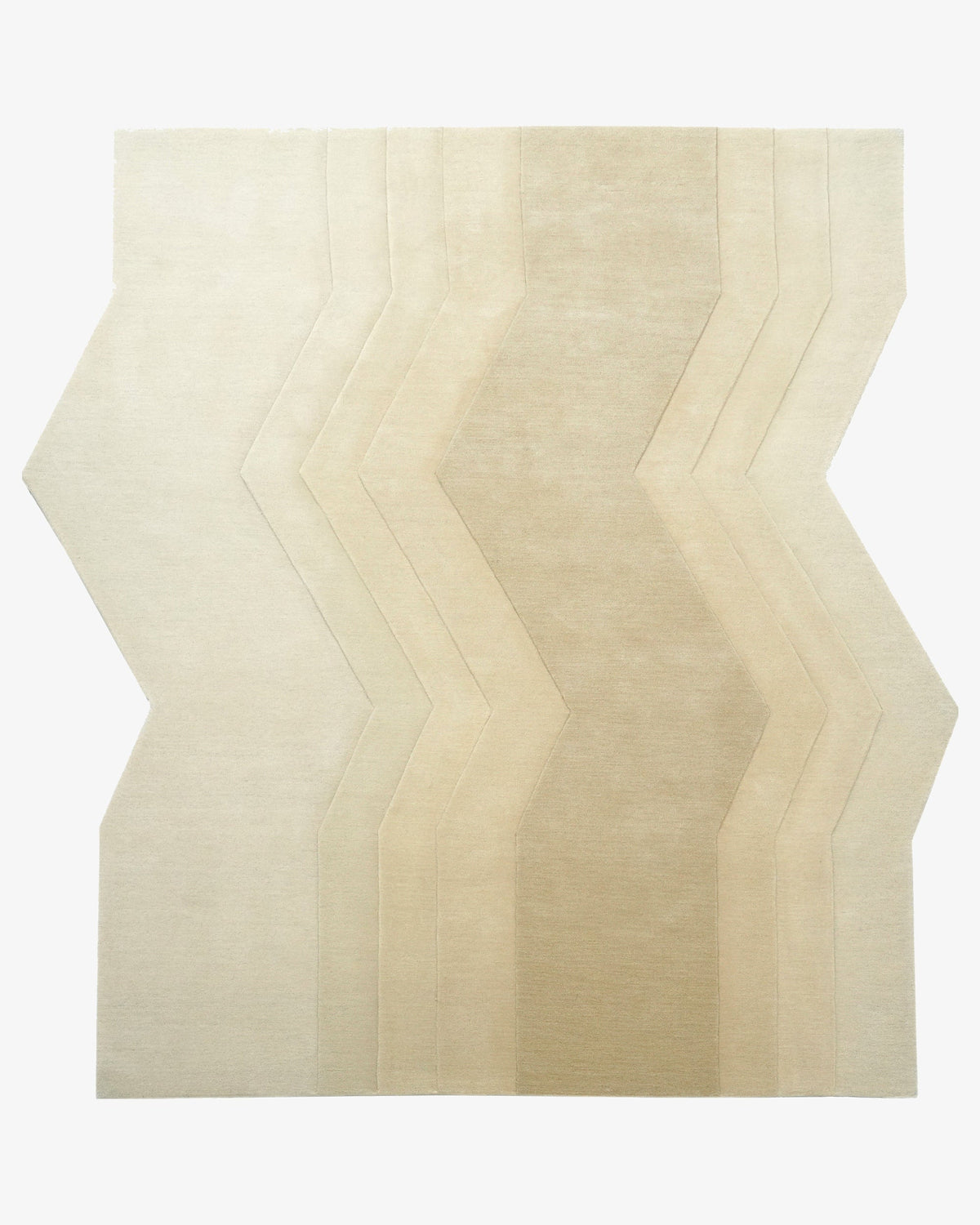
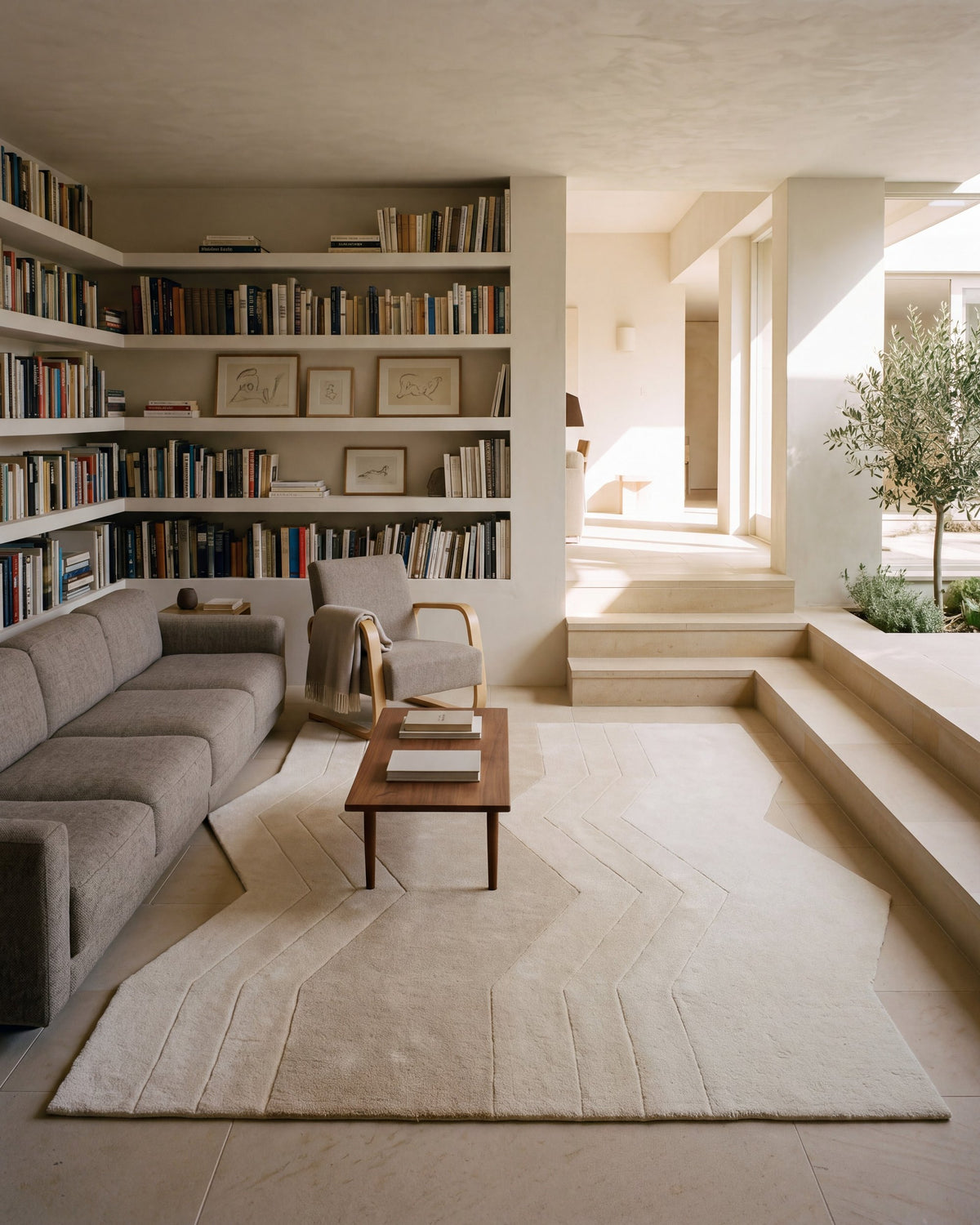
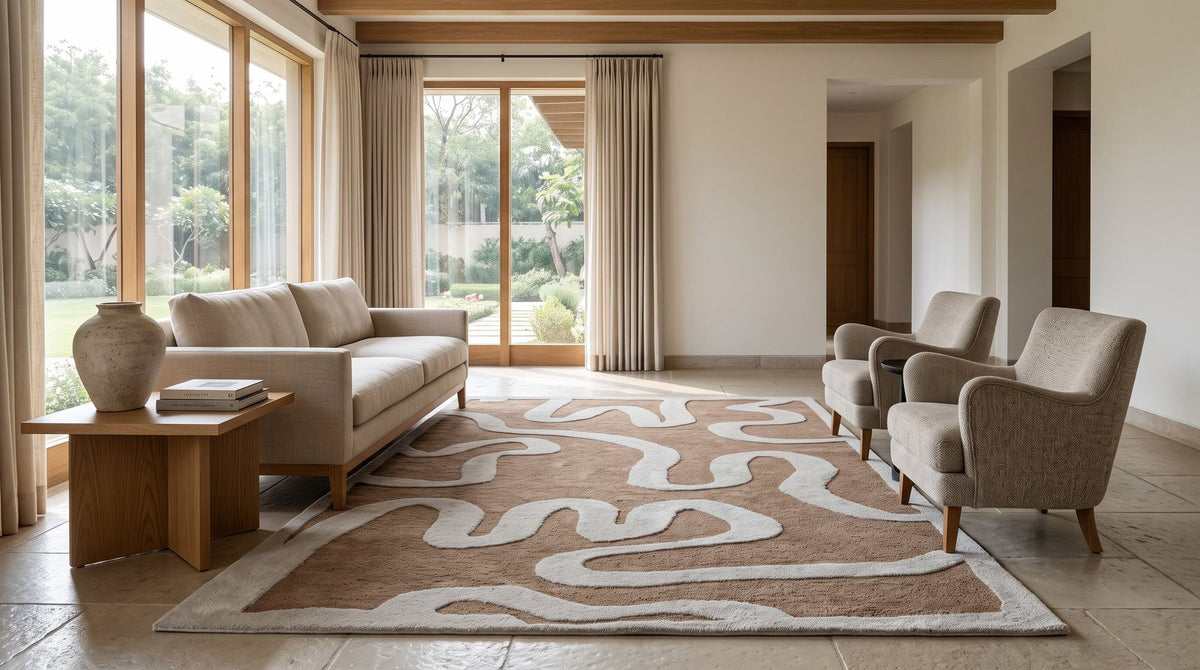
The Cadence Wool Rug, hand-tufted with stepped bands that shift tone edge to edge, can be made to size, but a pattern has to be rescaled to fit. Ask to see the adjusted drawing before you approve, especially for a long, narrow format where bands can stretch.
Mixed fibres
The Cabra Wool and Jute Rug in sand, handloom woven in New Zealand wool and jute, is firm and textured, from about ₹34,000. It is a practical base for a custom entrance or passage rug.
Step 3: Choose and approve colour
Colour is where most custom orders go wrong, and almost always for the same reason: it was chosen on a screen. Phone and laptop screens shift colour, and the warm LED light in most Indian homes shifts it again.


- Ask for a colour pom, a small bundle of the actual dyed yarn, or order a swatch from the swatches collection where one exists.
- Look at it on your own floor, in daylight and again at night under your own lights.
- Hold it against the fixed things in the room: the floor, the sofa fabric, the curtain.
- Remember that wool takes dye slightly differently from batch to batch, so a custom colour matches the approved pom closely rather than exactly.
What is the Rugberry Quick Custom Program?
The Quick Custom Program is Rugberry's simpler route to a custom rug, built on a set of handloom and blended designs.

For buyers who want a custom size or colour without starting from a blank page, the Quick Custom Program brings together the designs that move most simply to made to measure: the Grain and Plush handloom wool rugs, the Meraki jute and silk rugs and the Cashmere Blend rugs. You choose the quality, then change the size and colour. It is the more direct route to a custom rug, with fewer decisions to make.
Step 4: Confirm before it is made
Before work begins, confirm in writing:
- The final size, in feet and in centimetres.
- The base design, construction and fibre, as stated on the product page.
- The approved colour, by pom or swatch reference.
- The price, plus GST.
A custom rug is made for one room, so it is worth taking an extra day to check every line.
To read how the brand began, see Rugberry Revelations.
Frequently asked questions
Can any Rugberry rug be made to a custom size?
Most can. Each product page states the customisation available, and most read any size, any colour, made to your measure. Some designs, such as the hand-knotted Stratum, are held in a single stock size but can still be made to other measures.
How is a custom rug priced?
By area and construction, in the same way as stock sizes. A rug with more square feet, or a more time consuming construction, costs more. Prices exclude GST.
Can I change the colour of a stock design without changing its size?
Yes. Custom colours are offered on most designs. Approve the colour from a pom or swatch, not from a photo.
Is everything at Rugberry made to order?
No. Much of the range is held in stock in standard sizes. Custom is there for the rooms that need it.
Measure the room as it is, approve the colour in your own light, and the rug will fit the first time.



Leave a comment
This site is protected by hCaptcha and the hCaptcha Privacy Policy and Terms of Service apply.