

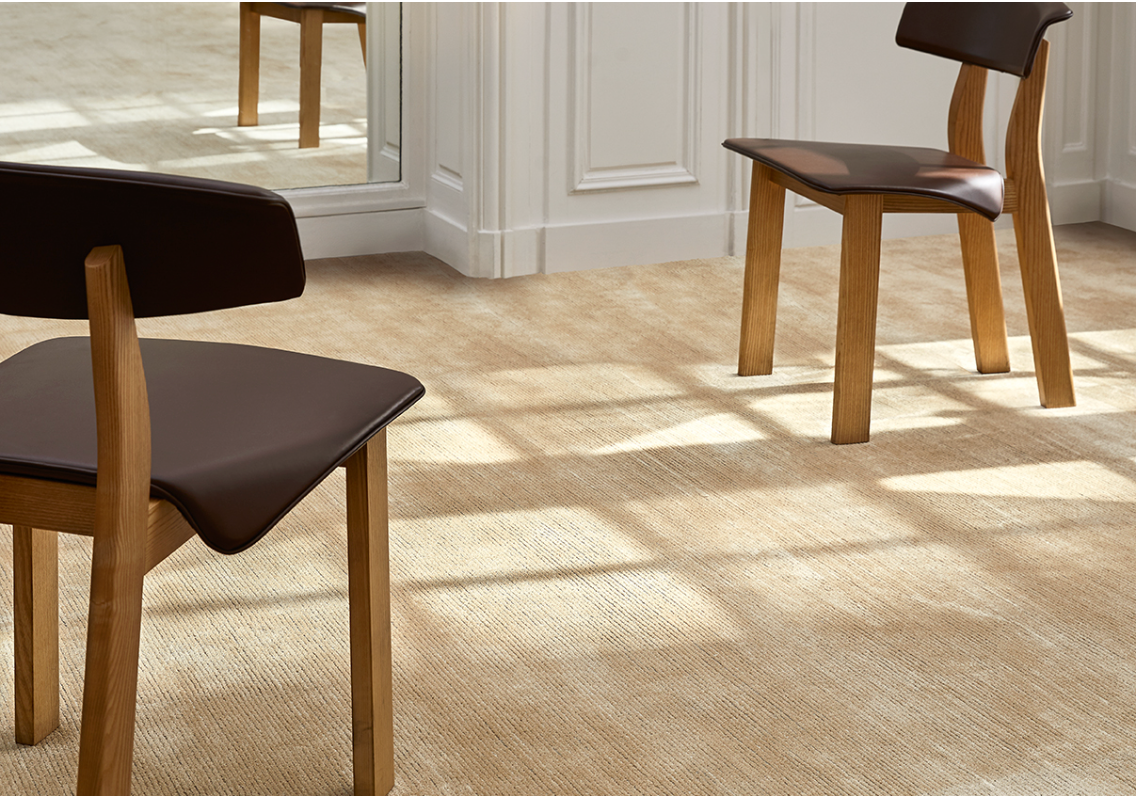

A Daily Rug Routine for Busy Households
A good daily rug routine takes about five minutes: a dry hand brush or quick vacuum on the traffic lanes, a check for spills, and no jhadu or wet pocha on the rug. The rest happens weekly and monthly.
In short
- A daily rug routine in an Indian home should replace the jhadu and wet pocha on the rug with a soft brush or a vacuum on suction only.
- A stiff jhadu pulls loose fibres out of a wool pile and frays the ends of a jute weave, so it should never be used on a rug.
- A wet pocha leaves moisture at the rug's edges, which can mark wool and jute and encourage a musty smell in the monsoon.
- Rugberry recommends writing the routine down for household help, with the mop line drawn 10 cm from the rug's edge.
Why do a jhadu and pocha harm a rug?
A jhadu is built to drag grit across hard stone, and on a rug it drags fibre too. Its stiff bristles catch the yarn, pull loose ends and leave the surface fuzzy within months.


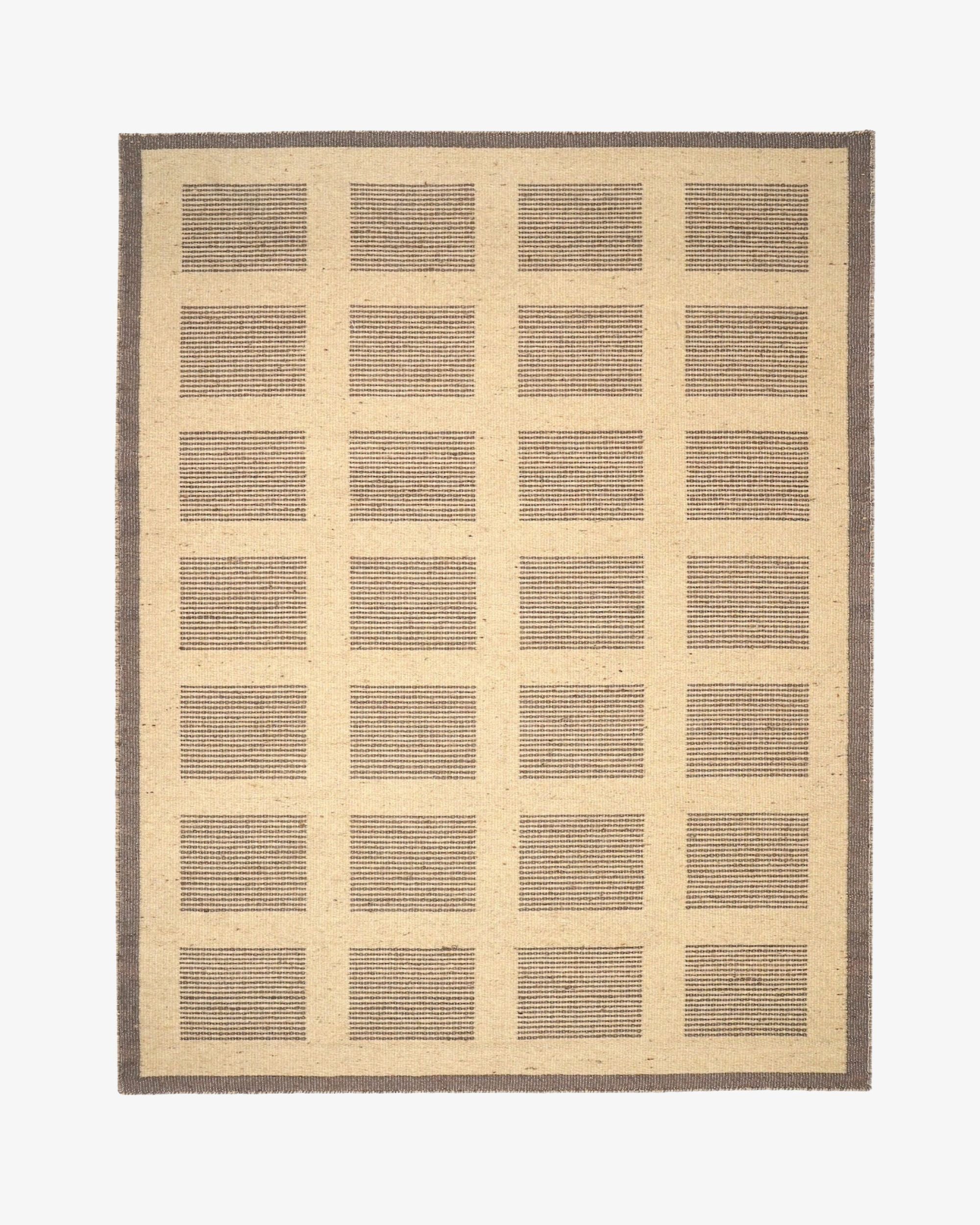
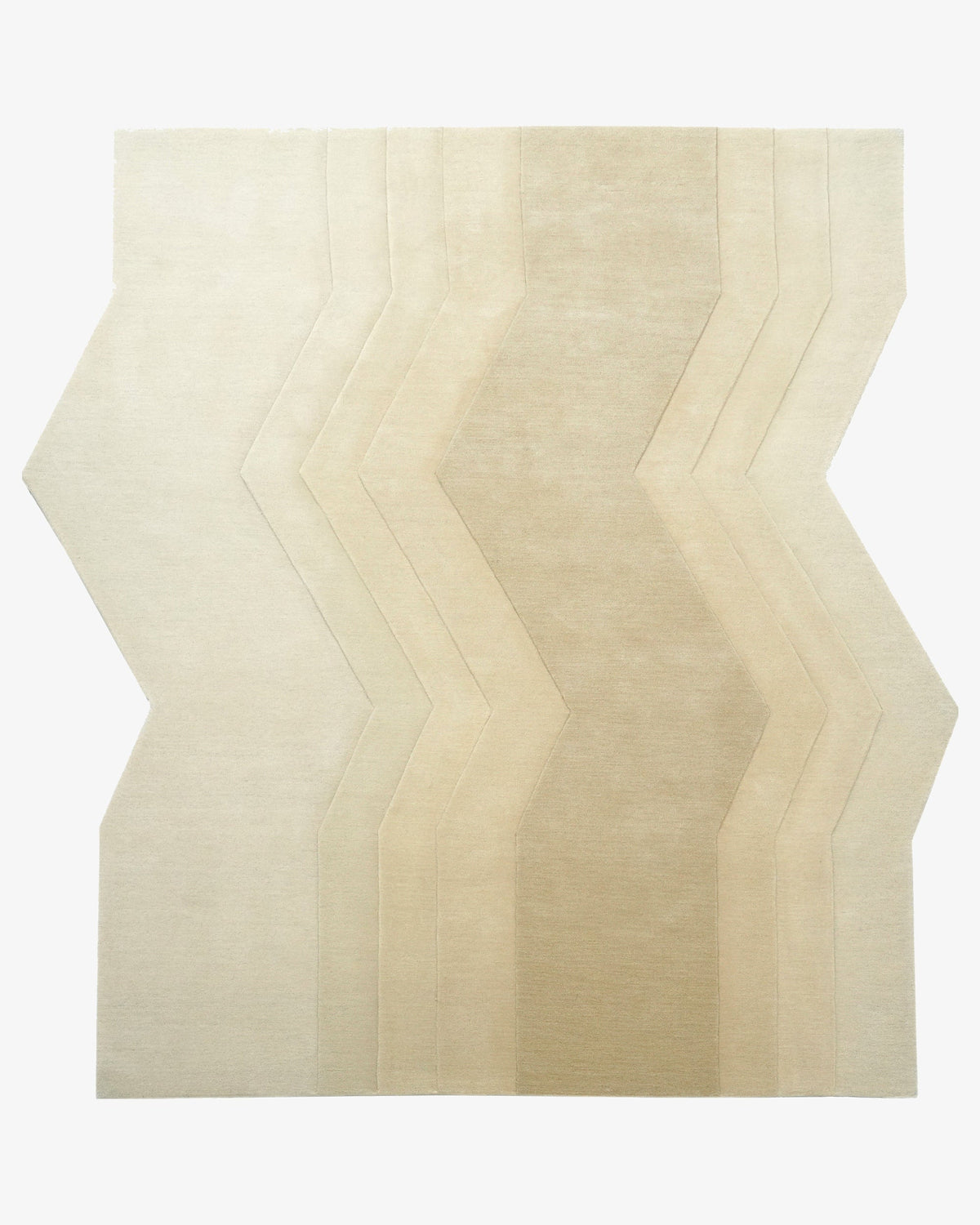
On a handwoven jute rug like the Kora Jute Rug, a jhadu frays the plant fibre and lifts the weave. On a hand-tufted wool rug like the Cadence, it scratches across the carved bands and makes them look tired.
The pocha causes a different problem. A wet cloth pushed up against the rug soaks the edge, and jute in particular can stain and stiffen as it dries unevenly.
What should the daily routine be?
The daily routine is three small steps, done after the floors are swept but before they are mopped.

- Lift. Pick up toys, shoes, newspapers and anything else left on the rug.
- Brush or vacuum the lanes. Use a soft hand brush or a vacuum on suction only, along the paths people walk: sofa to door, bed to bathroom.
- Check and blot. Look for chai, dal or ink marks and blot them with a dry white cloth. Tell the family about anything that does not lift.
This takes three to five minutes on an 8x10 ft Rugberry rug. It removes the grit that cuts fibres from below, which matters more than anything you do once a year.
How should household help mop around a rug?
The mop should stop 10 cm short of the rug's edge, with the last strip of floor wiped with a dry cloth. Ask that the pocha be wrung out well, so the floor is damp rather than wet.
Most rugs are not worn out by feet. They are worn out by the jhadu.
Once a week, the rug can be rolled back so the floor underneath is mopped and dried before the rug returns. On marble and vitrified tile, the floor must be fully dry first, since a damp floor under a rug traps moisture for hours.
A clear way to share this is a small printed card in Hindi or the local language, kept with the cleaning supplies. Draw the rug as a box, mark the 10 cm line, and add the words "brush, no jhadu".
What goes in the weekly and monthly routine?
Weekly, vacuum the whole rug in the direction of the pile, and monthly, turn it to share the wear. These two steps keep a rug looking even for years.


- Weekly: vacuum the full rug once, including under the coffee table. Our guide on how to vacuum a fine area rug covers technique and settings.
- Weekly: roll back the rug, mop and dry the floor, and lay it again.
- Monthly: turn the rug 180 degrees, so the sofa end and the door end swap places.
- Monthly: look at the underside of a corner for dust build up or damp.
Does the routine change for wool and jute?
Yes, a little. Wool forgives more than jute, while jute dislikes water more than wool.


Wool rugs
Handloom wool such as the Grain Wool Rug in tan has a low, closely worked surface that a soft brush cleans well. Wool fibre holds some lanolin, which helps everyday dust sit on top rather than sink in.
Jute rugs
Jute should be brushed or vacuumed with suction only, and kept well away from the pocha. Spills on jute need a dry blot and a fan, never a wet sponge, as our guide to keeping your rug spotlessly clean explains.
For a home with full time household help and young children, choose a wool rug over jute for the main room, because wool tolerates small slips in the routine.
What should the family do, not just the help?
The family's part in a Rugberry routine is shoes off on the rug, quick blotting of spills, and telling someone when a stain does not lift. A routine fails when only one person follows it.

Keep a small kit near the rug: two white cotton cloths, a soft brush and a small bottle of plain water. Most daily marks in an Indian home, from chai to biscuit crumbs, are handled with these alone if caught early.
Frequently asked questions
Can I use a broom on a wool rug?
A stiff jhadu should not be used on a wool rug, because it catches and pulls the fibre. Use a soft hand brush or a vacuum on suction only, moving in the direction of the pile.
How often should a rug be vacuumed in an Indian home?
Vacuum the traffic lanes of a rug daily or every other day, and the full rug once a week. Indian homes collect fine dust quickly, and grit left in the pile slowly cuts the fibre.
Is it safe to mop the floor around a rug?
Mopping around a rug is safe if the mop stops about 10 cm short of the edge and the floor is left damp rather than wet. Dry the last strip of floor with a cloth so no water seeps under the rug.
How do I explain rug care to household help?
Write a short card in the language your household help reads, with a drawing of the rug and the 10 cm mop line. Keep it with the cleaning supplies and show the routine once in person.
Five quiet minutes a day keep a rug for years. Material first.






Leave a comment
This site is protected by hCaptcha and the hCaptcha Privacy Policy and Terms of Service apply.