



Earth Tone Rugs: Terracotta, Umber and Sage
An earth tone rug in terracotta, rust, umber or sage is the simplest way to warm an Indian room built on lime plaster, teak and stone. Pick the shade from your floor and your wood, then choose a low, textured weave so the colour reads as material, not paint.
In short
- Earth tone rugs are rugs in the colours of soil, clay, bark and leaves: terracotta, rust, russet, umber, tan, ochre and sage.
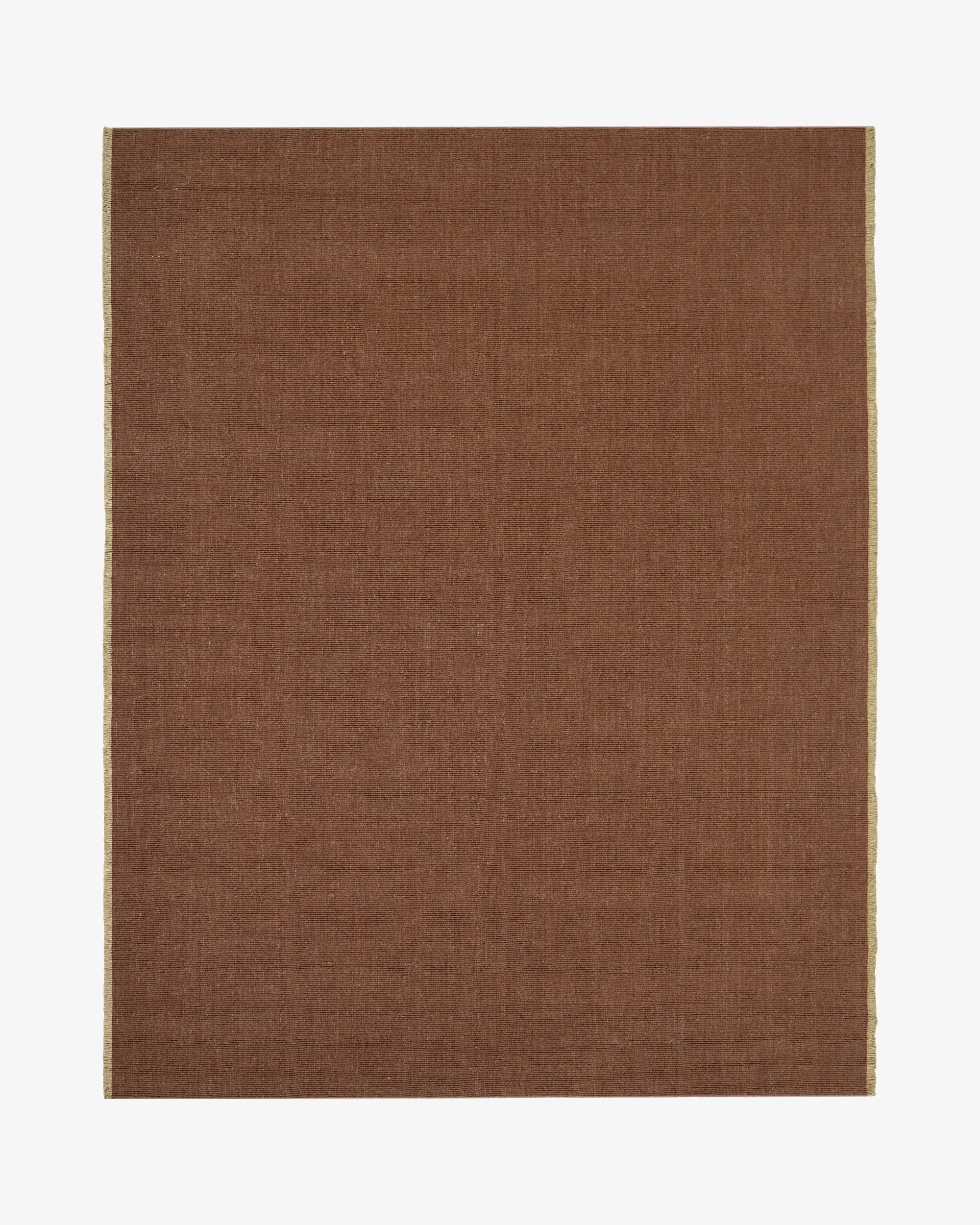
- Rugberry's Grain Wool Rug comes in Russet, Umber, Tan and Sage, handloom New Zealand wool at 12 to 14 mm, regular price ₹37,000 for 5x8 ft ex GST at the time of writing.
- The Cabra Wool & Jute Rug in Rust is handloom New Zealand wool and jute at 7 to 8 mm, regular price ₹34,000 for 5x8 ft, and suits dining rooms and entrances.
- A textured, low pile shows an earth colour as a living surface, while a smooth, flat dye can look heavy in strong Indian daylight.
What counts as an earth tone rug?
An earth tone rug is coloured in the hues of natural ground and plants: terracotta, rust, russet, umber, tan, ochre, olive and sage. These are warm, slightly muted colours, never bright, which is why they sit so easily with natural materials.
In India, earth tones are not a trend. They are the colours of laterite in Goa and Kerala, of the red soil in the Deccan, of the sandstone in Rajasthan and of the teak and sheesham in most of our furniture. A rug in these colours looks local even when the room is modern.
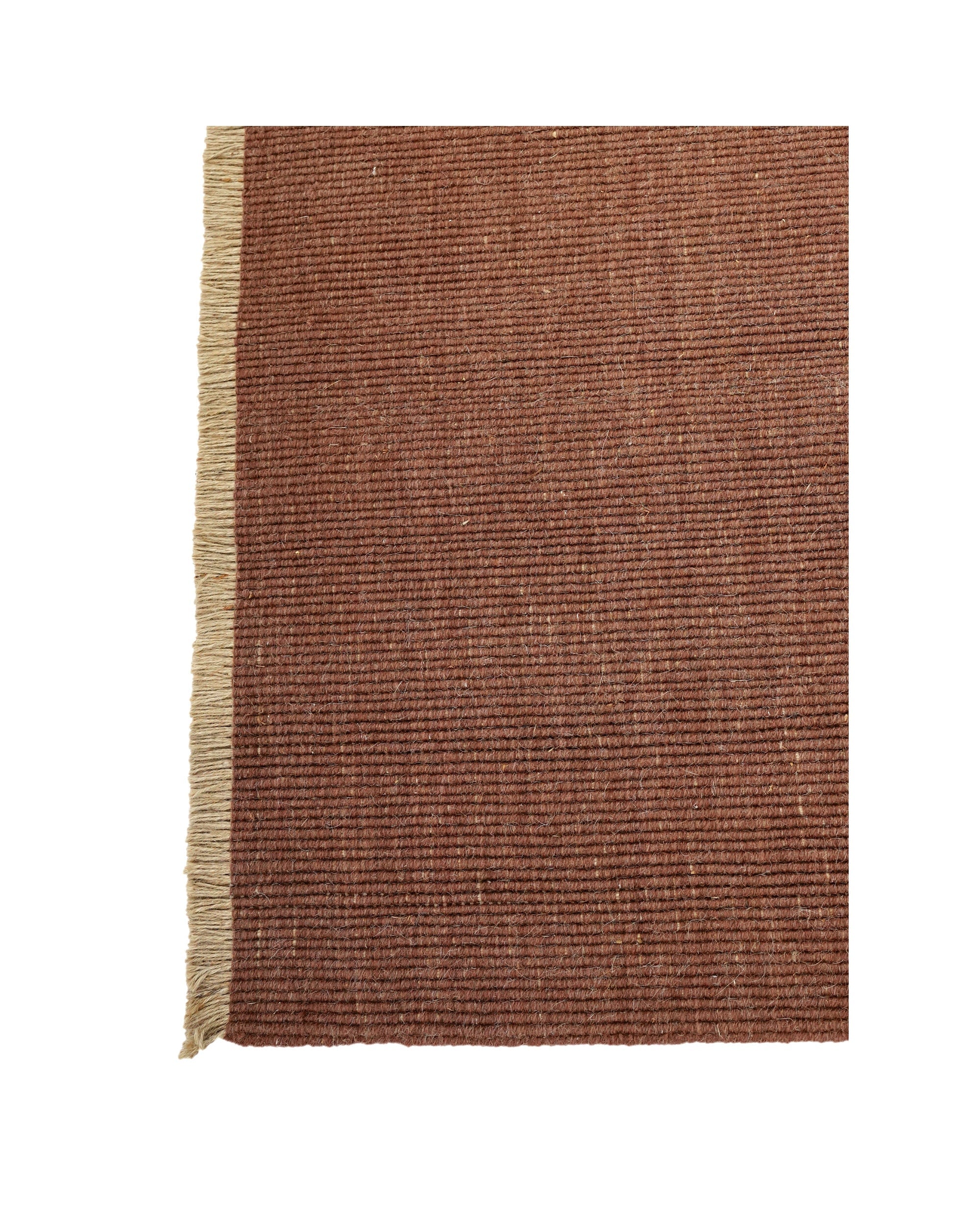
The difference between earthy and muddy is texture. A flat, single colour dye in brown can look dull. The same colour in a weave where you see small shifts of tone, as in a handloom rug, looks like soil in sun.
That is why Rugberry's earth tones sit mostly in handloom constructions. The weave breaks the colour into small points of light and shadow, and the eye reads that as depth.
Which earth tone shade suits which room?
Choose rust and russet for living rooms that need warmth, umber for rooms that need weight, tan for rooms that need to stay light, and sage for rooms that face strong sun. Each shade solves a different problem.


| Shade | Rugberry rug | Fibre and construction | Pile | Regular price, 5x8 ft, ex GST | Best room |
|---|---|---|---|---|---|
| Russet | Grain Wool Rug, Russet | New Zealand wool, handloom | 12 to 14 mm | ₹37,000 | Living rooms with teak and white walls |
| Umber | Grain Wool Rug, Umber | New Zealand wool, handloom | 12 to 14 mm | ₹37,000 | Large rooms with pale stone floors |
| Rust | Cabra Wool & Jute Rug, Rust | New Zealand wool and jute, handloom | 7 to 8 mm | ₹34,000 | Dining zones, entrances, verandas |
| Copper | Plush Wool Rug, Copper | New Zealand wool, handloom | 18 to 20 mm | ₹40,000 | Bedrooms and floor seating |
| Sage | Grain Wool Rug, Sage | New Zealand wool, handloom | 12 to 14 mm | ₹37,000 | Sunny rooms, studies, garden facing rooms |
For a living room with teak furniture and white walls, choose russet over umber, because russet warms the wood while umber can make a teak room feel dark. In a room with pale marble and light oak, umber gives the weight the room is missing.
Tan sits between the two. It is the lightest of the warm earth tones and works in a small apartment where a russet or umber rug would close the room in. It also shows the weave of the Grain range most clearly, because the light catches every row.
Sage is the cool earth tone. It belongs with terracotta pots, green plants and garden light. Our post on the green rug covers the full range of greens.
How do earth tone rugs work with lime plaster, teak and stone?
Earth tone rugs work with lime plaster, teak and stone because all of them are natural materials with small variations in colour. The rug repeats the plaster's texture, the wood's warmth and the stone's weight, so the room feels made of one family of materials.

Lime plaster, the lepan or chuna finish found in many new Indian homes, has a soft cloud of tone. Against it, a flat, perfectly even rug looks synthetic. A handloom weave, with its own small shifts of colour, matches the wall's surface.
- Lime plaster in white or off white: russet, tan or sage. The wall stays the brightest surface.
- Lime plaster in a pink or ochre wash: umber or a deep chocolate, to ground the warm wall.
- Teak or sheesham furniture: keep the rug one step lighter or one step darker than the wood, never the same tone, or the furniture disappears.
- Kota stone, Jaisalmer or red oxide floors: sage or tan, so the floor keeps its own colour.
- Grey vitrified tile: rust or russet, to warm a cool floor.
A flat brown looks like paint. The same brown in a handloom weave looks like soil in sun.
Our post on rugs with wooden furniture goes deeper on wood tones. The short rule: contrast in value, harmony in temperature.
Should an earth tone rug be wool, jute or a blend?
An earth tone rug should be wool where you sit and walk barefoot, and a wool and jute blend where people pass in shoes or eat. Pure jute has the most natural colour but is firm underfoot and stains more readily.


New Zealand wool takes dye deeply and evenly, which is why the Grain range holds strong rusts and umbers without looking flat. Wool also keeps its colour well, though any natural fibre fades a little in years of direct sun.
Jute has its own earth colour, a warm straw, and blends well with rust and tan wool. The Cabra Wool & Jute Rug uses the two together: wool for colour and softness, jute for a dry, firm hand. At 7 to 8 mm, it slides under a dining chair easily.
For a dining room in rust, choose the Cabra Wool & Jute Rug over the Grain Wool Rug, because the flatter weave lets chairs move and is easier to brush clean after meals. Our guide to wool versus jute rugs compares the two fibres in full.
How do you keep an earthy room from looking dated?
Keep an earthy room current by using earth tones on a few large surfaces, the rug and one wall at most, and keeping furniture lines clean and modern. The 1970s look comes from earth tones on every surface at once, with heavy pattern.
Limit the palette to three related colours plus white. A rust rug, a sage cushion and natural teak is enough. Add a fourth colour only in art.
Keep pattern low. An earth tone rug with texture and no pattern lets the colour work. If you want pattern, put it in one small place, such as a block printed cushion or a single kantha throw.
Bring in one cool element to balance the warmth. A grey stone side table, a pale sage linen or a black iron lamp keeps a room of rust and umber from feeling heavy in the Indian summer.
Light it warmly. Earth tones die under cold white LED at 6500 K, which turns rust to grey brown. Use warm white bulbs at 2700 to 3000 K, and the rug will look the way it did in daylight.
What size and placement work for an earth tone rug?
An earth tone rug usually works at 8x10 ft in a living room, 8x10 ft under a queen bed and 6x9 ft or 8x10 ft under a dining table for six. Because the colour is strong, a rug too small for the room looks like a stain on the floor.

With a warm, strong colour, proportion matters more than with a neutral. A small rust rug floating in a large white room pulls the eye and makes the room feel smaller. A rust rug that holds the whole seating group makes the room feel warmer and more settled.
Leave a border of floor all round, at least 18 inches in living rooms. On marble or stone, that border lets the floor and the rug frame each other.
Under a dining table, measure the table and add 24 inches on every side so chairs stay on the rug when pulled out. Rugberry's guide to modern dining room rugs has the full table chart.
How do you care for a rust or umber rug in Indian conditions?
Care for a rust or umber wool rug by vacuuming weekly, turning it every three to four months against sun fade and blotting spills at once with cold water. Mid to deep earth tones hide everyday dust better than ivory or black.
The main risk for strong colours is uneven fading where sun falls through one window. Turning the rug spreads the light evenly. Sheer curtains on south and west windows help in summer.
Turmeric is the classic Indian risk for a pale rug, but on rust and ochre it barely shows. That makes earth tones a sound choice for open plan kitchens and dining rooms. Blot, do not rub, and use a professional cleaner for anything set.
See the full range in Rugberry's rust and copper rugs and brown rugs. Our rust rug guide covers single rust pieces, and the Rugberry rug guide links every colour and fibre guide.
Frequently asked questions
What colours are earth tone rugs?
Earth tone rugs come in the colours of soil, clay, bark and plants: terracotta, rust, russet, umber, tan, ochre, olive and sage. They are warm, muted colours that sit well with wood, stone and lime plaster.
Which earth tone rug goes with teak furniture?
Russet and tan suit teak furniture best, because they warm the wood without matching it. Keep the rug one step lighter or darker than the teak so the furniture stays visible.
Is a rust rug practical for an Indian home?
A rust rug is practical in an Indian home because it hides dust, turmeric and everyday marks better than ivory or black. In New Zealand wool, as in the Rugberry Grain Wool Rug in Russet, it also resists light spills.
Do earth tone rugs fade in Indian sun?
Any natural fibre rug fades a little over years of direct sun, and strong colours show it sooner. Turning the rug every three to four months and using sheer curtains on south and west windows keeps the fading even.
Is sage an earth tone?
Sage is the cool earth tone, a grey green taken from leaves and lichen. It suits sunny rooms and pairs well with terracotta pots, teak and lime plaster.
Start with the colour of your floor, then let the rug carry the earth. Material first.




Leave a comment
This site is protected by hCaptcha and the hCaptcha Privacy Policy and Terms of Service apply.