

Handmade vs Machine Made Rugs: How to Tell
To tell a handmade rug from a machine made one, turn a corner over and look at the back, then check the fringe and run your palm across the pile. Each way of making a rug leaves its own marks, and none of them can be hidden on the underside.
In short
- A hand-knotted rug shows the same pattern on its back as on its face, with small irregularities in every row of knots.
- A hand-tufted rug has a backing cloth glued to the underside, so the pattern cannot be read from the back.
- A power loom rug shows a perfectly even grid on its back, and its fringe is usually sewn on rather than part of the rug.
- Rugberry makes rugs in four hand techniques, hand knotted, handloom, handwoven and hand tufted, and each product page names the one used.
How can you tell if a rug is handmade?
Fold back a corner and look at the underside in daylight. The back is the rug's working drawing: it shows whether yarn was tied, woven, punched through a cloth or laid down by a machine.


Then do two more checks. Look at where the fringe meets the body, and look across the pile at a low angle to see how even it is. Three checks, under a minute, in any store or at your own door when a rug arrives.
| Construction | The back | The fringe | The pile |
|---|---|---|---|
| Hand knotted | Pattern visible, knots slightly uneven | The warp threads themselves | Dense, with gentle variation |
| Handloom or handwoven | Weave visible, often close to the face | Warp ends, knotted or bound | Low or flat, rows faintly visible |
| Hand tufted | Backing cloth, pattern hidden | Added, or none | Even, often carved or sheared |
| Power loom | Rigid, perfectly regular grid | Usually sewn on | Uniform from edge to edge |
What does the back of a hand-knotted rug look like?
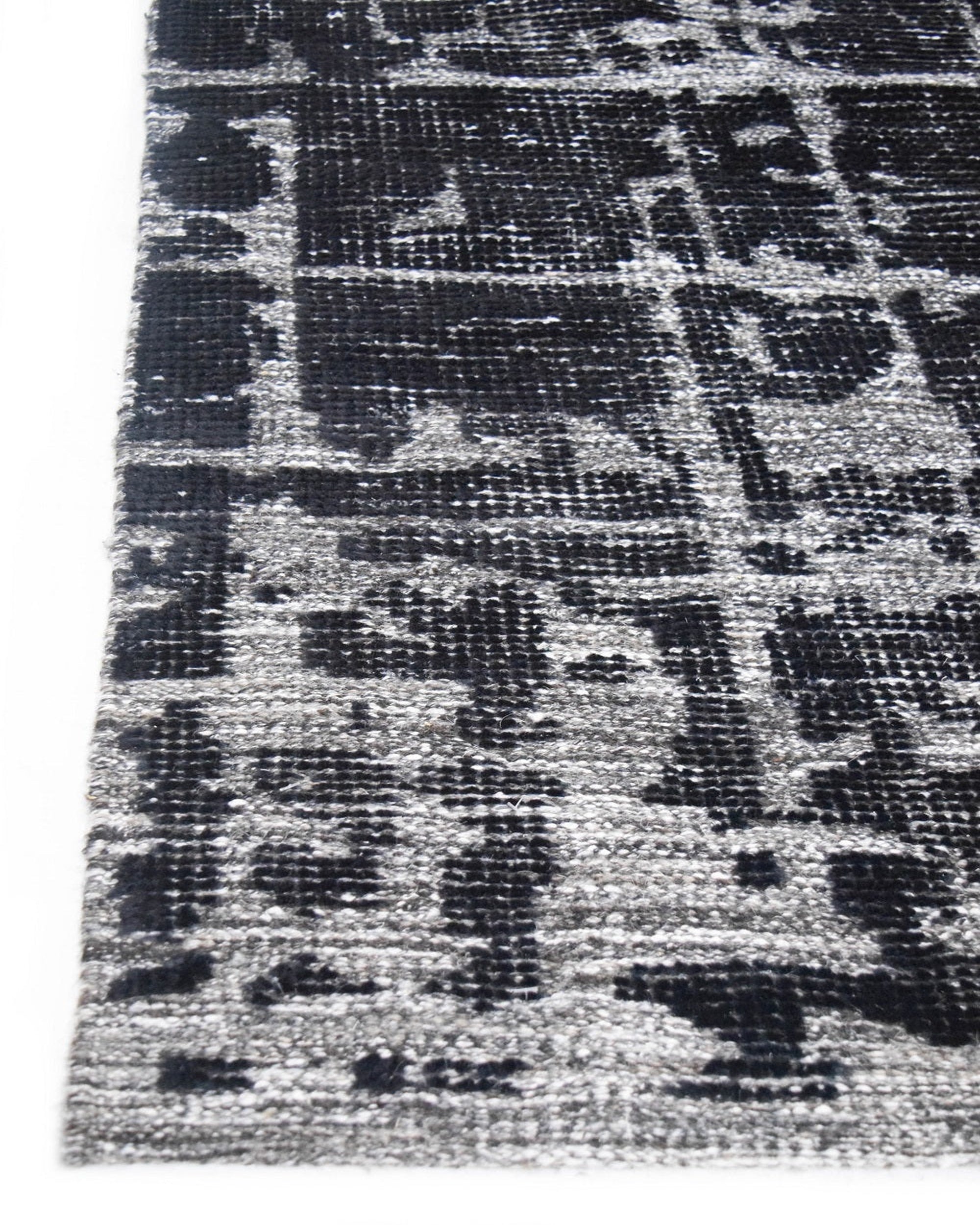
The back of a hand-knotted rug carries the full design, a little softer than the face. Look closely and each knot is a tiny bump, and no two rows sit perfectly level, because a weaver tied each one around a pair of warp threads.

The Ithaca Rug is hand knotted in wool, and its product page describes the feel as dense and fine, the most durable way a rug can be made. If the back of a rug sold as hand knotted is covered with cloth, it is not hand knotted.
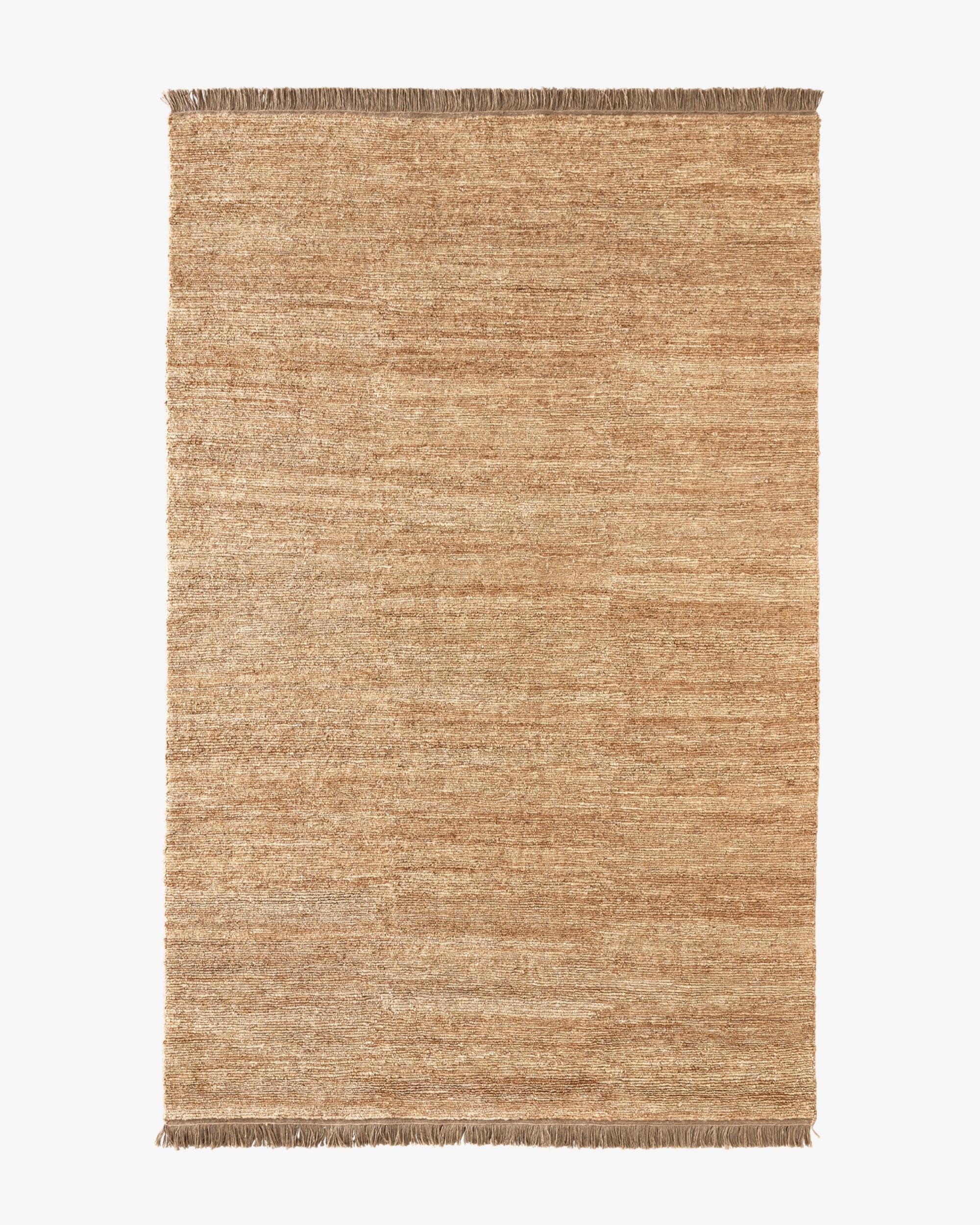
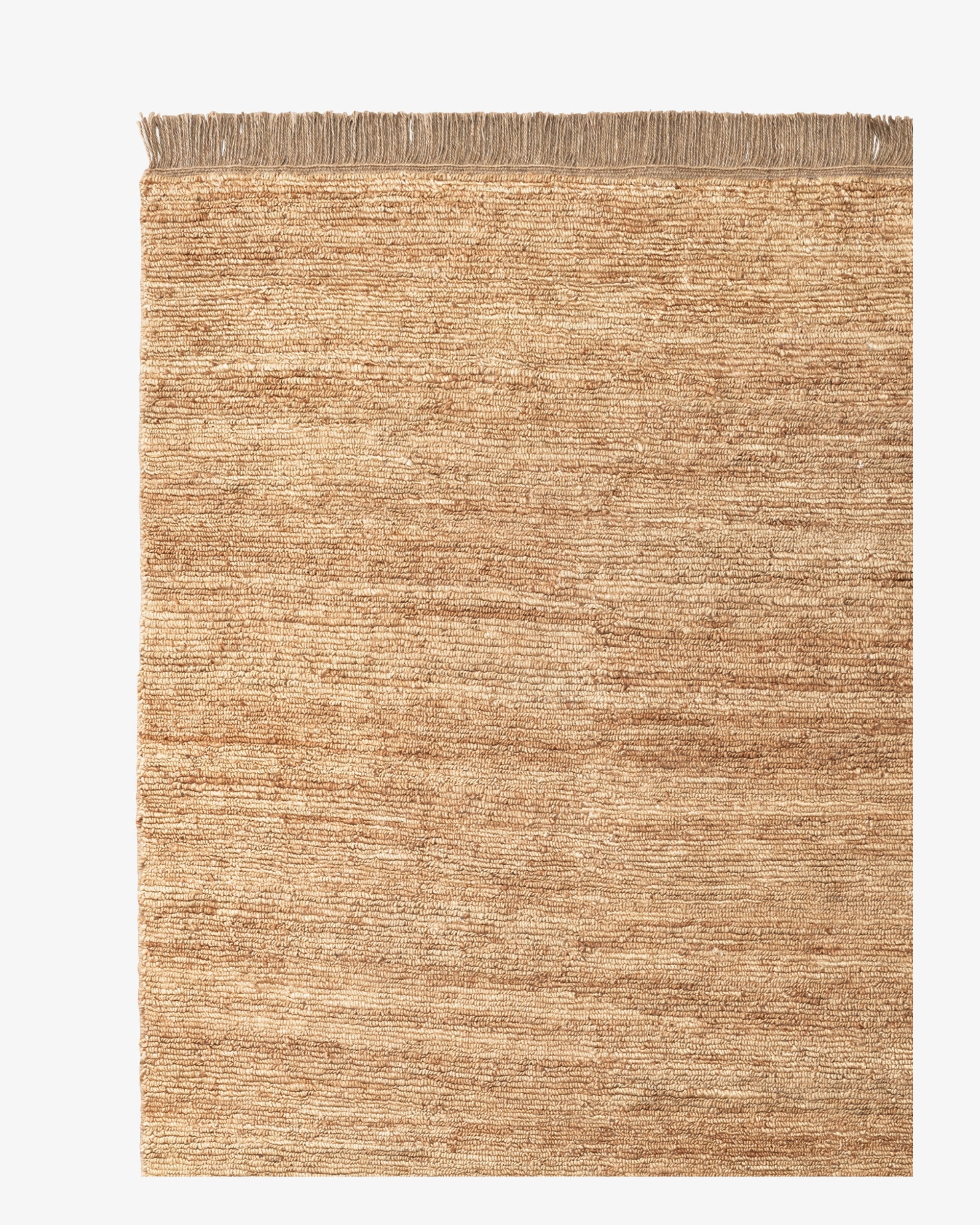
Jute can be knotted too. The Savannah Jute Rug in natural is hand knotted in jute, and its back shows the same knotted structure as a wool piece, only coarser.
How is a handloom rug different underneath?
A handloom rug is woven row by row, with the weaver passing weft across the warp and beating each row down by hand. The back shows the weave clearly, and in a low pile rug it can look almost like the face.


The Grain Wool Rug in russet is handloom woven in New Zealand wool with a low, closely worked surface. On a handloom piece, tiny shifts in tension show up as slightly wavy rows when you sight along the length, which a machine does not produce.
What does the back of a hand-tufted rug tell you?
A hand-tufted rug is made by pushing yarn through a stretched cloth with a hand-held tufting tool, then fixing a backing cloth to the underside. So the back shows plain fabric, not the pattern.

That is not a sign of a lesser rug. Most of the Rugberry range is hand tufted in New Zealand wool or wool and silk, because tufting allows carving, mixed pile heights and fine colour work. The honest test is simple: the product page should say hand tufted, and the back should match.
The back of a rug is its working drawing. It shows how the yarn got there.
Does fringe prove a rug is handmade?
Fringe proves something only when it is part of the rug. On a hand-knotted or handloom rug, the fringe is the end of the warp, the threads the whole rug was built on, so it runs straight into the body without a seam.


Part the fringe at the edge and look. If you see a strip of stitching or tape where the fringe meets the rug, it was sewn on afterwards, which is common on machine made and tufted rugs.
What does the pile tell you?
Crouch at one end and look across the rug toward a window. Handmade pile shows faint variation in height and tone, because yarn was cut, sheared or beaten by people working in sections.

Machine pile reads as one flat, even plane. Run your palm both ways too: a hand-knotted rug often feels smoother in one direction, the direction the knots lean.
Is a machine made rug ever the right choice?
Yes, when the rug is temporary or will take heavy wear for a short time, such as a rented flat you will leave soon. A power loom rug costs less because the machine does the hand time.
For a home you will live in for years, choose a handmade rug in a natural fibre over a machine made one, because it can be cleaned, repaired and lived with far longer. Our guide to the charm of a hand-knotted rug goes deeper into that choice, and the handloom collection shows the woven side of the range.
Frequently asked questions
Are all Rugberry rugs hand knotted?
No. Rugberry makes rugs by hand knotting, handloom weaving, handwoven flatweave and hand tufting. Each product page lists the technique in its Technique field, so you always know which one you are buying.
Is a hand-tufted rug handmade?
A hand-tufted rug is made by a person using a hand-held tufting tool on a framed cloth, then finished with a backing. It is hand worked, but built differently from a hand-knotted rug, and the two should not be confused.
Can a machine made rug have a pattern on the back?
Yes. A power loom rug also shows its pattern on the back, but the grid is perfectly regular and the fringe is usually stitched on. Small irregularities in the knots are what mark a hand-knotted rug.
What is the quickest test in a store?
Fold a corner and look at the underside. If the pattern is visible and slightly uneven, it is likely hand knotted; if it is covered with cloth, it is tufted; if it is rigidly even, it is machine made.
Look at the back first. Material first.




Leave a comment
This site is protected by hCaptcha and the hCaptcha Privacy Policy and Terms of Service apply.