

How Many Rugs Does a Home Need
A home needs as many rugs as it has places where people sit, gather or step out barefoot, and no more. For many Indian 2BHK flats that works out to two to four rugs, and for a 4BHK it is often five to eight, but the room plan matters more than the count.
In short
- There is no fixed number of rugs a home must have: plan one rug for each zone where people sit, gather or walk barefoot.
- The living room rug comes first, followed by the main bedroom, then the dining area and any entrance that collects grit.
- Rugs in different rooms relate best when they share a fibre family or a colour temperature, rather than matching exactly.
- Rugberry makes most rugs in six stock sizes from 5x8 to 12x15 ft, so one design or fibre can be repeated in different sizes across a home.
How many rugs does an Indian home need?
Count the zones, not the rooms. A living room with a sofa group and a separate dining table has two zones, while a bedroom has one, and a passage may have none that needs a rug.

Then remove the zones where a rug causes trouble: kitchens, bathroom doorways and wet balconies. What remains is your number, and it may be smaller than you expected.
Our rug placement guide shows how to position each one once you know where they go.
Which rooms should get a rug first?
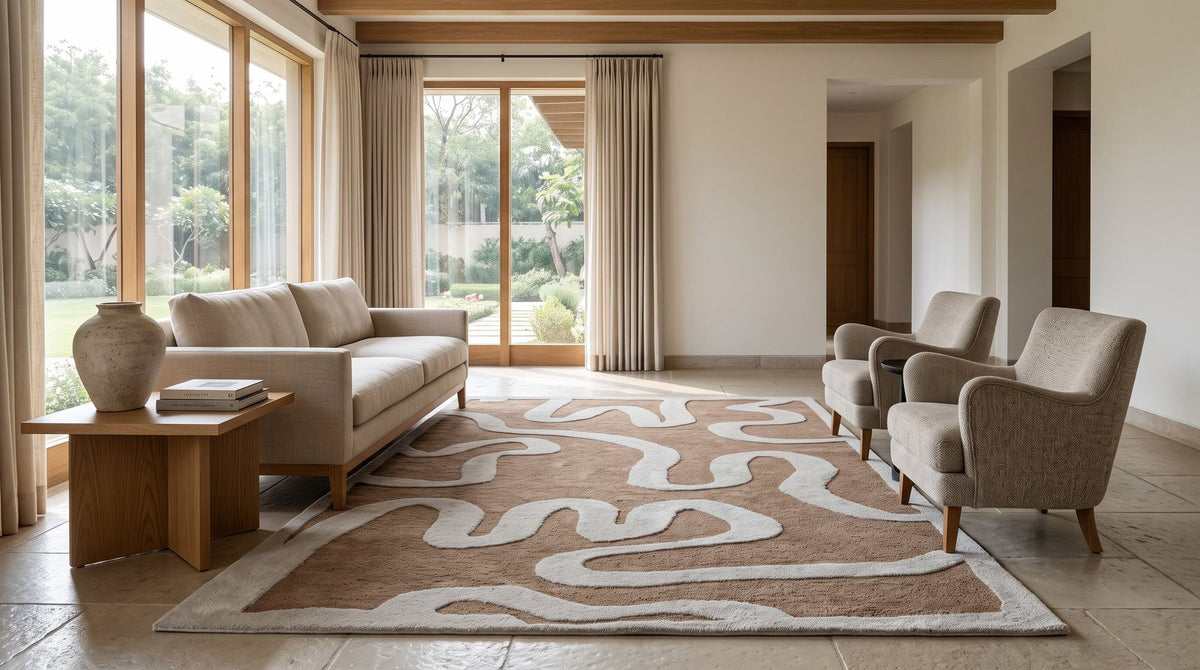
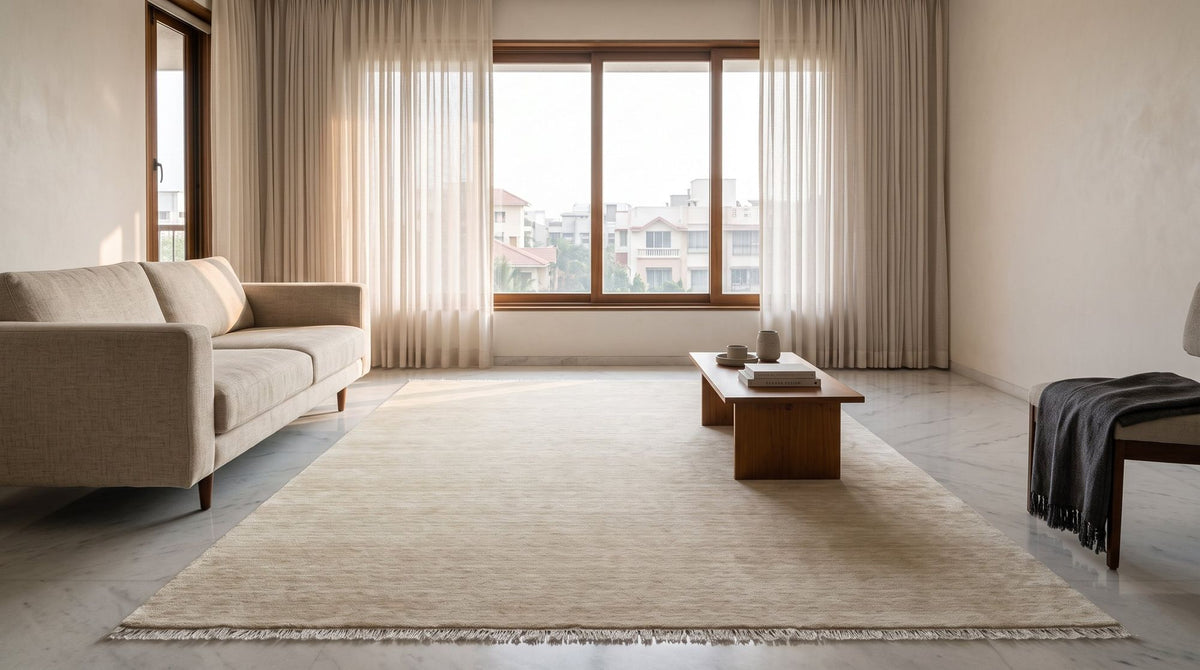
Start with the living room, because it is seen by every guest and used by the whole family. A good living room rug pulls a sofa set together and stops the room echoing on marble or tile.

Next comes the main bedroom, where the first step of the day is barefoot. The dining area follows if the table sits on stone that chairs scrape, and the entrance last, if shoes come off there and grit travels in.
Count the places where people sit and walk barefoot. That is the number of rugs a home needs.
What does a rug plan look like for a 2BHK?
A typical 2BHK of about 900 to 1,100 sq ft has a living and dining space, two bedrooms and a small entrance. A practical plan uses three rugs and keeps them in one fibre family.


| Zone | Suggested size | Example |
|---|---|---|
| Living area | 6x9 or 8x10 ft | Congrand Wool Rug, hand tufted |
| Main bedroom | 5x8 ft beside the bed | Grain Wool Rug in sage, handloom |
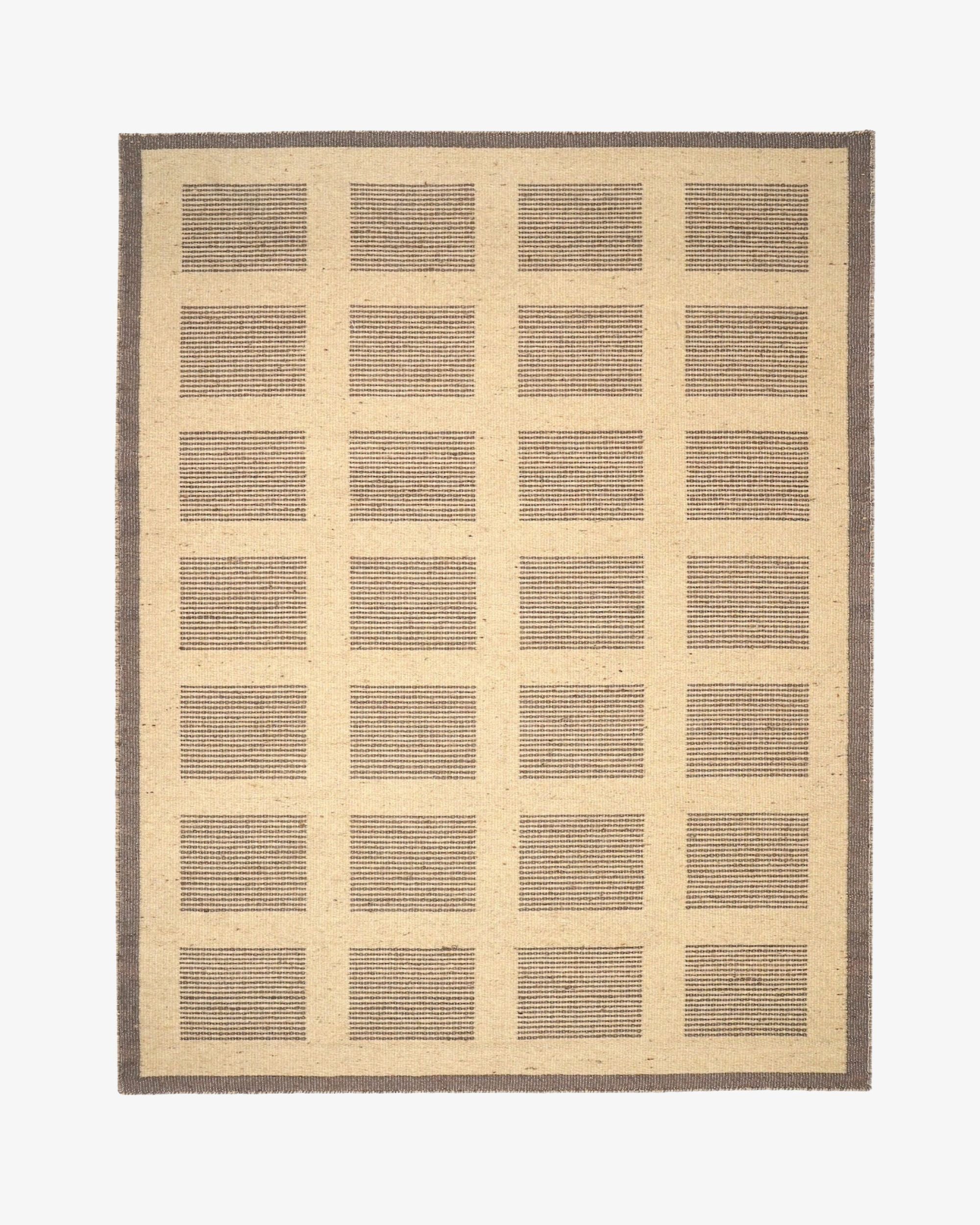
| Entrance or study | 5x8 ft | Kora Jute Rug, handwoven |
Keeping all three in wool and jute means one care routine for the whole flat: a weekly vacuum, a dry floor underneath and quick blotting of spills. Rugberry makes each of these designs in several sizes, so the plan can grow if you move to a larger home.
The second bedroom can wait. Live in the flat for a few months, then decide if a rug would help or simply add cleaning.
What does a rug plan look like for a 4BHK?
A 4BHK of 2,000 sq ft or more usually has a formal living room, a family lounge, a dining room and four bedrooms. Here the plan grows to five to eight rugs, and larger sizes come in.

- Formal living room: 9x12 or 10x14 ft, so all front sofa legs sit on the rug.
- Family lounge: 8x10 ft in a hard-wearing wool.
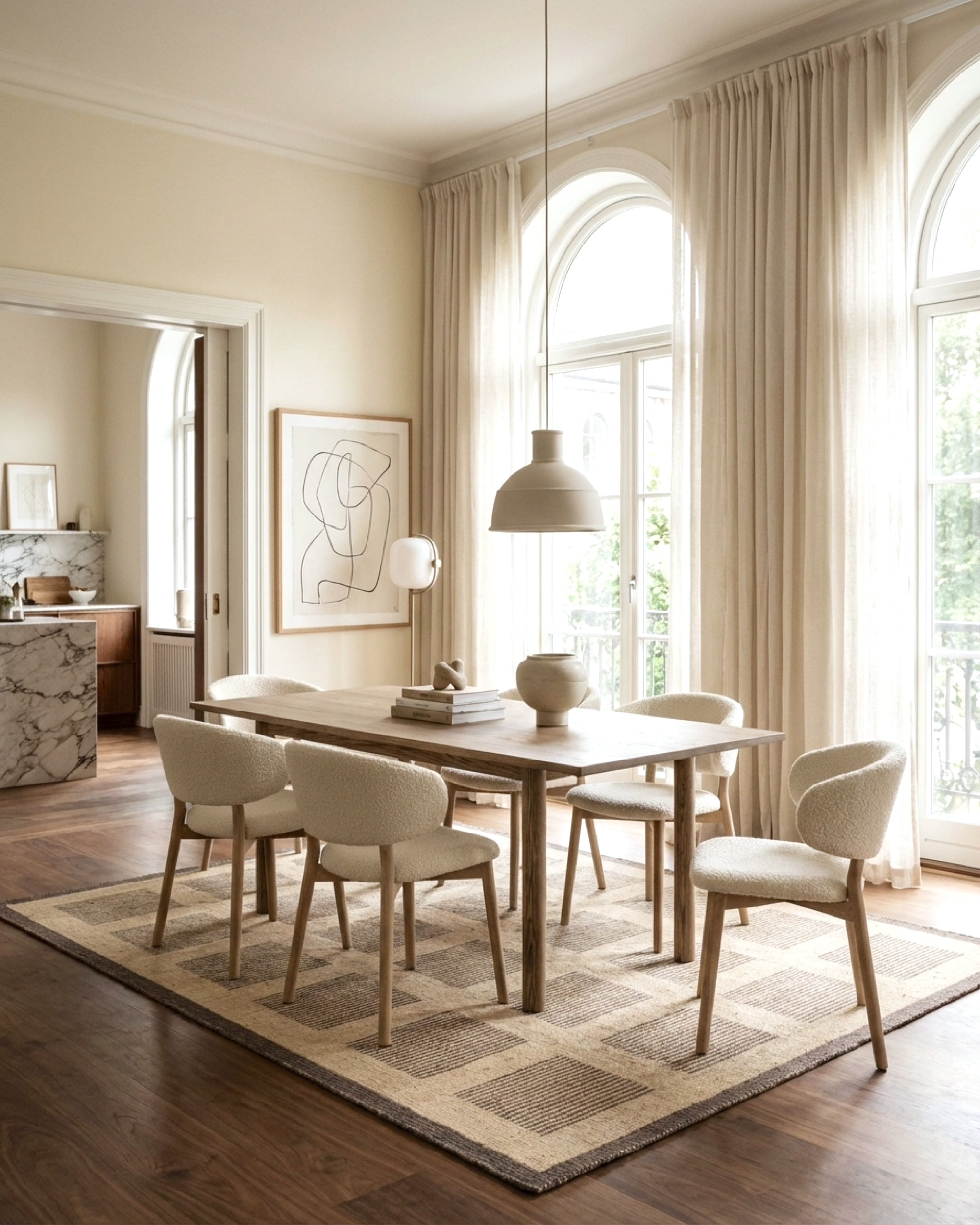
- Dining room: a low surface large enough for pulled out chairs, often 8x10 or 9x12 ft.
- Bedrooms: 5x8 or 6x9 ft, or two runners either side of the bed.
- Entrance: a firm jute or wool and jute rug.
The Congrand Wool Rug is hand tufted in New Zealand wool on a generous scale and is made in all six stock sizes up to 12x15 ft, which suits a formal living room.
How do rugs in different rooms relate to each other?
They relate through fibre and tone, not by matching. If you can see two rugs at once, for example living and dining in one open space, keep them in the same colour temperature, both warm or both cool.


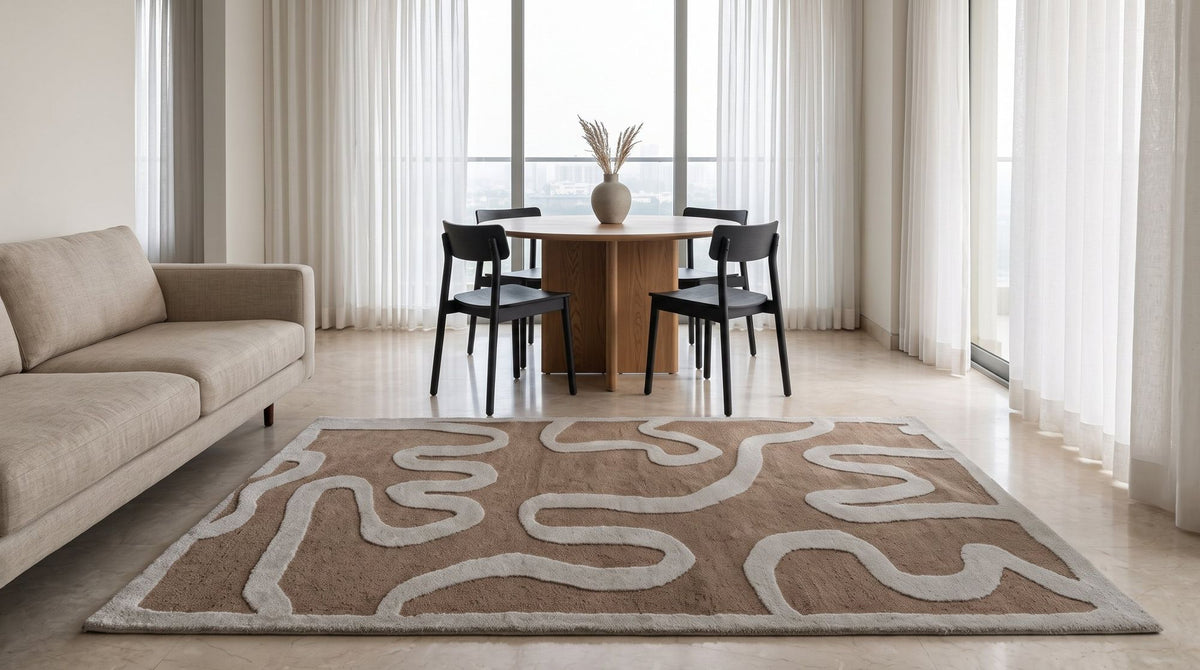
Fibre is the quieter link. Wool rugs throughout a home, from the camel and ivory of Congrand to the soft green of the Grain Wool Rug in sage, share a matte, soft look even in different colours.
Use jute or wool and jute where the home meets the outside, such as the entrance, and keep finer fibres for rooms where people sit. That progression feels natural as you walk through.
Where should a home not have a rug?
Skip rugs where water, heat or oil meet the floor. Kitchens, bathroom thresholds and open balconies in the monsoon all shorten a rug's life.
Leave out rugs on stairs and narrow passages where an older family member walks at night, unless the rug lies completely flat and is fixed with a pad. Safety comes before warmth.
A pooja room is a personal choice. Many families keep the floor bare and use a small mat or asan, which is easier to keep clean than a full Rugberry rug near lamps and flowers.
Frequently asked questions
Should every bedroom have a rug?
Not necessarily. A guest room that is used a few nights a year can do without one, while a main bedroom and a child's room benefit most because they are used barefoot daily.
Should all the rugs in a home match?
No. Rugs look better when they relate through fibre or colour temperature rather than matching exactly. Matching rugs in an open plan can make a space look flat.
Is it better to buy all the rugs at once?
Buying the living room and main bedroom rugs first is usually enough. Living in the home for a while shows where the remaining rugs are truly needed.
Plan by how the home is lived in, then let the customisable rugs fill the odd sizes. Material first.



Leave a comment
This site is protected by hCaptcha and the hCaptcha Privacy Policy and Terms of Service apply.