


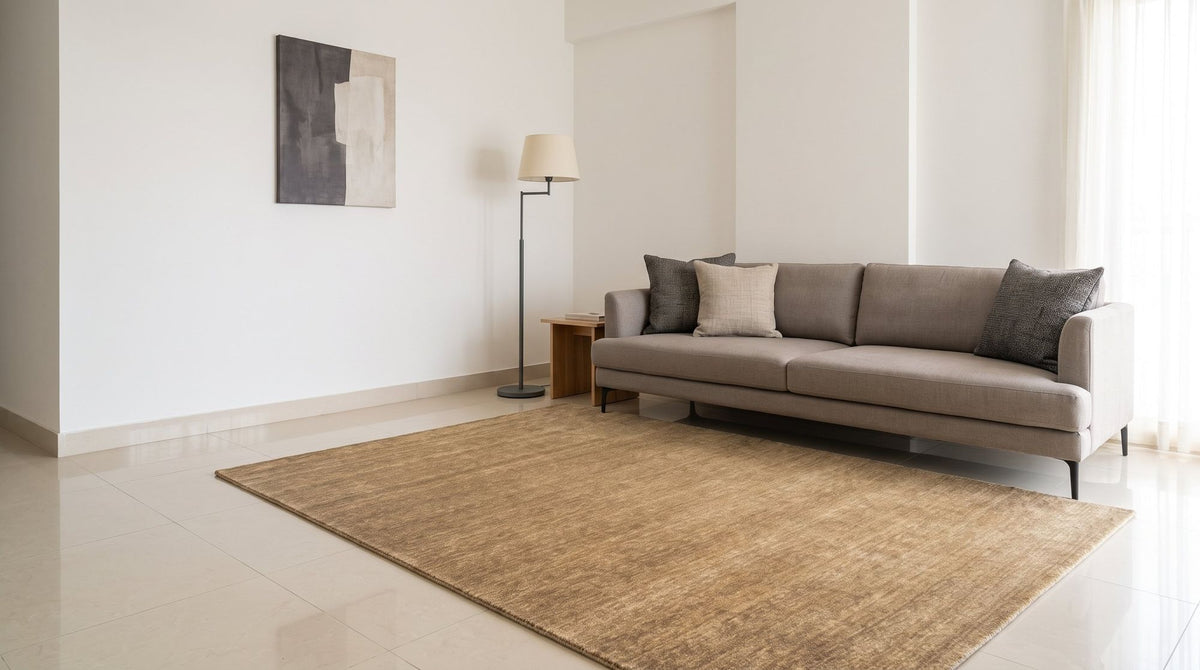
How to Measure a Room for a Rug
To measure for a rug, measure the area your furniture occupies plus the walkway around it, not the room from wall to wall. Then mark that outline on the floor with masking tape, live with it for a day, and read the rug size off the tape.
In short
- The size of a rug is set by the furniture group it holds, so measure the seating or the bed plus 45 to 60 cm of floor around it, not the full room.
- In Indian homes, measure from the face of the skirting rather than the wall, because marble or tile skirting usually takes 1 to 2 cm off every side of the room.
- A door that opens into the room sweeps an arc as wide as the door leaf, and a rug edge inside that arc will catch the door unless the gap under it is taller than the rug.
- Rugberry stocks most designs in six sizes from 5x8 ft (150x240 cm) to 12x15 ft (360x450 cm), and customisable designs are made to any size, so a taped outline converts directly into an order.
The method below takes about an hour with two people, a steel tape and a roll of masking tape. It works for a living room, a bedroom or a dining room, and it gives you numbers in both feet and centimetres.
What do you need before you measure?
You need a 5 m steel tape, a roll of 24 mm masking tape, a pencil, a sheet of paper and a second person. A cloth tailoring tape stretches and sags, so it is not accurate enough over 3 m.


Clear the floor of loose items such as poufs, baskets and floor cushions, but leave the large furniture where it lives. You are measuring the room as it is used, not as it looks empty.
Work in centimetres on the tape, even if you think in feet. Centimetres avoid the fractions of an inch that cause most errors, and every Rugberry product page lists its sizes in both units.
How do you measure the room itself?
Start with a rough sketch of the room on paper, then measure each wall at floor level and write the number on the sketch. Measure from the face of the skirting, because that is where a rug will actually stop.

- Measure all four walls at floor level. Opposite walls in Indian apartments often differ by 2 to 5 cm, so write down each one rather than assuming they match.
- Measure both diagonals. If the two corner to corner figures differ by more than about 3 cm, the room is out of square, and a rug laid against one wall will drift away from the other.
- Mark every opening. Doors, French windows, balcony sliders and a pooja unit all go on the sketch, with their width and which way they open.
- Mark anything fixed. Built in wardrobes, a TV console fixed to the wall, a floor bed or a platform diwan cannot move, so the rug must work around them.
How do you find the rug area inside the room?
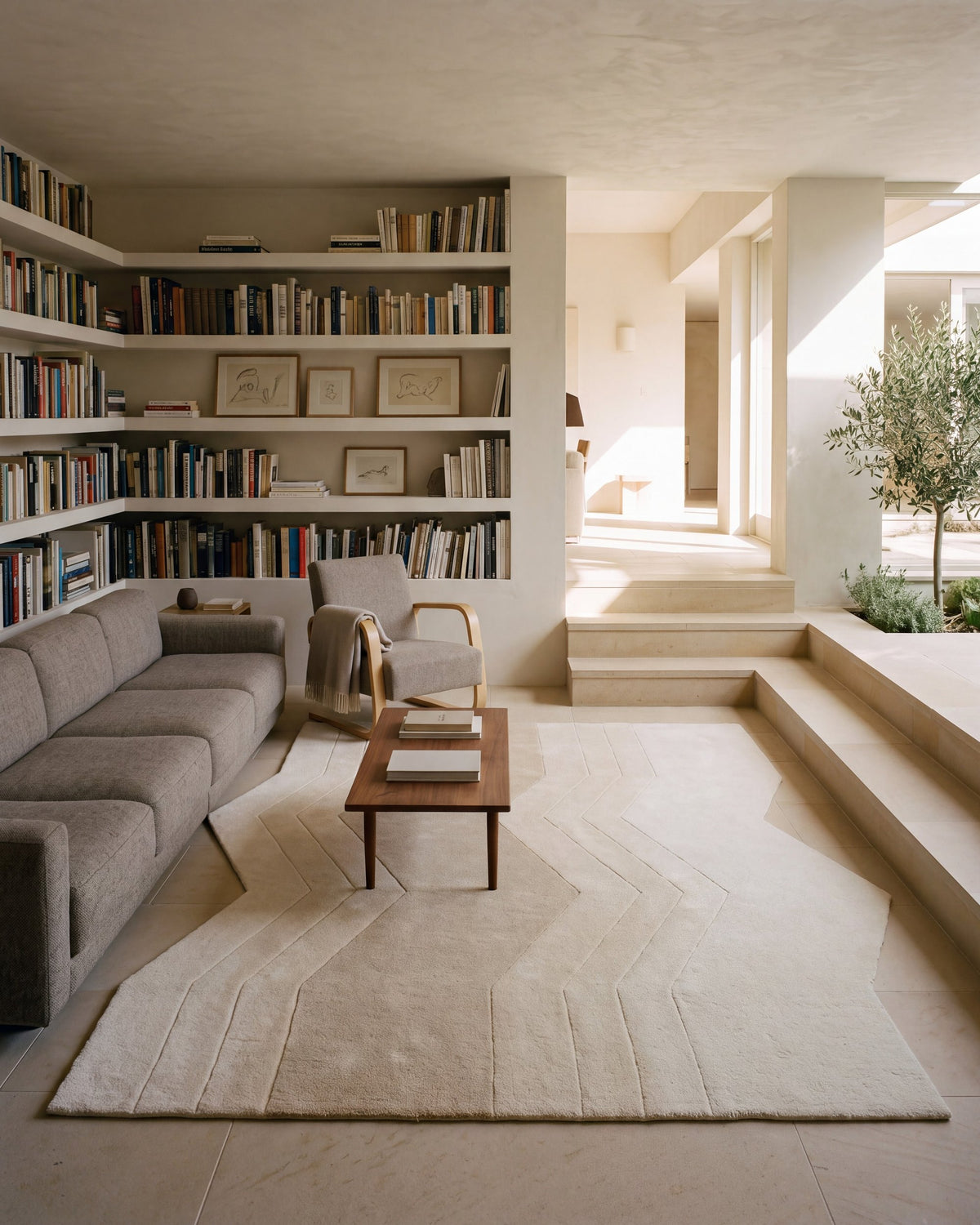
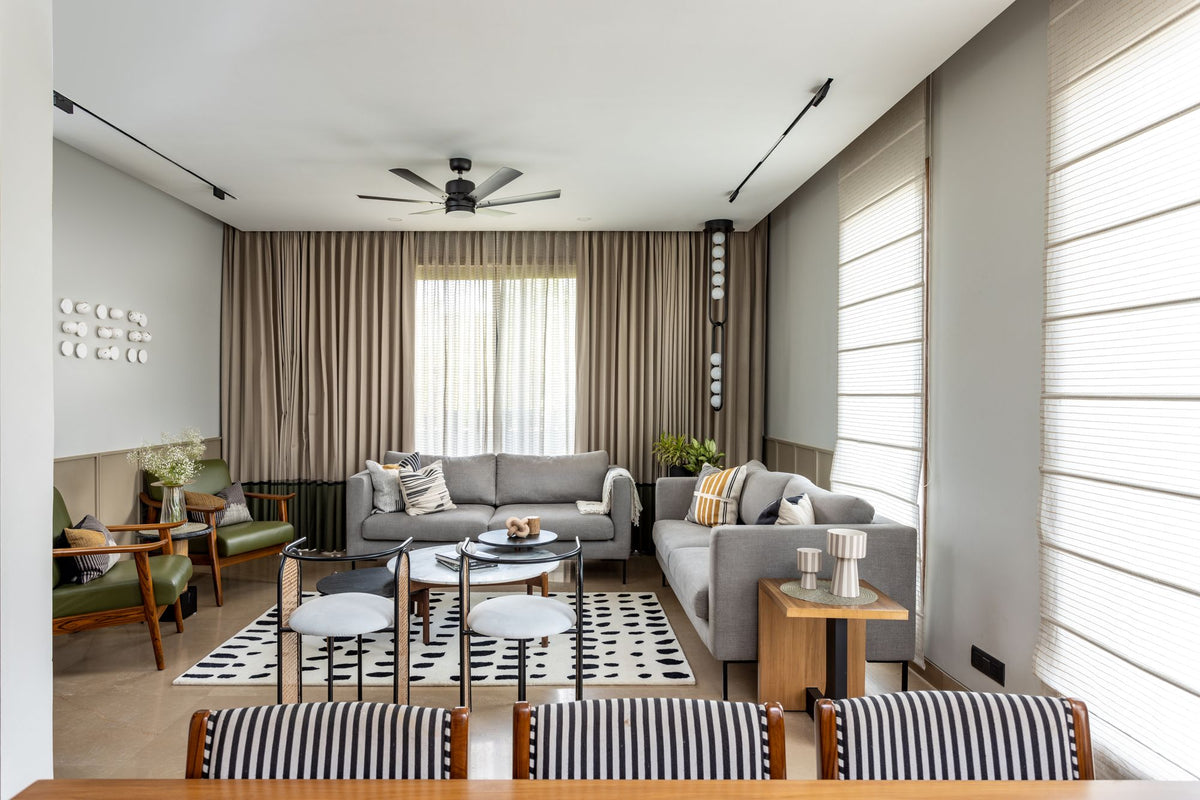
Find the rug area by measuring the furniture group, then adding the floor you want the rug to cover around it. In a living room, the rug should usually reach at least under the front legs of the sofa and every chair.

Measure from the back of the front legs on one side of the seating to the same point on the other side. Add 20 to 30 cm so the legs sit fully on the rug rather than on its edge.
| Room | What to measure | What to add |
|---|---|---|
| Living room | Front legs of sofa to front legs of facing chairs | 20 to 30 cm beyond the legs on each side |
| Bedroom | Width of the bed frame | 45 to 60 cm on each side for bare feet |
| Dining room | Table length and width | About 75 cm on every side where chairs pull out |
| Study or reading corner | Chair, side table and lamp as one group | 30 cm beyond the group |
Our rug placement guide explains the layouts these numbers come from, and the post on how much floor to leave around a rug covers the gap to the walls.
How do doors, skirting and floor beds change the measurement?
Doors, skirting and low furniture are the three things a wall to wall measurement misses, and each one can make a correctly sized rug fail in the room.
Door swings
A door that opens into the room sweeps an arc as wide as the door leaf, usually 75 to 90 cm. Most interior doors clear the floor by less than the height of a cut pile rug, so keep the rug edge outside that arc or plan to trim the door.
Skirting and thresholds
Marble and tile skirting stands 1 to 2 cm proud of the wall, and a raised threshold at a balcony door can be 2 cm higher again. Measure from the skirting face and stop the rug short of any threshold rather than letting it ride up.
Floor beds and diwans
A floor bed, a low diwan or a mattress on a platform sits too low for a rug to slide under it. Either stop the rug 10 to 15 cm short of the platform or measure for a rug that runs fully beneath it, never halfway.
Tape the outline, then live with it for a full day before you trust any number.
How do you test the size before you order?
Test the size by taping the rug's outline on the floor and using the room normally for a day. Masking tape lifts cleanly from marble, vitrified tile and sealed wood.
- Open every door that swings into the taped area and check it clears.
- Pull out each dining chair or walk round the bed and see whether your feet stay inside the tape.
- Look at the outline from the doorway, since that is where most visitors first see the room.
- Photograph the taped outline from a corner with the steel tape laid along one edge.
If the outline feels too small, move the tape out by 15 cm on every side and look again. Small changes on the floor are easier to judge than numbers on paper.
How do you turn the taped outline into a rug size?
Read the length and width of the tape in centimetres, then compare them with the nearest Rugberry stock size. If a stock size sits within about 15 cm of your outline on each side, it will usually look right.


The Grain Wool Rug in Tan, a handloom New Zealand wool rug from about ₹37,000, and the hand tufted Cadence Wool Rug from about ₹40,000 both come in all six stock sizes. The Plush Wool Rug in Copper, with its deeper handloom pile, does too.
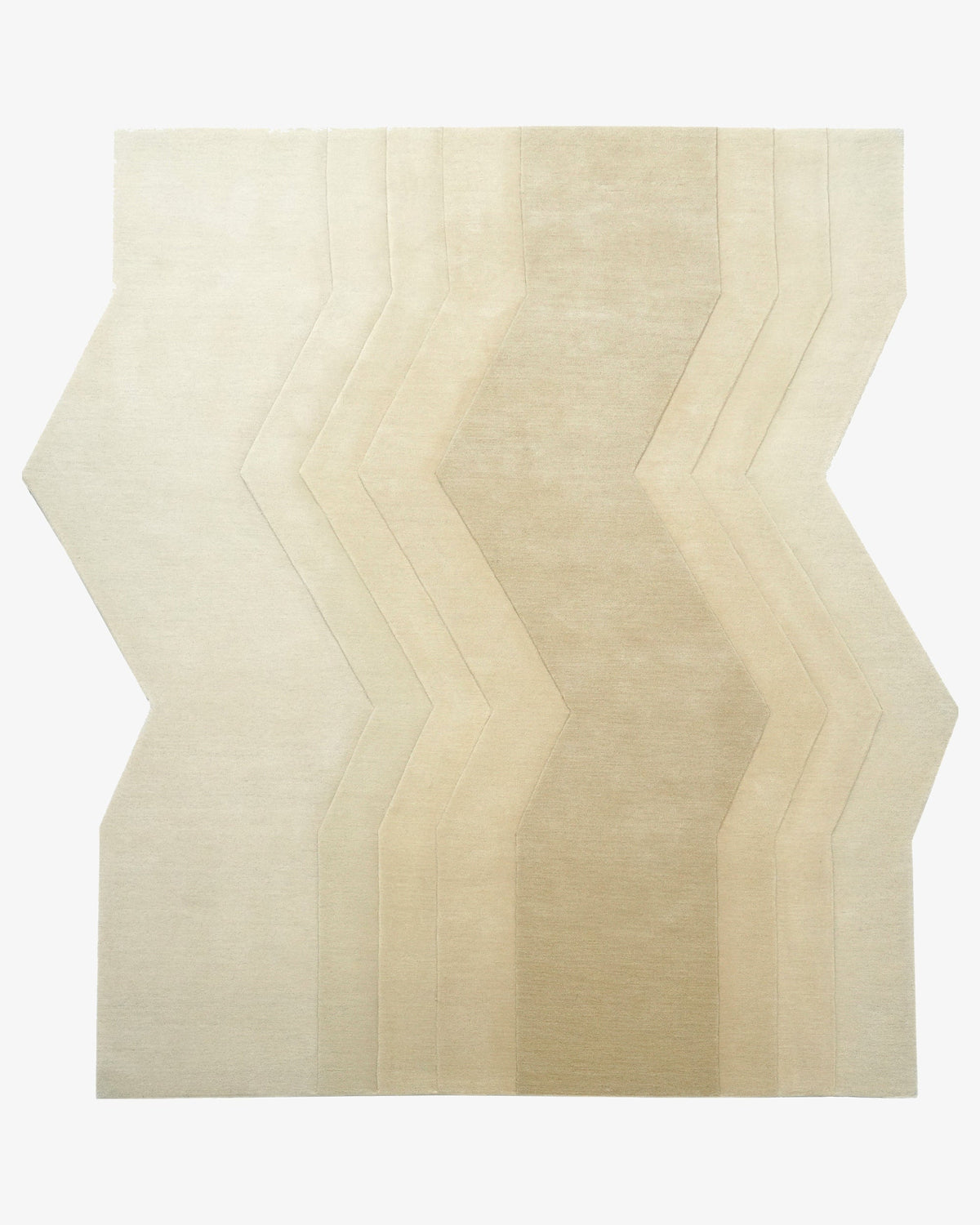
When your outline falls between two stock sizes, the customisable rugs collection takes a size in centimetres. Send the finished length and width, the photo of the tape and the design you have chosen, and Rugberry works from those numbers.
Frequently asked questions
Should I measure for a rug in feet or centimetres?
Measure in centimetres, because a steel tape reads more precisely in cm and there are no fractions to convert. Rugberry lists every size in both units, so you can compare directly with the product page.
What if my room is not square?
Measure both diagonals and align the rug with the furniture group rather than with one wall. A rug that sits square to the sofa looks right even when the walls are a few centimetres out.
Can I measure the old rug I already have instead?
Only if it already looked right in the room. An old rug is a useful reference for what feels too small, but measure the furniture zone as well before choosing a new size.
Do I include the skirting in the room size?
No. Measure from the face of the skirting, since the rug stops there, and marble or tile skirting can take 1 to 2 cm off each wall.
Measure the furniture, tape the floor, then choose. Material first.





Leave a comment
This site is protected by hCaptcha and the hCaptcha Privacy Policy and Terms of Service apply.