

Japandi Rugs: Texture Over Pattern
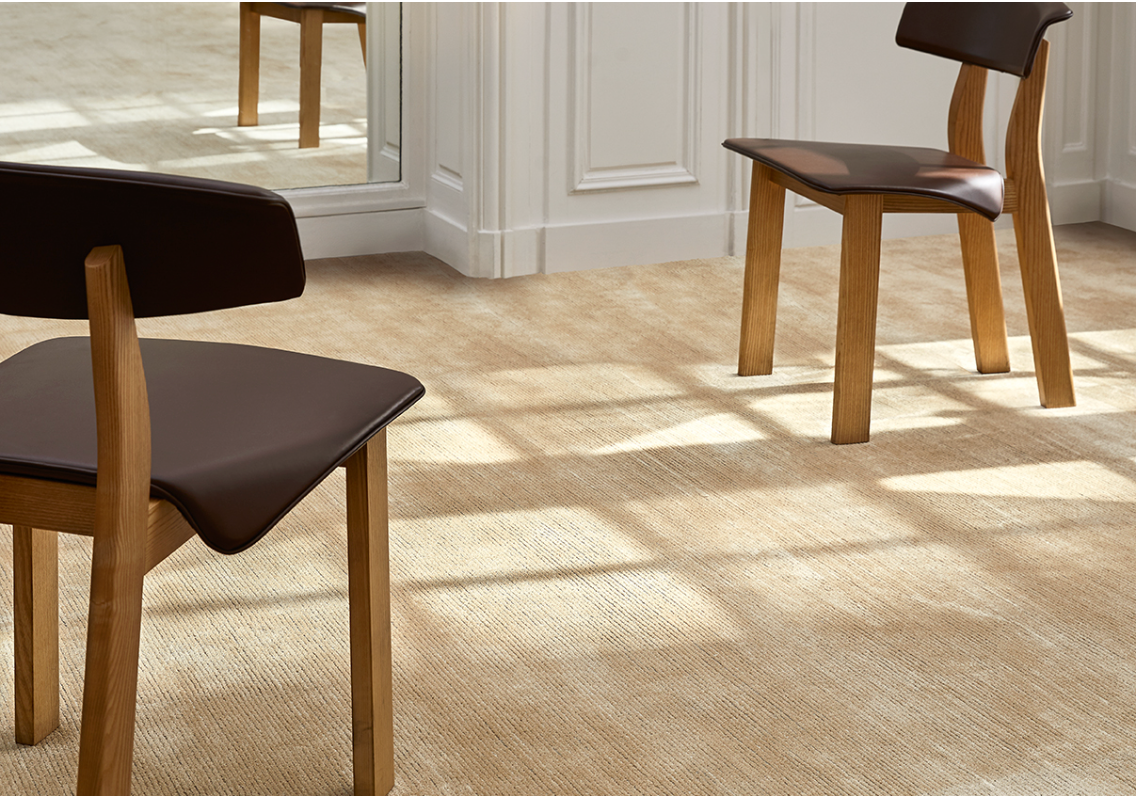
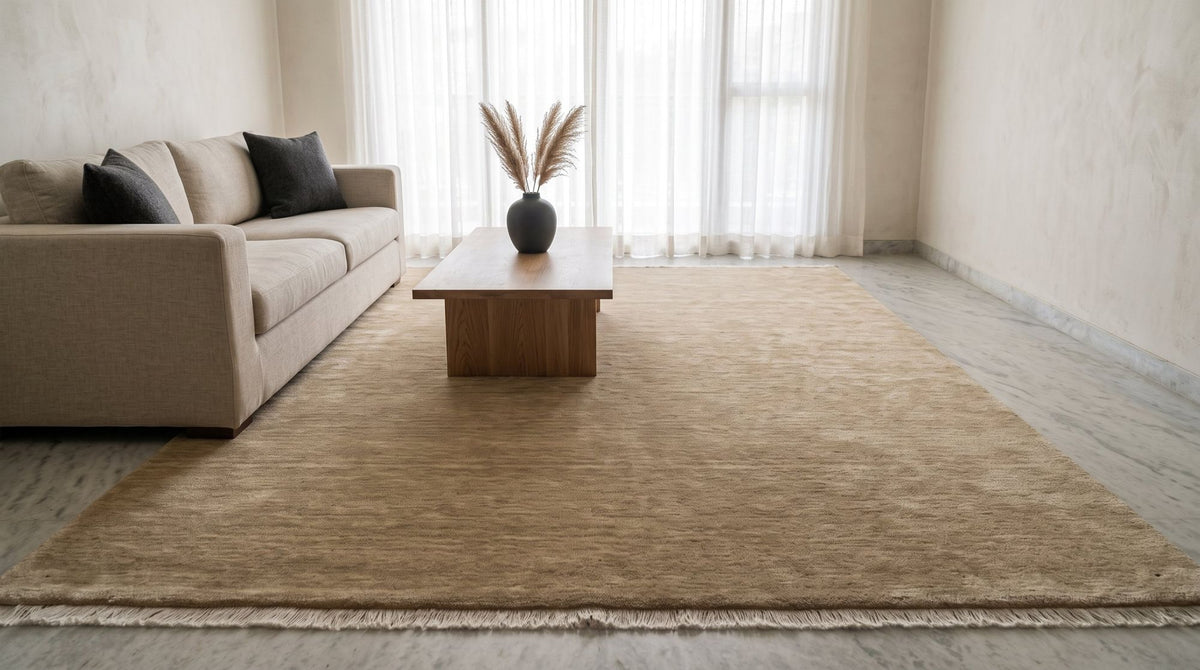
A Japandi rug is chosen for texture before colour: a visible weave, a plant fibre or a muted wool that sits easily beside pale wood and linen. Pattern, if any, stays quiet and low in contrast.
In short
- Japandi is a design style that blends a pared-back Japanese sensibility with Scandinavian warmth, and its rugs rely on texture and natural tones rather than pattern.
- For a Japandi room, Rugberry suggests the Grain Wool Rug in flax from about ₹37,000, the Kora Jute Rug from about ₹28,000 and the Eucalyptus Wool Rug from about ₹37,000, all in 5x8 ft.
- Jute suits dry, low-traffic Japandi corners, while handloom wool suits rooms where people sit on the floor.
- Japandi furniture sits low, so a Japandi rug should be large enough for floor cushions and a low table to sit fully on it.
What does a Japandi room ask of a rug?
A Japandi room asks the rug for warmth and texture without drawing the eye away from the wood and the light. The style is a design idea, not a product origin, and it works well in Indian apartments that already have teak, cane and plenty of daylight.


Rugberry rugs for this look are made by hand in our own workshops, not in Japan or Scandinavia. What they share with the style is restraint: plain grounds, visible fibre and earth tones.
The closest cousin to this post is our piece on minimalist decorating. Japandi adds more warmth and more wood to that idea.
Which fibres suit a Japandi rug?
Handloom wool and jute suit a Japandi rug best, because both show their structure. A muted hand-tufted wool works where a softer pile is needed.


Handloom wool
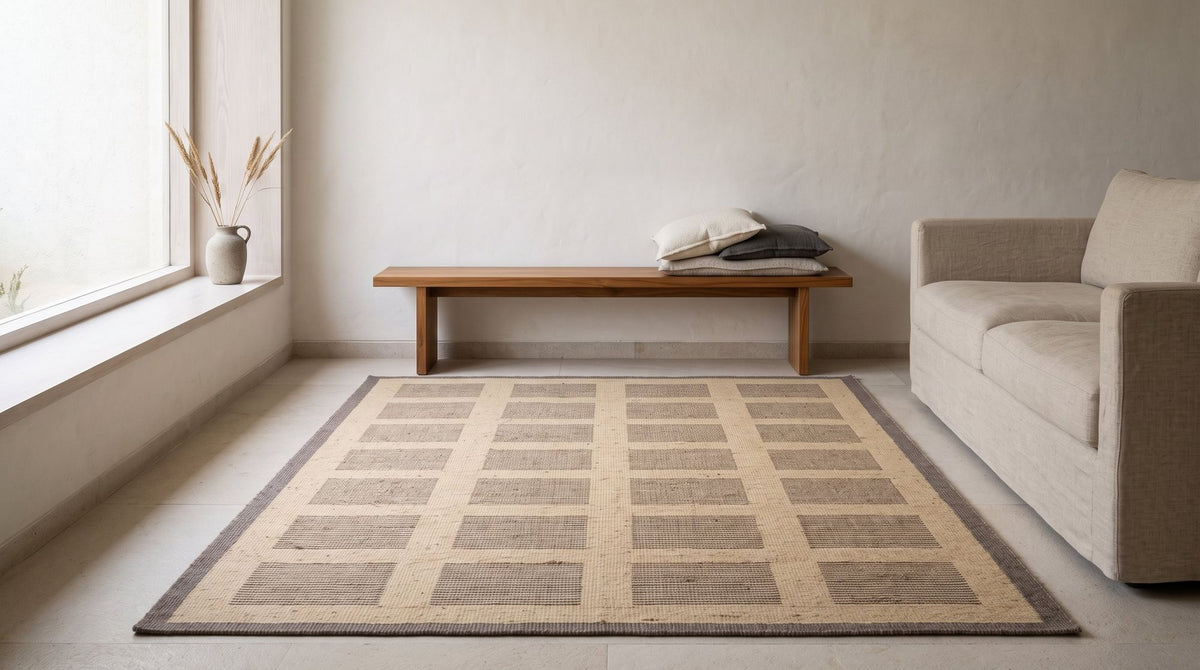
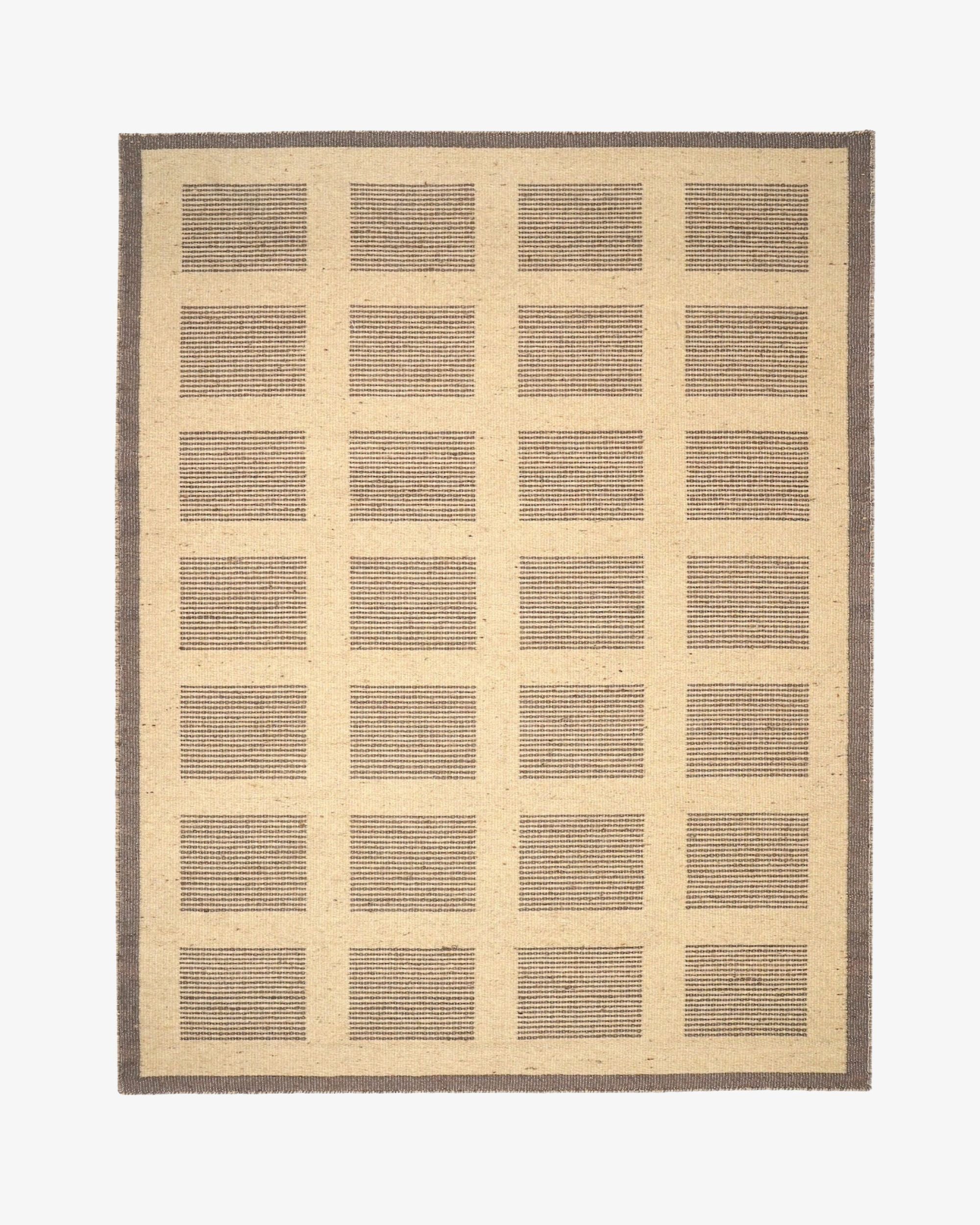
The Grain Wool Rug in flax is handloom woven in New Zealand wool with a low, closely worked surface. The flax tone sits between oatmeal and pale sand, so it rarely fights with light oak or ash.
Jute
The Kora Jute Rug is handwoven in jute, firm and textured with the irregularity of the fibre. It comes in 5x8, 6x9 and 8x10 ft, and any size to order. Read more on jute in the glossary.
Muted hand-tufted wool
The Eucalyptus Wool Rug is hand tufted in New Zealand wool in a muted green, soft and slightly grey, described as easy against wood and stone. It brings one plant tone into an otherwise neutral room.
Jute or wool for a Japandi living room?
For a Japandi living room where people sit on the floor, choose handloom wool over jute, because wool is softer on knees and ankles. Choose jute where the rug is mostly walked on, such as under a bench or across an entrance.

Jute is firm and dislikes damp, so keep it away from balcony doors during the monsoon in Mumbai or Kochi. Wool handles humidity better and springs back after being sat on.
If you want both, layer a smaller wool rug over a larger jute one. Keep the top rug at least 1 ft smaller on every side so the jute frames it.
Japandi is a design idea, not an origin. What the rug shares with it is restraint.
How large should a rug be for low Japandi furniture?
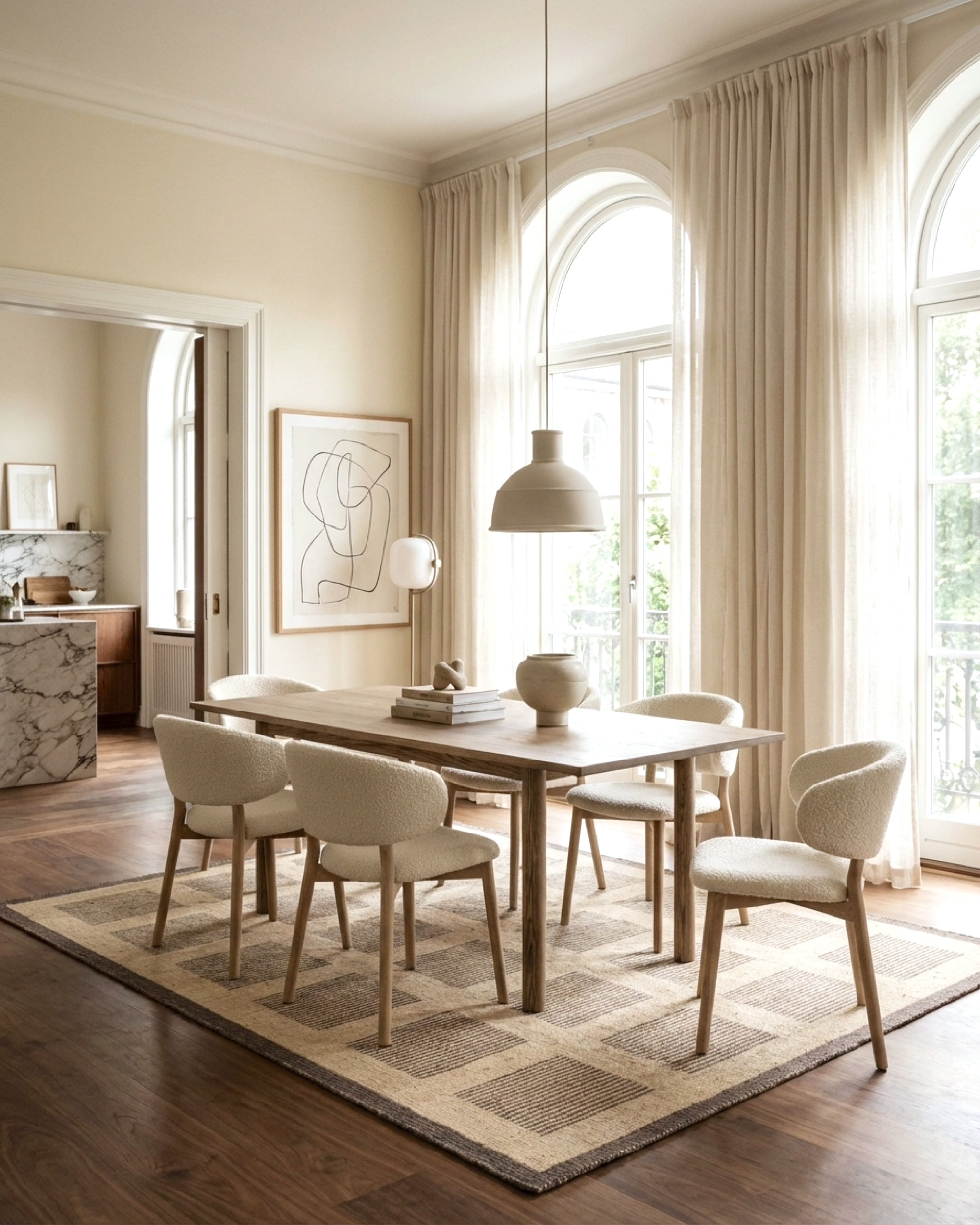
A rug for low Japandi furniture should hold the whole seating group, so floor cushions and the low table sit fully on it. In practice that is usually 6x9 ft for a small reading corner and 8x10 ft for a full living area.


Low seating puts your eye closer to the floor, so a rug edge cutting under a cushion is far more visible than under a raised sofa. Allow 1 to 1.5 ft of rug beyond the outer edge of every cushion.
For a tatami-style bed on a low platform in a Hyderabad flat, a 6x9 ft rug laid crosswise leaves a strip of rug on both sides of the bed for bare feet.
Which tones keep a Japandi rug calm?
Earth tones keep a Japandi rug calm: flax, sand, warm grey and a muted green, kept within two or three shades of the floor and the wood. Strong contrast between rug and floor breaks the quiet the style depends on.

- On pale marble or white tiles, a flax or sand rug adds warmth without darkening the room.
- On teak or walnut floors, a lighter rug stops the floor reading as one dark slab.
- For one accent, use a muted green such as Eucalyptus rather than a strong colour.
How do you care for a Japandi rug in an Indian home?
Care for a Japandi rug by vacuuming on suction only, keeping jute dry and turning the rug every few months. Floor-level living means more crumbs and more contact, so a short daily sweep around the low table helps.

For jute, blot spills at once and dry the spot with a fan, because water can mark the fibre. For wool, blot from the edge inward and let it air dry.
More Japandi-friendly plain rugs are gathered in the jute rugs and textures collections at Rugberry.
Frequently asked questions
Are Japandi rugs always beige?
No. Japandi rooms often use flax, sand and warm grey, but a muted green or a soft brown also fits. The rule is low contrast and visible texture rather than one fixed colour.
Is jute comfortable to sit on?
Jute is firm and textured, so it is better walked on than sat on for long. For floor seating, a handloom wool rug such as the Grain Wool Rug is kinder to the body.
Can a Japandi rug have a pattern?
It can, if the pattern is low in contrast and close in tone to the ground. A quiet weave or fine line pattern sits well, while bold motifs pull the eye away from the wood and light.
Let the weave speak and the wood answer. Material first.






Leave a comment
This site is protected by hCaptcha and the hCaptcha Privacy Policy and Terms of Service apply.