

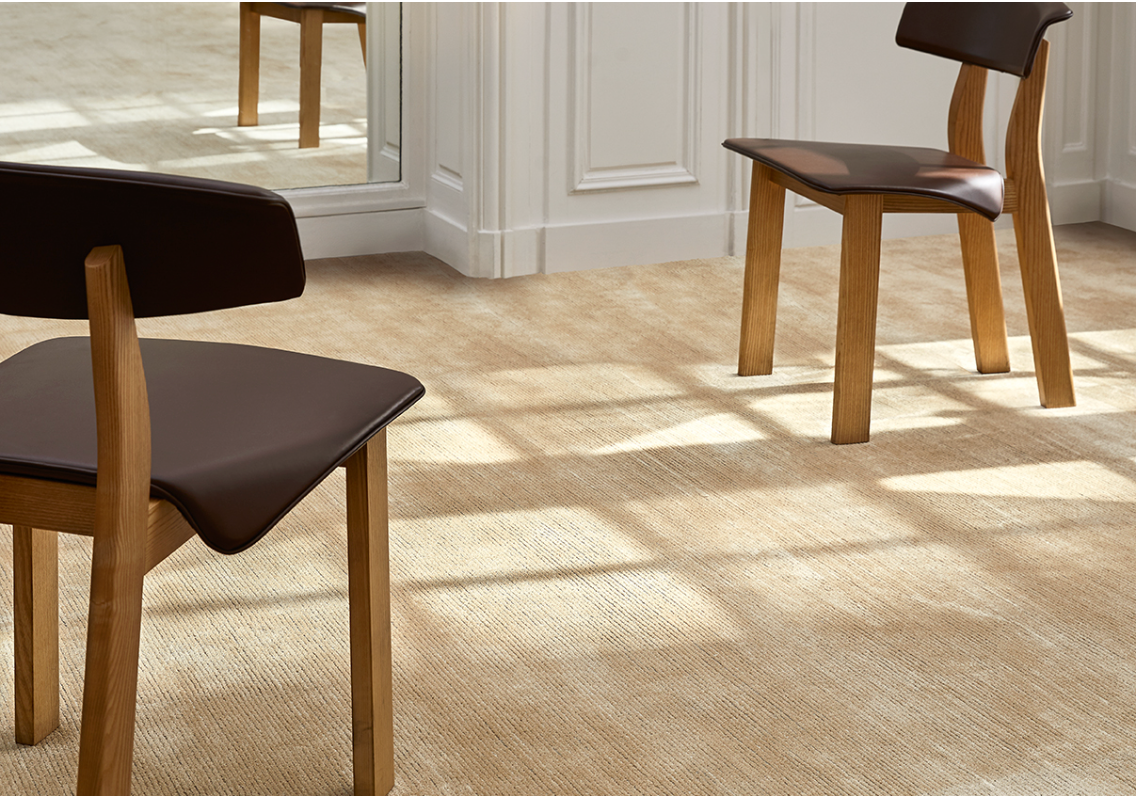
Rugberry Journal
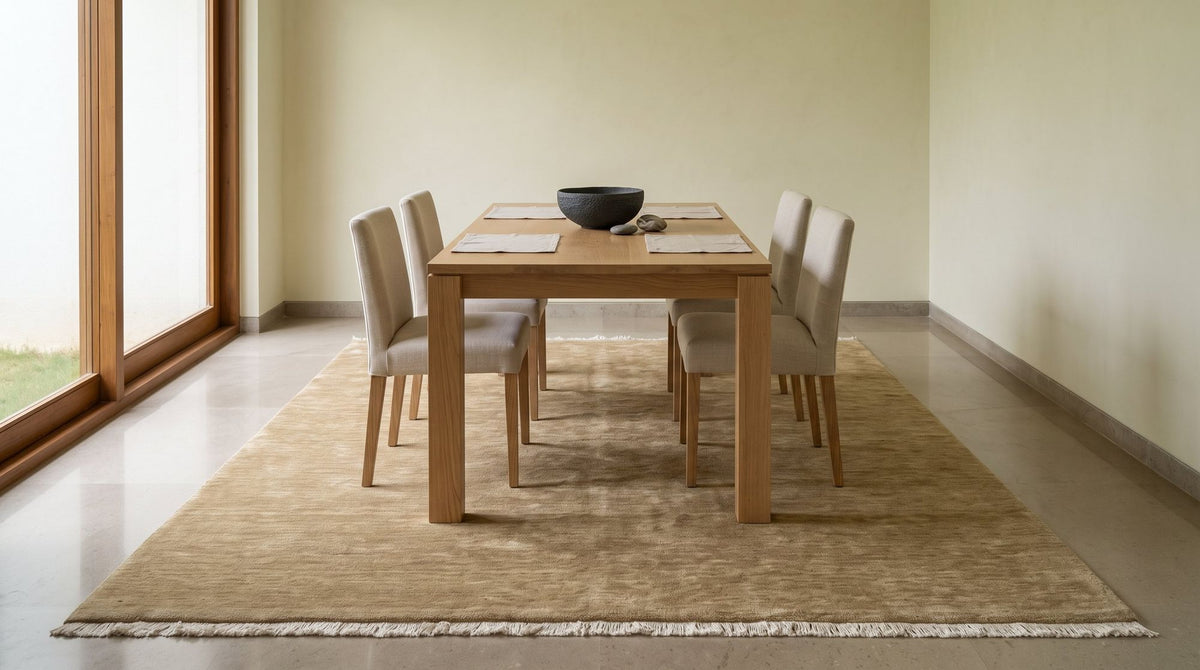
Pairing Rugs with Teak and Sheesham
Teak, sheesham and mango wood each carry a different undertone. Here is how to read the wood in your home and choose a rug that sits well with it.
Read more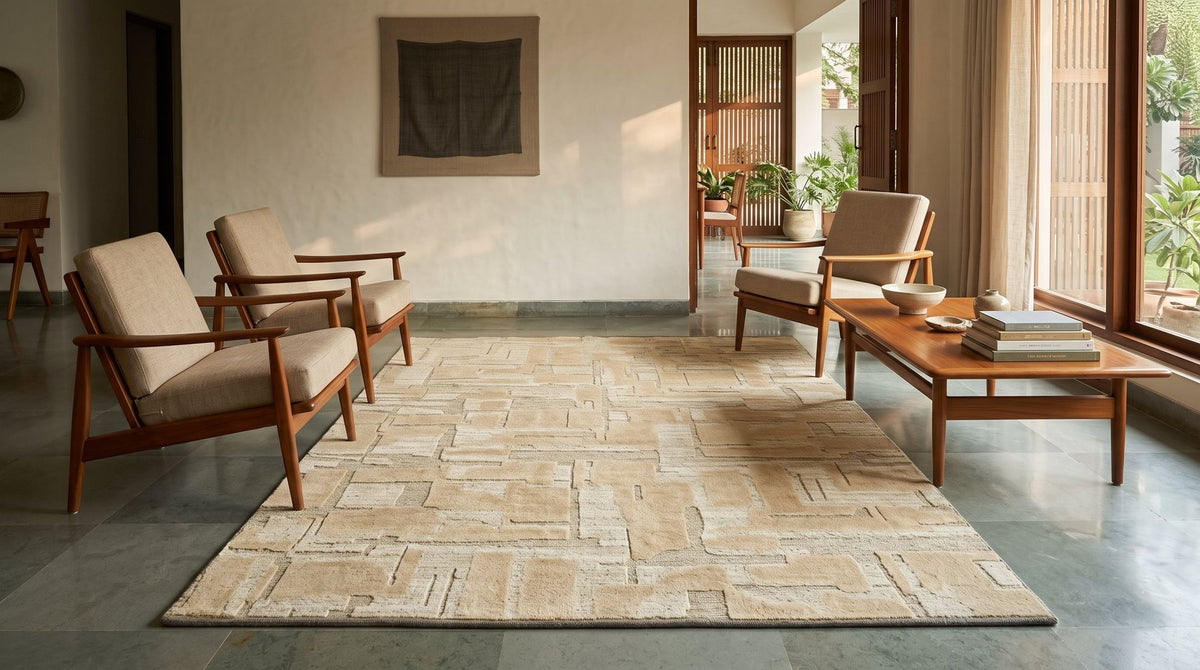
Modern Indian Interiors: Rugs That Bridge Old and New
Modern Indian homes mix cane, solid wood, brass-free metal and handloom textiles with clean lines. The rug is where those materials meet, so choose it for fibre and scale.
Read more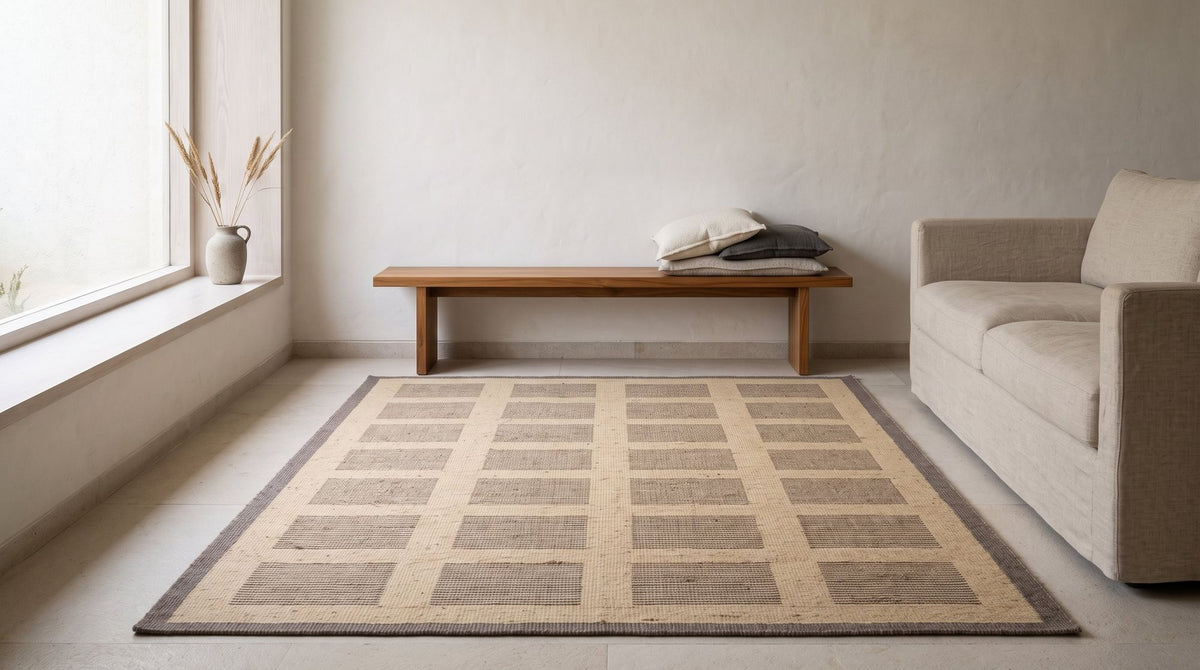
Japandi Rugs: Texture Over Pattern
Japandi rooms rely on low furniture, pale wood and honest materials. The rug carries the texture, so here is how to pick fibre, weave and tone for one.
Read more
Rugs and Dust in Indian Cities
Dust is part of life in Delhi, Bengaluru and Pune. The right rug surface and a steady routine keep it from settling into the pile for good.
Read more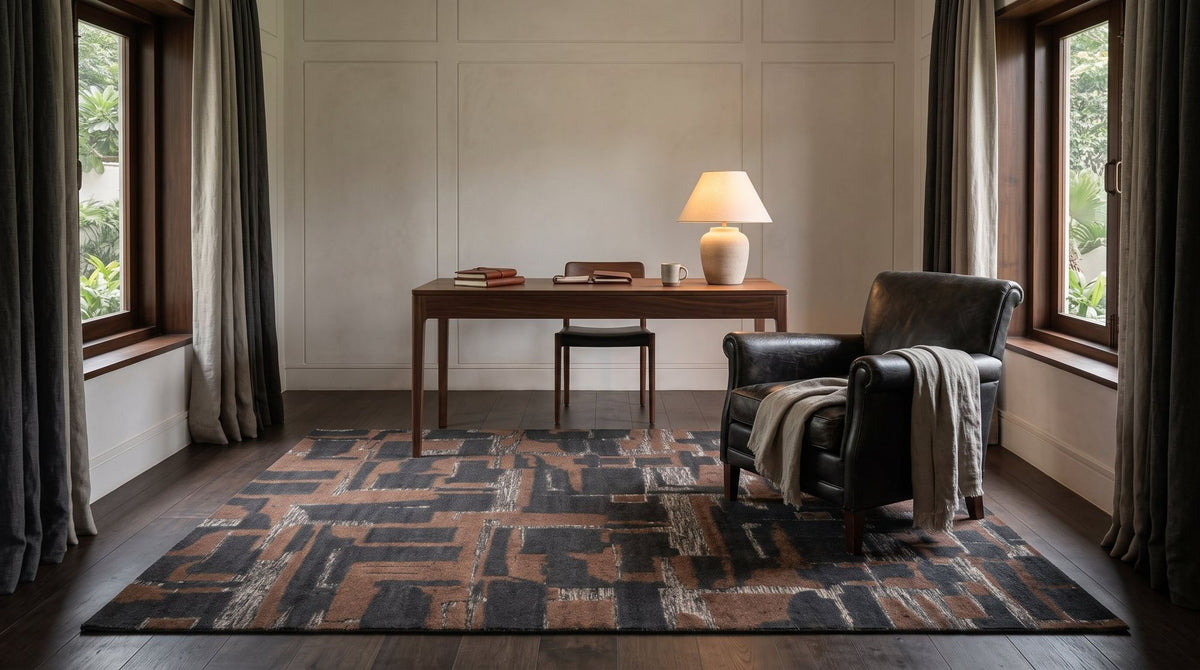
Durability by Construction: Knotted to Woven
Hand knotting is the most durable way to make a rug, but it is not the only sound choice. Here is how each construction ranks, and where each belongs.
Read more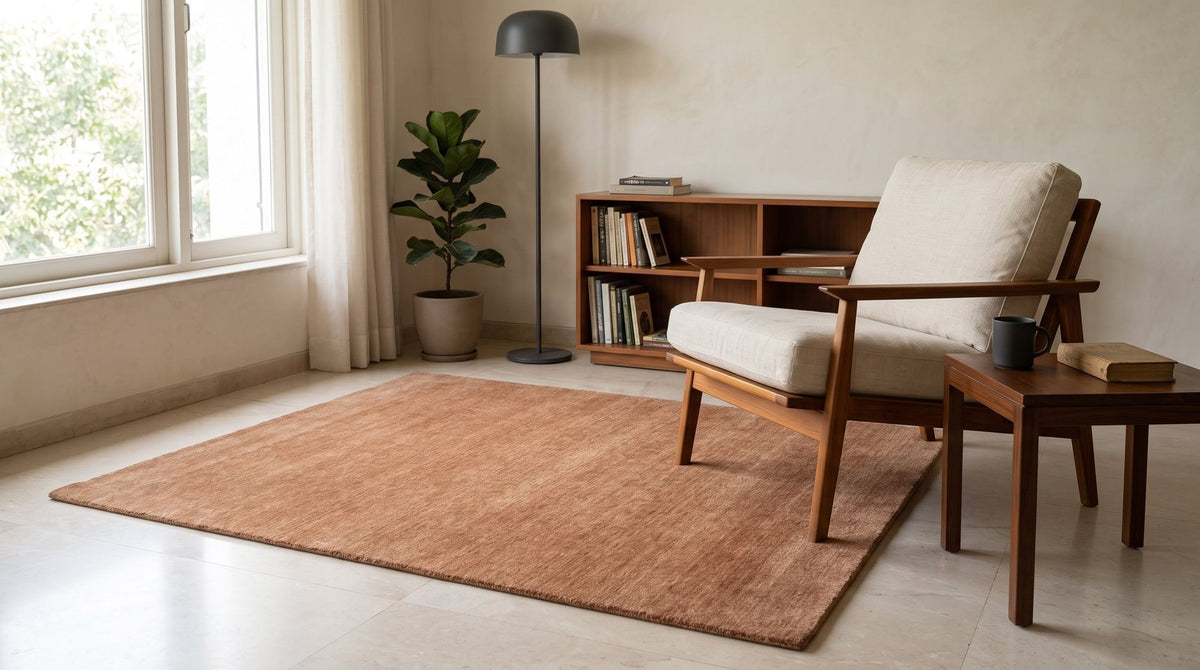
Every knotted, handloom and flatweave rug is built on warp and weft, the same frame of threads as a handloom sari. Here is how it works under the pile.
Read more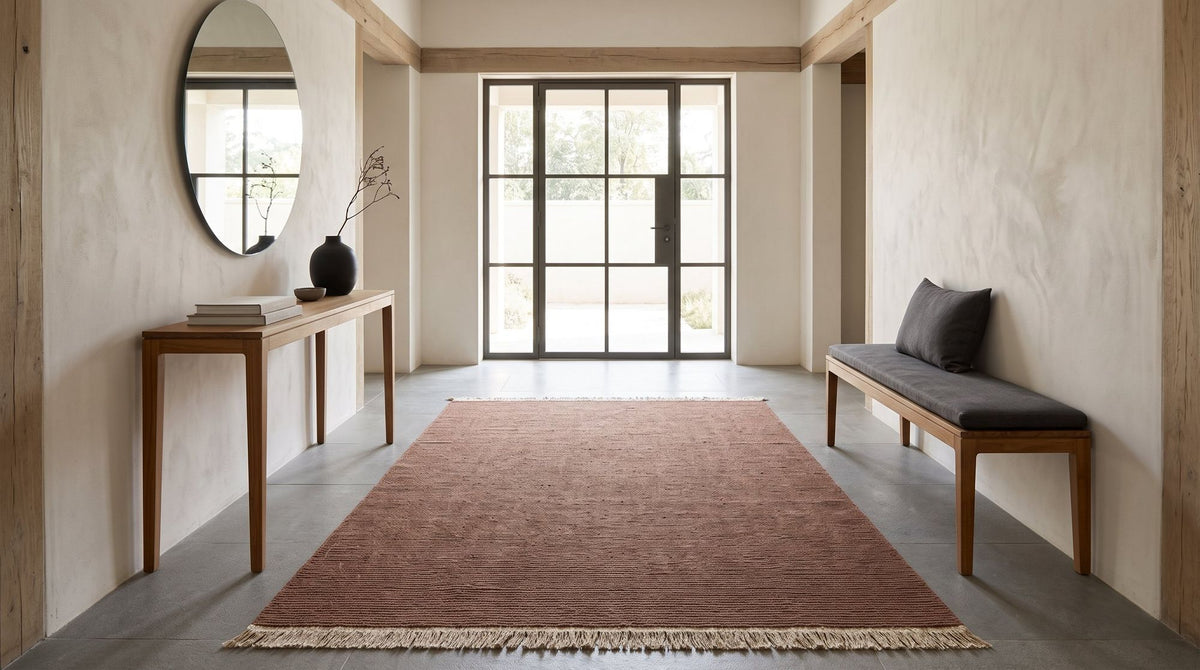
Cabra: Wool and Jute Woven Together
Cabra is handloom woven in New Zealand wool and jute: the look of jute, with wool softening its irregularity underfoot. Here is who it suits and how it compares.
Read more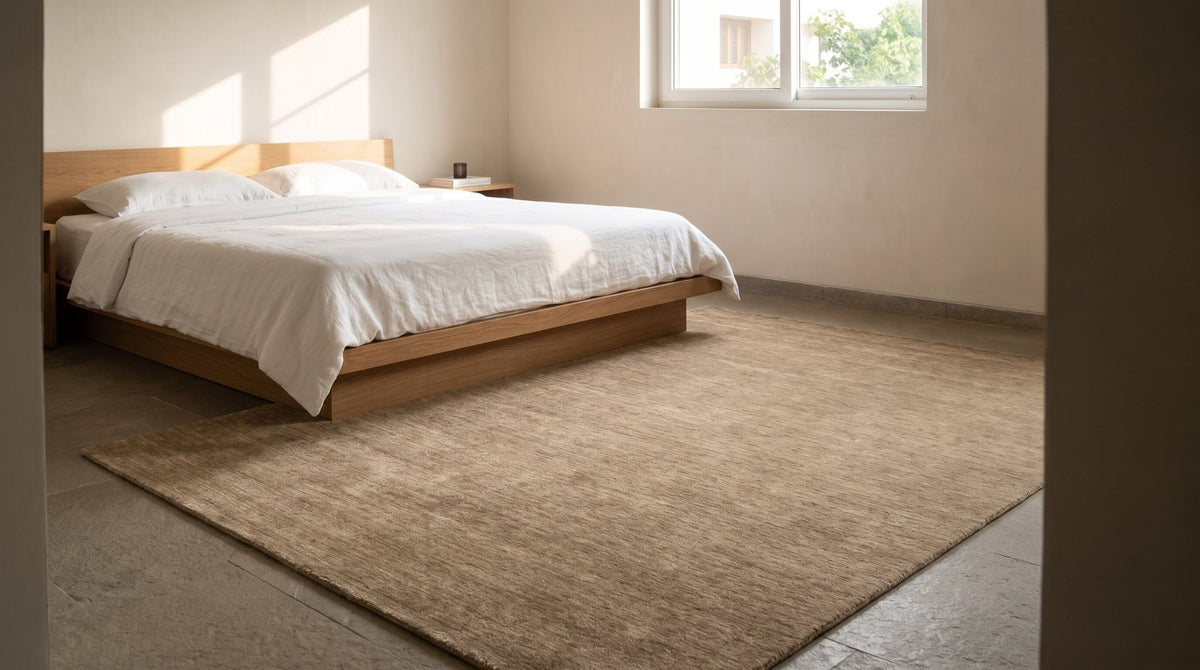
Buying Your First Handmade Rug: Where to Start
A first handmade rug should be forgiving: wool, a low or even surface, a stock size and a room you use every day. Here is where to start.
Read more
Handloom vs Hand Tufted Rugs: A Buyer's Comparison
A handloom rug is woven on a loom. A hand tufted rug is built by punching yarn through cloth. Each suits different designs, and neither wins everywhere.
Read more
Handmade vs Machine Made Rugs: How to Tell
The back of a rug tells you more than the front. Three checks, the back, the fringe and the pile, show how any rug was made.
Read more