


Rugs Across Connected Rooms
Rugs in connected rooms look best when they share one quality, such as a fibre, a texture or an undertone, rather than one colour. Using the same rug family in two or three colourways is the simplest way to do that.
In short
- Rugs in an open plan home do not have to match; they read as a set when they share a texture, a fibre or a colour undertone.
- The Rugberry Grain Wool Rug comes in several colourways, such as tan and sage, so one family can cover a living area and a dining area without repeating a colour.
- Leave at least 45 cm of bare floor between two rugs in the same open space, so each zone reads clearly.
- A bedroom or study off the main space can break the set, because a closed door already separates it.
Rugberry designs several of its rugs as families for exactly this reason. Matching everything exactly can make a home feel like a catalogue page. A shared thread with small differences feels lived in.
Should rugs match in an open plan flat?
They should relate, not match. In a typical Indian 2BHK or 3BHK, the living and dining areas share one long space of 300 to 450 sq ft, so both rugs are seen at once from the front door.


Two identical rugs in that view can feel repetitive, while two unrelated rugs make the space look divided. The middle path is a common thread: the same construction and surface, with a colour shift between zones.
Some homes do want an exact pair, for example two seating groups facing each other in a large drawing room. That is a deliberate choice, and it works best when the zones are symmetrical.
What does one rug family in several colours look like?
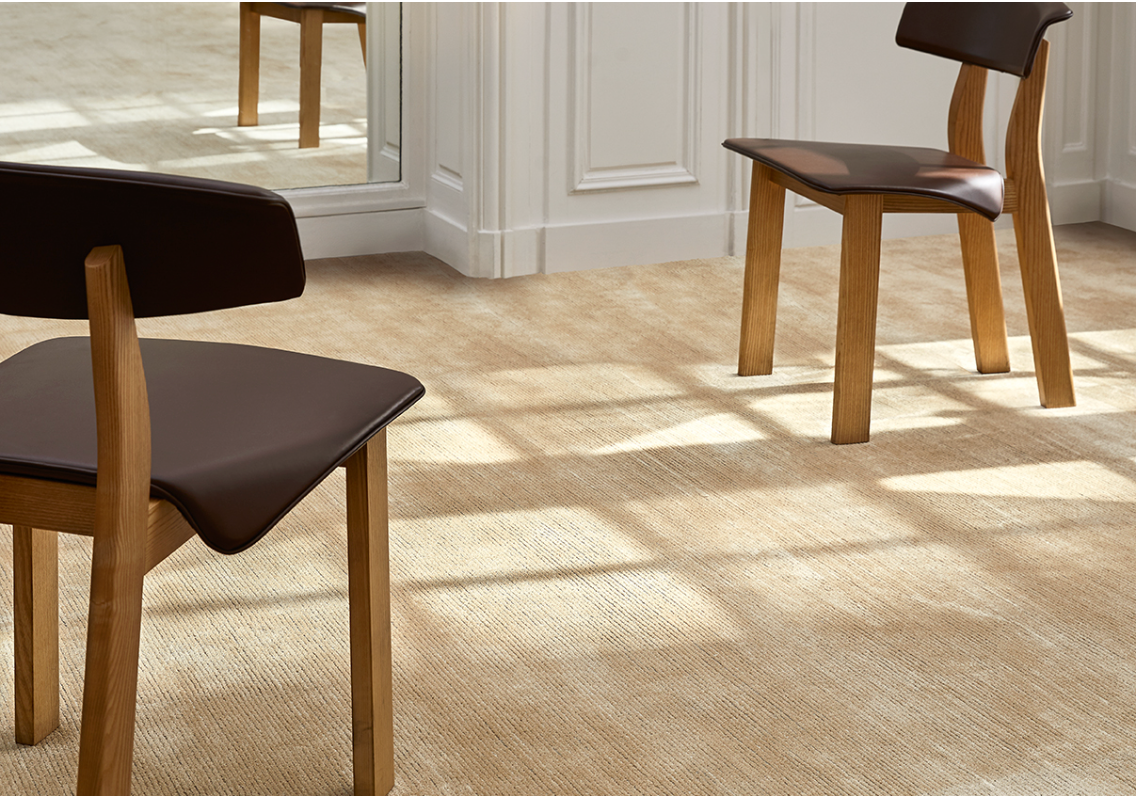
It looks like the same handwriting in different ink. The Grain collection at Rugberry is handloom woven in New Zealand wool with a low, closely textured surface, and it comes in colourways including tan, sage, sandstone, umber, russet and mochaccino.


Put the Grain Wool Rug in tan under the sofa and the Grain Wool Rug in sage under the dining table. The weave, the pile height and the way light runs across the surface stay the same, so the eye connects them, while the colours mark two separate uses. Both start from about ₹37,000 in 5x8 ft.
The same weave in two colours reads as one home with two rooms in it.
How far apart should two rugs sit in one space?
Leave at least 45 cm, about 18 inches, of bare floor between two rugs. Less than that and they look like one rug that has been cut in half.

In narrow Mumbai and Bengaluru flats, where the dining table often sits only a metre or so from the sofa back, size the rugs to the furniture rather than the room so the gap survives. Our guide on how many rugs a home needs covers which zones need a rug at all.
Line the rugs up along one axis where you can, for example both parallel to the long wall. Rugs set at different angles fight each other, even when the colours agree.
How do you choose colours for connected rooms?
Start from what cannot change: the floor, the main wall colour and any large wooden joinery. Choose colourways that sit on the same side of warm or cool as those fixed elements.


- Warm floors, such as beige vitrified tile or teak. Tan, russet and mochaccino sit together comfortably, and sage adds a cooler note without breaking the set.
- Cool floors, such as white marble or grey Kota stone. Sandstone and sage feel calmer, with umber as a deeper anchor.
- A step in depth. Use the deeper rug where traffic and crumbs are heavier, often the dining zone, and the lighter one where you sit.
| Zone | Rug | Typical size |
|---|---|---|
| Living area, three seater and two chairs | Grain in tan | 8x10 ft |
| Dining area, six seater table | Grain in sage | 8x10 ft or 9x12 ft |
| Bedroom off the corridor | Cabella in latte | 6x9 ft |
For an open flat with warm flooring, choose tan and sage from one family over two unrelated rugs, because the shared weave holds the space together while the colours separate the uses.
When should a rug break from the set?
When a room has its own door and its own mood. A bedroom, a study or a pooja room can step away from the shared family without the home feeling disjointed.

The Cabella Wool & Silk Rug in latte is a good example. It is hand-tufted in New Zealand wool and silk, with a low sheen that lifts as the light moves, from about ₹41,000. Its soft beige sits close to the Grain colourways in tone, yet the silk gives the bedroom a different surface from the living area.
That is the useful rule at Rugberry: change one thing at a time. Change the fibre and keep the tone, or change the tone and keep the fibre.
Frequently asked questions
Can I use two different rug designs in the same open space?
Yes, if they share a colour undertone or a surface texture. Two designs with nothing in common tend to split the room into separate pieces.
Should a hallway runner match the living room rug?
A runner works well as a quieter relative of the main rug, in the same fibre or a neighbouring colour. It does not need the same design.
Do the rugs in my bedrooms need to match the living room?
No. Rooms behind a door can follow their own palette. Keeping the same undertone, warm or cool, is usually enough to make the home feel consistent.
One family, several colours, a little floor between them. Material first.



Leave a comment
This site is protected by hCaptcha and the hCaptcha Privacy Policy and Terms of Service apply.