

The Ombre Collection: Nine Gradations in Wool
The Rugberry Ombré Collection is nine hand tufted New Zealand wool rugs, each moving slowly from one tone to another across its length. They are hand tufted, not hand knotted, which keeps them at about ₹44,000 for 5x8 ft.
In short
- The Rugberry Ombré Collection has nine designs: Haze, Forest, Dusk, Solitude, Taupe, Meadow, Mystique, Pristine and Anomaly.
- Every Rugberry ombré rug is hand tufted in New Zealand wool, with a dense pile that holds its shape.
- Each ombré design starts from about ₹44,000 in 5x8 ft and is stocked up to 12x15 ft, with any size to order.
- In a living room, an ombré rug usually works best with its deepest end nearest the sofa, so the room appears to lighten towards the door.
What is an ombré rug?
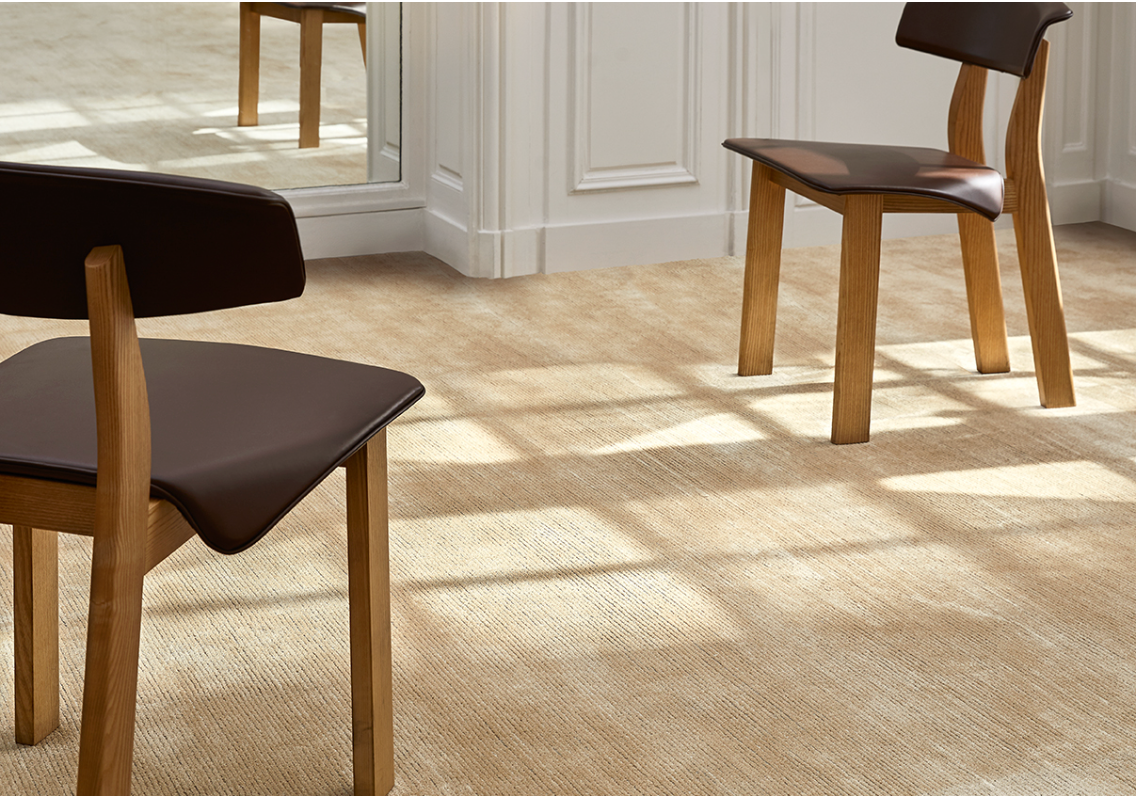
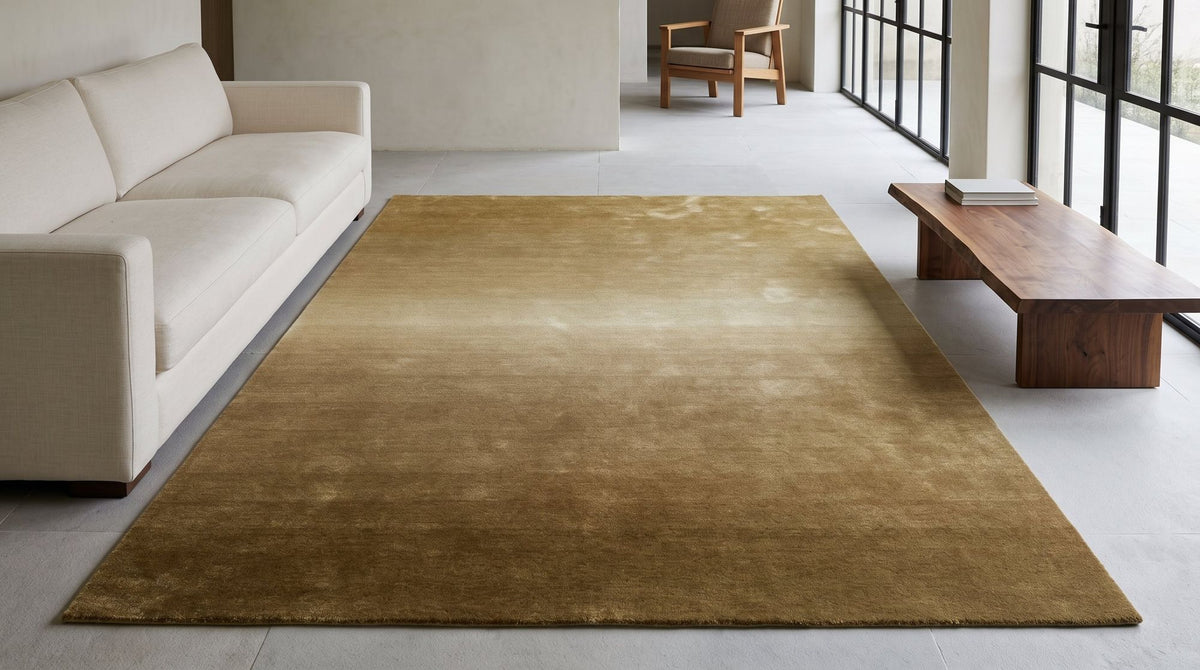
An ombré rug is a rug whose colour shifts gradually from one tone to another, with no hard line between them. The word comes from the French for shaded, and in rugs it means a gradient rather than a pattern.


A good ombré reads as a single field from across the room and only shows its steps up close. That is what makes it useful in Indian living rooms, where a plain rug can feel flat and a patterned one can fight with printed upholstery.
How are the Rugberry ombré rugs made?
Every Rugberry ombré rug is hand tufted in New Zealand wool. A craftsperson works a hand held tufting tool through a backing cloth, row after row. In hand tufting, yarn tone can be changed gradually from row to row, which is how a gradation is built.

The pile is then sheared level, so the colour change is felt as one even surface underfoot. Rugberry describes the result as soft and even, with a dense pile that holds its shape.
These are not hand knotted rugs, and they are priced accordingly. If you want to understand the difference, our guide to hand knotted and hand tufted rugs sets the two side by side.
Which of the nine gradations should you choose?
Choose by the direction of light in the room and by your sofa colour. Here is how Rugberry describes each one:


| Design | How the tone moves |
|---|---|
| Haze | A slow gradation of pale tone, as though seen through haze |
| Pristine | Held within the palest range of tones |
| Taupe | Through warm grey |
| Anomaly | A slow gradation broken once, deliberately, near the centre |
| Solitude | Across an otherwise empty field, in gold |
| Meadow | Through soft greens and warm neutrals |
| Forest | Through greens, deepest at one end |
| Dusk | From light to deep, in the tones of late evening |
| Mystique | Into shadow, darkest where the light leaves |
For a small apartment living room of around 150 sq ft, choose Haze, Pristine or Taupe over Mystique or Dusk, because a pale gradient keeps the floor feeling open while a deep one pulls the walls in.
A gradient reads as one calm field from the door and only shows its steps when you sit down.
Which way should the gradient run in a room?
Run the deepest end towards the heaviest furniture. Under a three seater sofa, the dark end grounds the seating and the rug lightens towards the room's entrance.
In a bedroom, reverse the logic: put the pale end at the foot of the bed, where light from the window lands, and let the deep end disappear under the bed frame. Lay the rug out loosely and walk round it once before you place furniture, because the same rug can look quite different turned through 180 degrees.
What size ombré rug for an Indian living room?
A gradient needs length to read, so size up rather than down. In a living room of about 12x14 ft with a three seater and two chairs, an 8x10 ft rug lets the colour change show across the whole seating area.


A 5x8 ft ombré rug works as a bedside rug or in a study, where the gradation can run the full length of a reading chair. Our living room rug size guide covers sofa layouts in more detail.
How do you keep a gradient looking even?
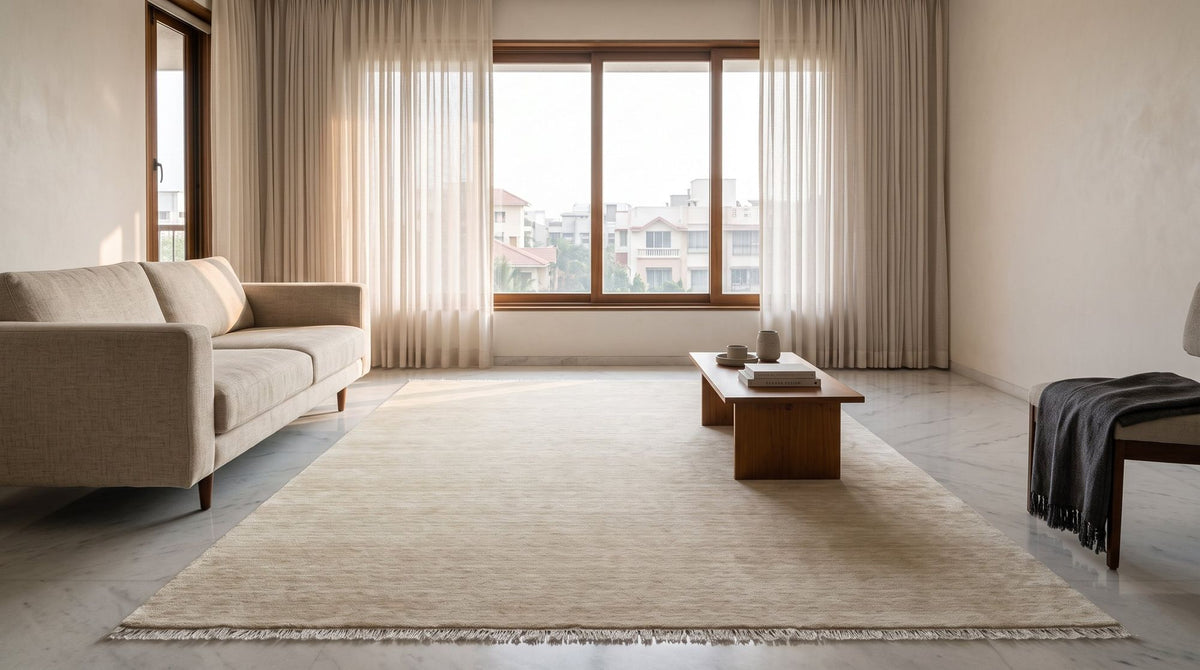
Strong sun is the main risk. A west facing window can lighten one end of a rug over a few summers, and on an ombré that shift is easier to spot than on a solid colour.

- Use sheer curtains during the hottest afternoon hours.
- Turn the rug end to end every few months, which is called rotation. Note that this also reverses the gradient, so choose a rhythm, such as turning it back each season.
- Vacuum along the length of the rug so the pile lies the same way from end to end.
Frequently asked questions
Are Rugberry ombré rugs hand knotted?
No. All nine Rugberry ombré rugs are hand tufted in New Zealand wool. Hand tufting builds the gradation row by row on a backing cloth and costs less than hand knotting for the same size.
Which ombré rug is best for a small room?
Pale gradations such as Haze, Pristine and Taupe suit small rooms because they keep the floor light. Deep designs such as Dusk and Mystique work better in larger rooms with good daylight.
Can an ombré rug be made in a custom size?
Yes. Every design in the Rugberry Ombré Collection is offered in any size to order, alongside six stock sizes from 5x8 to 12x15 ft. Custom colours are also available on request.
The whole range is in the Ombré Collection. Material first.



Leave a comment
This site is protected by hCaptcha and the hCaptcha Privacy Policy and Terms of Service apply.