

How to Read a Rug Spec Sheet
A Rugberry spec sheet answers four questions: what the rug is made of, how it was made, how it feels and what sizes it comes in. Read the Made of and Technique lines first, because together they set the price, the feel and the care.
In short
- Every Rugberry product page lists the same fields: Made of, Feel, Technique, Colours, Sizes, Customisation and Pricing.
- The Made of field names the fibre, such as New Zealand wool, wool and silk, silk, jute or a wool and cashmere blend.
- The Technique field names one of four constructions: hand knotted, handloom, handwoven or hand tufted.
- Rugberry prices on the spec sheet exclude GST, which is added at checkout.
What fields does a Rugberry spec sheet have?
Seven short lines, in the same order on every rug. Here is how they read for the Cadence Wool Rug:


| Field | Cadence Wool Rug | What to check |
|---|---|---|
| Made of | New Zealand wool | The fibre, and whether it is a blend |
| Feel | Soft and even underfoot, with a dense pile that holds its shape | Pile or flat, soft or firm |
| Technique | Hand tufted | How it was made, which sets care and lifespan |
| Colours | As shown, custom colours on request | Whether a colour change is possible |
| Sizes | 5x8 to 12x15 ft, and any size to order | The stock sizes, and whether custom is offered |
| Customisation | Any size, any colour, made to your measure | What can be changed |
| Pricing | Prices shown exclude GST | Add GST to your budget |
What does the Made of line tell you?
It names the fibre, and the fibre decides most of how a rug behaves. Wool is springy and forgiving of spills; silk is cool and bright but marks more easily; jute is firm and dislikes damp.


Read blends word for word. "Wool and silk" is a blend with silk highlights, while "Silk" alone, as on the Luma Silk Rug in gold, means the whole surface is silk, cool underfoot with a sheen that changes as the light moves.
How should you read the Feel line?
Read it as a description of the surface, not as praise. Rugberry uses a small set of phrases, and each one maps to a construction:


- Soft and even, dense pile that holds its shape: hand-tufted wool.
- Low and closely textured, the weave visible underfoot: handloom wool, such as Grain.
- Firm and textured: jute.
- Dense and fine, the most durable way a rug can be made: hand knotted.
Read the Feel line as a description of the surface, not as praise.
What does the Technique line mean?
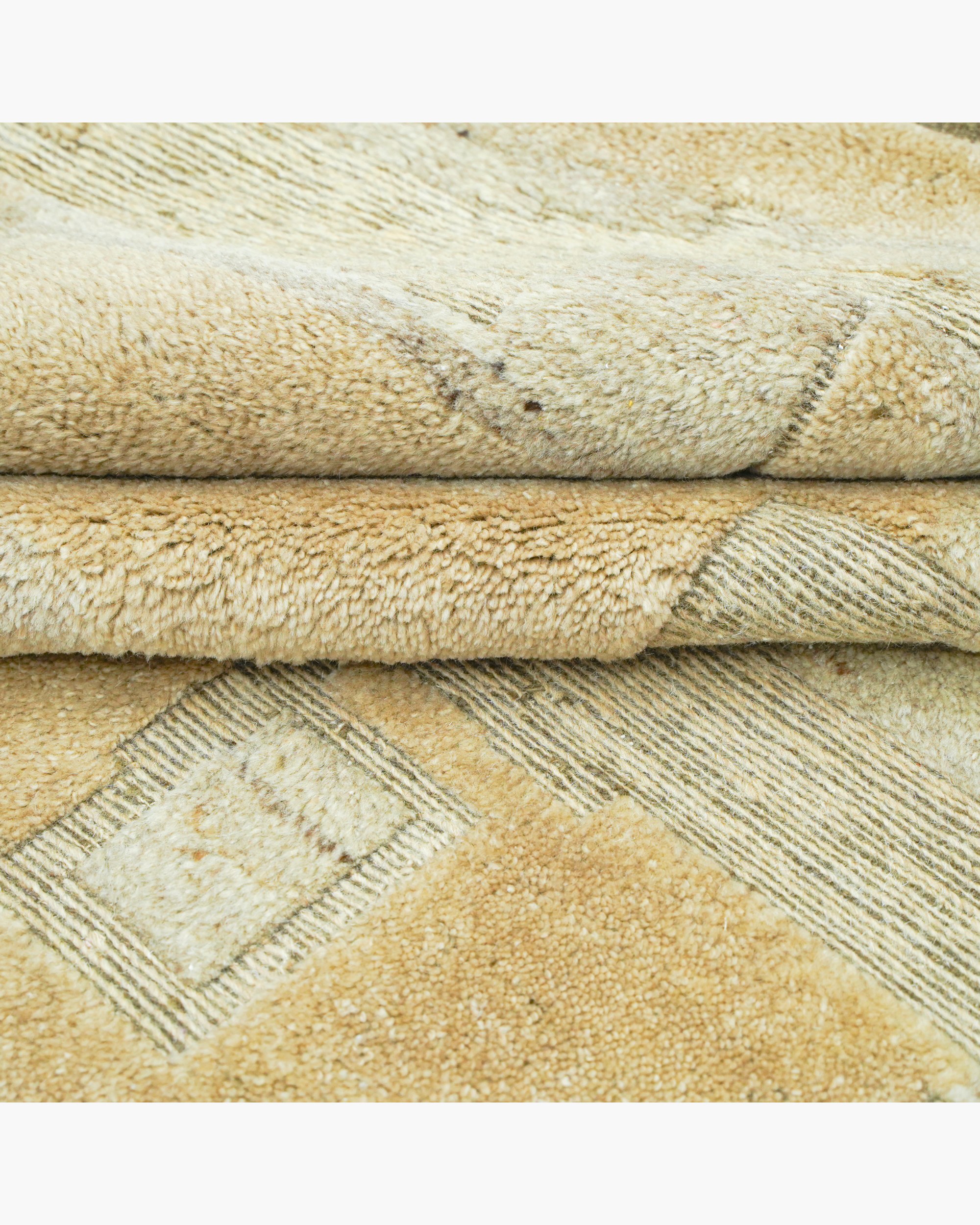
It names the construction, which is the biggest driver of price after size. Hand knotted means each knot was tied by hand on a loom; handloom and handwoven mean the rug was woven row by row; hand tufted means yarn was punched through a cloth with a hand-held tool and finished with a backing.


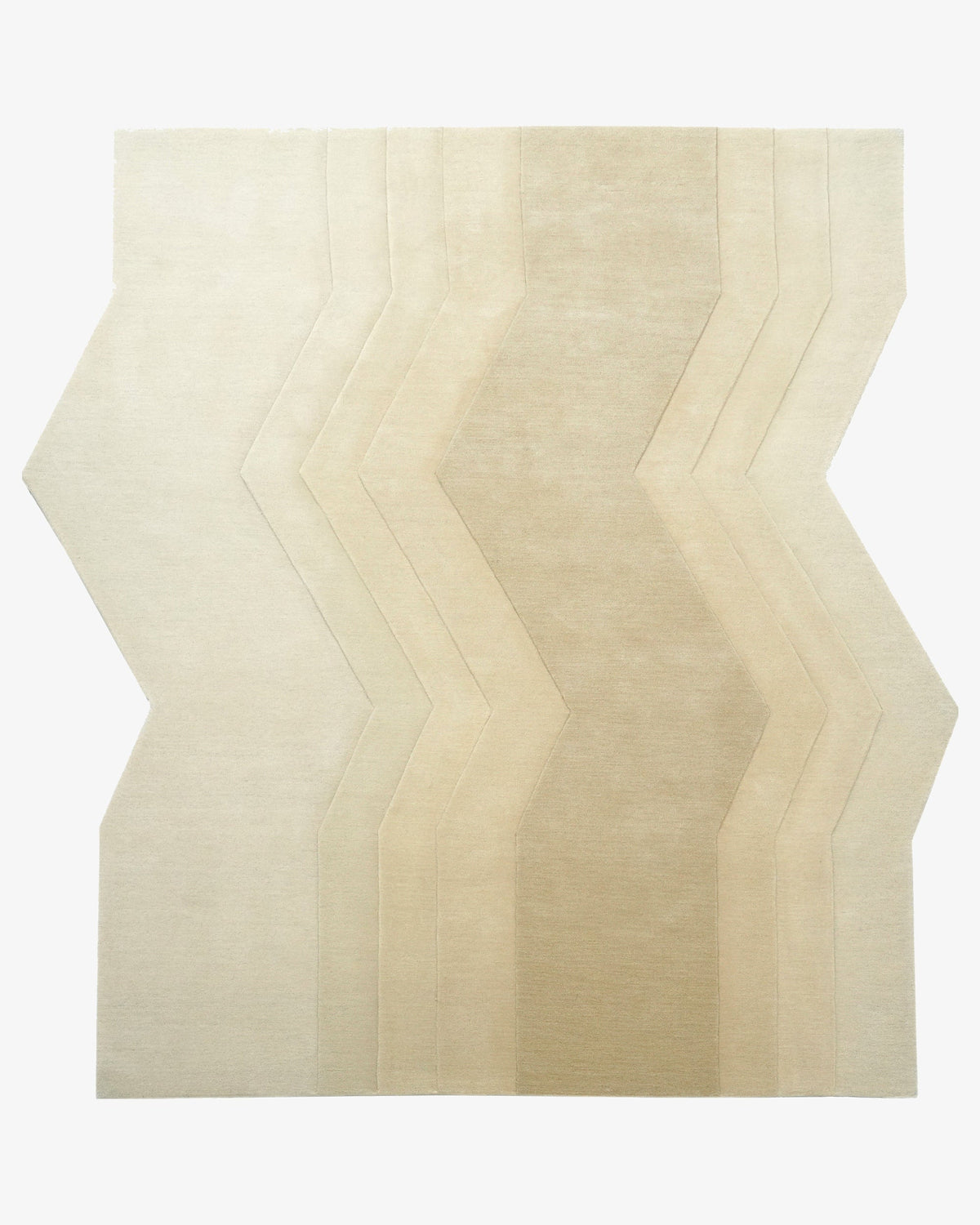
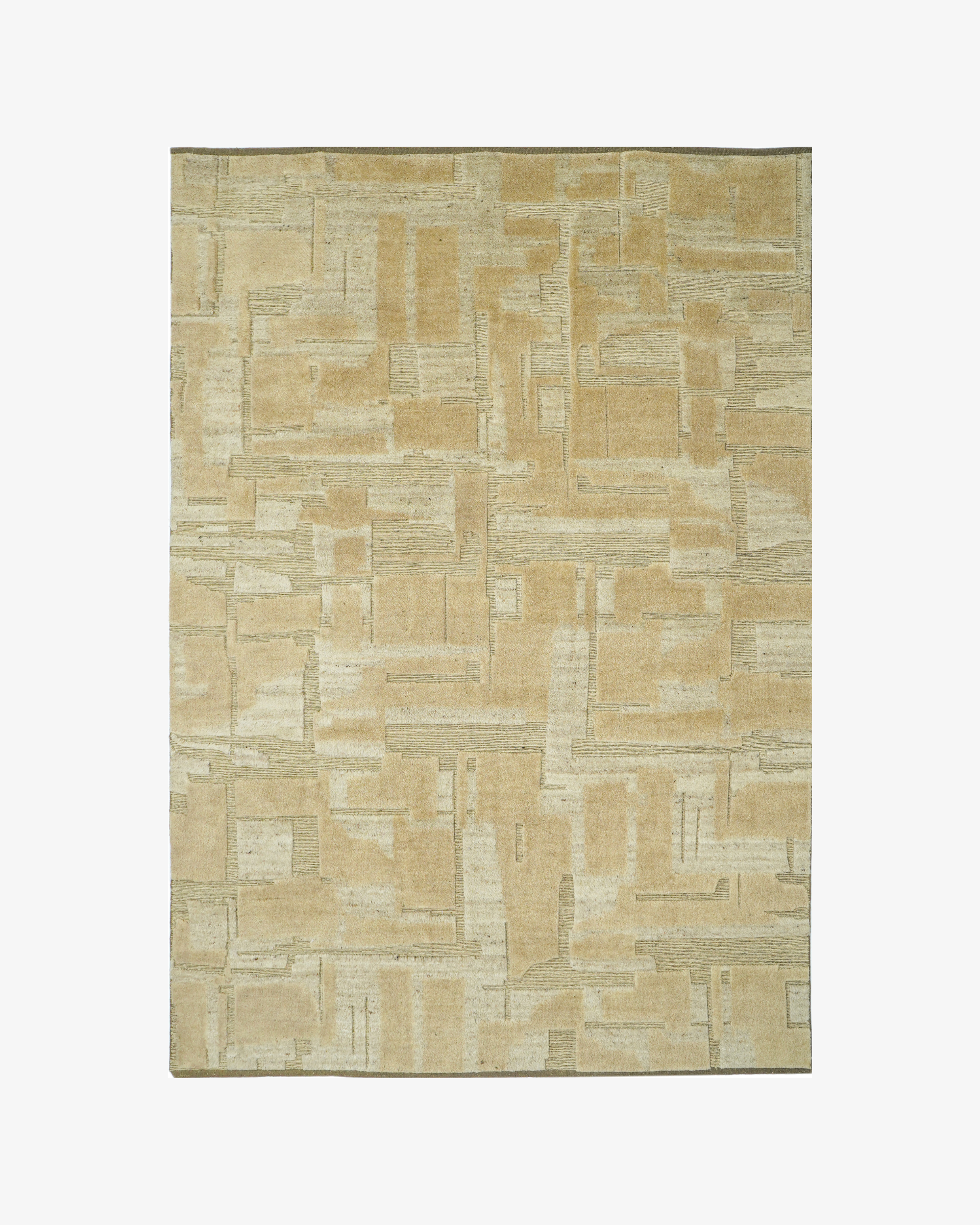
The Stratum Knotted Rug in dune shows how Technique and price connect: hand knotted in New Zealand wool, it starts from about ₹1,75,000 in 9x12 ft, where a hand-tufted wool rug of the same size starts near ₹1 lakh.
How do you read the Sizes and Colours lines?
Sizes lists the stock sizes in feet, with centimetres in the size selector, then says "and any size to order" where custom is offered. Note which stock sizes appear: the Stratum lists only 9x12 ft, while the Cadence lists six.


Colours reads "as shown" for the photographed colourway, then "custom colours on request". A named colourway such as dune or gold is one fixed shade; anything else is a custom order.
How do you compare two rugs using their spec sheets?
Open both product pages side by side and compare line by line, starting with Technique. If one rug is hand knotted and the other hand tufted, the price gap is explained before you look at design.
Next compare Made of. A wool rug and a wool and silk rug of the same construction will differ by a few thousand rupees, and the silk one will show more sheen and more footprints. Then compare Feel: "low and closely textured" and "soft and even" describe two very different surfaces under a bare foot.
Finally compare the price for the same size, not the from price. A rug listed from ₹37,000 and another from ₹44,000 may both be well within budget in 5x8 ft and far apart in 9x12 ft.
What is not on the spec sheet, and how do you ask?
Rugberry spec sheets do not list knot counts, weights or exact pile heights. If one of those matters to you, for example a pile height to clear a door that opens over the rug, ask the Rugberry team before ordering rather than guessing from photographs.
The rug glossary explains the terms you will meet on spec sheets elsewhere, and the customisable rugs list every design you can change.
Frequently asked questions
Do Rugberry prices include GST?
No. The Pricing line on every Rugberry spec sheet states that prices exclude GST, which is added at checkout.
Why does the spec sheet not list the knot count?
Rugberry product pages describe a rug by fibre, technique and feel rather than knot counts. If a figure such as pile height matters for your room, ask before ordering.
What does "any size to order" mean?
It means the design can be made to dimensions you give, in addition to the stock sizes listed. Custom sizes are priced on area and construction.
Read the fibre, then the technique. Everything else follows. Material first.



Leave a comment
This site is protected by hCaptcha and the hCaptcha Privacy Policy and Terms of Service apply.