

North and South Light: How Rugs Change Colour
The same rug can look grey at noon in a north facing room and beige under warm LEDs at night, because both the direction of daylight and the colour of your bulbs change the light that reaches the rug. In an Indian home, the only reliable test is a swatch, seen on your own floor at three times of day.
In short
- In most Indian homes, north facing rooms get soft, even daylight that makes rug colours look cooler, while south and west facing rooms get stronger, warmer sun.
- Warm white LEDs of about 2700K push a greige or taupe rug toward beige, and cool white LEDs of about 6500K push the same rug toward grey.
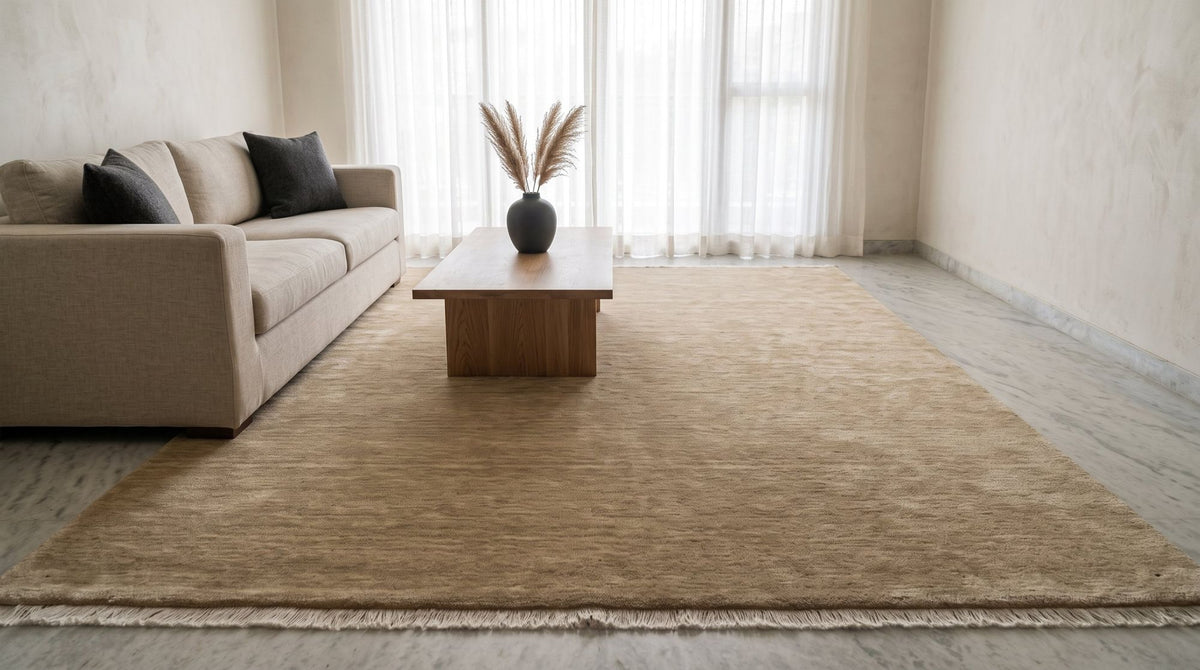
- Wool and silk rugs such as the Rugberry Cabella Wool and Silk Rug in frost change more with light direction than plain wool rugs, because the silk reflects light along the pile.
- A rug colour on a phone or laptop screen is an approximation, which is why Rugberry sells swatches for most rugs so colour can be checked in the actual room.
Why does a rug look different in different rooms?
A rug looks different because colour is reflected light, and every room has light of its own colour and direction. The fibre does not change; the light does.

Daylight indoors is a mix of blue skylight, warm direct sun and light bounced off walls and floors. A cream wall or a warm stone floor tints that bounced light, so a rug beside a yellow painted wall reads warmer than the same rug in a white room.
Our older piece on rugs for a white room shows how a pale backdrop shifts the way a rug reads.
How do north and south light change a rug's colour in India?
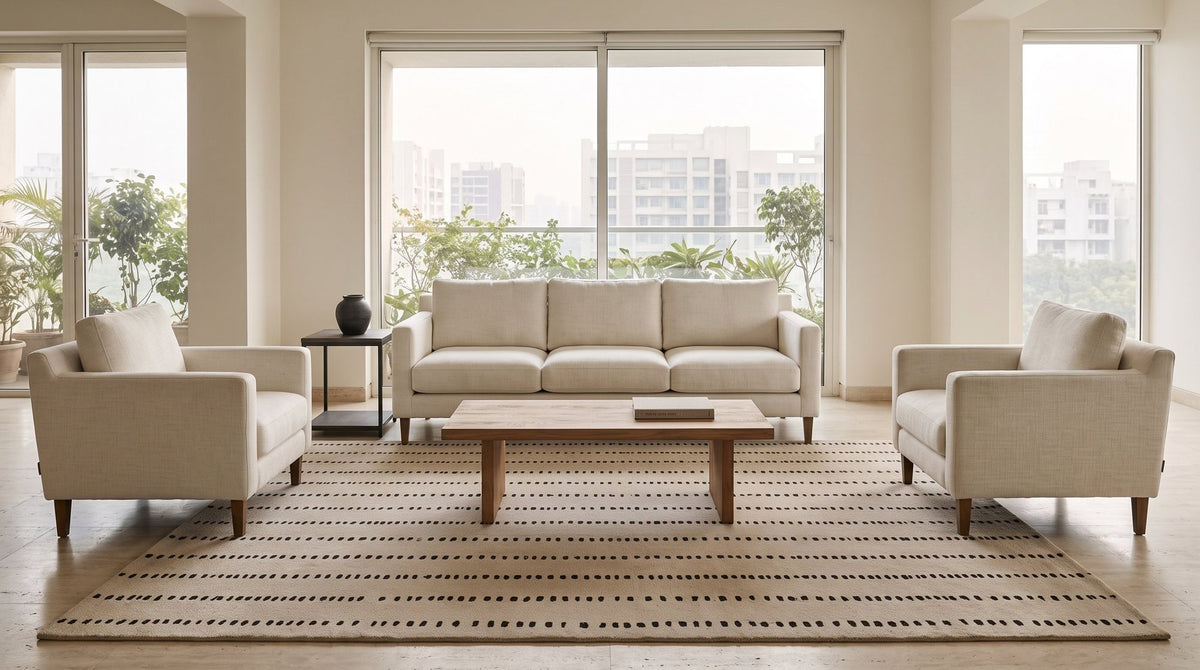
In most of India, a north facing room receives steady, indirect skylight all day, which reads cooler and shows a rug's colour most evenly. A south facing room receives direct sun for much of the year, which warms and brightens colour and changes it hour by hour.


| Window faces | Light through the day | Effect on a greige rug |
|---|---|---|
| North | Soft, even, slightly cool | Reads grey and consistent |
| South | Strong sun for much of the year | Warm and bright, paler at midday |
| East | Warm morning sun, flatter afternoons | Warm early, neutral later |
| West | Flat mornings, golden evenings | Golden, with deeper shadows in the pile |
One nuance for the south of India: in cities below the Tropic of Cancer, such as Chennai and Bengaluru, the midday sun passes slightly to the north for a few months around June. North facing rooms there get some direct sun in early summer, so a rug can look warmer then than in winter.
For a north facing room, choose a rug a shade warmer than you think you need, because north light cools it.
How do LED bulbs change rug colour at night?
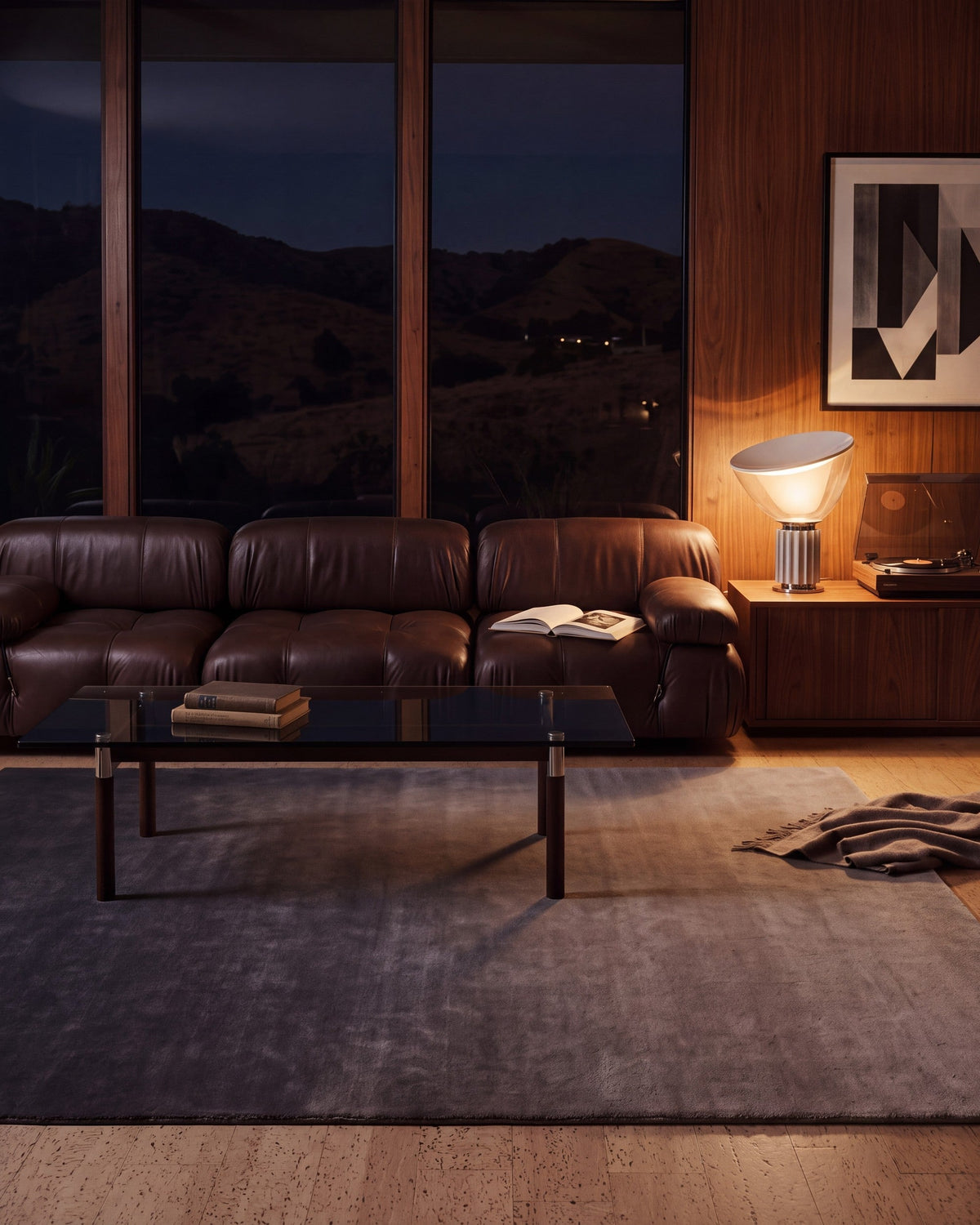
LED colour temperature changes a rug's colour more than most people expect: warm white at 2700K to 3000K yellows it, neutral white at about 4000K stays close to daylight, and cool white at 6500K pushes it toward blue grey. Many Indian homes mix a cool tube light and warm cove lights in one room, which gives two colours on one rug.
The other number on the box is CRI, the colour rendering index. Bulbs of CRI 90 or above show browns, greens and greys more faithfully; cheaper LEDs flatten them.
- Choose one colour temperature per room, and keep it the same across fittings.
- Test a swatch with the lights you actually use in the evening, not only the brightest ones.
Which Rugberry rugs shift most with light?
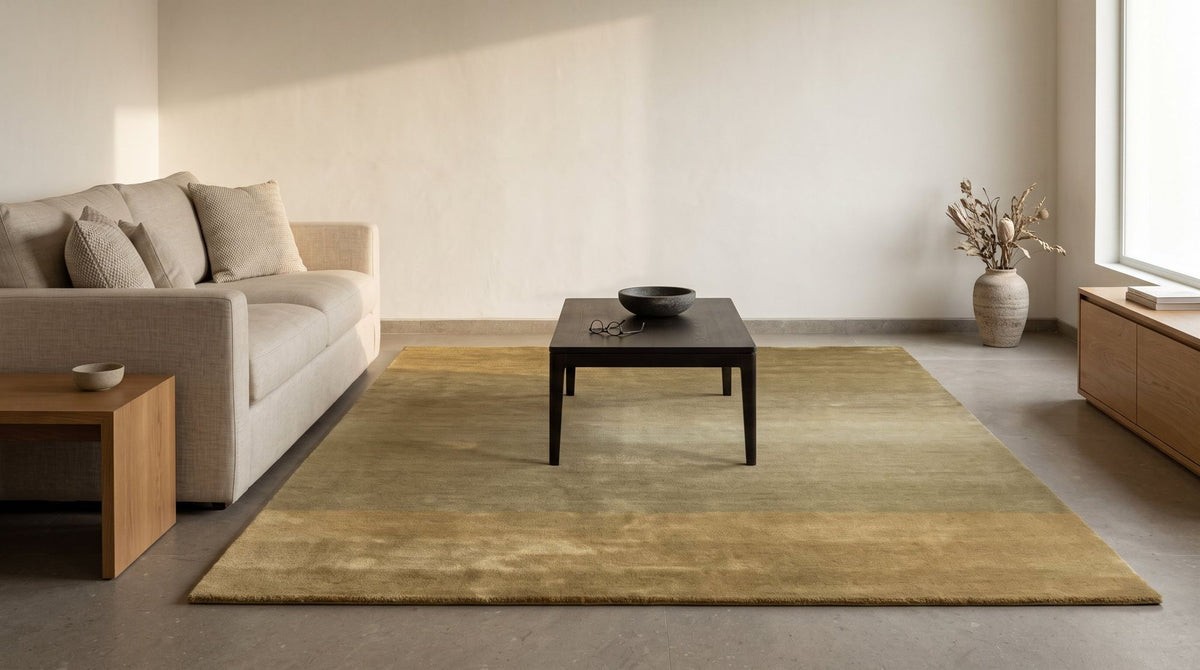
Warm neutrals and wool and silk blends shift most, because they sit between two colour families or carry a sheen. The Greige Wool Rug is hand-tufted in New Zealand wool in a grey that leans warm, from about ₹40,000 in 5x8 ft; in north light it reads grey, under 2700K bulbs it reads close to beige.


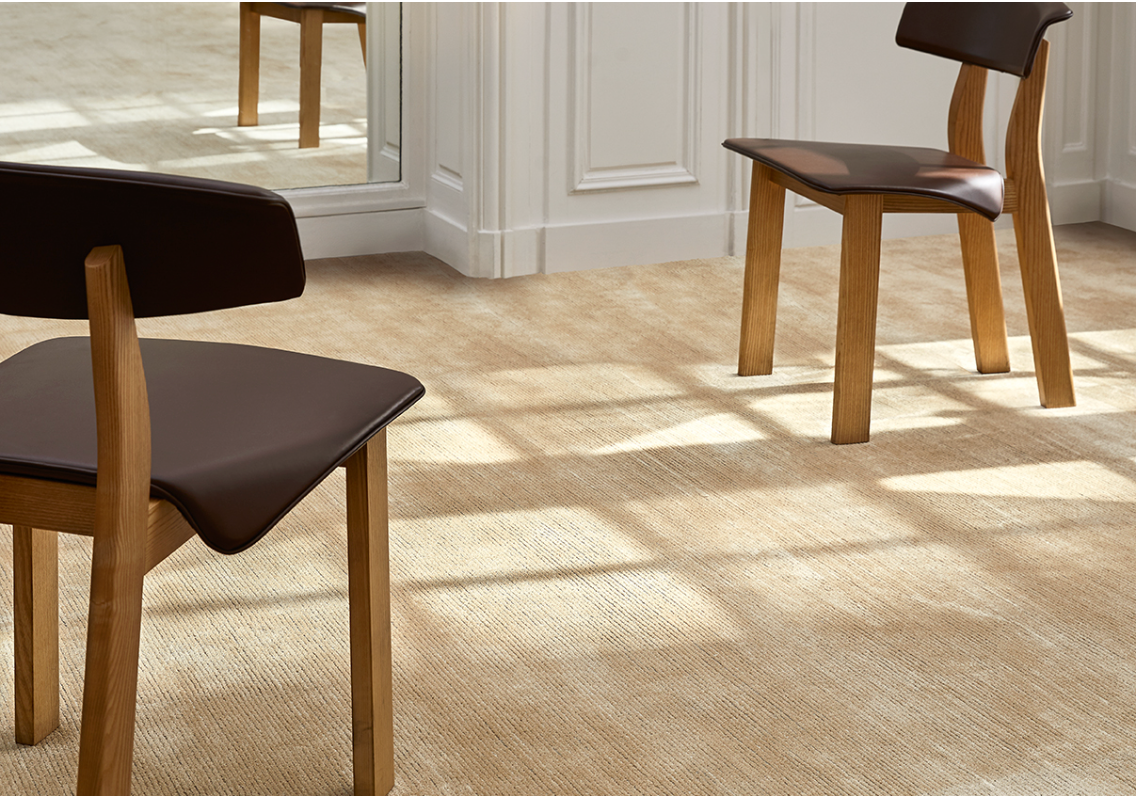
The Ombré Taupe Rug, a slow gradation through warm grey in hand-tufted New Zealand wool from about ₹44,000, shows its gradient differently as light moves across it. The Cabella Wool & Silk Rug in frost, from about ₹41,000, has a low sheen that lifts as the light moves: from the window side it looks lighter, from the opposite side darker, an effect called shading.
The fibre never changes colour. The light in your room does.
How do you test a rug's colour in your own light?
Lay a swatch on the floor exactly where the rug will go, and look at it three times: mid morning, early afternoon and after dark under your usual lights. Photograph it each time with the same phone, without filters, to compare later.

- Put the swatch next to the sofa fabric, curtain or floor it must sit with.
- Look from where you usually sit, not standing over it.
- Turn the swatch 180 degrees to see how the pile direction changes it.
- Check it once with the curtains drawn and once with them open.
Rugberry sells swatches for most rugs, and our guide to ordering a swatch before buying explains what to look for.
Why can't a screen show a rug's true colour?
A screen cannot show a rug's true colour because every phone and laptop has its own brightness, white point and night mode, and product photos are taken under controlled light. Rugberry photographs its rugs with care, but an image is a guide to colour, not a match for it.

Two people looking at the same product page on different phones are, in effect, seeing two different rugs. Our piece on judging rug colour online covers the rest.
Frequently asked questions
Which room shows a rug's colour most accurately?
A north facing room in most of India shows a rug's colour most consistently, because its light is indirect and steady all day. A south or west facing room shows a warmer, brighter version that changes through the day.
What LED colour temperature is best for rugs?
Neutral white at about 4000K with a CRI of 90 or above shows rug colours closest to daylight. Warm white at 2700K feels cosier but yellows ivory, grey and blue rugs.
Why does my rug look lighter from one side of the room?
Pile leans slightly in one direction, so looking along it you see the sides of the fibres, which reflect more light, and looking against it you see the tips, which read darker. This shading is strongest in silk and wool and silk rugs.
See it in your own light before you choose. Material first.





Leave a comment
This site is protected by hCaptcha and the hCaptcha Privacy Policy and Terms of Service apply.