


Holi and Rugs: Protect Before the Colour
The safest way to protect a rug at Holi is to roll it up and put it away the night before. If gulal does get in, vacuum it dry first and never add water until the loose powder is gone.
In short
- Before Holi, roll every rug that sits on a path between the door, the terrace and the bathroom, and store it in a room nobody will enter in colour.
- Dry gulal on a rug should be vacuumed or lifted with tape before any water touches it, because water turns loose powder into dye.
- Wet Holi colours and synthetic pigments can leave a permanent mark on wool and silk, and no home method can guarantee removal.
- Pale rugs such as the Rugberry Grain Wool Rug in flax and the Cabella Wool and Silk Rug in flax show Holi colour most clearly.
Should you roll up your rugs before Holi?
Yes, roll up any rug that sits near a door, a terrace, a staircase or a bathroom before Holi begins. Colour travels on feet, hands, hair and wet clothes, and it reaches far further into a home than the garden.


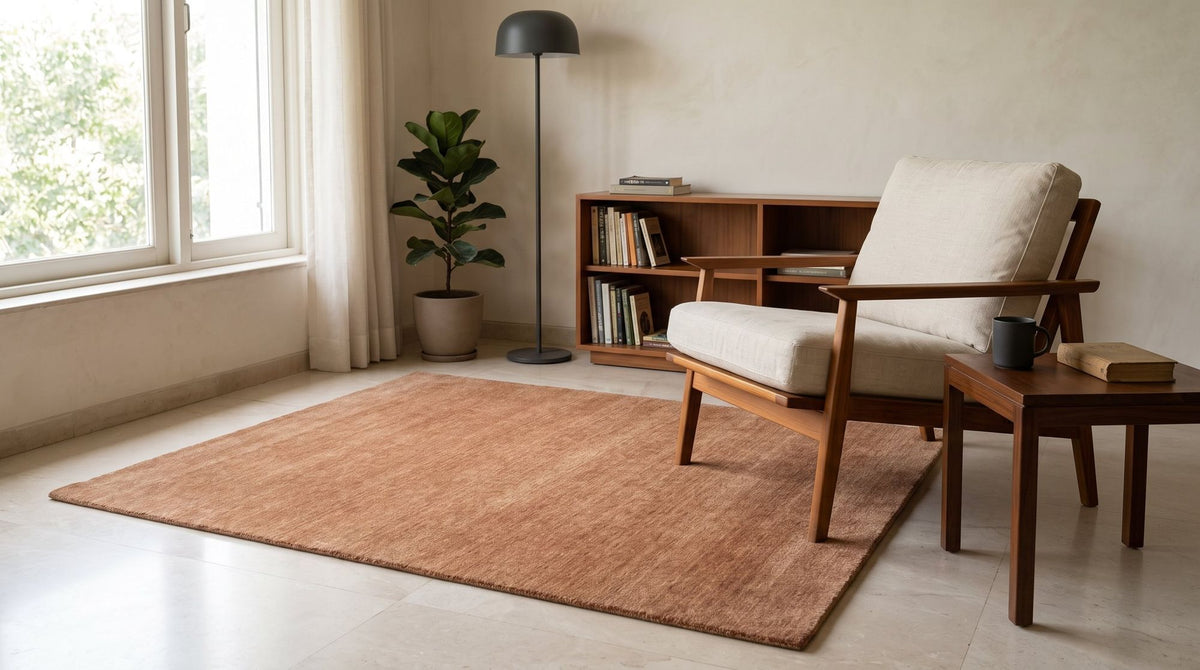
Rolling takes ten minutes for an 8x10 ft Rugberry rug and removes nearly all the risk. Roll the rug with the pile facing inward, wrap it in an old cotton bedsheet, and stand it in a bedroom that stays closed for the day.
If a rug is too large to move, cover it with a cotton dhurrie or an old sheet taped at the corners, and keep children's colour play outdoors.
Which rugs are most at risk at Holi?
Pale and silk blend rugs are most at risk, because they show colour clearly and are harder to clean.


Pale wool
The Grain Wool Rug in flax and the Ivory Wool Rug are light, even tones. A single pink handprint stands out from across the room.
Wool and silk
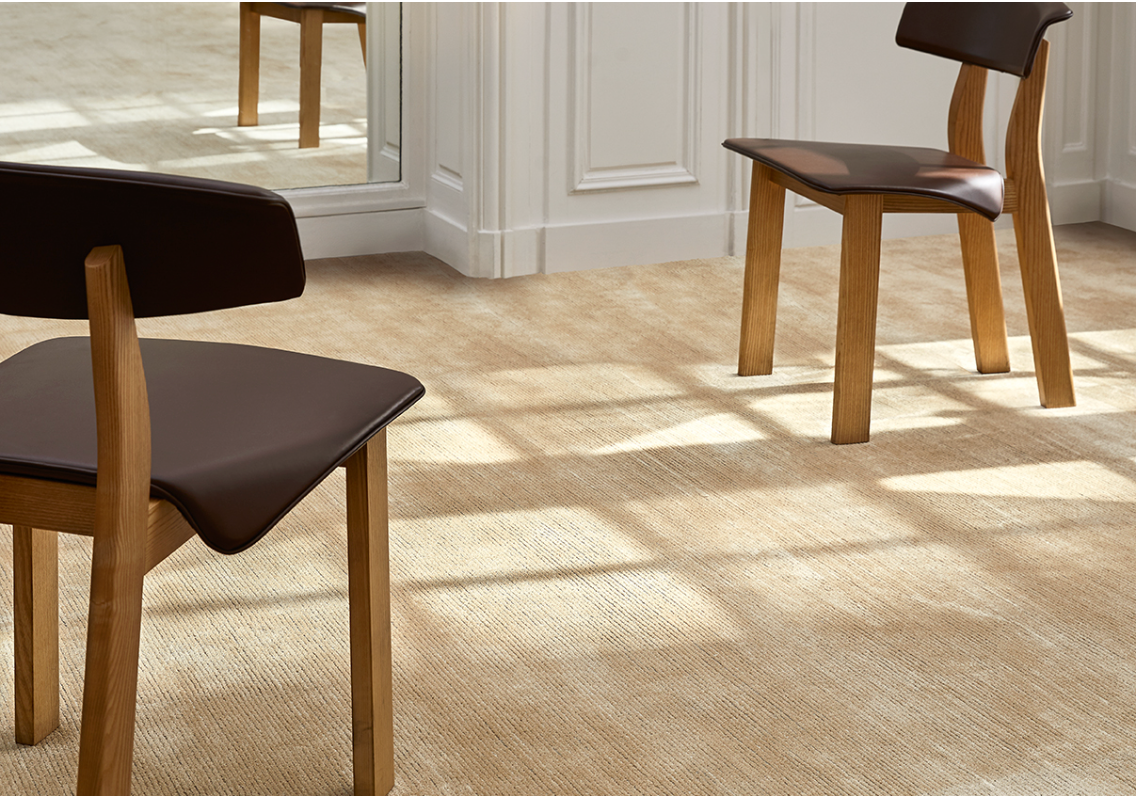
The Cabella Wool and Silk Rug in flax is hand-tufted in New Zealand wool and silk, with a low sheen. Silk takes dye quickly and does not like scrubbing, so colour on the silk strands is the hardest to lift.
For a home that plays Holi indoors every year, Rugberry suggests you choose a mid tone wool rug over a pale wool and silk rug in the main living room, because wool alone handles cleaning better.
What should you do first if gulal reaches the rug?
Keep it dry, lift the loose powder, and only then think about water. Most gulal is a fine powder that sits on top of the pile, and it only becomes a stain when it gets wet.

- Stop traffic. Ask everyone to walk around the spot, since feet press powder deeper.
- Tap, do not rub. Hold a corner up and tap the back gently so loose powder falls onto newspaper.
- Vacuum on suction only. Use a hose nozzle with no brush, working slowly over the area.
- Lift the rest with tape. Press wide packing tape onto the surface and lift it straight up, a few times.
Gulal is a powder until you add water. Then it is a dye.
What if the colour is wet?
Blot wet colour with a dry white cloth at once, working from the outside in, and change to a clean part of the cloth each time. Do not rub, and do not pour water on it.
After blotting, a few drops of plain cool water on a cloth can draw a little more out, but test on a hidden corner first. Avoid hot water, bleach, detergent and stain removers meant for clothes, all of which can set colour or damage wool and silk.
Synthetic Holi colours and those mixed with oil or paint can leave a mark that no home method lifts. Our guide to keeping your rug spotlessly clean covers general spot cleaning, and anything larger than a palm is best left to a professional rug cleaner.
How do you lay rugs back after Holi?
Lay the rugs back only after the floors have been mopped twice and dried completely, usually the next morning. Gulal hides in grout lines and corners, and a damp floor under a rug can transfer it.

- Wipe the soles of house slippers before the rugs return.
- Check wet clothes and towels are out of the room first.
- Unroll each rug in the reverse direction for an hour so it lies flat.
Is there a rug that is safe for Holi?
No rug is fully safe from Holi colour, and none should be sold as such. Some cope better than others: mid tones and textured surfaces hide a faint mark, and flat reversible rugs can be turned over if one face is marked.

If your family hosts every year, keep the good rugs rolled and lay a cotton dhurrie or an inexpensive flatweave for the day. The Rugberry Textures and Solids collection has the calm everyday rugs that come back out once the colour is gone.
Frequently asked questions
How do I protect my rug during Holi?
Roll the rug with the pile inward, wrap it in a cotton sheet and store it in a closed room before Holi starts. If it is too large to move, cover it with an old sheet taped at the corners and keep colour play outdoors.
How do I get dry gulal out of a wool rug?
Keep the area dry, tap loose powder out from the back, vacuum on suction only and lift the rest with wide packing tape. Water should come last, if at all, because it turns gulal into dye.
Can Holi colour be removed from a silk rug?
Holi colour on silk is difficult to remove and may leave a permanent mark. Blot gently, avoid water and detergents, and call a professional rug cleaner rather than scrubbing.
When can I put my rugs back after Holi?
Put rugs back once the floors have been mopped twice and are completely dry, usually the next morning. Gulal hides in corners and grout lines and can transfer to a rug laid on a damp floor.
Play outside, roll the good rugs in, and bring them back to a clean floor. Material first.




Leave a comment
This site is protected by hCaptcha and the hCaptcha Privacy Policy and Terms of Service apply.