


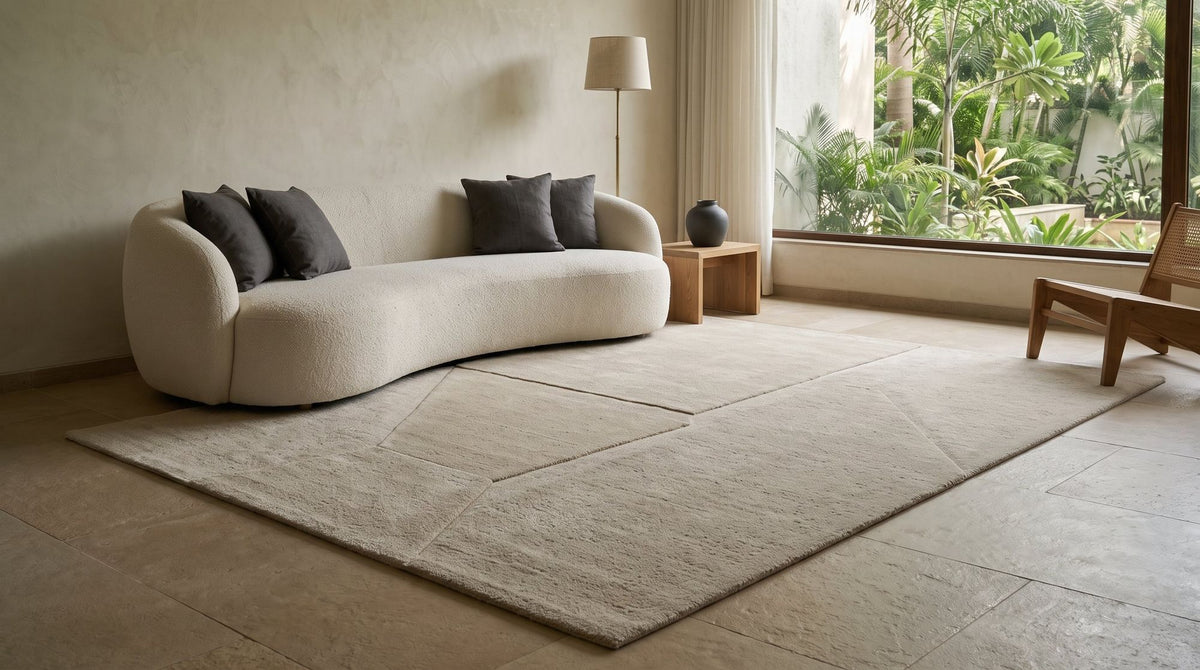
Shearing: How a Rug Gets an Even Surface
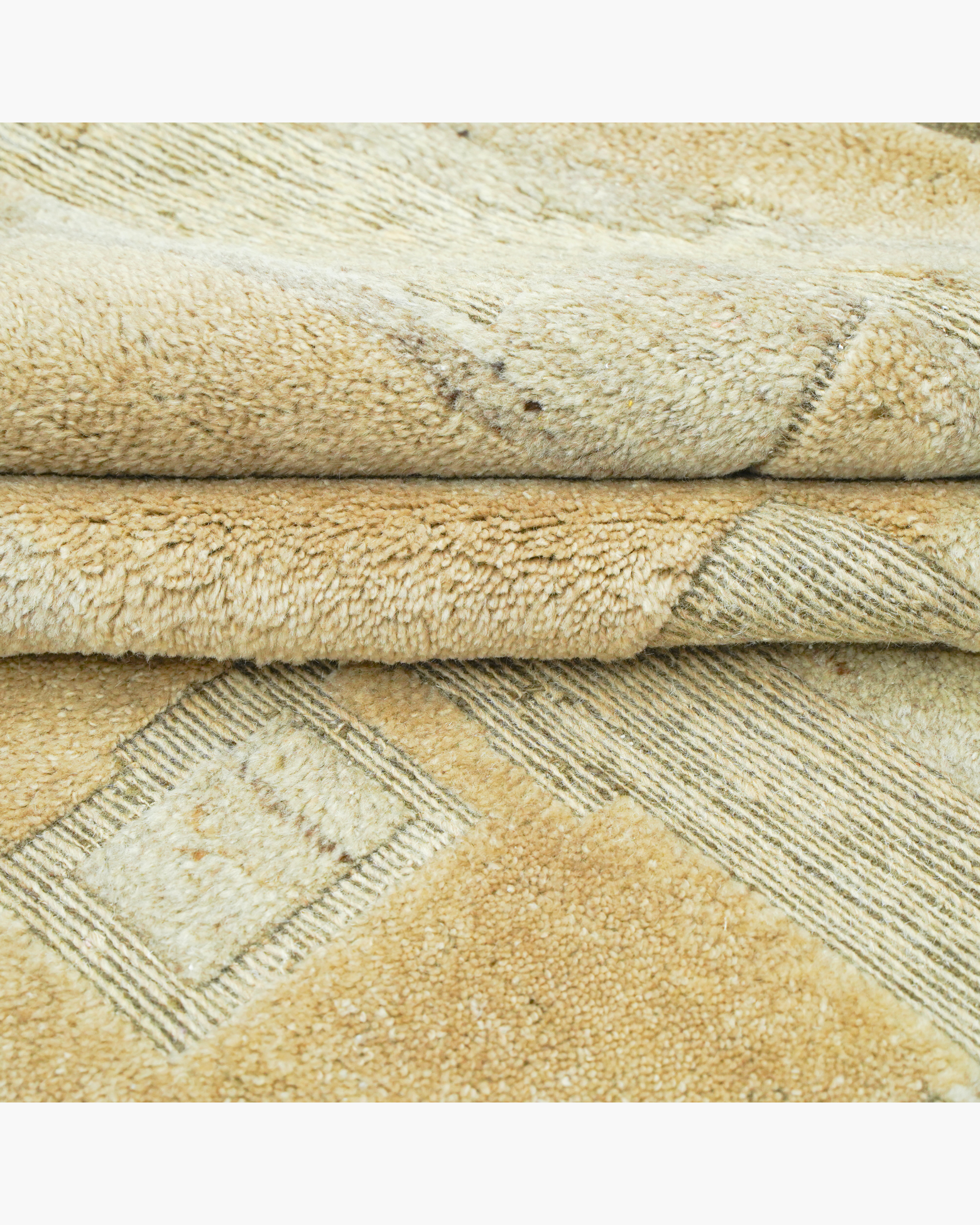
Shearing is the step that clips a rug's pile to one level once the rug is made. It is why a handmade surface looks calm and even rather than shaggy and uneven.
In short
- Rug shearing is a finishing step in which the pile of a handmade rug is clipped so the surface sits at one level.
- Shearing is needed because hand work leaves tufts and knots at slightly different heights.
- Light fluff from a new wool rug in its first weeks is mostly fine fibre loosened by shearing, and it slows down with vacuuming.
- A single tuft standing above the surface should be trimmed level with scissors, never pulled.
The details of how each rug is shorn vary by construction, so this guide covers what shearing achieves and what you will notice at home.
What is rug shearing?
Rug shearing is the clipping of the pile so every tuft or knot ends at the same height. It happens after the rug comes off the loom or frame and, usually, after it has been washed.


Think of it as the difference between a lawn after mowing and before. The yarn is already in place, but its ends sit at slightly different heights. Shearing makes the top of the rug read as one surface. The glossary entry for shearing gives the short definition.
Why does a handmade rug need shearing?
A handmade rug needs shearing because no two hands cut every knot or loop to exactly the same length. A short difference of height is enough to catch the light unevenly.


On a hand-knotted rug
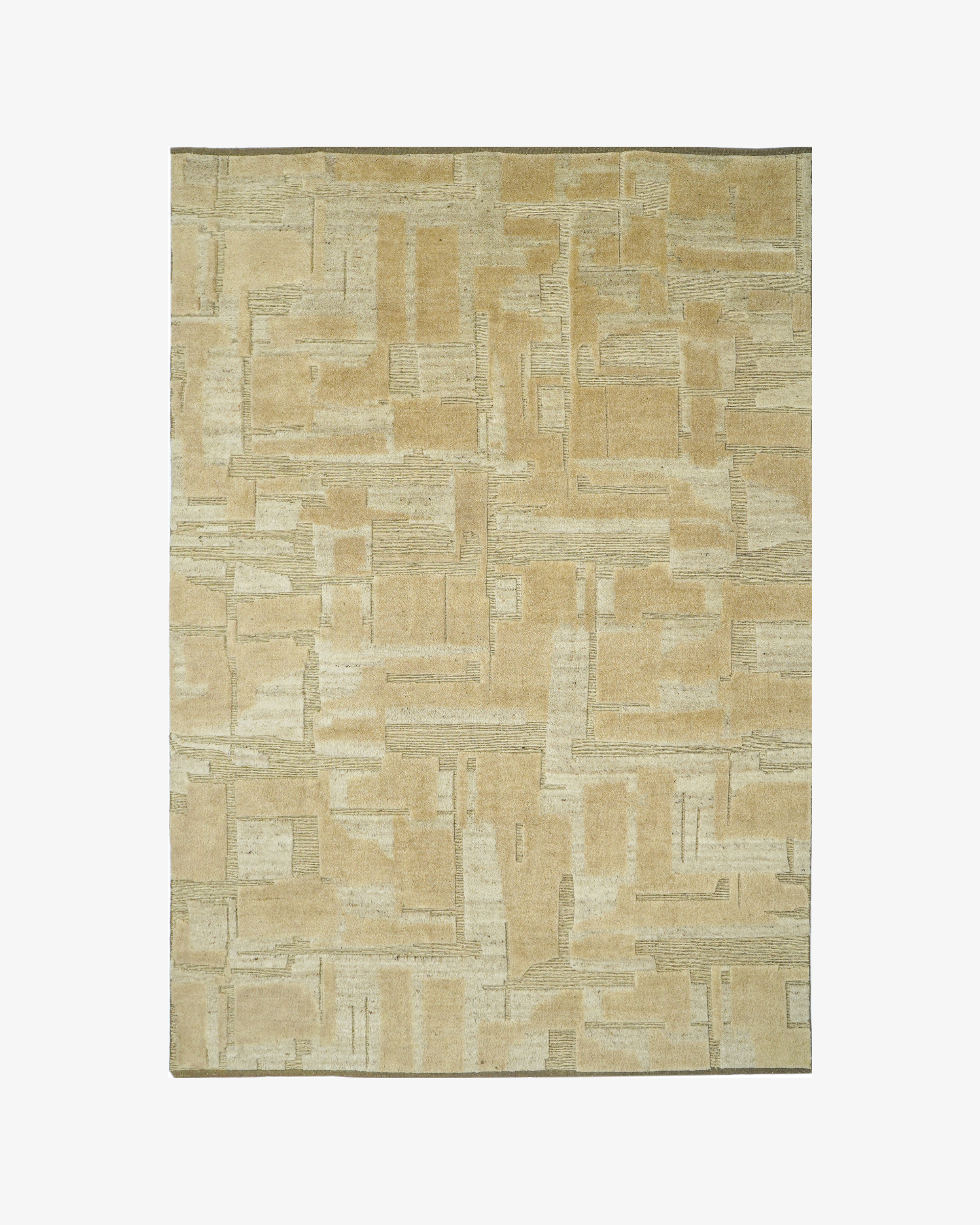
Each knot on a rug such as the Rugberry Stratum Knotted Rug in Dune is tied and cut by hand, row after row. Shearing brings those rows into line so the dense New Zealand wool pile reads as a single field rather than a ridged one.
On a hand-tufted rug
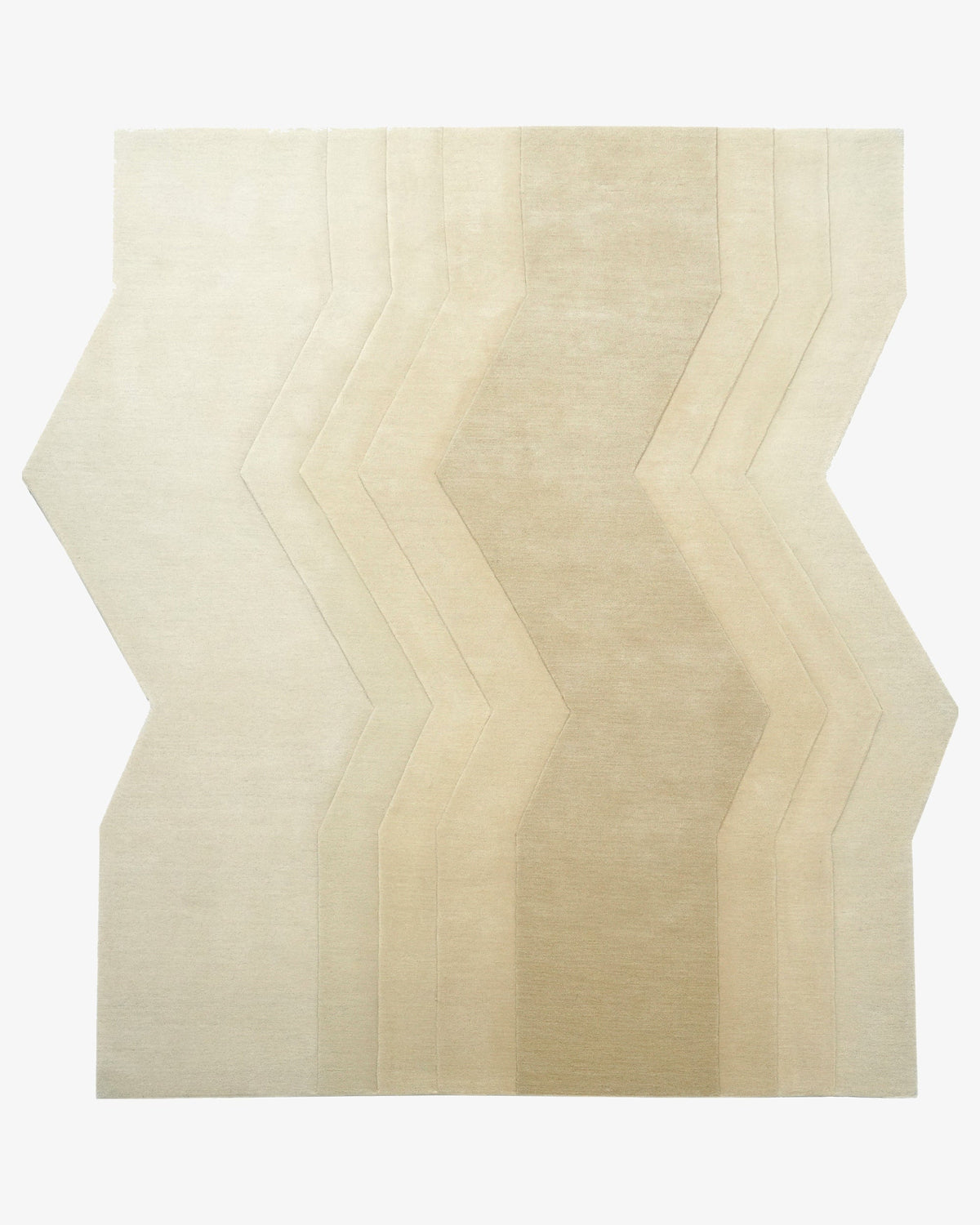
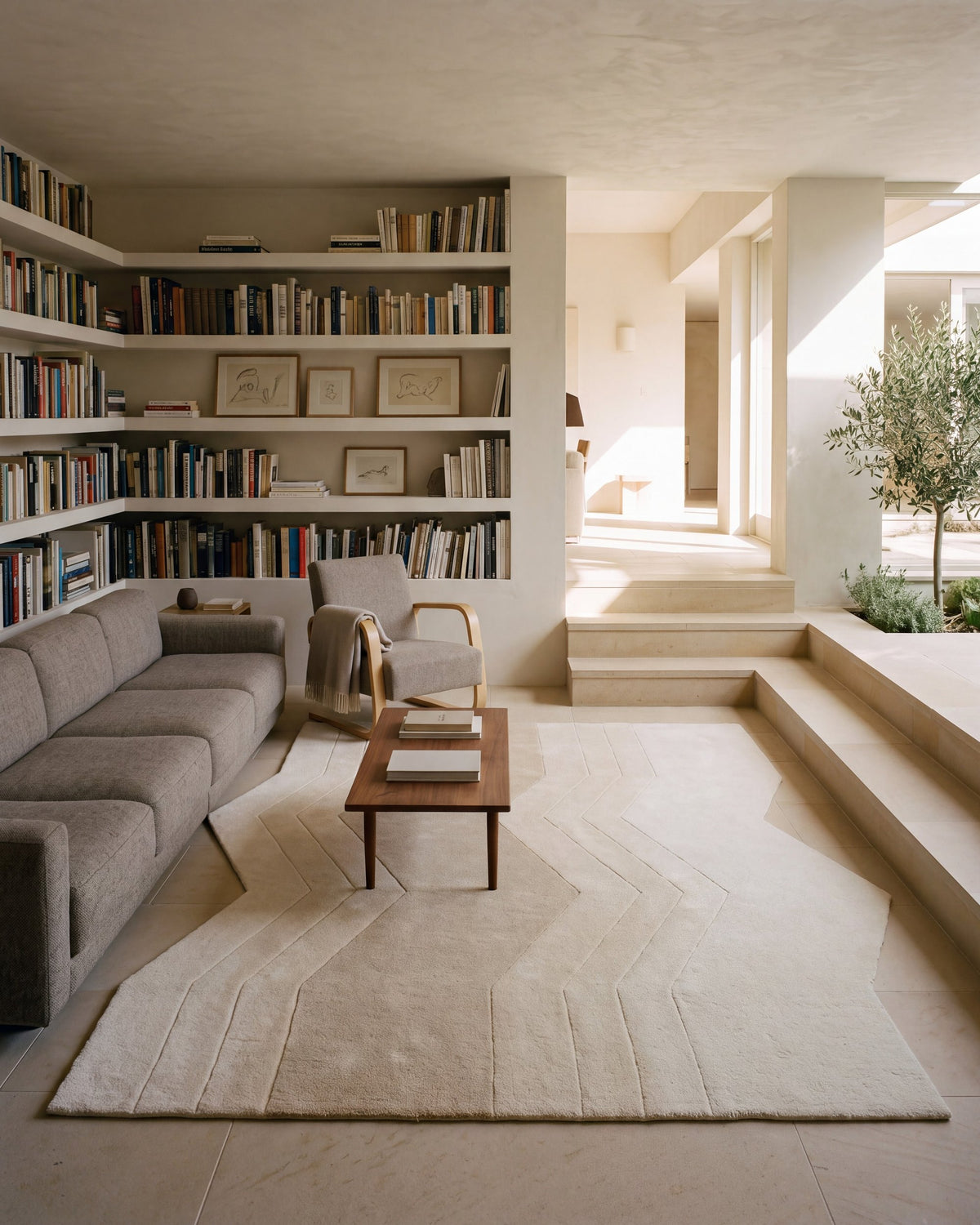
A tufted rug is made by punching yarn through a cloth, which leaves loops or cut ends at varied heights. On the Rugberry Cadence Wool Rug, hand-tufted New Zealand wool from about ₹40,000, shearing keeps each stepped band crisp, so the tone changes edge to edge without the surface looking patchy.
How does shearing differ between a tufted and a handloom pile?
A tufted pile is shorn to level the tufts, while a deep handloom pile is shorn more lightly so it keeps its softness. The aim is always an even surface, not the lowest possible one.

The Rugberry Plush Wool Rug in Sand is handloom New Zealand wool with a deep, quiet pile, from about ₹40,000. A deep pile like this is meant to move under the hand, so shearing tidies it rather than cutting it hard. Carved or high and low designs are a separate case, where the height difference is the design itself.
For more on how pile depth affects feel and wear, see our guide to rug pile height.
Why does a new rug shed fluff in the first weeks?
A new wool rug sheds fluff because shearing and washing leave short fibre ends caught in the pile, and foot traffic works them loose. This is normal and it slows down.

Fluff from a new wool rug is the last of the shearing working its way out. It thins with every vacuum.
The amount depends on the yarn. Wool spun from shorter fibres sheds a little more than long staple yarn, and a deep pile holds more loose fibre than a low one. In the dry winter of North India, static can make fluff cling to dark clothes and sofas, which makes it look like more than it is.
Shedding that continues at the same rate for many months, or bald patches where the base shows, are different. Those are worth raising with the seller.
How should you handle fluff and loose tufts at home?
Vacuum gently and often, and trim any raised tuft with scissors. Never pull a loose end.
- Use suction only. For the first weeks, switch off the rotating brush or use a hard floor head, which lifts fibre without tearing at the pile.
- Vacuum twice a week. Frequent light passes clear shedding faster than one heavy clean.
- Trim, do not pull. A single tuft standing proud is called sprouting. Snip it level with the pile using sharp scissors. Pulling it can loosen the yarn around it.
- Brush a deep pile. On a plush rug, a soft brush in the direction of the pile lifts flattened areas after furniture moves.
What does an even surface tell you about a rug?
An even surface tells you the rug has been finished with care, and it is easy to check in daylight. Stand at one end and look along the rug toward a window.

The light should travel across it smoothly. Small shifts in tone are often pile direction, where the yarn leans one way, rather than uneven shearing. Brush a patch with your hand and see whether the tone changes. If it does, it is the pile lean, which is normal. For a calm, level surface in a single tone, browse textures and solids.
Frequently asked questions
How long does a new wool rug shed?
Most of the shedding from a new wool rug happens in the first weeks of regular use and then tapers off. The pace depends on the yarn and pile depth, so a deep pile may release fibre a little longer than a low one.
Is it safe to cut a loose tuft on my rug?
Yes, if you trim it level with the rest of the pile using sharp scissors. Do not pull it, because pulling can loosen the yarn next to it.
Why does my rug look lighter from one end and darker from the other?
That is pile direction. The yarn leans slightly one way, so it reflects more light from one side, and it is a property of the pile rather than a shearing fault.
An even surface is quiet work, done once and well. Material first.




Leave a comment
This site is protected by hCaptcha and the hCaptcha Privacy Policy and Terms of Service apply.