





A Rug With Cane and Rattan Furniture
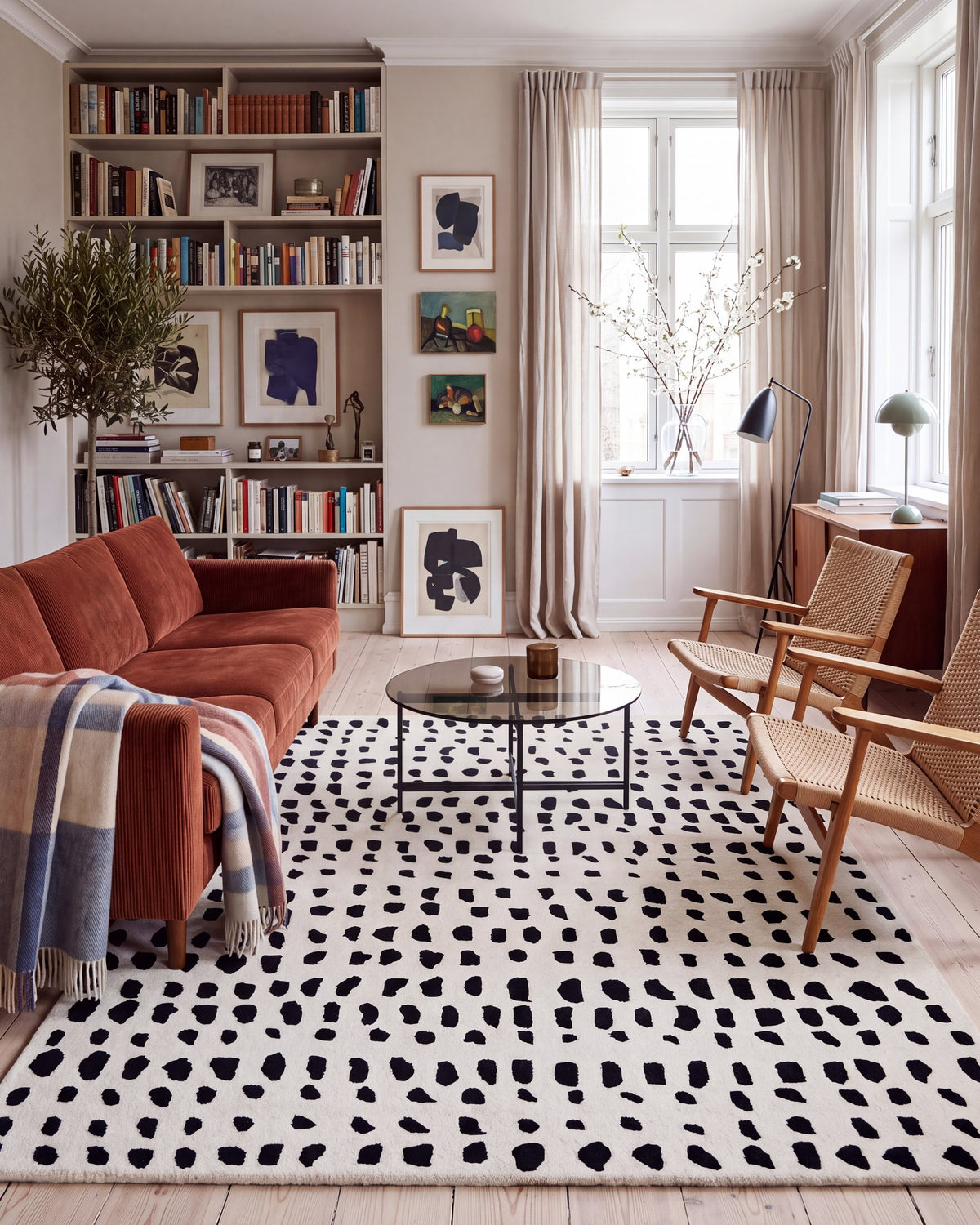
With cane and rattan furniture, choose a rug that contrasts with the weave instead of repeating it: a soft wool pile, a graphic design or a darker ground. Jute under rattan can read as one material from floor to seat, so if you love natural fibre, vary its texture, colour or scale.
In short
- A plain jute rug under rattan chairs often looks flat, because both surfaces share the same colour, sheen and woven texture.
- Cane and rattan furniture looks sharper on a cut pile wool rug, a rug with a graphic design, or a natural fibre rug in a clearly different tone.
- Thin cane and rattan legs press hard into a rug and can catch flat weaves, so felt caps or glides under each leg protect both the rug and the furniture.
- Rugberry options for cane furniture include the hand tufted Bias in wool, the handloom Cabra in wool and jute, the handloom Meraki in jute and Botanical Silk, and the patterned handwoven Pampas in jute.
Why does jute under rattan often look flat?
Jute under rattan often looks flat because the rug and the furniture share the same honey colour, the same matt surface and the same woven texture. The chair legs disappear into the floor, and the room loses the outline that makes cane furniture so appealing.

Cane is graphic. A Bombay planter's chair, a caned dining chair or a rattan lounge chair is defined by its open mesh and its curves, and it needs a background that lets that pattern show. Against a contrasting surface, the light through the cane casts small shadows that bring the piece to life.
This is not a rule against natural fibre. It is a rule against sameness. A natural jute rug can still work under rattan if it differs clearly in tone, pattern or texture, and our guide to natural jute rugs explains the four jute families at Rugberry.
Which rug textures contrast best with cane?
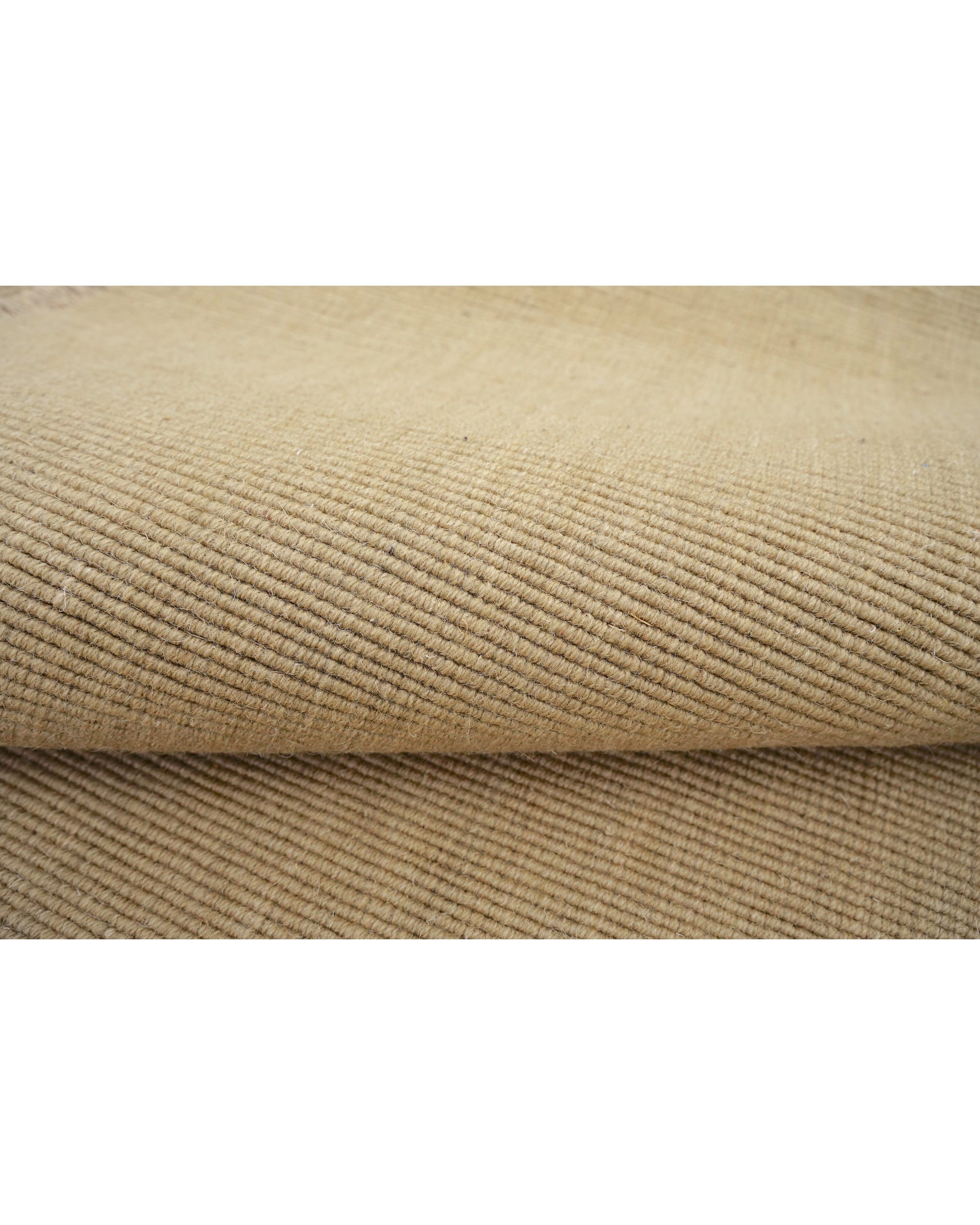
A soft, cut pile wool rug contrasts best with cane, because its dense velvet surface is the opposite of an open, crisp weave. Flat weaves can work too when they bring a different tone, a pattern or a soft wool content.


| Rugberry rug | Surface | Contrast with cane | Best with |
|---|---|---|---|
| Bias | Hand tufted wool, cut pile | Strong: soft pile and a bold graphic | Honey or natural cane armchairs in a living room |
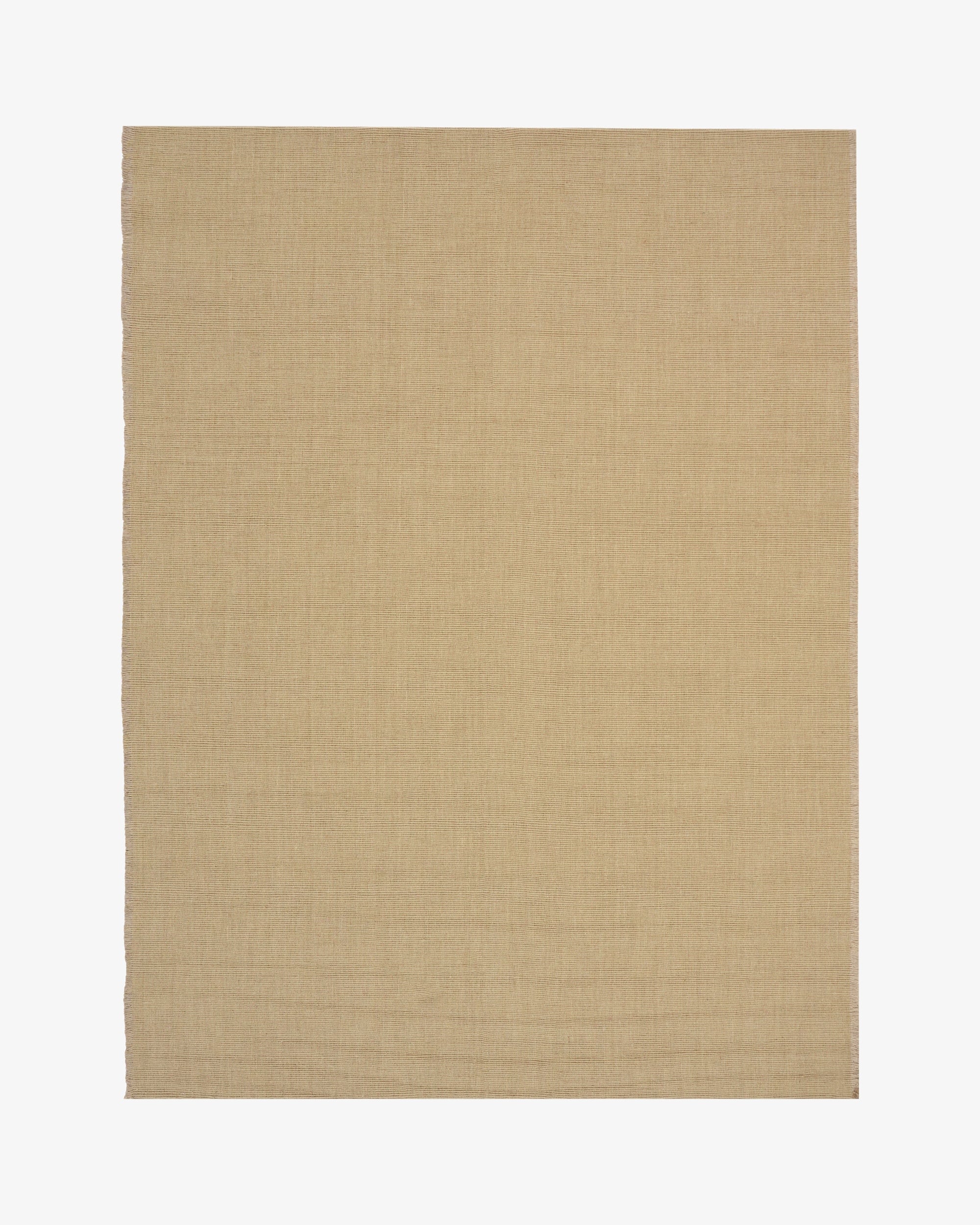
| Cabra in Sand | Handloom wool and jute, 7 to 8 mm | Gentle: wool softens the jute | Black stained or dark walnut cane frames |
| Meraki in Sage | Handloom jute and Botanical Silk, 12 to 14 mm | Moderate: green tone and a quiet shine | Natural cane on a covered verandah or sunroom |
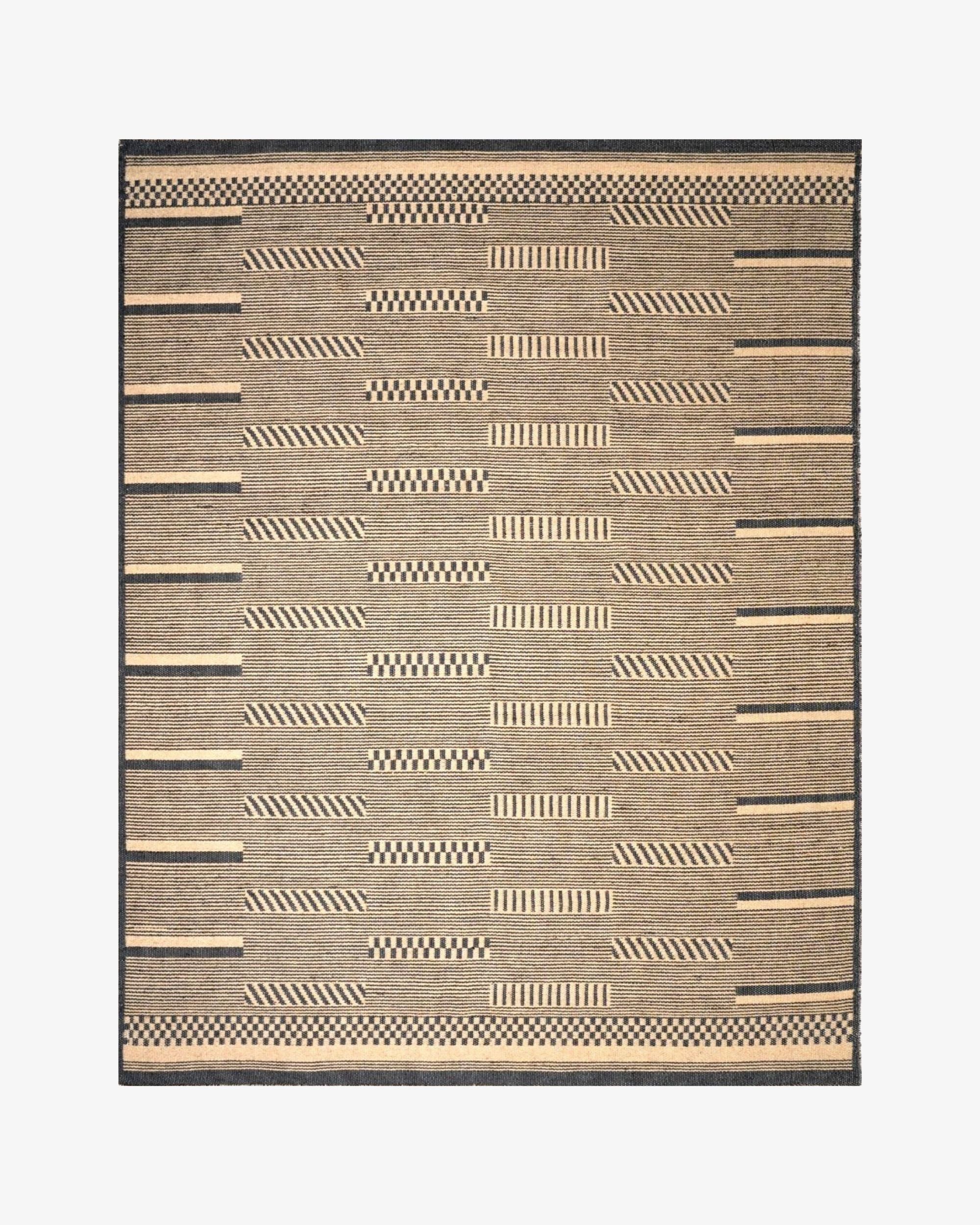
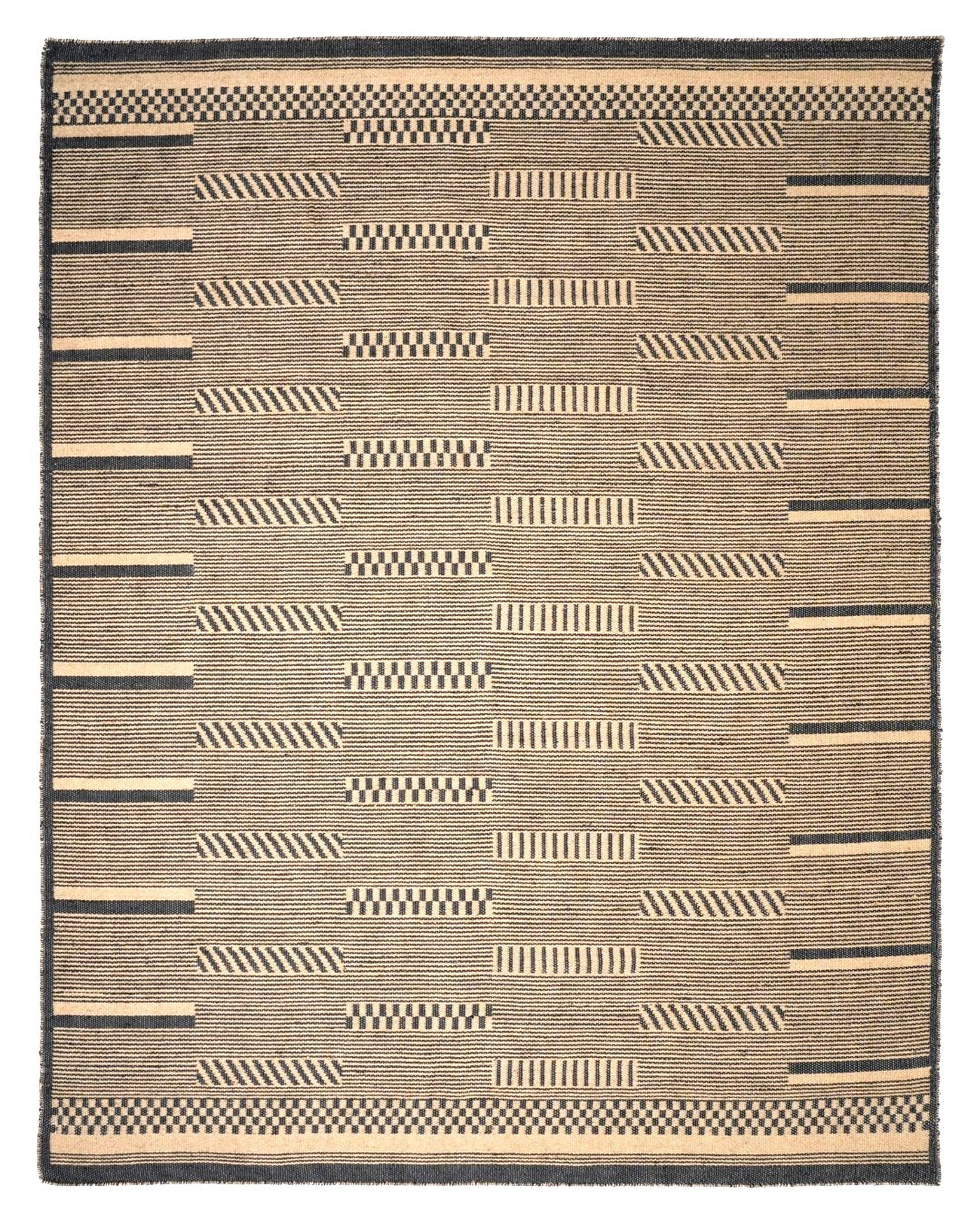
| Pampas | Handwoven jute with a pattern | Moderate: pattern breaks up the fibre | A single rattan chair or a cane bench |
Verdict: for a living room with honey coloured cane armchairs, choose a cut pile wool rug such as Bias over plain jute, because the contrast of soft pile against crisp weave is what makes cane furniture look its best.
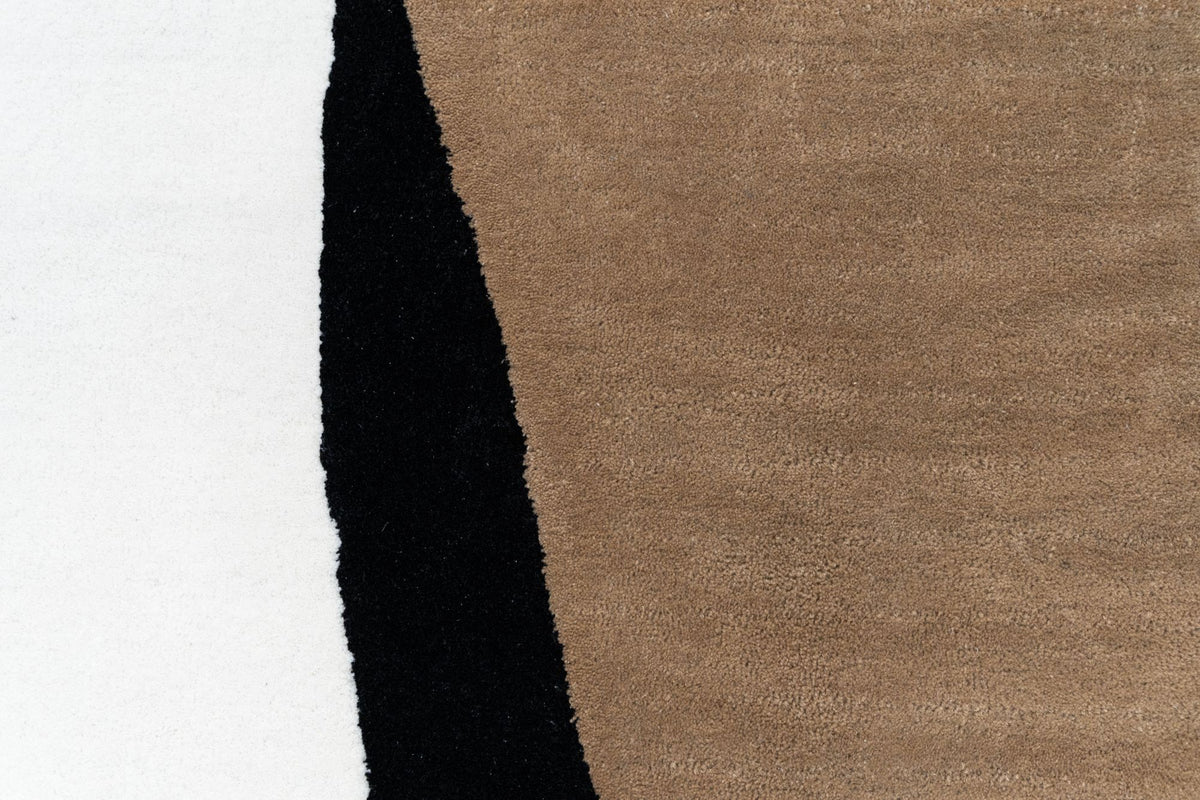
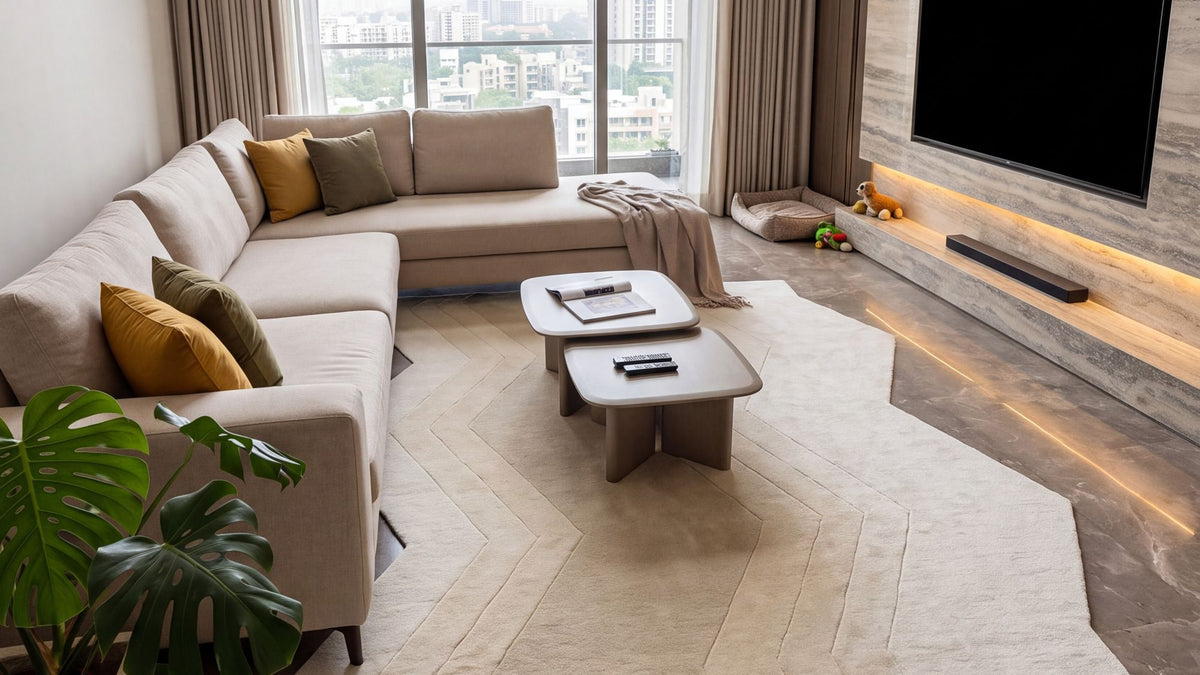
The Bias Wool Rug is hand tufted in New Zealand wool, with a black brushstroke falling through fields of tan and ivory. It comes in 8x10, 9x12 and 12x15 ft and is listed from ₹45,570 for 8x10 ft, inclusive of GST at the time of writing.
How does the colour of the cane change the rug choice?
The colour of the cane decides which rug tones will contrast and which will merge. Natural and honey cane need a rug that is clearly lighter, darker or cooler; black stained cane needs a lighter rug so the frame stands out.


Honey and natural cane, the most common in Indian homes, look best over ivory, cool grey, sage or deep charcoal, and they get lost over tan, camel and gold. Black stained or ebonised cane, popular in modern apartments, reads beautifully on a sand or ivory rug, where the dark frame draws a clean line.
White painted or whitewashed cane is the trickiest, because it disappears on ivory. Give it a mid tone rug with some colour, such as a soft green or a warm sand with texture. If your cane is a dark walnut stain, the Cabra Wool & Jute Rug in Sand gives a pale, textured ground at 7 to 8 mm, from ₹28,560 for 5x8 ft inclusive of GST at the time of writing.
Does a graphic rug work with cane furniture?
A graphic rug works very well with cane furniture, because cane is itself a fine, regular pattern and a bolder, freer design sets it off. Large shapes, brushstrokes and stripes all give the delicate mesh a strong background.

The key is scale. Cane mesh is a tiny repeat, a few millimetres across, so the rug's pattern should be much larger: wide bands, big curves, a single gesture. A fine all over print on the rug starts to compete with the cane and the two textures blur together.
Stripes are a natural partner. Cane armchairs on a striped wool rug, with the stripes running parallel to the seating, give a clean, modern look that suits a Delhi apartment as well as a Goa house. For more on line designs, see our guide to striped rugs.
Cane is already a pattern. Give it a floor that answers it, not one that copies it.
How do cane and rattan legs affect a rug?
Cane and rattan legs affect a rug more than solid furniture does, because the frames are light but the legs are thin. The weight of a seated person is concentrated on four small points, which press dents into a pile rug and can catch the weave of a flat rug.
Rattan legs are often finished with wrapped binding strips at the foot, and as that binding wears, its ends can snag loops on a flatweave or handloom rug. Check each foot with your fingertips and trim or rewrap any loose ends before the furniture goes on the rug.
Small felt caps or round glides under each leg spread the load and stop snagging. On a cut pile wool rug, dents from chair legs usually lift again when you brush the pile up with your fingers, and moving the chairs a few centimetres now and then prevents deep marks. Our guide to front legs on the rug covers furniture placement on the rug.
What about a cane swing or daybed over a rug?
A cane swing or jhoola needs a low, firm rug that sits clear of its arc, because a swing that brushes the pile on every pass wears a groove into it. Hang the swing so the seat clears the rug by a comfortable margin when someone sits, and choose a flat or low pile rug that feet can push off from.
A handloom rug at 7 to 8 mm, such as Cabra, gives feet grip without catching, while a deep cut pile under a swing can feel soft but flattens quickly where toes push off. Place the rug so the swing's centre point sits over its middle, so wear spreads instead of collecting at one edge.
A cane daybed or a long planter's chair behaves differently. These pieces rarely move, so they can stand fully on a soft wool rug, and the rug then becomes the place for bare feet when you get up. Choose a size that lets the whole frame sit on the rug rather than half on and half off, which leaves the legs at two heights.
What works on a verandah and what works indoors?
On a covered verandah, a handwoven or handloom jute rug works best, provided it stays out of driving rain; indoors, a wool pile rug gives cane furniture the softest contrast. The setting changes what the rug must cope with.


Verandahs and sit outs with cane seating see dust, sun and humid air. A patterned jute rug, such as the handwoven Pampas Jute Rug with its bands of dashes and small checks, brings pattern without fuss and is listed from ₹23,520 for 5x8 ft inclusive of GST at the time of writing. Lift and store it before the heaviest monsoon weeks.
The Meraki rug in Sage, handloom woven in jute with threads of Botanical Silk, suits a sunroom or a covered garden room where its green tone contrasts with natural cane. It is listed from ₹27,930 for 5x8 ft at the time of writing. For open sit outs, our guide to a rug for a covered balcony or sit out covers sun and rain in more detail.
How do you clean up when cane sheds fibres?
When cane sheds fibres, pick the slivers off the rug by hand or with a lint roller before vacuuming, because thin cane splinters can lodge deep in the pile or weave. Older cane and rattan pieces shed most where the mesh meets the frame and where seats flex.
On a jute or handloom rug, vacuum with suction only and keep any rotating brush off, so splinters are lifted rather than pushed in. On a wool pile rug, brush the surface in the direction of the pile with your hand first to bring fragments up, then vacuum.
Shedding is a sign the cane is drying out. A light wipe with a barely damp cloth a few times a year, kept away from the rug, helps the cane stay supple and sheds less. Treat broken strands early, since a frayed seat edge drops fragments every time someone sits.
Frequently asked questions
Can I put a jute rug under rattan furniture?
You can, but choose a jute rug that differs from the rattan in tone or pattern, such as a darker, patterned or green jute. A plain honey jute under honey rattan tends to merge into one flat surface.
What colour rug goes with natural cane chairs?
Ivory, cool grey, sage and charcoal all set off natural cane well. Avoid tan, camel and gold rugs of the same warmth, because the cane loses its outline against them.
Will rattan chair legs damage a wool rug?
Thin legs can leave dents in a wool pile, and worn binding at the feet can snag. Felt caps under each leg and moving the chairs slightly from time to time prevent most damage.
Is a wool rug or a jute rug better with cane furniture?
Indoors, a cut pile wool rug usually looks better because its softness contrasts with the crisp cane. On a covered verandah, a handwoven jute rug in a contrasting tone is the more practical choice.
Does Rugberry make rugs to match a cane furniture set?
Rugberry rugs can be ordered in custom colours and any size, so a rug can be planned around a cane set. Bring photos of the furniture in daylight so the colour of the cane can be judged properly.
Light furniture deserves a grounded floor. Browse natural jute rugs, handloom rugs and handwoven rugs at Rugberry. Material first.






Leave a comment
This site is protected by hCaptcha and the hCaptcha Privacy Policy and Terms of Service apply.