



Terracotta Rugs in Modern Indian Homes
A terracotta rug suits a modern Indian home when it is used as the one warm, earthy block in an otherwise pale room. It looks most natural on grey Kota stone, white marble or a whitewashed room, and least natural beside a second strong red such as a red oxide floor.
In short
- Terracotta is a brownish orange red, the colour of fired clay, and rugs in this family are sold as rust, russet, copper or burnt sienna.
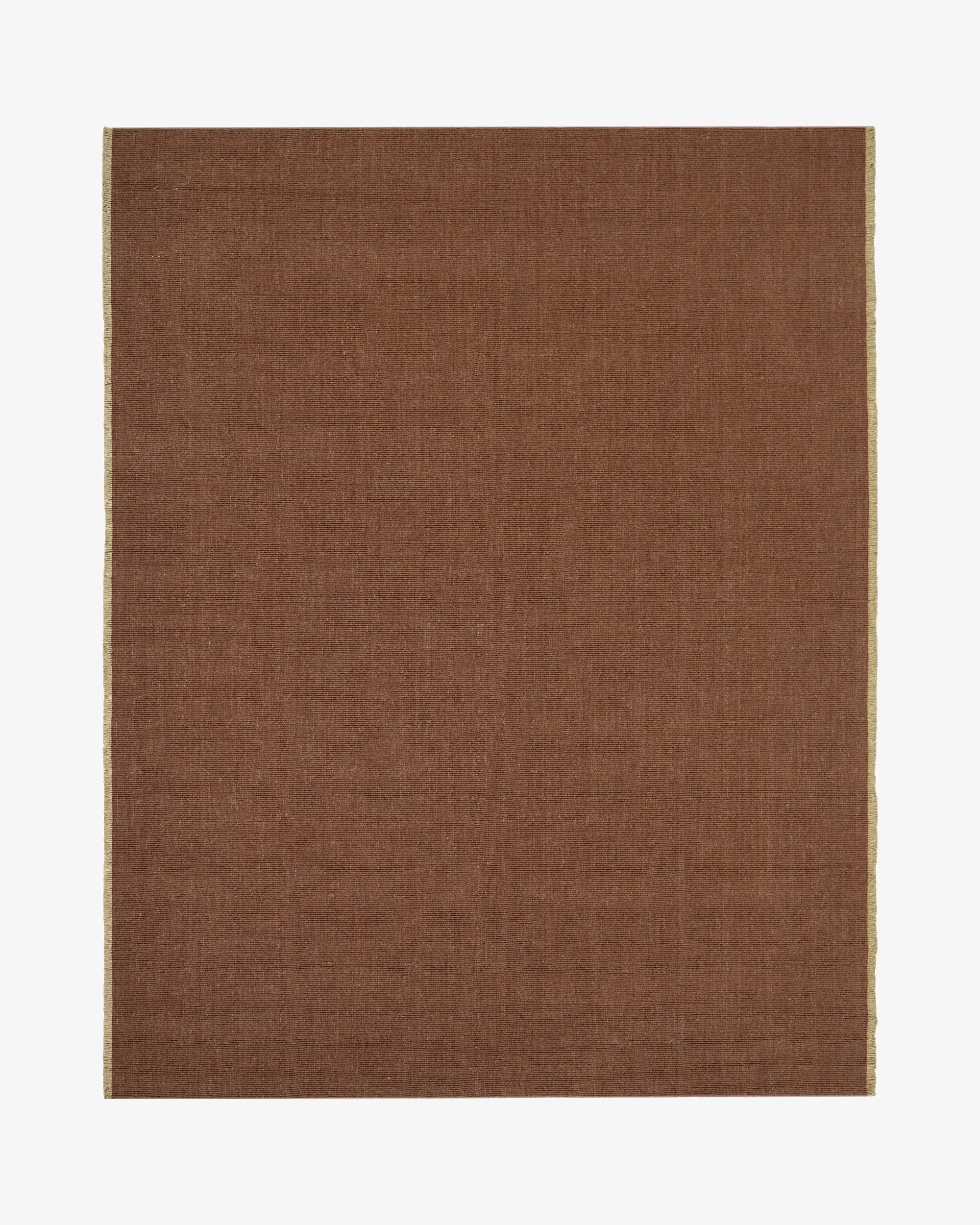
- Rugberry's Cabra Wool & Jute Rug in Rust is handloom woven in New Zealand wool and jute at 7 to 8 mm, with a regular price of ₹34,000 for 5x8 ft ex GST at the time of writing.
- Grey Kota stone and white marble are the easiest floors for a terracotta rug, because their cool tone makes the clay colour look intentional.
- A terracotta rug hides dust, dried mud and tea marks better than ivory or sage, but fades where direct afternoon sun falls for years.
What counts as terracotta in a rug?
Terracotta in a rug is any warm, brownish orange red that sits between brick and clay. The name means baked earth, and the colour should look fired and dusty rather than bright.
Four names cover most of the family.
Rust leans brown and slightly red. Russet is deeper and quieter, closer to autumn leaves.
Copper is lighter and more orange, with a metallic warmth in the right light. Burnt sienna is the reddest, an earthen red that stops short of brick.
A useful test is a terracotta planter. Put it on the swatch in daylight: if the rug and pot look like relatives, the rug is a true terracotta. If the rug looks pinker or brighter than the pot, it will read as orange in the room.
Which Rugberry rugs come in terracotta tones?
Rugberry makes three rugs in this family, all handloom woven, at three pile depths. They range from a firm flat weave for a foyer to a deep pile for a winter sitting room.


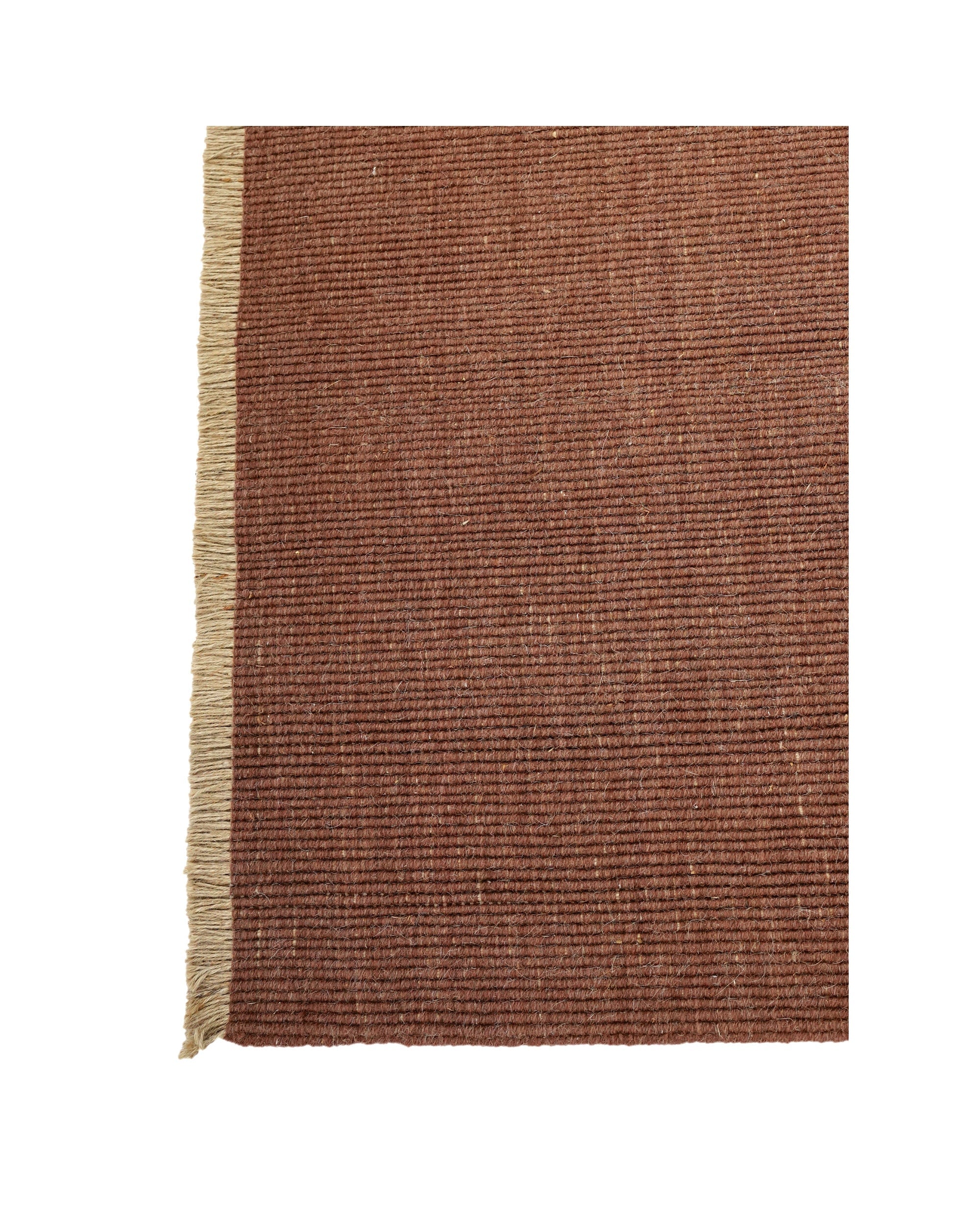
The Cabra Wool & Jute Rug in Rust is handloom woven in New Zealand wool and jute at 7 to 8 mm. The jute gives it a flecked, dry surface like unglazed clay, and its firmness suits entrances and corridors.
The Grain Wool Rug in Russet is handloom woven in Terra grade New Zealand wool at 12 to 14 mm. It is the calmest of the three, a russet that reads almost brown at night. Its regular price is ₹37,000 for 5x8 ft and ₹74,000 for 8x10 ft, ex GST at the time of writing.
The Plush Wool Rug in Copper is handloom woven in New Zealand wool at 18 to 20 mm, a deep pile that holds light in its surface. Copper looks lighter at noon and turns to a rich brown orange by lamplight. It starts at a regular ₹40,000 for 5x8 ft ex GST at the time of writing.
The rust and copper collection holds the full set, and any of the three can be made to measure or woven in a custom shade.
Which floors and walls suit a terracotta rug?
A terracotta rug suits cool or pale floors and white or lime washed walls, because contrast in temperature makes the clay colour look deliberate. It struggles on floors that are already red or orange.

| Element | Works with terracotta | Why |
|---|---|---|
| Grey Kota stone | Very well | Cool blue grey stone sets off the warm clay tone |
| White or pale marble | Very well | The rug becomes the single warm block in the room |
| Beige vitrified tile | Well, choose russet | A deeper rug keeps contrast with a warm floor |
| Red oxide floor | With care | Two reds compete; choose a sand or olive rug instead |
| Teak or sheesham | Well, with a pale wall | Wood and clay are both warm, the wall must be light |
| Wall colour | Lime white, chalk, pale clay | Avoid peach or salmon walls, they read as too much orange |
| Sofa fabric | Ecru linen, off white cotton, olive or ink blue | Light or cool fabric balances the warmth |
All prices here are Rugberry's regular prices shown on product pages, before GST and before any seasonal offer, at the time of writing.
Red oxide floors deserve a direct answer. They are beautiful and common in older homes in Kerala, Goa, Chennai and Kolkata, and a terracotta rug on top usually looks like a patch of the same floor in a slightly different red. On red oxide, choose a sand, olive or ivory rug, and let the floor be the terracotta in the room.
How do you use terracotta in a modern room without it looking rustic?
You keep terracotta modern by giving it clean lines around it and very little pattern near it. The colour is ancient, so the room should be quiet and contemporary.
Pair the rug with a low sofa with straight arms, a stone or wood coffee table with plain edges, and walls with one large artwork rather than many frames. The terracotta then reads as a considered choice, the way a single clay vessel reads in a white niche.
Avoid stacking warm tones: terracotta rug, mustard cushions, orange curtains and brass all together turns a room into a postcard. Pick one partner instead. Ink blue, deep olive or charcoal each make terracotta look calmer.
Terracotta is fired earth. Give it pale stone and clean lines, and it looks entirely of today.
Rugberry's broader piece on earthy tones in a rug shows how clay, sand and olive work together in one home.
Which room suits each shade?
Each shade suits a different room: rust for entrances, russet for dining rooms and studies, and copper for winter sitting rooms.

- Foyer or corridor: the Cabra in Rust, because the firm 7 to 8 mm weave takes outdoor shoes and does not hold grit.
- Dining room: the Grain in Russet, because its low 12 to 14 mm surface lets chairs slide and its deep tone hides crumbs.
- Living room in north India: the Plush in Copper, because 18 to 20 mm of wool is warm underfoot through a Delhi December.
- Study or reading corner: the Grain in Russet in 5x8 ft, a single warm field under one chair and a lamp, quiet enough to read beside.
In a typical Mumbai 2BHK living room of about 11x13 ft, a 6x9 ft rug is usually right. The Cabra in Rust in 6x9 ft has a regular price of ₹45,900 ex GST, and the Plush in Copper in 6x9 ft is ₹53,000 ex GST, both at the time of writing.
Verdict: for a stone floored entrance choose the Cabra in Rust over the Plush in Copper, because a firm wool and jute weave handles outdoor footwear better than deep pile.
How does terracotta wear in Indian conditions?
Terracotta is one of the most forgiving rug colours for Indian homes, because its warm mid tone is close to the colour of dust, dried mud and tea. It does have two weak points: strong sun and pale pet hair.


Fine dust and the brown film that monsoon footwear leaves behind barely show on rust or russet. A weekly vacuum and a shake of the smaller rugs on a balcony is usually enough. Spills of tea, coffee and dal read far less on terracotta than on ivory, though they should still be blotted at once with a dry white cloth.
Sun is the slow risk. Warm reds and oranges are among the dyes that soften most under direct light, so a terracotta rug in a west facing room in Ahmedabad or Jaipur can turn paler where the afternoon sun lands. Rotate it twice a year and use sheer curtains in the hottest hours.
White or grey pet hair shows on terracotta, especially on the Plush pile. If you have a pale coated dog, choose the Grain in Russet, whose low surface releases hair easily to a vacuum. Rugberry's guide to the rust rug covers care and colour shifts in more detail.
Can a terracotta rug be made to a custom size or shade?
Yes, every terracotta rug from Rugberry can be made to measure in any size, and custom colours can be requested. This helps when a room has an odd shape or when the shade needs to sit against a particular floor.
The safest process is to order a swatch, place it on the floor at different times of day, and then ask for the size you need. A swatch of the Cabra in Rust next to grey Kota stone tells you more in one afternoon than any photograph.
Kota stone deserves one more note. Its grey green tone varies from slab to slab, so lay the swatch across two or three slabs rather than one, and look at it from standing height, the way you will see the rug every day. A clay colour that looks orange on a single pale slab often settles into russet on a darker one.
A rented home is another reason to ask for an exact size. A terracotta rug cut to sit inside the seating group, rather than wall to wall, moves with you to the next flat and still fits most living rooms.
Designers matching a rug to a clay tile, a painted wall or upholstery can ask for a custom colour. Rugberry's made to measure service builds the rug on an existing design, so the construction and fibre stay the same.
Frequently asked questions
Is terracotta the same as rust?
They are close relatives but not identical. Terracotta is the broad colour of fired clay, and rust is one shade within it, slightly browner. Copper is lighter and more orange, and burnt sienna is redder.
Does a terracotta rug go with a grey sofa?
Yes, especially a mid grey in linen or wool. The cool sofa balances the warm rug, and adding one charcoal or olive cushion links the two without introducing a third strong colour.
Will a terracotta rug look dated?
A terracotta rug looks current when the room around it is pale, plain and modern. It dates only when paired with many other warm tones and busy pattern, which is a styling choice rather than a problem with the colour.
Which terracotta rug is softest?
The Plush Wool Rug in Copper is the softest, a handloom New Zealand wool rug with an 18 to 20 mm pile. The Cabra in Rust is the firmest, because jute is woven in with the wool.
Is a terracotta rug good for a home with children?
A rust or russet rug is one of the more practical choices for children, because it hides crumbs and everyday marks well. Choose a low weave such as the Grain in Russet for play areas, and keep a deep pile for a quieter room.
Fired earth on pale stone is one of the oldest pairings in Indian homes. A good wool rug simply brings it indoors, quietly. Browse Rugberry's modern rugs to see it in context.


Leave a comment
This site is protected by hCaptcha and the hCaptcha Privacy Policy and Terms of Service apply.