

Wool Rugs in India: A Buyer's Guide by Construction
Wool is the most forgiving fibre for an Indian home: it springs back under furniture, resists the odd spill for long enough to blot it, and stays comfortable from a Delhi winter to a Chennai summer. The decision that changes how a wool rug lives is not the wool itself but how it is built.
In short
- Rugberry makes wool rugs in three constructions, hand tufted, handloom and hand knotted, mostly in New Zealand wool.
- Rugberry hand-tufted wool rugs start from about ₹36,000, handloom wool rugs from about ₹37,000 and hand-knotted wool rugs from about ₹1.1 lakh.
- For an Indian dining room, a low handloom wool rug such as the Grain Wool Rug is the best choice, because chairs slide over it.
- Wool suits Indian homes because it recovers from furniture dents, gives you time to blot spills and handles monsoon humidity.
Hand tufted, handloom and hand knotted wool rugs feel, wear and cost differently, and choosing by construction is the surest way to buy the right one.
Why does wool suit Indian homes?
Wool suits Indian homes because it recovers from weight, slows spills and stays comfortable through dry heat and monsoon humidity.

Wool fibre has a natural crimp, a wave along its length that lets it compress under a sofa leg and recover when the weight is gone. It carries lanolin, a waxy coat that slows the moment a spilled cup of chai soaks in, which gives you a minute to blot. It also takes up moisture from humid air and gives it back as the air dries, so a wool rug does not feel clammy in the monsoon the way synthetic pile can.
Most of Rugberry's wool rugs are labelled New Zealand wool on the product page. Where a page simply says wool, we leave it at that.
What is a hand-tufted wool rug?
A hand-tufted rug is made by pushing loops of yarn through a stretched backing cloth with a hand-held tufting tool, following a drawn design. The loops are sheared into a cut pile, and the back is sealed and covered with a second cloth so the tufts stay put. Our hand tufted rugs all share this build.

- Feel: soft and even, with a dense pile. Rugberry's tufted range sits around 14 to 16 mm of cut pile.
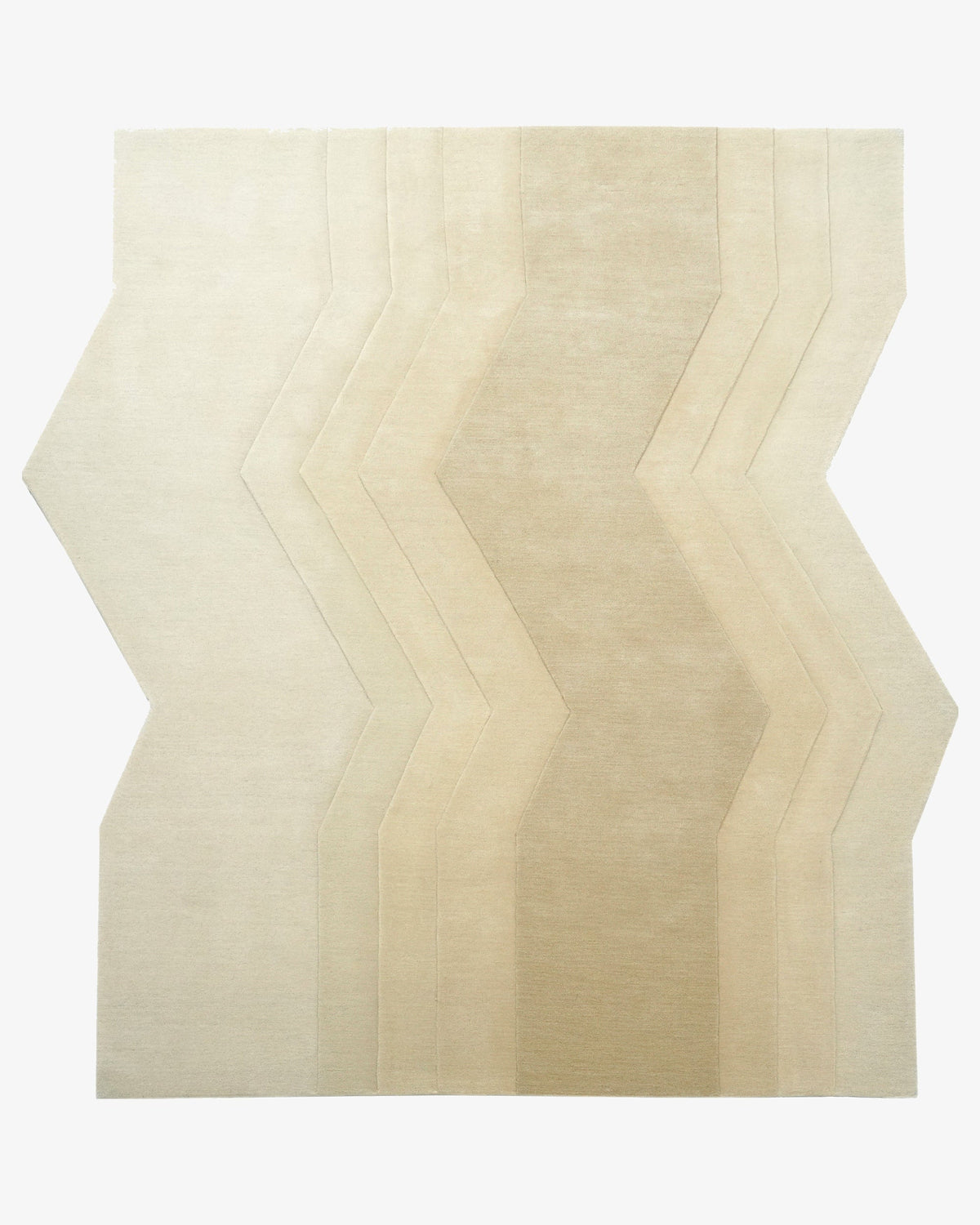
- Design: the freest of the three. Curves, bands and gradients are easy, which is why rugs like the Cadence Wool Rug, with stepped bands shifting tone edge to edge, are tufted. It starts from about ₹40,000.
- Watch for: the back. Keep a tufted rug dry underneath and do not soak it. In monsoon months, lift a corner every couple of weeks to check the floor below is dry.
What is a handloom wool rug?
A handloom rug is woven on a loom worked by hand and foot, the weft beaten in row after row. Rugberry's Grain and Plush rugs are both handloom New Zealand wool, and they show how wide the category is.


Low and close: Grain
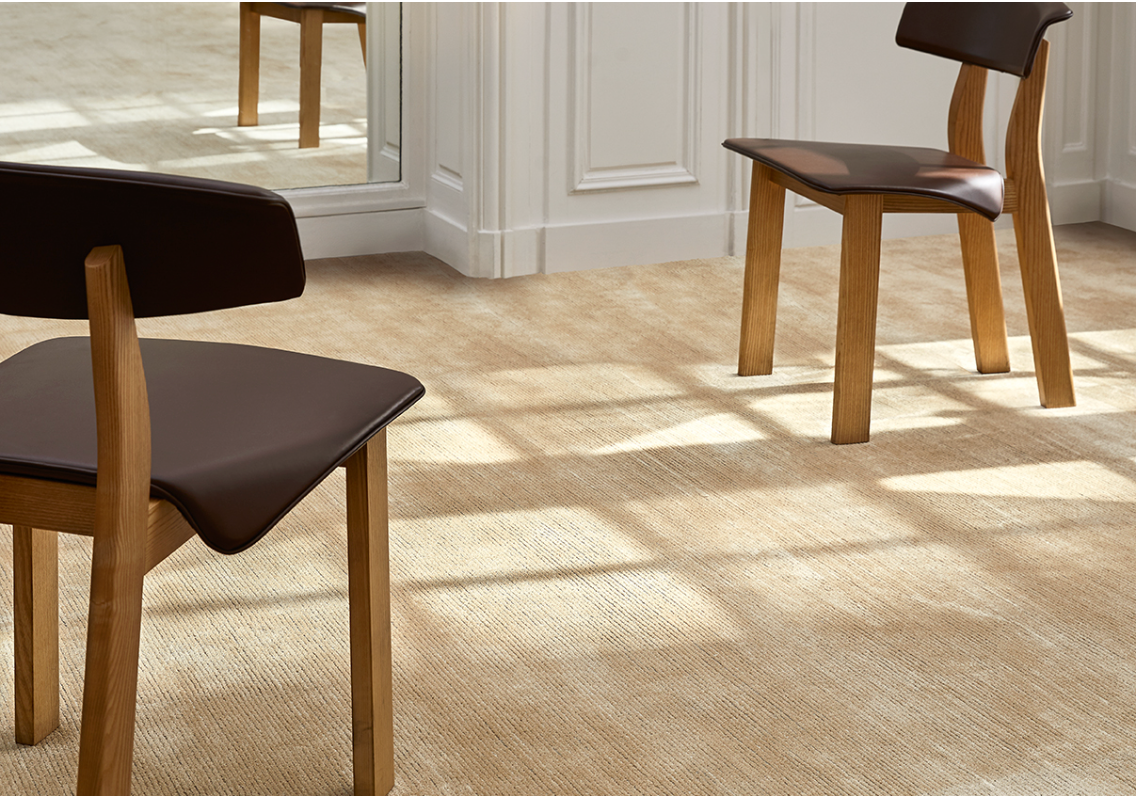
The Grain Wool Rug in umber has a low, closely worked surface where you can see the weave underfoot. It starts from about ₹37,000. A low surface is the practical choice under a dining table, because chairs slide rather than catch, and crumbs sit on top where a vacuum lifts them in one pass.
Deep and quiet: Plush
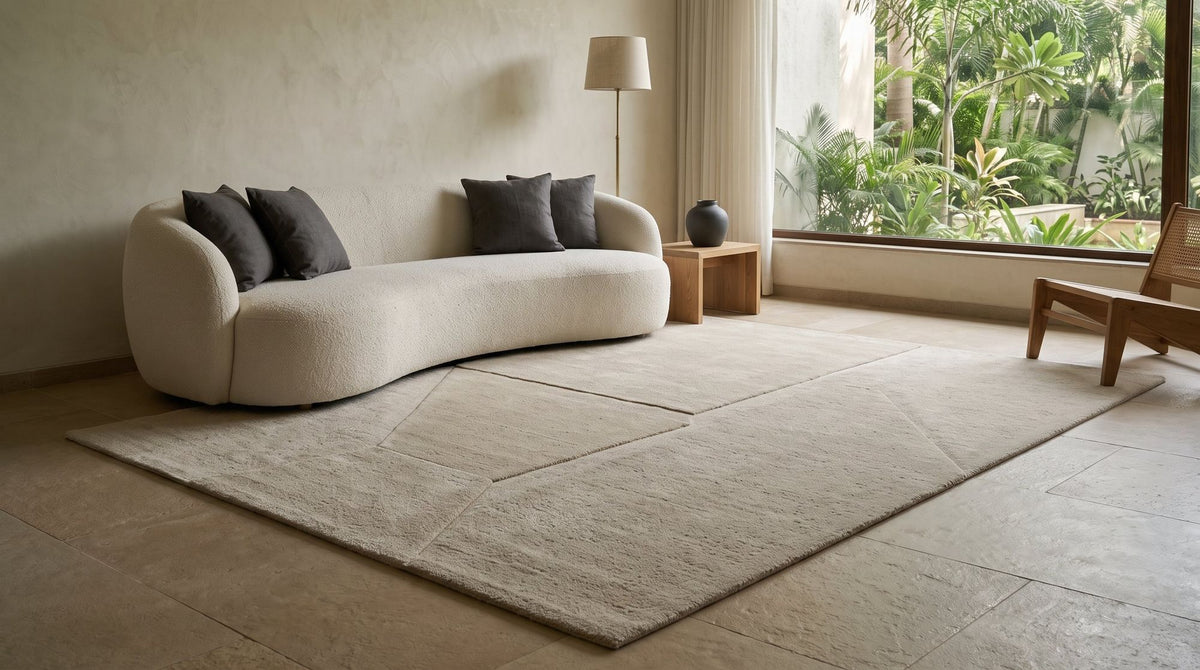
The Plush Wool Rug in camel has a deep pile that is soft underfoot, starting from about ₹40,000. Deep pile holds warmth and dampens sound, which matters in apartments with hard floors and high ceilings, where voices and footsteps carry. It also shows footprints and the direction of the pile more, so expect a little shading where people walk.
What is a hand-knotted wool rug?
A hand-knotted rug is built on a vertical loom, each knot tied around the warp threads by hand and cut, row on row. There is no glued back.

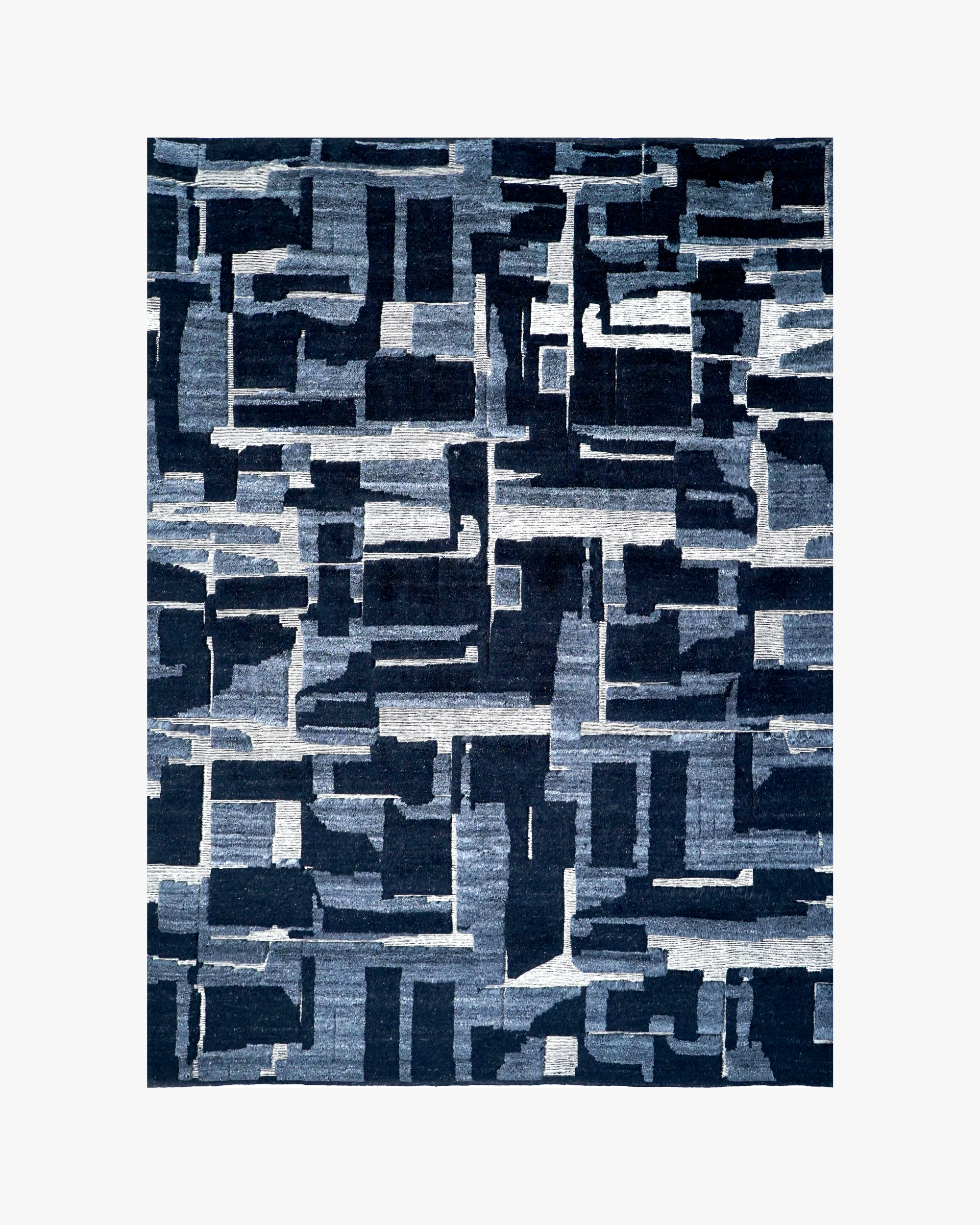
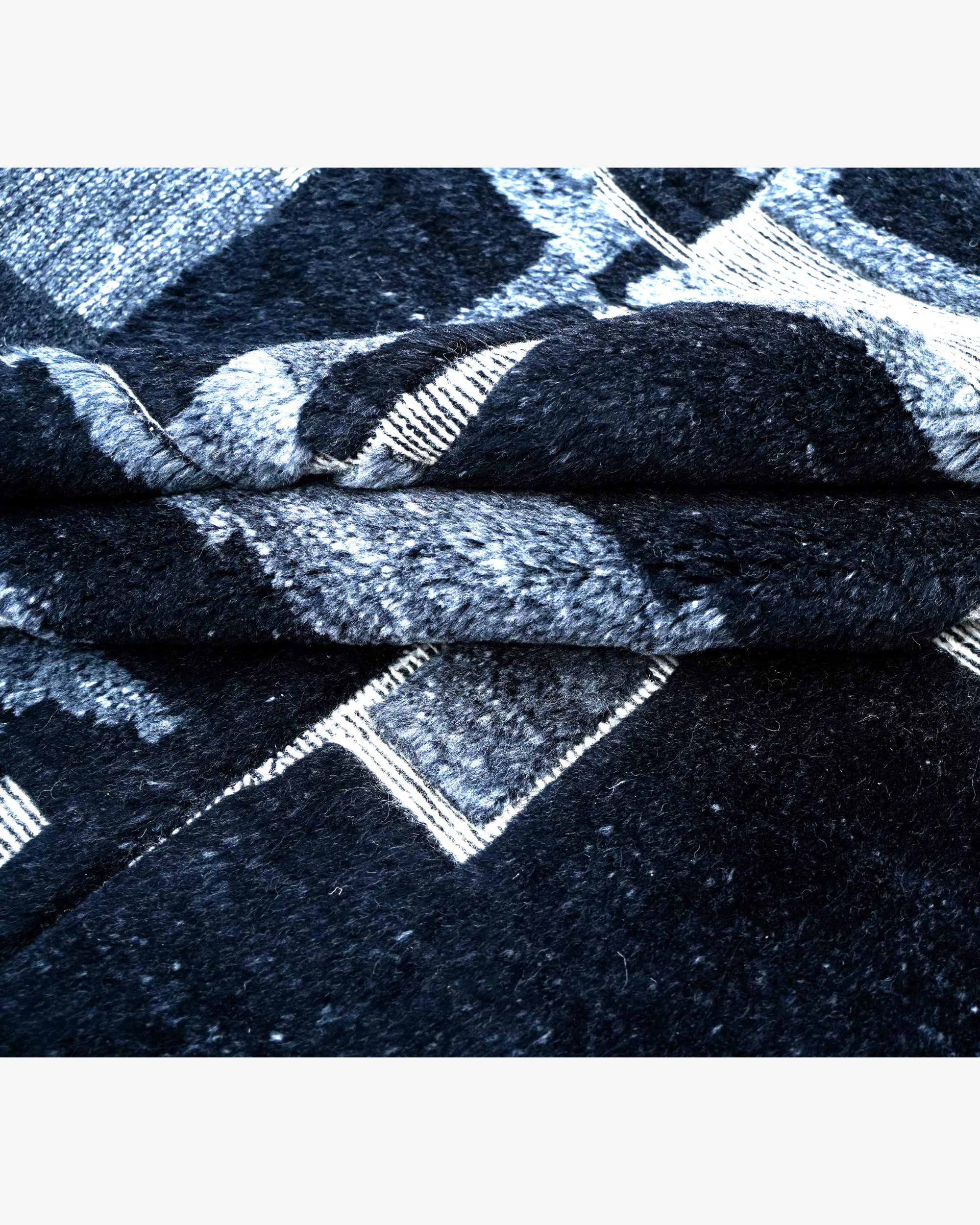
The knots are the structure. The Stratum Knotted Rug in abyss, a hand-knotted New Zealand wool rug in charcoal, is about ₹1.75 lakh in 9x12 ft and can be made to any size.
- Feel: dense and fine, firmer than a plush pile.
- Wear: the most durable way a rug can be made. It can be turned, washed by a specialist and carried from home to home.
- Cost: several times a tufted rug of the same size, because of the hand time.
What changes how a wool rug lives is not the wool itself, but how it is built.
How do the three constructions compare?
Hand tufted is the softest and freest in design, handloom the most practical for dining rooms, and hand knotted the most durable and the most expensive.


| Hand tufted | Handloom | Hand knotted | |
|---|---|---|---|
| How it is made | Yarn punched through cloth, back sealed | Woven row by row on a hand loom | Each knot tied by hand on a vertical loom |
| Underfoot | Soft, even cut pile | Low and textured, or deep and plush | Dense and fine |
| Design freedom | High | Mostly solids and textures | High, slower to make |
| Rugberry from price | About ₹36,000 upward | About ₹37,000 upward | About ₹1.1 lakh upward |
| Best room | Living rooms, bedrooms | Dining (low), bedrooms (plush) | The room the rug must last in |
Which wool rug suits which room?
For a busy family room, choose hand tufted or low handloom wool over a deep plush pile, because both clean easily and stand up to traffic.
- Busy living room with children: hand tufted or low handloom wool. Both handle traffic and are easy to vacuum.
- Dining room: low handloom. Avoid deep pile under chairs.
- Bedroom: plush handloom or tufted, chosen for feel.
- A rug for the long term: hand knotted, ideally in a size that will fit your next home too.
How do you care for a wool rug in India?
Vacuum a wool rug on suction only, keep it out of harsh afternoon sun, keep it dry in the monsoon and rotate it every few months.

Expect some loose fibre in the first weeks. This is shedding, short fibres left from shearing working their way out, and it eases with regular vacuuming on suction only. In summer, keep wool out of direct afternoon sun near west-facing windows, as strong light fades any dyed fibre over time.
In the monsoon, run a fan over the rug after mopping the floor around it, and never lay it back on a floor that is still wet. Rotate the rug every few months so that sun and foot traffic fall evenly.
Frequently asked questions
Is a hand-tufted wool rug the same as a hand-knotted one?
No. A tufted rug is punched through a cloth and sealed at the back; a knotted rug is tied knot by knot with no glued back. They can look alike from above, but they are built and priced differently.
Will a wool rug feel too warm in an Indian summer?
Wool breathes and handles humidity well, so it rarely feels hot underfoot. If you want something cooler, choose a low handloom surface rather than a deep plush pile.
How do I clean a spill on a wool rug?
Blot from the outside in with a clean white cloth and cold water. Do not rub, and do not pour water onto a tufted rug, since the backing should stay dry.
Is a wool rug better than a wool carpet fitted wall to wall?
A loose rug can be lifted, dried, rotated and moved with you, which suits tiled and stone floors and monsoon weather far better than fitted floor covering. For most Indian homes, the loose rug is the better choice.
For the history of fine rugs, read our piece on fine rugs. Pick the construction for the room, and the wool will do the rest. Browse fine wool rugs.






Leave a comment
This site is protected by hCaptcha and the hCaptcha Privacy Policy and Terms of Service apply.