Mexico City After Barragán: Walls, Light and Volcanic Stone
Images are credited where they are not from the Rugberry house.
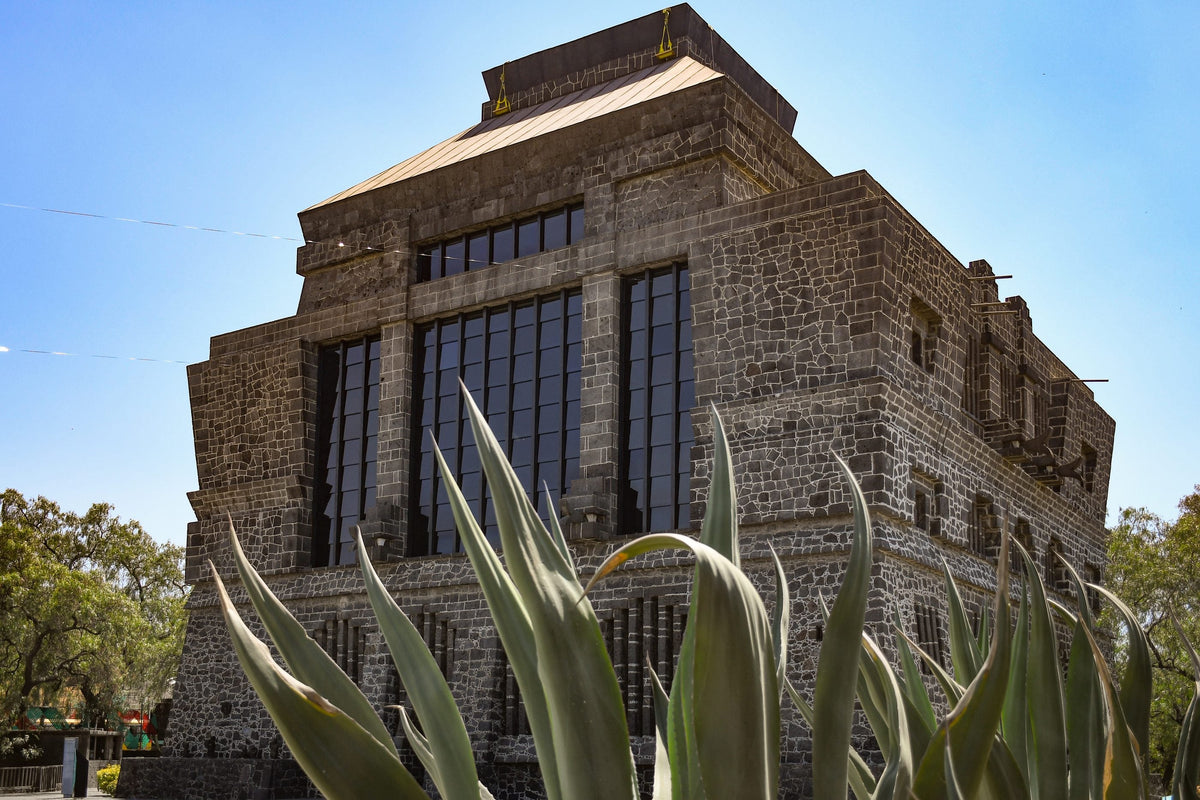
The Anahuacalli in Coyoacán, its walls built of the dark volcanic stone of El Pedregal. Photo: Nicole Valenzuela Mejía, CC BY-SA 4.0, via Wikimedia Commons, licence
Mexico City has been flattened into a single picture: a pink wall, a slice of blue sky, a figure posed against it for a phone. The picture is real enough, but it misses almost everything that makes the architecture of the city worth crossing an ocean for. Walk between the houses and museums that matter, and the colour turns out to be the least of it. What stays with you is mass, shadow, rough stone and the slow passage from a dark room into a bright one.
This is a short guide to that thread, from Luis Barragán's house in Tacubaya to Mathias Goeritz's El Eco and the black lava of the Anahuacalli, with a few rooms to sleep in along the way. It is also an argument about weight, and about what it means to build with heavy, rough materials in a city that photographs itself in pastel.
The house in Tacubaya
Begin on a quiet street in Tacubaya, in the Miguel Hidalgo district, at the house and studio Barragán spent the rest of his working life refining. Casa Luis Barragán is now a house museum, shown on guided visits that must be booked in advance, and the booking is part of its character: the house is meant to be entered slowly, with a guide, one room at a time.
This is where he worked out his language of walls, light and colour, and the order of those three words is worth keeping. The walls come first: thick, plain, enclosing. Light comes second, admitted carefully, so that it reads as an event rather than a condition. Colour comes last. It is the most photographed element of his work and the least important to the feeling of it, because it only works on a wall that has already been made calm, in a room that has already been given its shadow.
The colour arrives late and in measured doses. The calm comes from everything that is left plain.
That is the first lesson of the city. Calm is not produced by colour. It is produced by surfaces that refuse to compete with each other, and by thresholds that make you slow down before a room reveals itself.
The last house
In San Miguel Chapultepec stands Casa Gilardi, Barragán's last house, still privately owned by the family who commissioned it and shown only by appointment. It is best known for its blue and red pool corridor, where colour and water meet inside the house itself. Because it is a lived in home, the visit feels different from a museum: the rooms are still in use, and the architecture is visibly doing its everyday job.
Respect is part of the visit. A private house that opens its doors is offering a favour, not a backdrop, and the best response is to look, listen and leave the camera low.
A sculpture to walk through
Then cross the city to San Rafael, to the Museo Experimental El Eco. Goeritz created it in 1953 for the businessman Daniel Mont, and he meant it as a habitable sculpture rather than a conventional museum, a building to be felt with the body as much as seen. It has been part of UNAM, the national university, for two decades, and entry is free.
El Eco is the necessary counterpoint to Barragán. Both buildings ask to be walked rather than looked at, yet where the house in Tacubaya settles you, the habitable sculpture keeps you alert. Seeing both in a single day shows how wide the range of feeling can be within the same plain materials, and how much of that feeling is made by the body moving through space rather than by anything applied to a surface.
Black stone in the south
In the south of the city, in Coyoacán, lies El Pedregal, a field of old lava that became a focus for artists and intellectuals in the first half of the twentieth century. Here Diego Rivera and Juan O'Gorman built the Anahuacalli in volcanic stone, a dark, heavy temple for Rivera's collection of pre Hispanic art. The building and the ground it stands on are made of the same dark material, so that the museum seems less placed on the lava field than pulled up out of it.
More recently Taller Mauricio Rocha added three new buildings, raised on volcanic bases, so that more of the collection could go on display. The extension is quiet and careful, deferring to the old building while giving it room to breathe. It is a model of how to add to a strong place without trying to outshout it.

Concrete in the park
In the Bosque de Chapultepec, the Museo Tamayo, by Teodoro González de León and Abraham Zabludovsky, gives contemporary art a home in heavy concrete. It is a different temperament from the houses, more civic and more monumental, but it shares the same trust in mass and in materials left honest.

Where to sleep
Two hotels make good bases. In Condesa, Condesa DF places India Mahdavi's interiors inside a building from 1928, a lesson in how playful colour can live inside a historic shell without erasing it. In the Centro Histórico, near the cathedral, Círculo Mexicano occupies the building where the photographer Manuel Álvarez Bravo once lived, which is reason enough to stay.
What to carry home
Return home from this city and the thing most worth copying is not a wall colour. It is the sequence. A low, dim entry before a bright room. A wall thick enough to feel in the shoulders. A threshold that asks you to pause. None of it costs much, and all of it changes how a home is lived in, because it turns walking from one room to the next into something you notice.
The second thing is weight. Lava stone, raw concrete and old timber have a heaviness that light, smooth materials cannot fake, and the best rooms on this route lean on that heaviness rather than hiding it. Pattern stays on the walls, in the light, in the view through a window. What sits lower down is rough, dense and slow to change, which is what every building here, from the quiet house in Tacubaya to the black stone temple in the south, was designed to protect.
Rugberry notes
From the Rugberry house
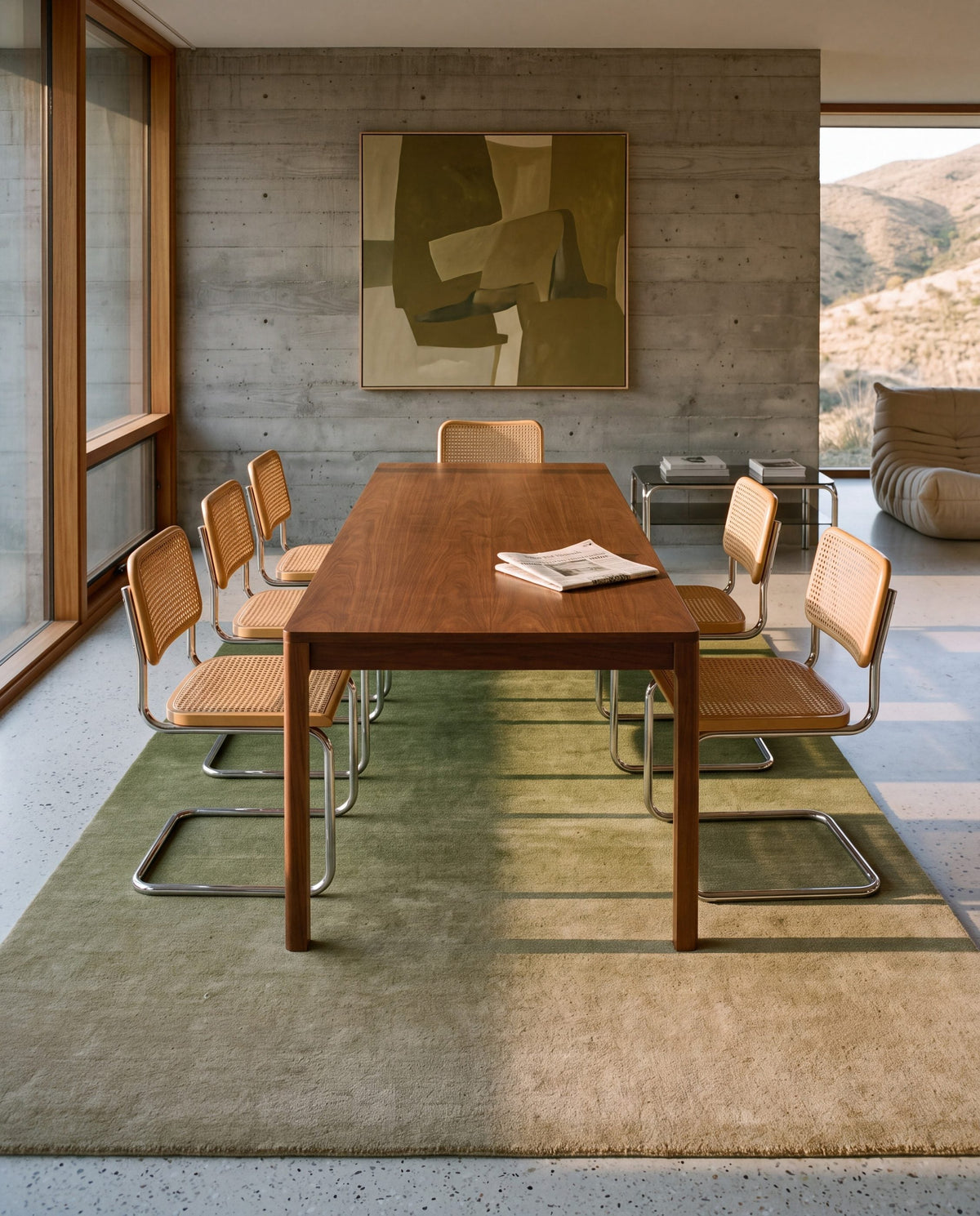
The city's lesson for a maker is about weight and texture: a rug dense enough to feel like ground rather than decoration, with a surface as rough and even as a field of old lava. In rust, copper and ochre it picks up the earth of the stone; in a plain, closely worked weave it lets the room stay heavy and quiet.
If that way of furnishing appeals, our rust and copper rugs keep to that earthy register, and our textured and solid rugs stay quiet underfoot.


In the Rugberry house
- Rust and copper rugsEarthy colour that changes with the light.
- Textures and solidsPlain grounds for rooms full of incident.
- Handloom rugsFirm, flat and even underfoot.
Rugberry has no affiliation with the studios featured. Images are from the Rugberry house unless credited.