Phantom Hands and the Many Authors of Chandigarh
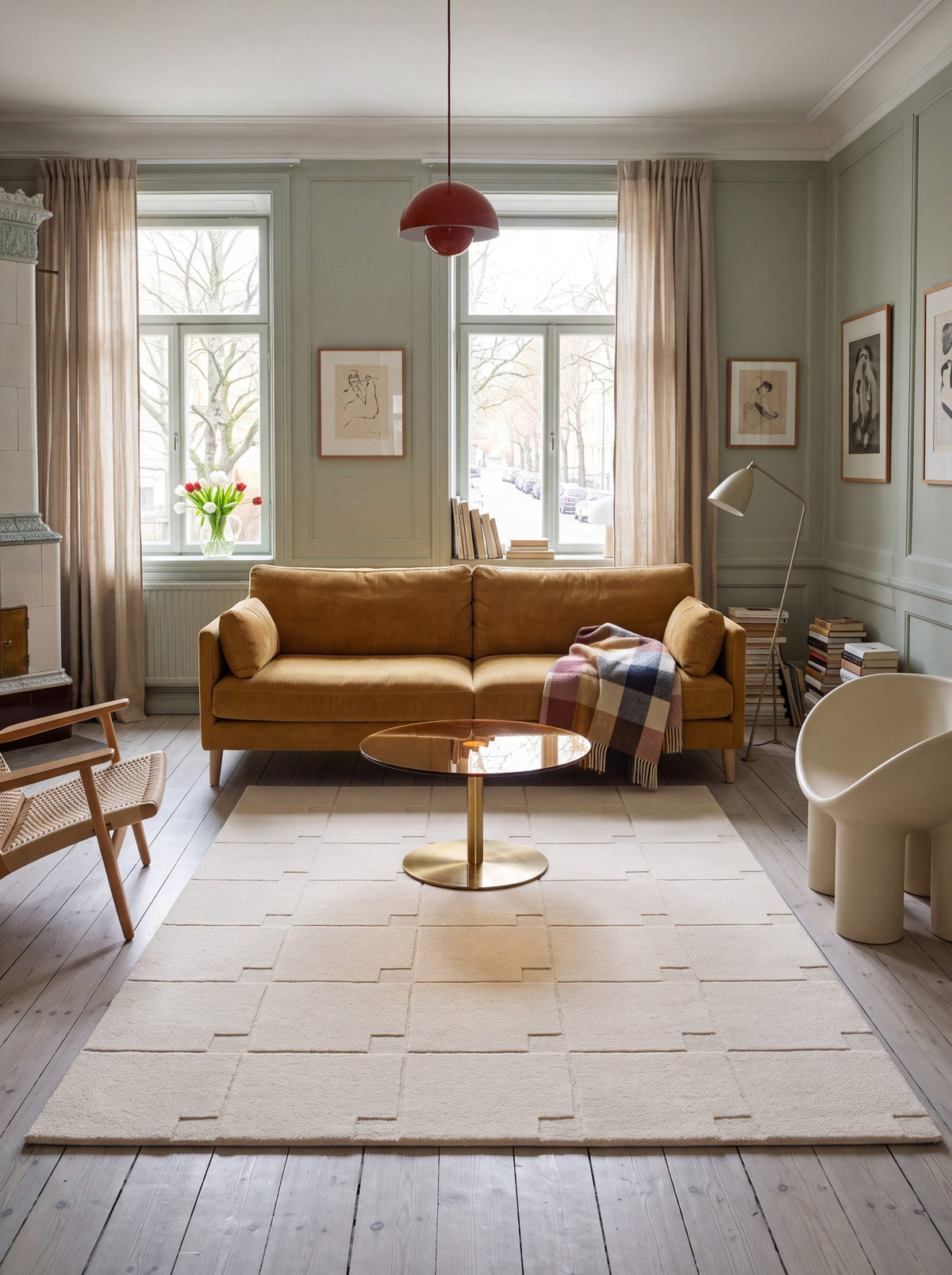
Images are credited where they are not from the Rugberry house.
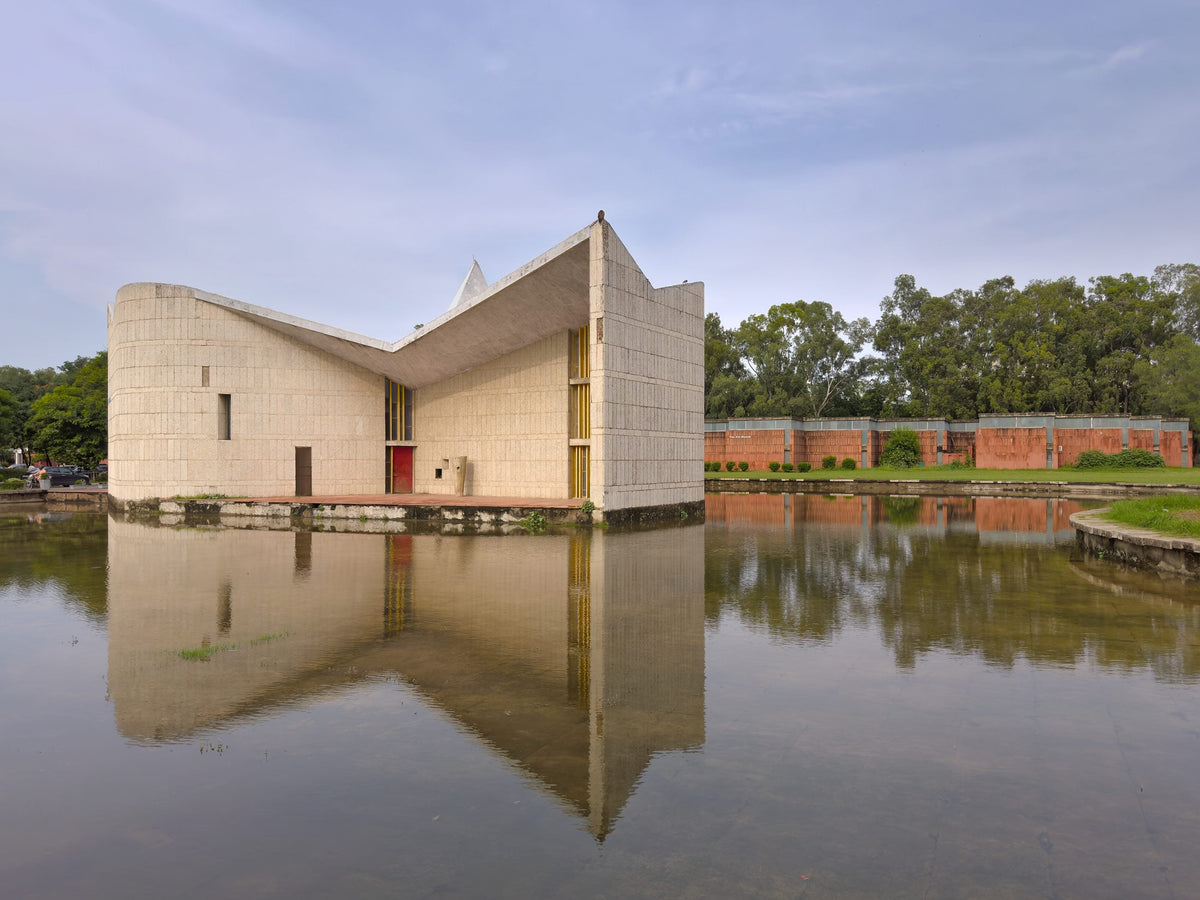
Gandhi Bhawan at Panjab University, Chandigarh, designed by Pierre Jeanneret. Photo: UnpetitproleX, CC BY-SA 4.0, via Wikimedia Commons, licence
Look closely at a Chandigarh chair, the kind with a woven cane seat and back, and you will find a small history of hands. Someone cut and joined the teak. Someone wove the cane in its tight, open mesh. Someone sanded and finished the frame. For decades the market has wanted one name to stand behind all that work. Phantom Hands, a workshop in Bengaluru, has built its practice on politely insisting that the story is larger.
The studio was started in 2014 by Aparna Rao and Deepak Srinath, and it did not begin as a furniture maker at all. It began as a monthly catalogue of researched vintage objects, each piece found, studied and written about before it was offered. Only later did the founders turn to remaking the 1950s furniture of Chandigarh, whose chairs, tables and benches have become some of the most sought after pieces of Indian modernism.
A catalogue before a workshop
That origin explains a great deal about how Phantom Hands works now. A catalogue of researched objects is, at heart, an exercise in looking carefully and recording honestly: where a thing came from, who made it, how it was made, what has happened to it since. The habit of research came first. The making grew out of it.
It also explains the studio's name, and the argument it carries. The Chandigarh furniture is often attributed simply to Pierre Jeanneret. The founders point out that the pieces were in fact developed in the collaborative design office he led and produced in a number of local workshops. Many people shaped them, most of whom are unnamed. The phantom hands of the title are theirs.
That correction matters in a market that prizes a single famous name above everything else. A chair attributed to one celebrated designer commands one price. The same chair understood as the work of an office and of several workshops is harder to sell as a trophy, and more interesting as an object. It points to a whole system of skill, joinery, cane weaving and finishing, spread across many people and many benches.
The phantom hands of the title belong to the people who made the furniture and were never named.
A hundred artisans in Bengaluru
Today the Bengaluru workshop is a collective of more than 100 artisans working across carpentry, wood finishing, cane weaving, upholstery and metalwork. That breadth is the point. A good Chandigarh chair is not one craft but several, and each of them can be done well or badly. The joinery can be true or forced. The cane can be woven tight and even, or loose and hurried. The finish can bring out the grain of the timber or bury it under a thick coat.
Its Project Chandigarh sets out to restore exactly those qualities, the integrity of joinery, cane weaving and finish that decades of reproductions had worn away. It is a striking ambition. The problem with a design that becomes famous is that it is copied, and every careless copy teaches the eye to accept a little less. After enough of them, the original standard is half forgotten. Project Chandigarh is an attempt to remember it.
The studio's interest in the authorship question extends to the archive. In 2016 Phantom Hands funded the digitisation of the Pierre Jeanneret archive at the Canadian Centre for Architecture in Montreal. It is an unusual thing for a furniture workshop to do, and a telling one. Making the drawings and records available to researchers is a way of putting the history back into public hands, so that the story of the furniture can be told from the evidence rather than from the auction catalogue.
Cane weaving is a good example of what is at stake. A well woven cane seat is taut, even and slightly springy, and it lets air move through it in a hot climate. It is also slow work, done strand by strand, and it is one of the first things to suffer when a piece is copied in a hurry. A loose or uneven weave sags within a few years. A good one can be repaired and rewoven and go on for decades. The difference is invisible in a photograph and obvious the moment you sit down.
Beyond Chandigarh
The workshop's range now goes further than one city. Its Geoffrey Bawa Collection is made with the Bawa Trust, extending the same careful approach to the furniture of the Sri Lankan architect. And in November 2025, working with the American Hardwood Export Council, it showed eight Re-editions pieces in red oak and cherry at Design Mumbai.
That last project is a small lesson in itself. Teak is the timber everyone associates with Chandigarh furniture. To remake a design in red oak or cherry is to ask what the design really depends on: the proportions, the joinery, the logic of the frame, or the particular wood it happened to be built in first. A design that survives a change of timber is a design whose quality lives in its making.
Seen together, these projects describe a workshop that treats design history as a living thing rather than a closed catalogue. A historic design is not something to be reproduced exactly and endlessly. It is something to be understood, so that it can be made well again, in new places and new materials, by people whose skill is acknowledged.
What this asks of a buyer
For anyone buying modernist furniture in India, the studio's work carries a useful caution. The single famous name is a convenient label, but it can hide more than it reveals. It hides the office where ideas were developed collectively. It hides the workshops where they were made. And it can hide the difference between a careful piece and a careless copy, because both carry the same attribution.
The better questions are practical ones. How is this joined? Who wove the cane, and how tightly? What finish was used, and does it let the timber show? Those questions are harder to answer than whose name is on the label, but they lead to better furniture, and to a fairer account of the people who make it.
The same thinking changes how such furniture is looked after. A piece made by people who understood joinery and cane can be understood again by people with the same skills: rejoined when a frame works loose, rewoven when a seat finally gives. That may be the quiet promise of naming the hands. Once a skill is acknowledged, it can be found, paid for and passed on, and the furniture stops being a relic and goes back to being something made.
Follow @phantomhands on Instagram for their own work, in their own words.
Rugberry notes
From the Rugberry house
Teak and cane sit most easily on warm, quiet neutrals, and these rooms are built on them. The Greige Wool Rug is hand tufted in New Zealand wool in a grey that leans warm, and the Grain Wool Rug is handloom woven with a low, closely worked surface that lets the weave show underfoot.


In the Rugberry house
- Handloom rugsQuiet woven wool for calm rooms.
- Beige rugsWarm neutrals that sit easily with teak and cane.
- Fine wool rugsNew Zealand wool, soft and resilient.
Rugberry has no affiliation with the studios featured. Images are from the Rugberry house unless credited.