

Abrash: The Tonal Shifts in Handmade Rugs
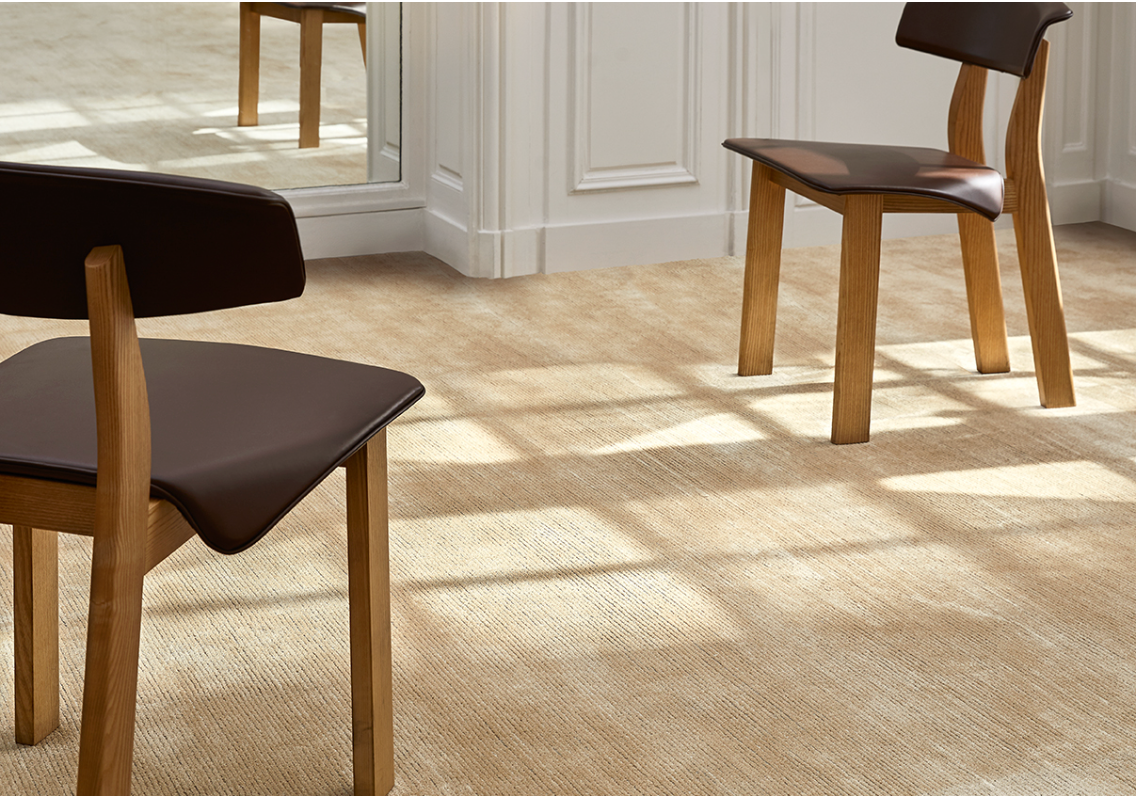
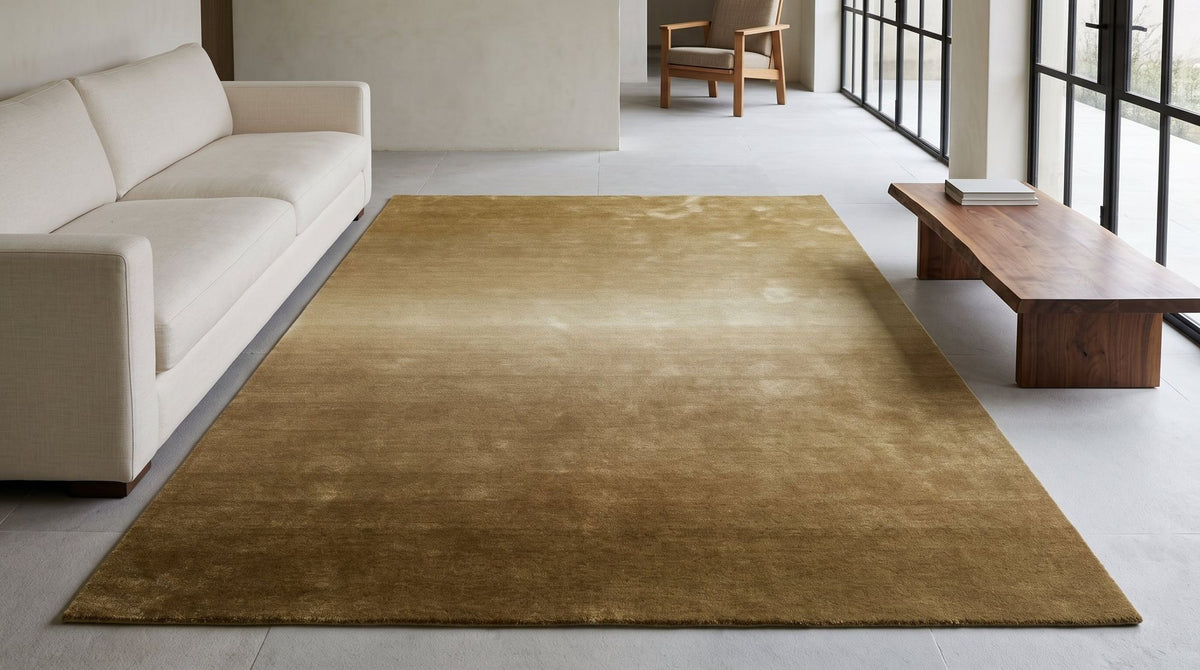
Abrash is a soft change of tone that runs across a handmade rug in bands, usually from side to side, because the yarn was dyed in small batches that took colour slightly differently. It is a mark of hand dyed yarn and slow knotting, and it should look gentle and even, never like a stain or a streak.
In short
- Abrash is the gentle banding of colour across a handmade rug, caused by yarn from different small dye batches being knotted in sequence.
- Abrash is most common in hand knotted rugs and in plant fibres such as jute, which take dye less evenly than wool.
- Abrash runs as soft horizontal bands across the width of a rug; spots, streaks, bleeding colour or patches are faults, not abrash.
- Rugberry encourages buyers to check a new rug in daylight from both ends and raise anything that looks like a fault rather than a gradual shift.
What is abrash?
Abrash is the visible variation of shade within one colour in a handmade rug, seen as soft bands where the tone deepens or lightens.


The word comes from the old rug trades of Persia and Turkey. In older village rugs the bands can be strong, with a field shifting from one blue to another halfway up. In a contemporary rug it is usually subtle, closer to the play of light on water. Our glossary entry on abrash gives the short version, and the full rug glossary lists related terms.
What causes abrash?
Abrash is caused by yarn dyed in separate small batches being used one after another as the rug is built from the bottom up.
Small dye batches
When yarn is dyed in small lots, each lot can come out a shade apart. Wool from different fleeces, small changes in water and heat, and the time in the bath all play a part.
How a knotted rug grows
A hand knotted rug is built row by row from one end. When a weaver finishes one batch of yarn and starts the next, the new shade carries straight across the width. That is why abrash forms bands across the rug, not patches in one corner.
The fibre itself
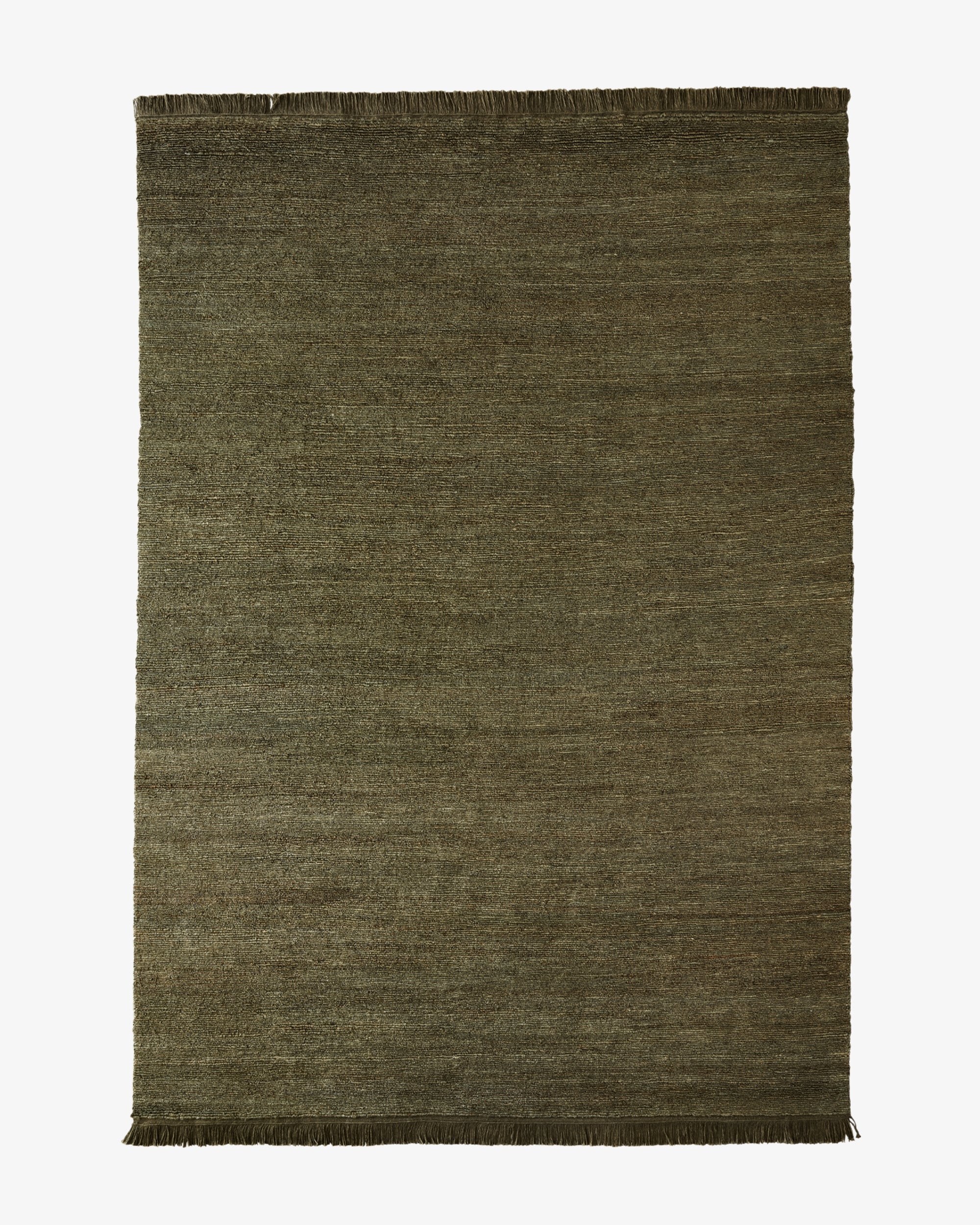
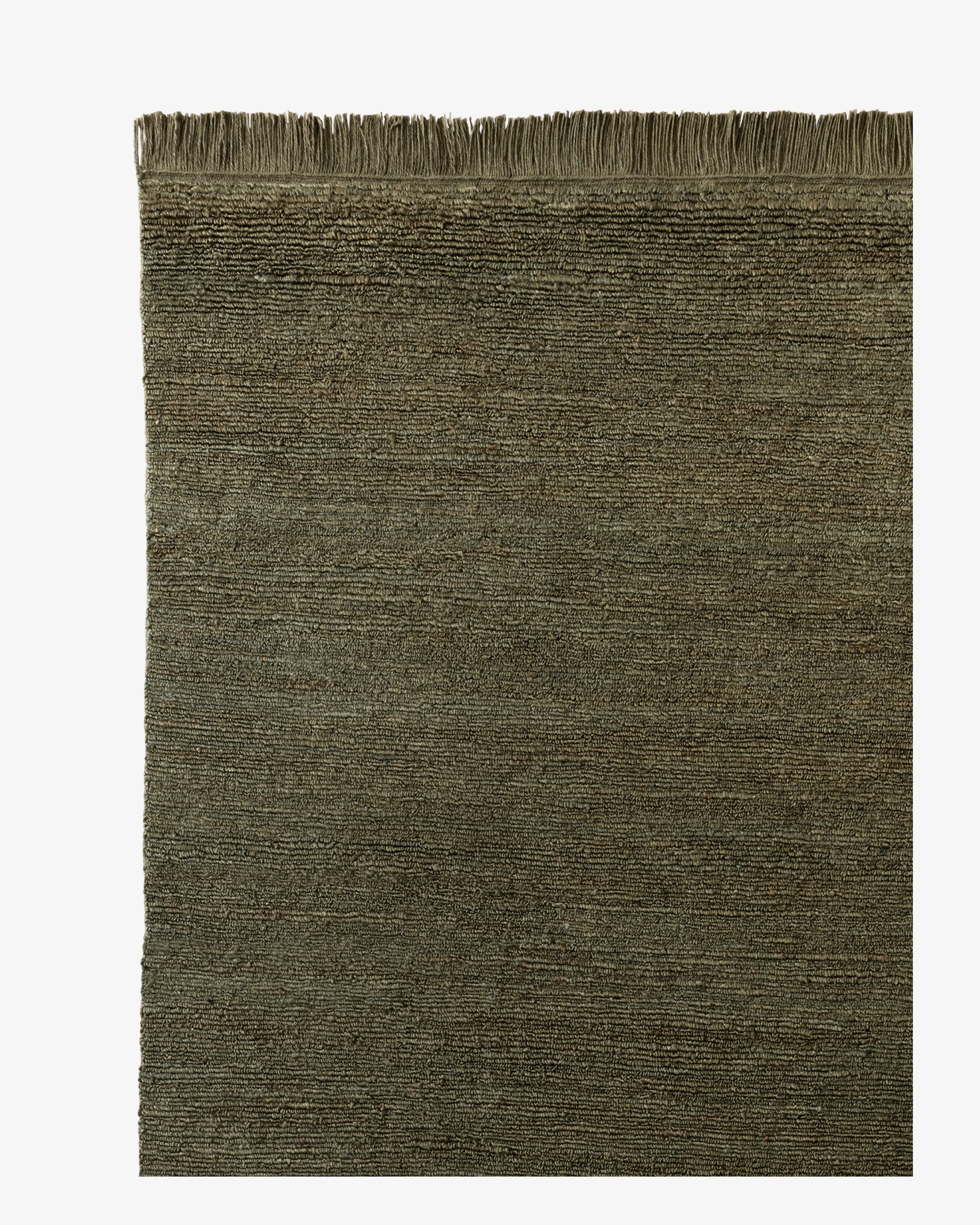
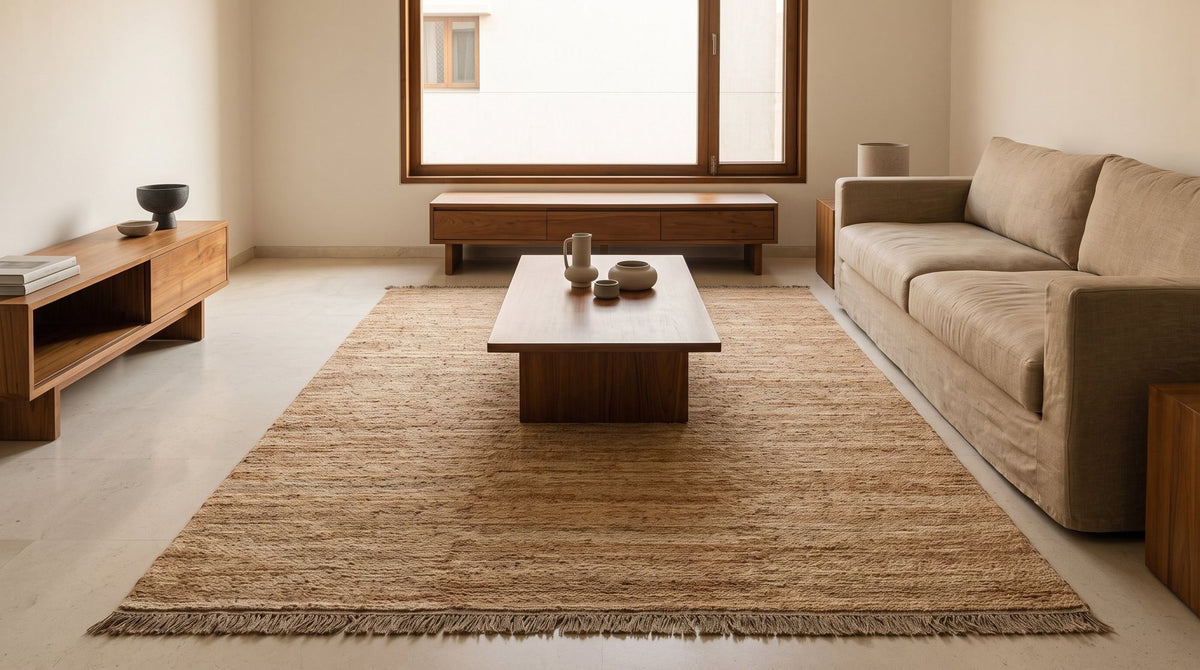
Plant fibres such as jute have a less even surface than wool and take dye less uniformly. A dyed jute rug often shows more tonal life than a wool one for that reason.
Which rugs show abrash?
Abrash appears most often in hand knotted rugs and in dyed jute, and least in rugs made from one large, even dye lot.


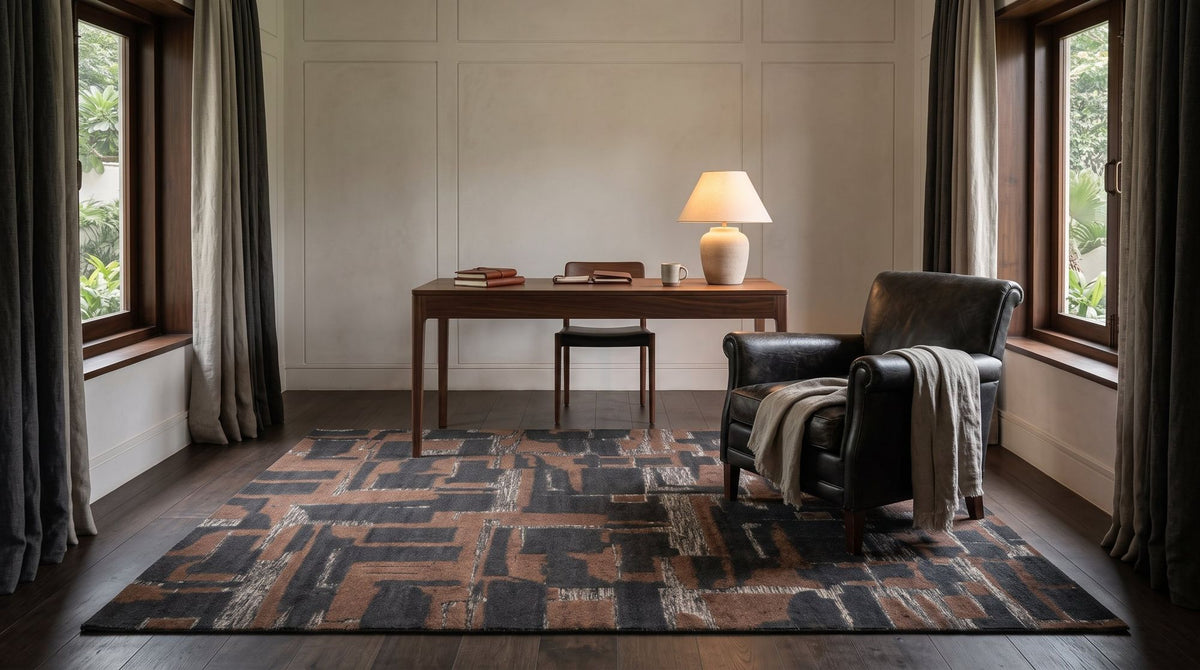
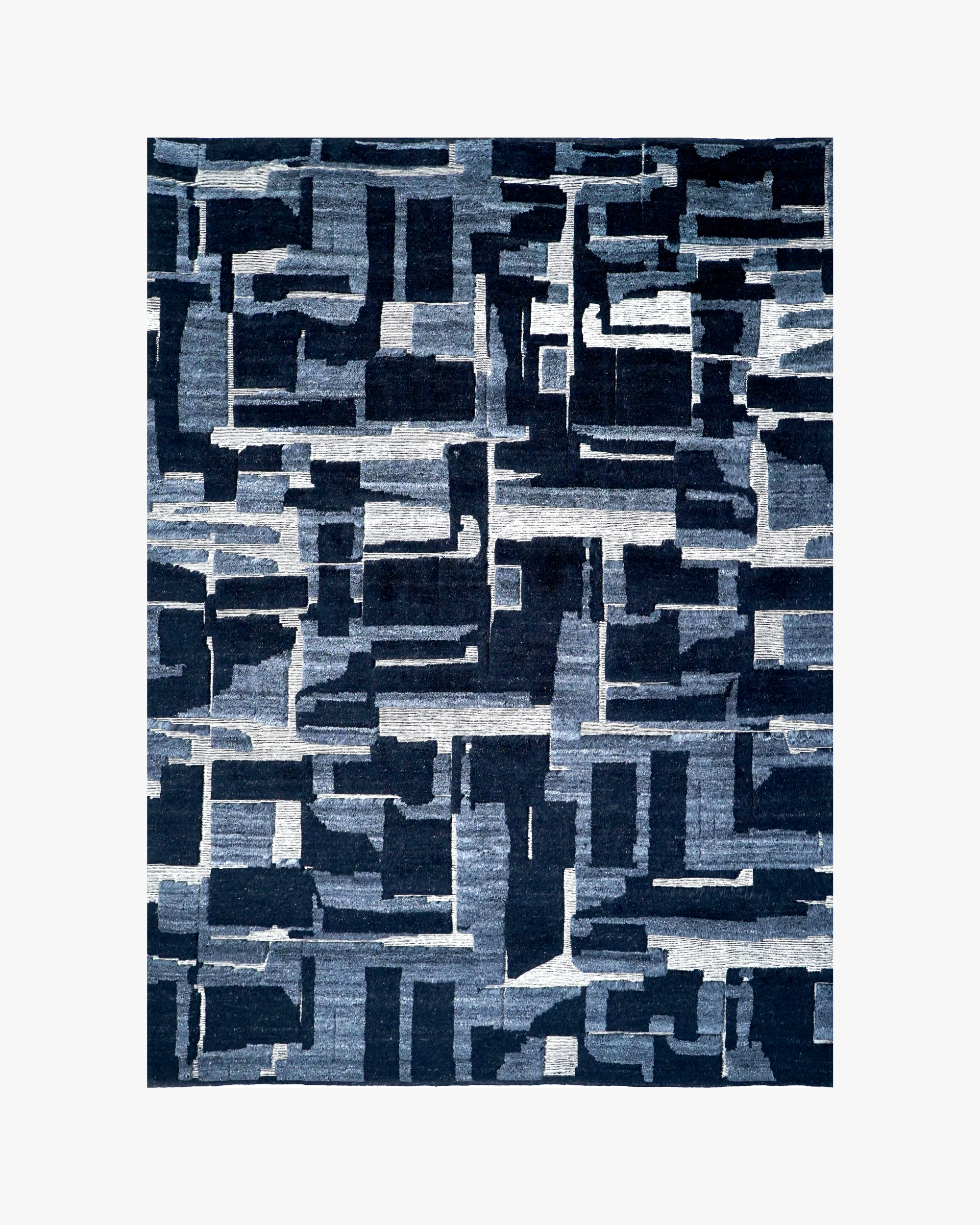
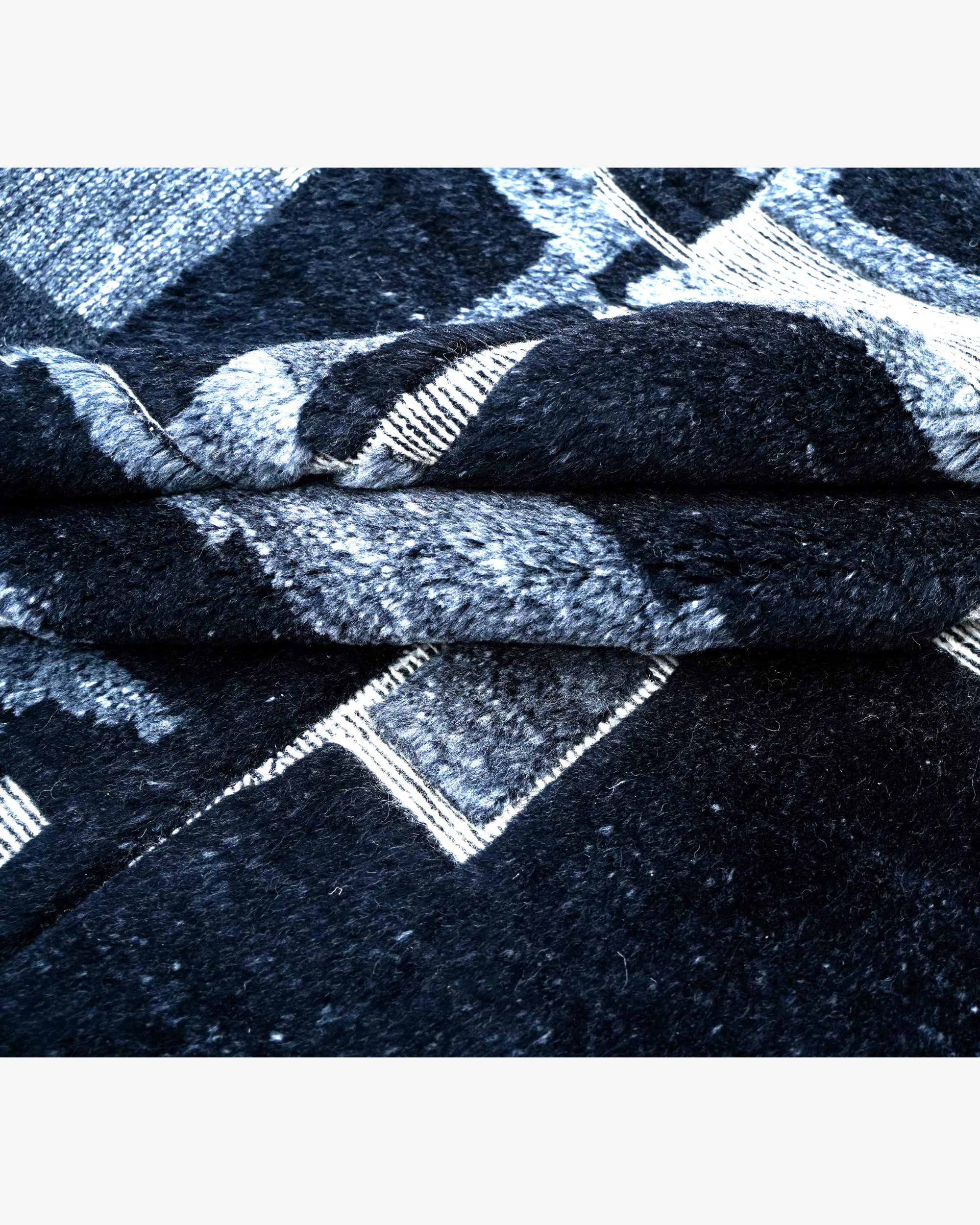
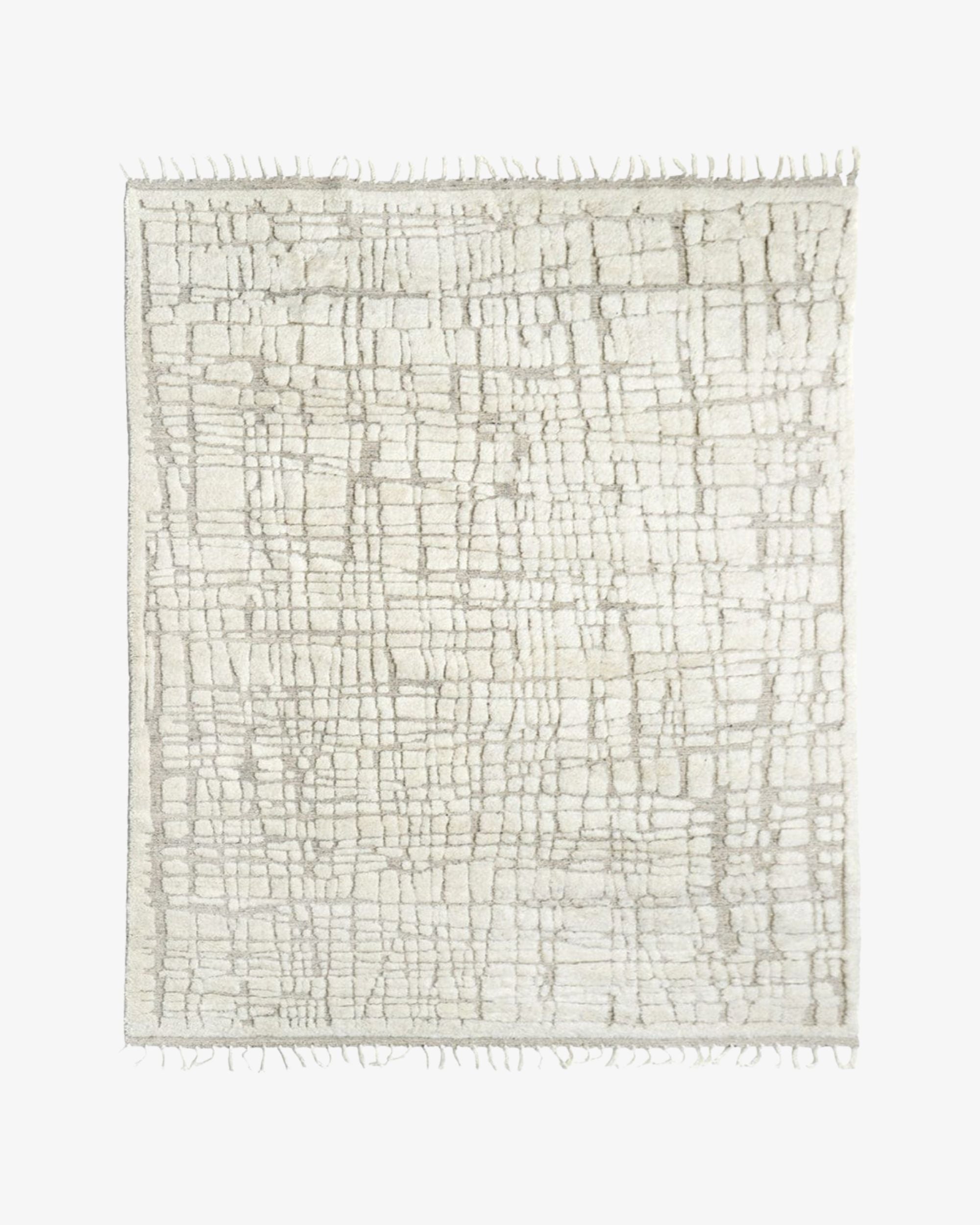
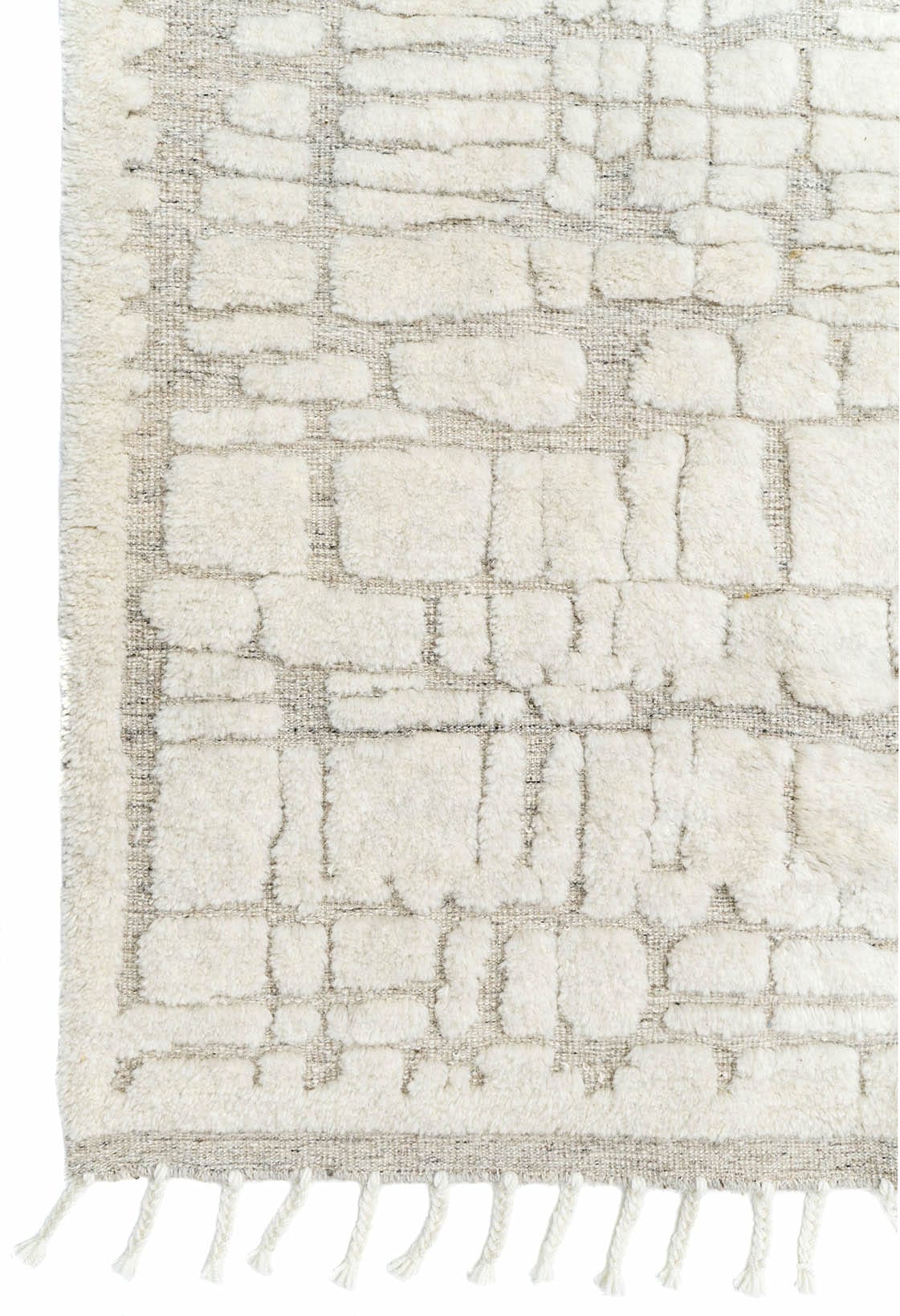
The Stratum Knotted Rug in abyss is hand knotted in New Zealand wool, about ₹1.75 lakh in 9x12 ft. In a deep, dark colourway like this, any tonal shift shows as a slow change in depth across the field rather than a sharp line.
The Savannah Jute Rug in olive is hand knotted in jute, firm and textured with the natural irregularity of the fibre, from about ₹41,000. Here, variation in tone is part of how jute looks. The Fern Hand Knotted Wool Rug, from about ₹1,12,500 in 8x10 ft, belongs to the same knotted tradition.
Abrash moves gently across a rug. A fault sits in one place and looks like an accident.
Is abrash a defect?
No. Gentle, even abrash is a normal feature of hand dyed, hand knotted rugs, but it is not a cover for real faults.

Many buyers in India unroll a new hand knotted rug, see a band of slightly deeper colour and worry that something went wrong. If the band runs evenly across the width and the edge between tones is soft, it is abrash.
Abrash should never be used to explain away a rug that is stained, patchy, bleeding colour or a different shade from what was agreed. Those are quality issues and deserve a proper answer from the seller.
How do you tell abrash from a fault?
Look at the shape, the edges and the direction of the colour change.

| What you see | Likely abrash | Likely a fault |
|---|---|---|
| Direction | Bands running across the width | Random patches, spots or streaks lengthwise |
| Edges | Soft, gradual change in tone | Hard edges, rings or tide marks |
| Colour | Same colour family, slightly deeper or lighter | A different colour, or dye spreading into a neighbouring colour |
| Feel | Pile feels the same across the band | Pile feels stiff, sticky or damp in the patch |
One caution: shading from pile direction can look like abrash. If a band appears lighter from one end and darker from the other, and swaps when you walk round, that is the pile, not the dye.
What should you do if you see banding when your rug arrives?
Check the rug in daylight from both ends after it has relaxed for a day, then decide whether it is abrash, shading or a fault.
- Unroll the rug and let the pile recover for 24 hours. A crushed pile looks darker.
- Look at it from each end in daylight, with no lamps on.
- Run your hand across the band. If the shade swaps with the direction of your hand, it is shading.
- If the change is a soft band across the width, it is abrash.
- If you see spots, streaks, bleeding colour or a stiff patch, photograph it in daylight and contact Rugberry.
Our guide to handmade rug irregularities covers other features that are normal in hand made rugs, and those that are not.
Frequently asked questions
What does abrash mean in a rug?
Abrash is the gentle variation in shade within one colour of a handmade rug, seen as soft bands across the width. It comes from yarn dyed in small separate batches.
Does abrash lower a rug's value?
Soft, even abrash is widely seen as a sign of hand dyed yarn and does not lower the value of a hand knotted rug. Uneven patches, stains or bleeding colour are faults and are judged differently.
Do hand tufted rugs have abrash?
Hand tufted rugs are usually made from yarn dyed in larger lots, so abrash is less common. Small shifts can still appear, especially in pale or plain colours.
Will abrash fade over time?
No. Abrash is part of the dyed yarn, so it stays. Light and wear may soften it slightly as the whole rug mellows.
A hand dyed rug carries the record of its making. Read it calmly. See the Rugberry hand knotted rugs.

Leave a comment
This site is protected by hCaptcha and the hCaptcha Privacy Policy and Terms of Service apply.