

How Wool Takes Colour: Dyeing Explained
Rug wool is usually dyed as yarn, before it is woven or tufted, in batches called dye lots. Each lot comes out very close to the last but never exactly the same, which is why rugs that must match should be made together.
In short
- Yarn dyeing means wool is coloured as yarn, before weaving or tufting, so colour runs through each strand.
- Each dye lot of rug yarn varies slightly, because wool, water and timing are never perfectly identical between batches.
- Rugs that must match, such as a pair either side of a bed, should be ordered together so they come from one dye lot.
- Rugberry ombré rugs, such as the Ombré Forest Rug, are built from many dyed shades placed in a slow gradation.
How does wool take colour?
Wool takes colour because its fibre has sites that bond with dye in hot water. The yarn is wetted, heated in a dye bath, held until the colour is absorbed, then rinsed and dried.


Wool accepts dye deeply and evenly, which is why it gives such clear, rich colour in rugs. Silk takes dye too, and often looks brighter because its smooth surface reflects more light.
Why yarn is dyed before the rug is made
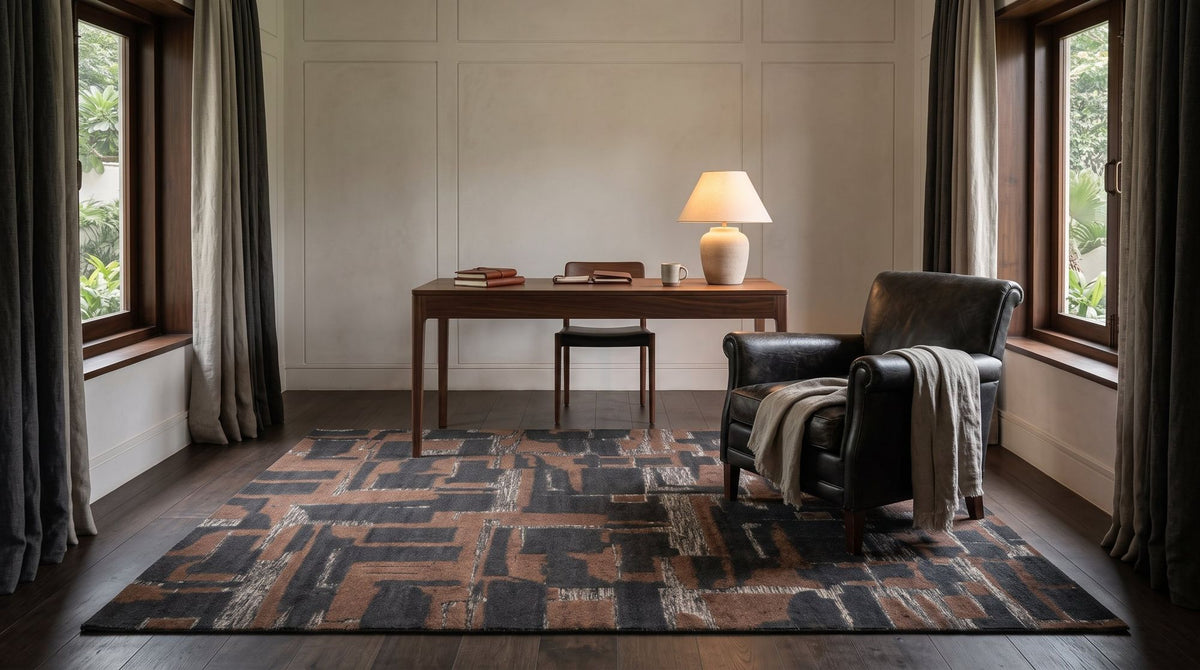
Yarn dyeing lets a maker build a design from many separate colours, each tufted or woven exactly where it belongs. A pattern like stepped bands or a gradient is only possible because each shade exists as its own yarn first.
What is a dye lot?
A dye lot is one batch of yarn dyed together in the same bath at the same time. All yarn in one lot is a close match to itself.


Between lots there is always a small difference. Wool from different fleeces takes dye a little differently, and water, heat and timing never repeat perfectly. A skilled dyer keeps the difference small. Nobody can make it zero.
Two rugs from one dye lot match. Two rugs from two dye lots are close relatives.
Why should you order matching rugs together?
Order matching rugs together so they are made from the same dye lot. A pair of bedside runners, two rugs in an open living and dining room, or a set for a hotel suite will then match each other closely.

If you buy one rug now and its twin next Diwali, the second will come from a new lot and may sit a shade warmer or cooler. On its own nobody would notice. Side by side, under the same light, you might.
- Plan the set at once. Even if you are furnishing room by room, decide which rugs must match before ordering the first.
- Tell Rugberry they are a set. Ask for the rugs to be made together.
- Keep the swatch. If a later rug must sit near an earlier one, a swatch of the first gives a reference for colour.
How do ombré rugs use dyed yarn?
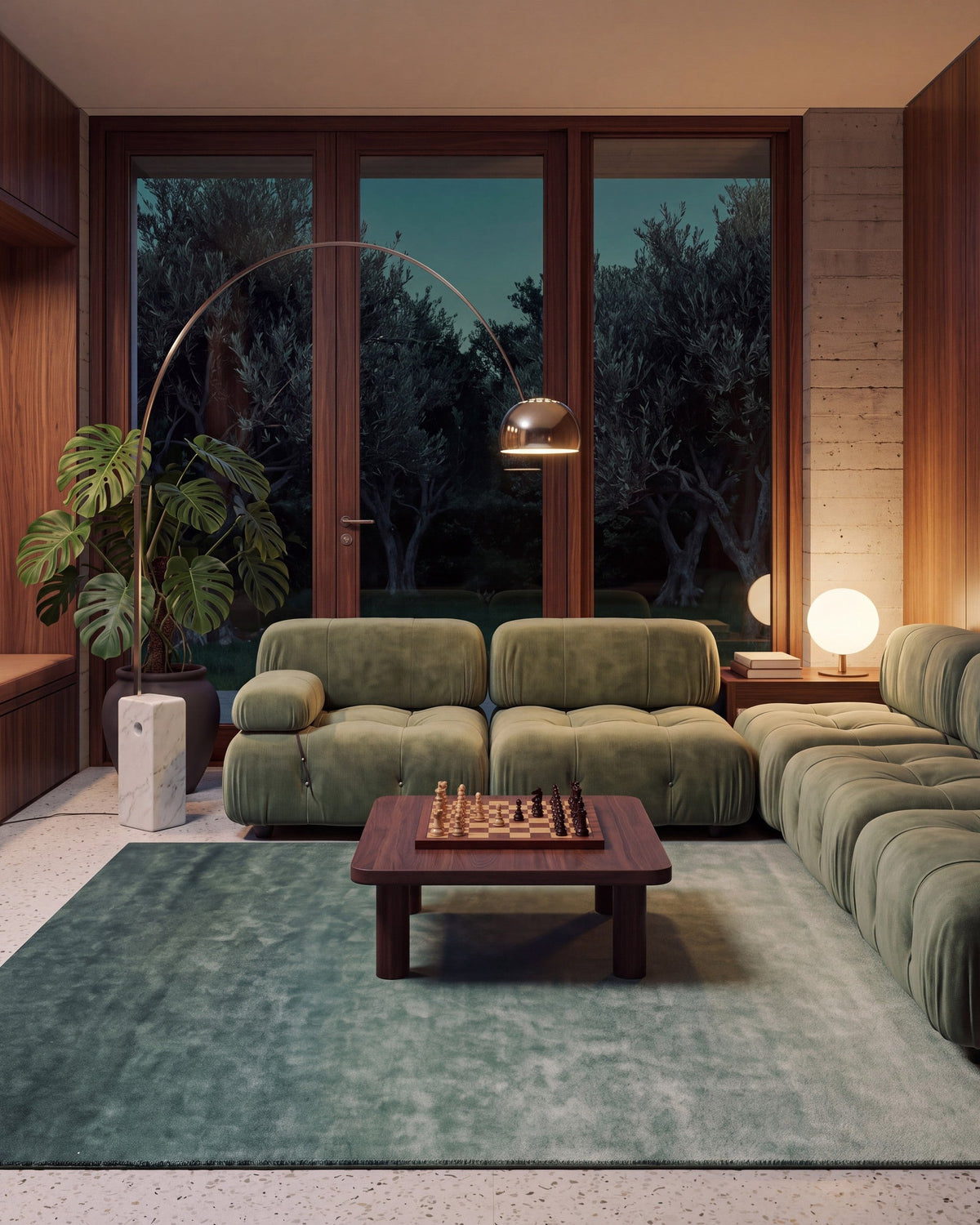
Ombré rugs place many dyed shades in sequence, so the eye reads one smooth fade across the rug. The Ombré Forest Rug is hand tufted in New Zealand wool in a slow gradation through greens, deepest at one end.


Each step in that gradient is a separate yarn colour, set close enough to the next that the joins vanish. It is slow, careful work, and it is one reason ombré rugs start from about ₹44,000 in 5x8 ft at Rugberry. Our post on the ombré collection shows the full range of fades.
Why do warm colours like rust vary most?
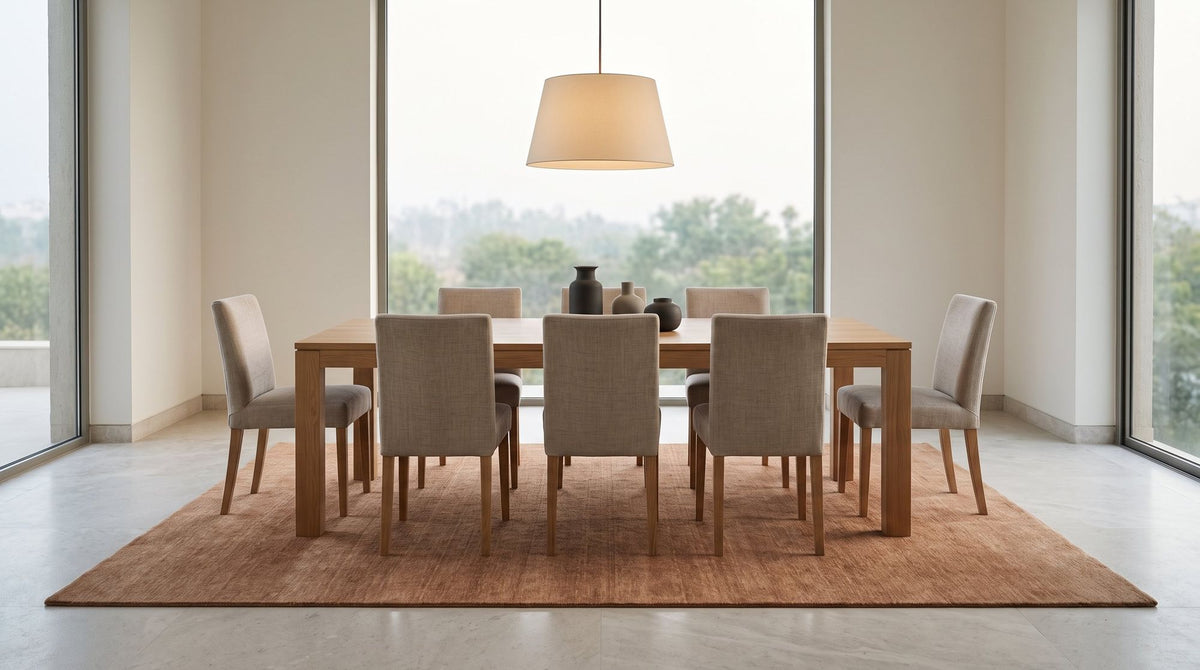
Warm, deep colours such as rust, russet and burnt sienna often show lot differences more clearly, because a slight shift toward red or toward brown is easy for the eye to read.


The Burnt Sienna Wool Rug, hand tufted in New Zealand wool in a deep earthen red, and the handloom Grain Wool Rug in russet both sit in this family. If you are pairing either with a sofa fabric or a terracotta floor, look at a swatch in your own room, morning and evening, before deciding. More warm tones sit in rust and copper rugs.
What does colourfast mean for a rug?
Colourfast means dye stays in the fibre and does not bleed when wet or fade quickly in light. No dyed fibre is immune to strong sun over years.
A simple home test: dampen a white cloth with plain water, press it on an inconspicuous corner for a minute, and check for colour transfer. Do this before any wet cleaning. To protect colour day to day, keep rugs out of hard afternoon sun from west windows, and rotate them once or twice a year.
Frequently asked questions
Why does my rug look different from the photo?
Screens, camera settings and room light all shift colour, and each dye lot varies slightly. Ordering a swatch from Rugberry shows the colour in your own light before you commit.
Can a custom rug match an existing rug?
A custom rug can be dyed to come very close to an existing rug, using a sample as the target. Because it is a new dye lot, expect a near match rather than an identical one.
Is a slight colour difference a defect?
A slight shift between two rugs made at different times is normal in dyed wool. A sharp line or stripe across a single rug is different, and is worth raising with the maker.
Order the set together, check colour in your own light. Material first.





Leave a comment
This site is protected by hCaptcha and the hCaptcha Privacy Policy and Terms of Service apply.