




Bauhaus Style Rugs for Modern Homes
A Bauhaus style rug is built from the simplest parts of geometry, a grid, a circle, a square, and lets structure rather than ornament make the pattern. In a modern Indian home, choose one in quiet tones or a single strong colour, and pair it with honest materials such as steel, cane, plywood and plain linen.
In short
- A Bauhaus style rug uses basic geometry, such as grids, circles, squares and stripes, with flat areas of colour and no floral ornament.
- The Bauhaus look comes in two versions: bold primary blocks of red, yellow and blue, or quiet tone on tone geometry in greys, ivories and charcoal.
- Tubular steel chairs, cane seats, plywood, glass and plain linen suit a Bauhaus rug, because they share its idea that form follows use.
- Rugberry's Plaid, Round Square in Beige and Facet rugs carry Bauhaus geometry in hand tufted New Zealand wool.
What makes a rug Bauhaus style?
A rug is Bauhaus style when its design comes from basic geometry and from structure, not from applied decoration. Look for grids, stripes, circles, squares and rectangles, laid flat, with clear edges and a limited palette.


The Bauhaus was a German school of art, design and architecture that ran from 1919 to 1933. It taught that a chair, a lamp or a textile should be shaped by its use and its material, and its weaving workshop, led for years by Gunta Stölzl, produced textiles in which pattern grew out of the weave itself. Rugberry Universe tells the longer story of the women who wove there; this guide is about living with the idea today.
In practice, three habits mark the style on a floor. The pattern is built on a visible order, often a grid, and its shapes are pure rather than drawn from nature. Colour is used in flat fields, either strong and few or close in tone.
Primary colour or quiet tone: which Bauhaus look suits an Indian flat?
For most Indian flats, quiet tone is the safer and longer lasting choice: geometry in ivory, grey, sand or charcoal, where the shapes come through in texture and slight shifts of shade. Bold primary blocks of red, yellow and blue work best as one accent in a room that is otherwise calm.


Strong primaries meet two challenges in Indian homes. Bright daylight on white vitrified tile makes saturated colour look louder than it did in the photograph, and a red, yellow and blue rug can tip a living room towards a children's playroom. Used small, as a runner or a rug under a single chair, primaries look deliberate.
The quiet version suits the way most Indian families live. Mid grey, charcoal and ivory geometry hides dust and footprints well, sits easily with teak or sheesham, and leaves room for colour in cushions, art and textiles that can change with the seasons. If you want both, pick a tonal rug and bring one primary into the room through a lamp, a print or a cushion.
In a Bauhaus room, the grid does the work. Colour can stay quiet and still be read.
Which furniture belongs on a Bauhaus rug?
Furniture that shows how it is made belongs on a Bauhaus rug: tubular steel frames, cantilever chairs, cane seats, bent plywood, plain glass tops and simple block upholstery in linen or wool. These pieces have slender legs and open frames, so the geometry of the rug stays visible between them.

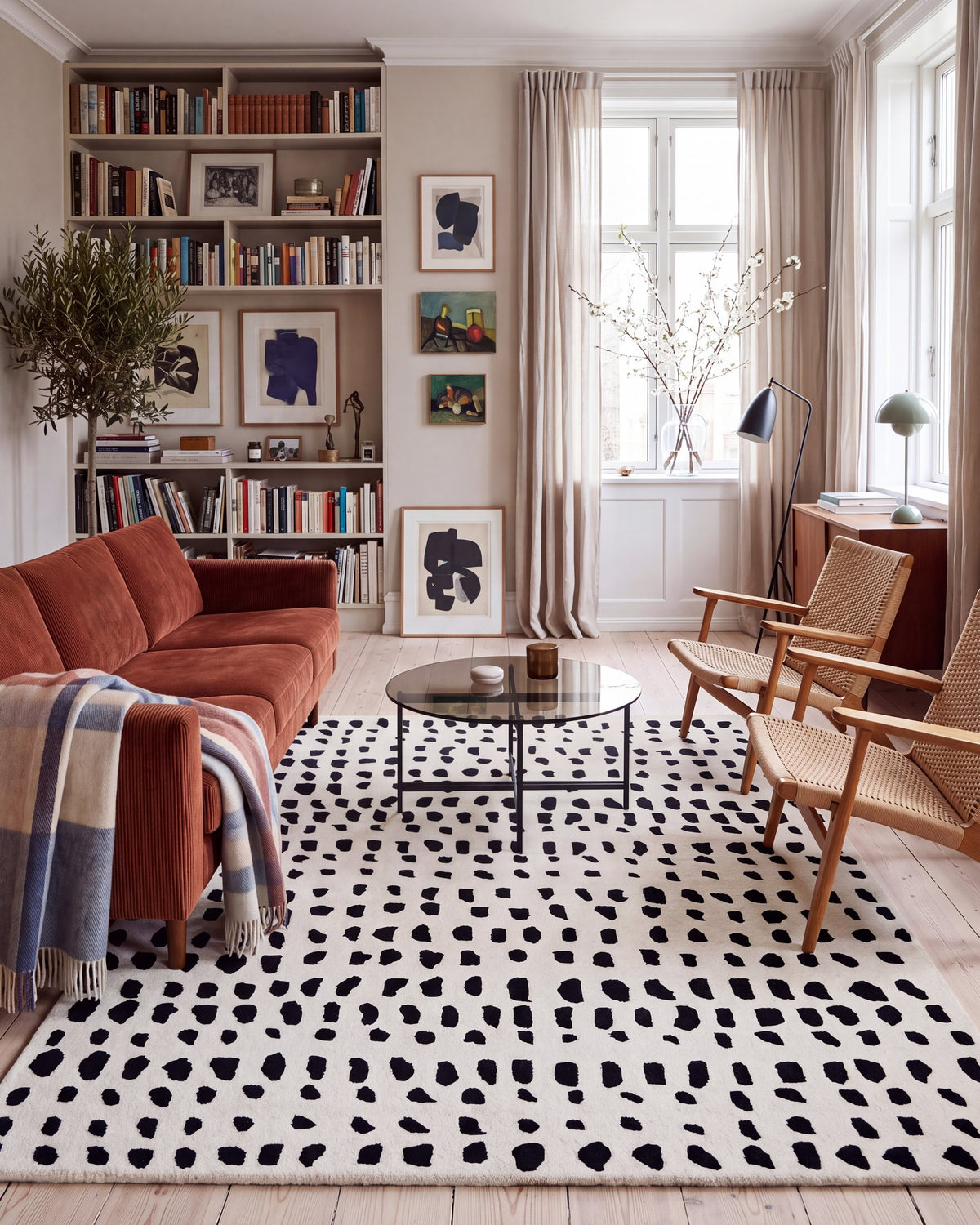
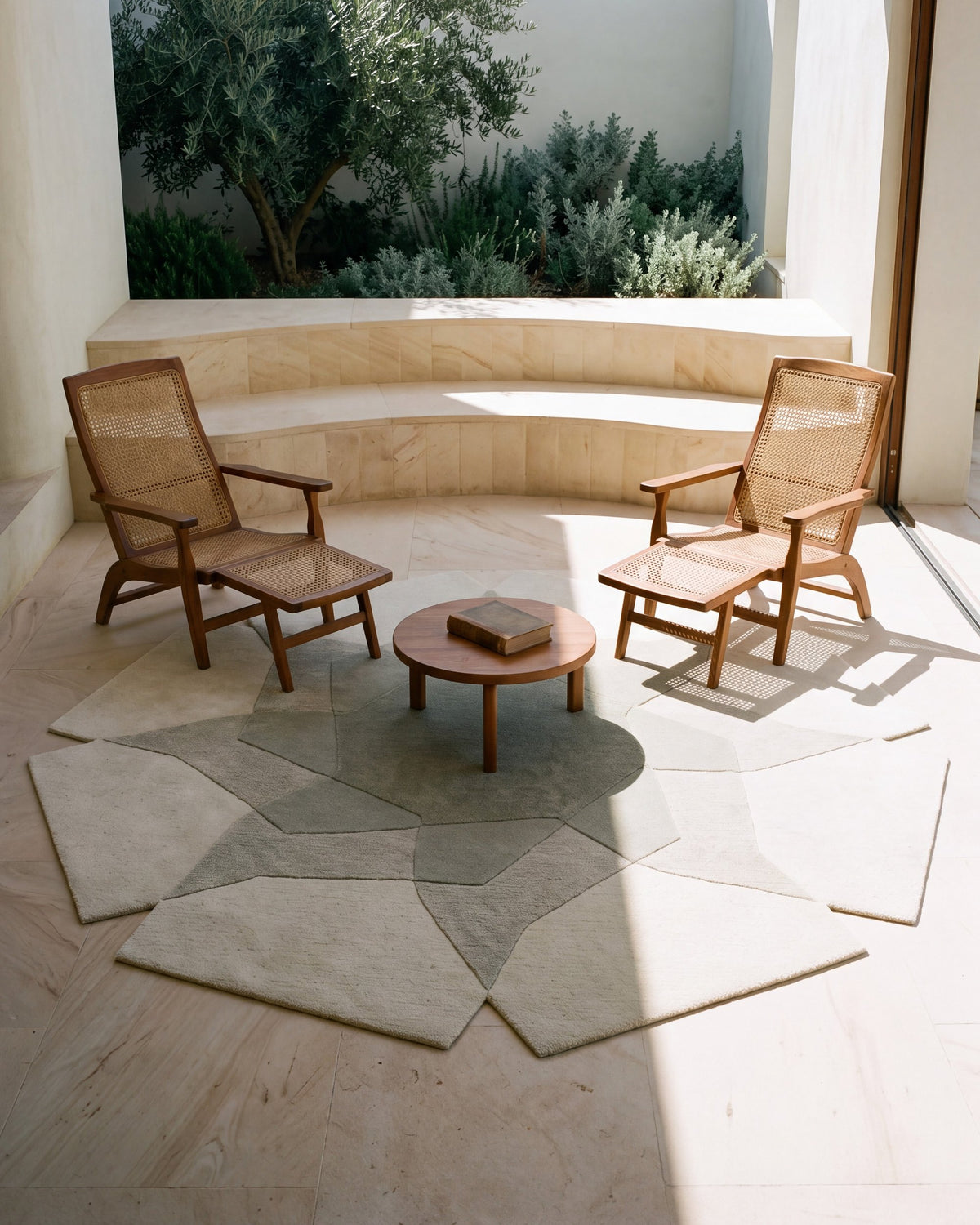
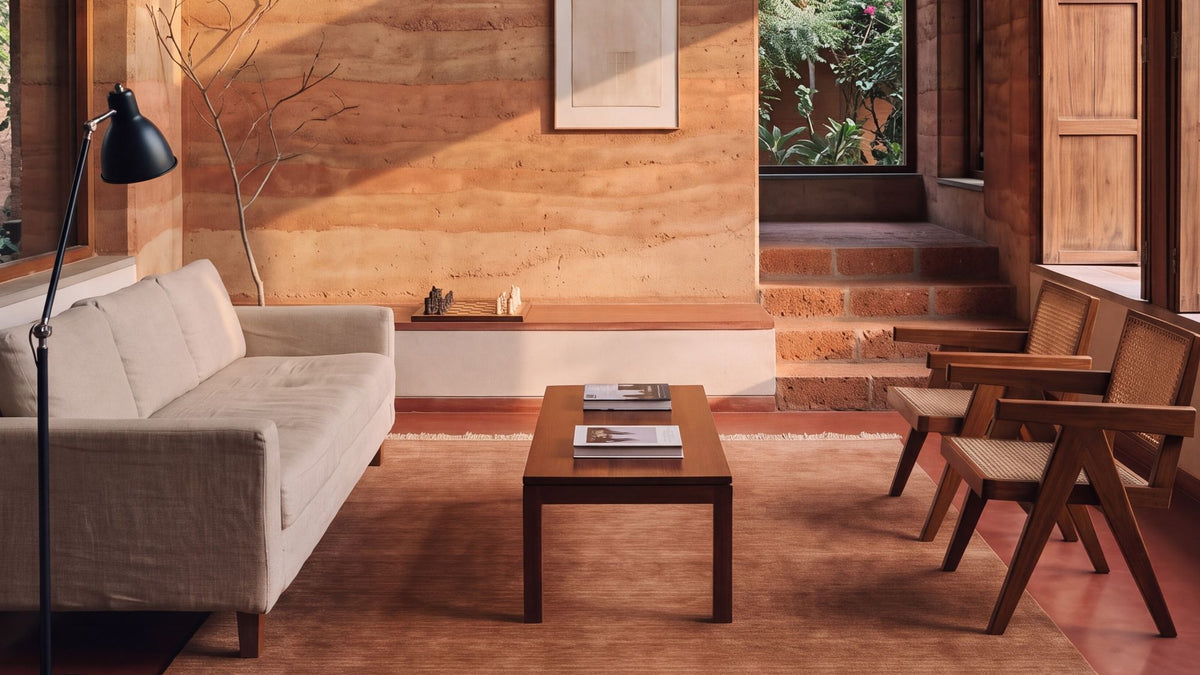
Cane is a natural bridge to Indian homes. The best known Bauhaus era cantilever chairs pair a chrome steel frame with a woven cane seat and back, the same material Indian craftspeople have worked for generations. A pair of cane and steel chairs on a grey grid rug reads as Bauhaus without looking imported.
Keep upholstery plain and solid. Patterned fabric on top of a geometric rug fights for attention, while a charcoal, ivory or single colour sofa lets the rug's lines run underneath. For warmer mid century teak, our guide to rugs for mid century furniture covers the softer side of the same era.
How do you keep a Bauhaus room from looking like a museum?
Keep one or two icons and let the rest be ordinary, lived in pieces. A room filled only with famous chairs and a perfect grid rug feels like an exhibition, while the same rug with a well used bookshelf, a cotton throw and plants feels like a home.
Warm the room with material rather than ornament. Teak or sheesham shelving, khadi or linen curtains, a jute basket and stacks of books soften steel and glass without breaking the style's rules. Lime plaster or a warm white wall also takes the chill off a grey and charcoal palette.
Let one thing be imperfect. A family chair that does not match, a handmade ceramic lamp base or a print bought on holiday keeps the geometry from feeling cold. The Bauhaus taught honesty to materials, and a home that shows its own history is honest too.
How does Bauhaus style sit with Indian modernism?
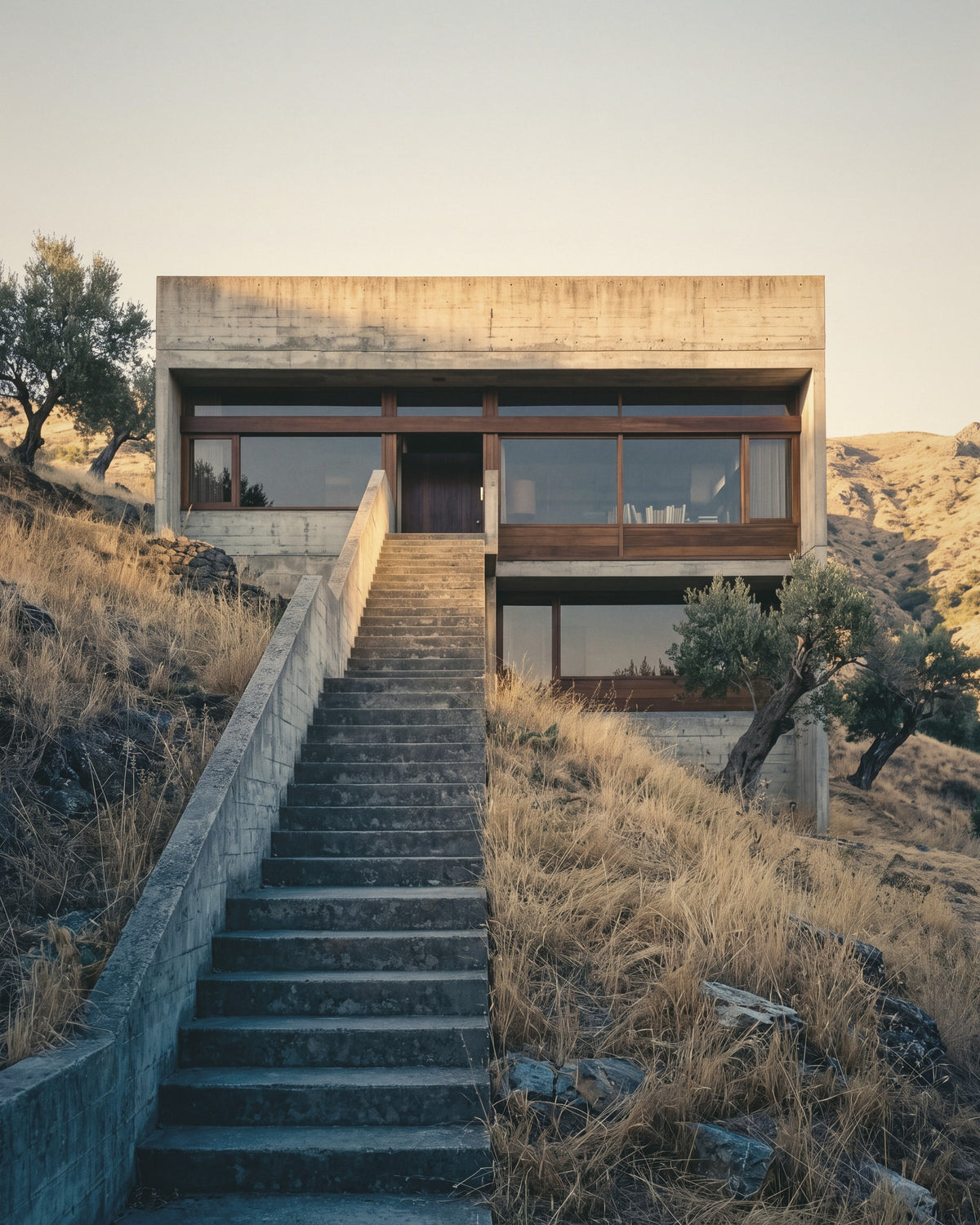
Bauhaus style sits naturally with Indian modernism, because both value plain geometry, exposed material and furniture shaped by use. A grid rug looks at home in a flat with exposed concrete, brick jaali, Kota stone or a cane and teak chair, the vocabulary of Indian modern architecture from the 1950s onward.
The match works best when the rug takes its colour from those materials. A charcoal grid echoes concrete and black stone, an ivory and beige geometry echoes lime plaster, and a pale grey faceted rug sits well on Kota or on grey terrazzo. The geometry then feels like part of the building rather than an imported style.
Indian modern homes also tend to be lived in more densely than a European apartment of the 1920s. Floor seating, guests and children mean a Bauhaus rug in India should favour mid tones and a firm, dense pile over a pale, delicate one. The idea stays the same: a useful object, honestly made, with nothing on it that does not need to be there.
- With exposed concrete or grey stone, choose charcoal or grey geometry.
- With lime plaster and teak, choose ivory, beige or sand geometry.
- With brick and cane, choose a warm grey or a quiet sand, and keep the pattern simple.
What size and placement suit a Bauhaus room?
Place a Bauhaus rug square to the walls and centred on the room's main axis, never at an angle, because its grid only reads as order when it lines up with the architecture. Size it so the front legs of every seat stand on the rug, usually 8x10 ft for a living room seating 5 to 6 people.

Check how the rug's lines meet the room's lines. A grid rug looks best when its main lines run parallel to the long wall and the sofa, and when the margin of bare floor around it is even on all sides, typically 30 to 45 cm in a standard living room.
Circles need their own logic. A round or faceted rug suits a round dining table, a reading corner with one lounge chair or a square room that needs a soft centre, and a 6 to 8 ft diameter rug works under most round tables for four. Rugberry's round and shaped rugs sit in the shaped rugs collection, and a round rug is explained in the glossary.
Which Rugberry designs carry the Bauhaus idea?
Three Rugberry designs carry Bauhaus geometry in different ways: Plaid as a grid, Round Square in Beige as circle and square, and Facet as flat planes. All three are hand tufted in New Zealand wool at 14 to 16 mm, and all can be made in custom colours.


| Rug | Geometry | Bauhaus idea it echoes | Palette | Best room | From, inclusive of GST |
|---|---|---|---|---|---|
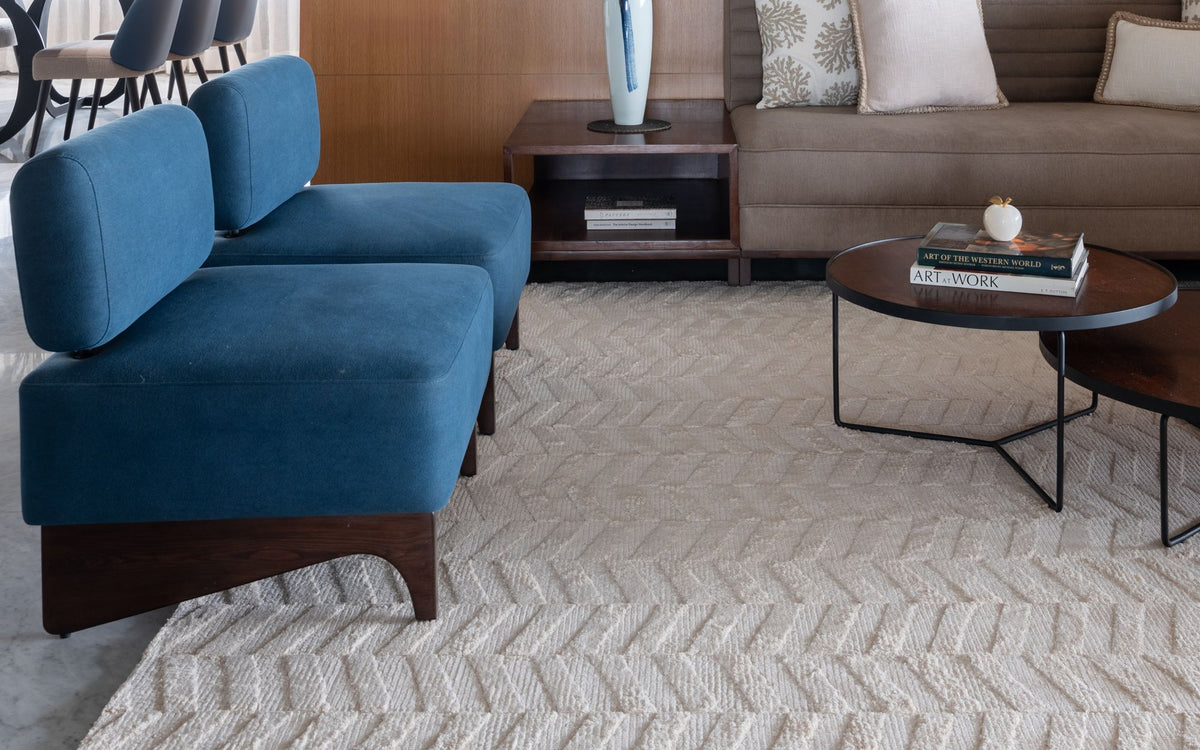
| Plaid | A grid of fine raised lines | Pattern from structure, the grid as order | Charcoal, tone on tone | Living rooms, studies with steel and cane | About ₹31,080 |
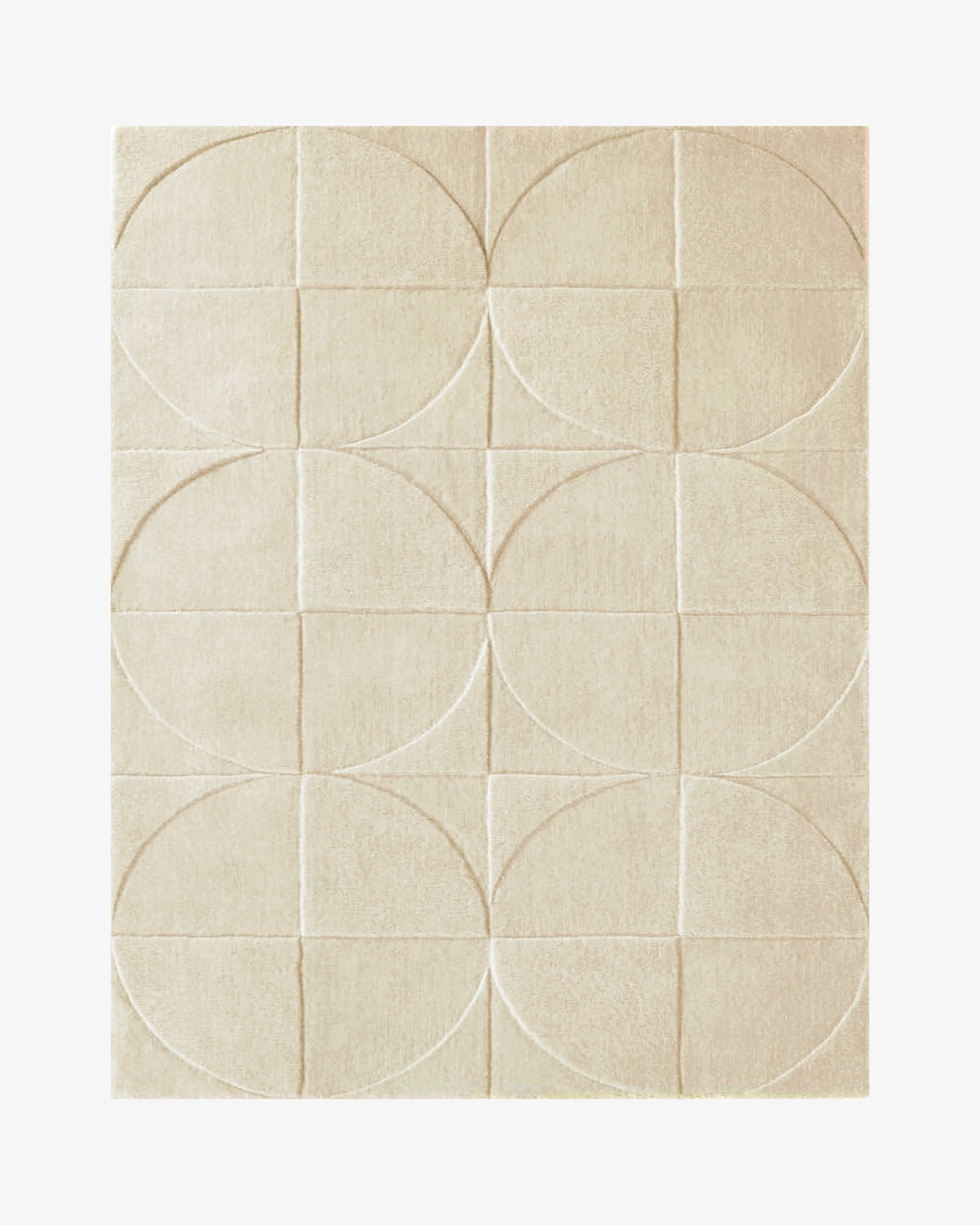
| Round Square, Beige | Quarter circles set against squares | The basic shapes, circle and square | Beige and ivory | Bedrooms, calm living rooms | About ₹31,080 |
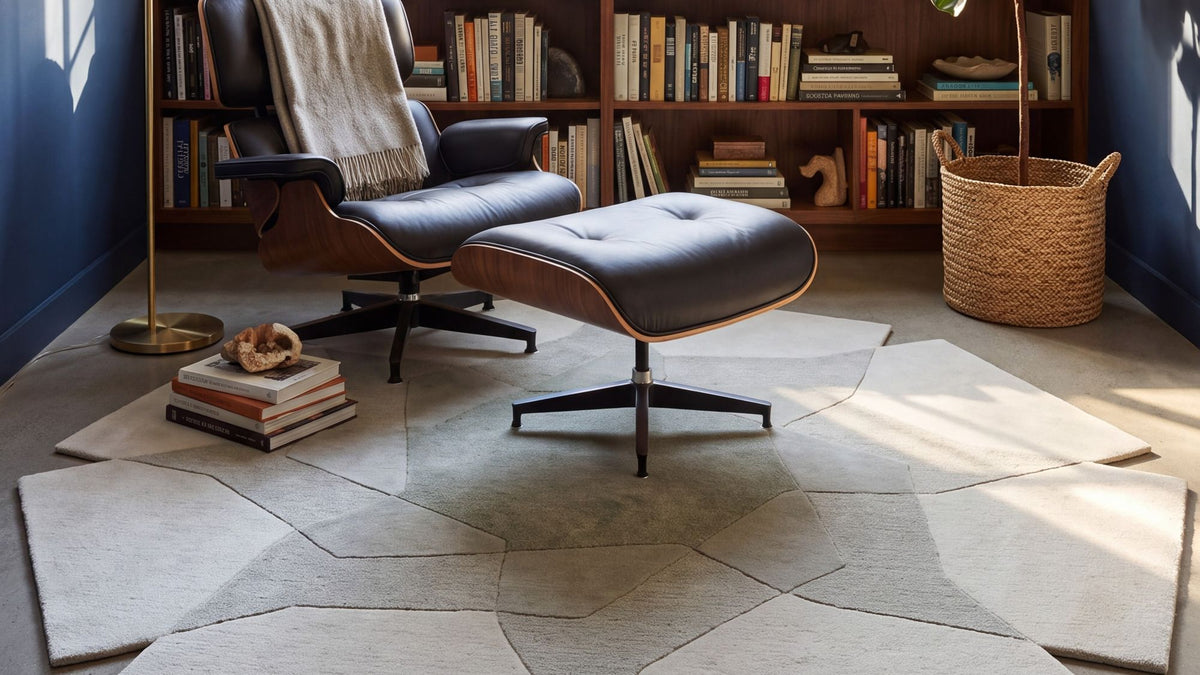
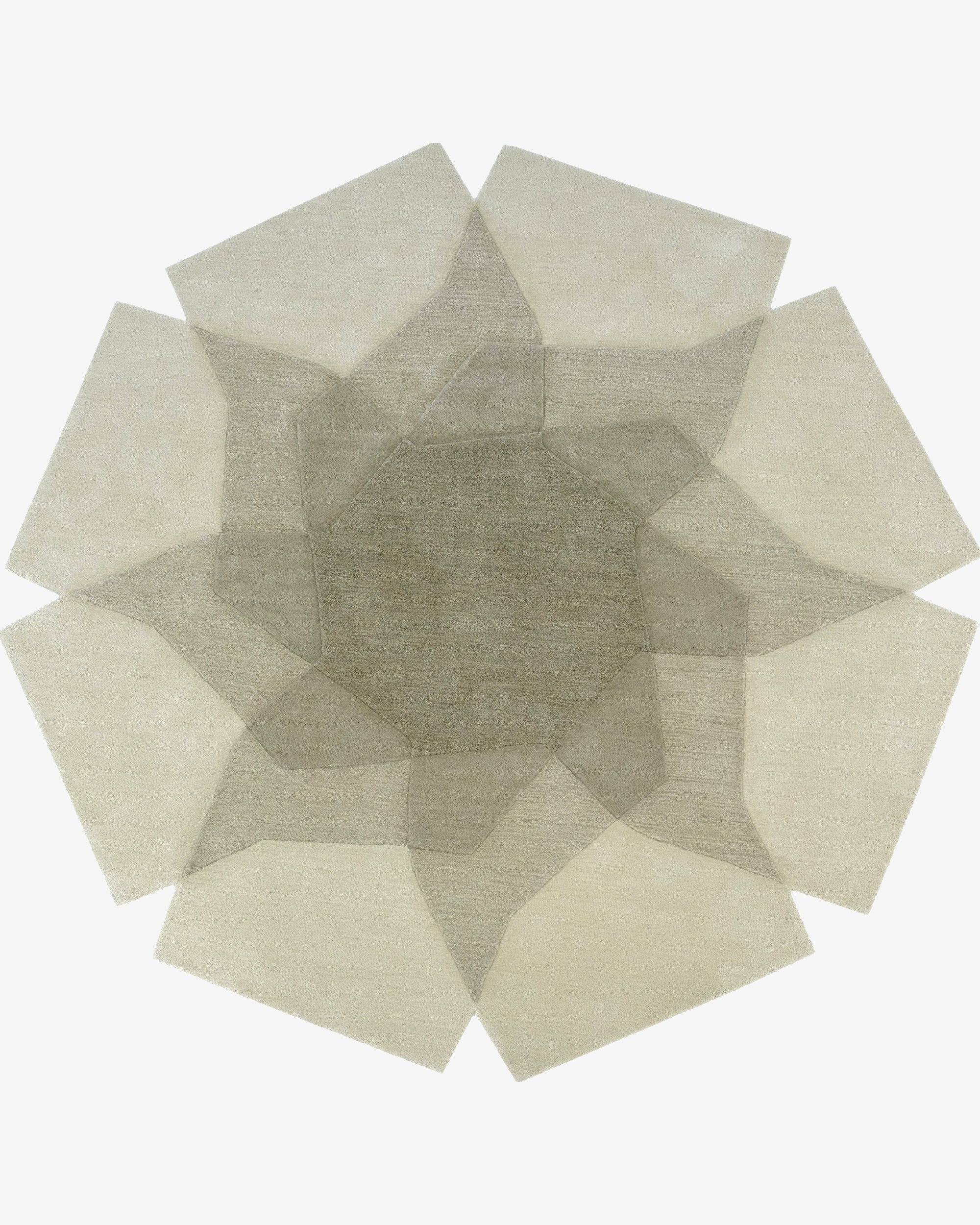
| Facet | Flat planes in a shaped round | Pure planes, no ornament | Pale grey and ivory | Under round tables, reading corners | About ₹23,835 |
Verdict: for a living room with steel or cane chairs, choose Plaid over Round Square, because its charcoal grid matches the frames and hides daily wear; for a bedroom or a pale room, choose Round Square in Beige, because its soft shapes keep the geometry gentle.
The Plaid Rug crosses fine raised lines over a charcoal field, a grid that stays quiet at a distance and shows its structure up close. It comes in six sizes from 5x8 to 12x15 ft. The Round Square Rug in Beige sets rounds and squares against each other across an ivory and beige field, in the same six sizes.
The Facet Wool Rug is a shaped rug made of flat, faceted planes in pale grey and ivory, listed in 6, 8 and 10 ft diameters and made entirely to your measure. More line and shape led designs sit in the pattern rugs collection.
Frequently asked questions
Does a Bauhaus rug have to be red, yellow and blue?
No. Primary colours are one famous version of the style, but geometry in greys, ivory and charcoal is just as true to its ideas. In most Indian homes the tonal version lasts longer and sits more easily with wood and stone.
Can a Bauhaus rug work with Indian furniture?
Yes, especially with cane, plain teak and simple modern Indian pieces. Furniture with clean lines and visible joinery shares the Bauhaus respect for material, while heavily carved pieces can clash with a strict grid.
Is a geometric rug the same as a Bauhaus rug?
Every Bauhaus style rug is geometric, but not every geometric rug is Bauhaus. The Bauhaus look keeps to basic shapes, flat colour and visible order, while many geometric rugs use diagonals, curves or dense repeats that belong to other styles, such as Art Deco.
What floor suits a Bauhaus style rug best?
Plain, even floors suit it best, such as polished concrete, Kota stone, large format tiles or plain wooden boards. A busy veined marble or a patterned tile competes with the rug's geometry, so choose a quieter rug there.
How do I care for a carved or raised line rug?
Vacuum along the direction of the lines with a suction only head, without a rotating brush, so the raised edges stay crisp. Blot spills at once and leave deeper cleaning to a professional rug cleaner.
Grid, circle, square, and a material that earns its place. Material first.




Leave a comment
This site is protected by hCaptcha and the hCaptcha Privacy Policy and Terms of Service apply.