




A Rug for a Colour Drenched Room
In a colour drenched room, choose a rug in the same colour family but one or two steps deeper than the walls, with a visible texture in the pile. A tonal rug keeps the enveloping effect that drenching is for, while the texture stops a single colour from going flat.
In short
- Colour drenching means painting walls, ceiling, skirting, doors and trim in one colour, so the floor becomes the only surface that breaks it.
- A tonal rug one or two steps deeper than a drenched wall continues the colour and makes the room feel enveloping, while a contrast rug in a different value frames it.
- In a drenched room a textured rug, such as a low handloom weave or a carved pile, matters more than pattern, because texture keeps one colour from looking flat.
- Rugberry's Grain rugs in Russet and Sage, the carved Talus in green and the Teal rug suit warm, green and blue drenches respectively.
What is colour drenching, and what does it do to the floor?
Colour drenching is painting every vertical and overhead surface of a room in one colour: walls, ceiling, skirting, doors, window frames and sometimes built in shelves. The result is a room that wraps around you, and the floor becomes the only large surface left to decide on.

That gives the rug an unusual job. In a white room, a rug is a patch of colour on a neutral box; in a drenched room, it either continues the colour onto the floor or deliberately stops it. Both can work, but they produce very different rooms, so decide which you want before choosing a shade.
Drenching also removes the usual visual edges. With no white ceiling or trim to frame the walls, the line where floor meets wall becomes the strongest edge in the room, and the rug's own edge becomes the second. Their positions, covered further down, matter more than usual.
Should the rug match the drench or contrast with it?
For most drenched rooms, a tonal rug works best: the same hue as the walls, one or two steps deeper, so the floor reads as the darkest layer of one colour. A contrast rug, in a clearly lighter or darker value or a neighbouring hue, works when you want the drench to feel like a backdrop rather than an envelope.


An exact match rarely works. Paint and wool reflect light differently, so a rug dyed to the same reference as the wall almost always looks a shade off, and the near miss reads as a mistake. A deliberate step deeper or lighter reads as a choice.
Use contrast with care. A pale ivory rug in a deep green drenched room creates a bright island that can pull the eye down and away from the walls, which undoes the drench. If you want contrast, keep it in the same temperature: a sand or camel rug under a warm terracotta drench, a grey or stone rug under a cool blue one.
Verdict: for a drenched room meant to feel enveloping, choose a tonal rug one or two steps deeper than the walls over a contrast rug, because it carries the colour down to the floor and keeps the room whole.
How much floor should show around the rug?
In a drenched room, show a narrow, even band of floor, usually 20 to 30 cm, rather than the 45 cm or more common in a white room. A narrow band keeps the floor colour from breaking the drench, and an even band keeps the room calm.
The floor's own colour decides how strict to be. A red oxide, terracotta tile or dark wooden floor already belongs to the warm drench family, so a wider band is fine. A bright white vitrified tile, common in Indian flats, draws a hard pale line between rug and wall, so size the rug up until that line is thin.
Measure the room wall to wall, subtract 40 to 60 cm from each dimension and look for the nearest standard size. In a 12 by 15 ft drenched living room, that points to a 10x14 ft rug, and in a 10 by 12 ft bedroom to an 8x10 ft rug. Rugberry makes any rug in custom sizes when standard sizes leave too wide a band.
Why do texture and sheen matter more in a drenched room?
Texture matters more because a single colour on every surface gives the eye nothing to hold on to. A rug with visible weave, carved lines or a slight variation of shade puts back the shadow and detail that the drench removes.


Look at the finish of your paint before you choose the pile. Matt and chalky finishes, popular for drenching, absorb light; a rug with a little lift, such as a low handloom weave with a visible grain or a carved hand tufted pile that throws small shadows, keeps the floor alive against them. A very flat, very smooth rug in the same colour as matt walls tends to vanish.
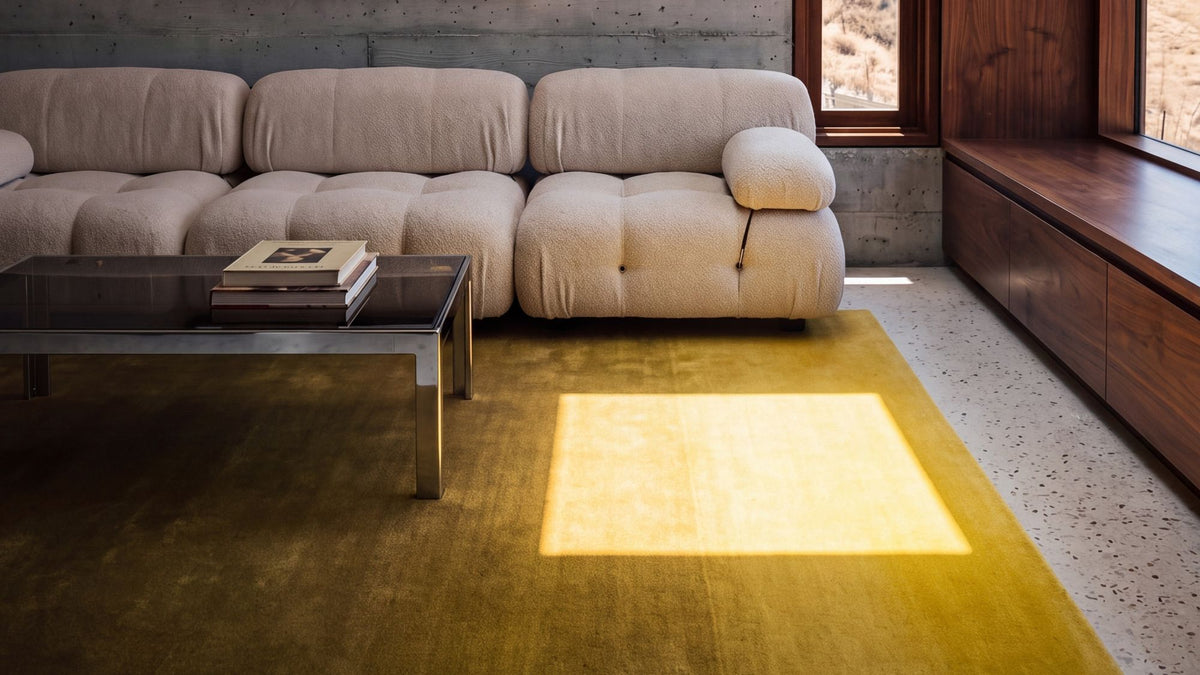
Sheen helps in dark drenches. Botanical Silk in a wool rug, or any fibre with a low lustre, catches lamp light and gives a dark room some sparkle at floor level. In bright, warm drenches the opposite is true, and a matt wool texture looks calmer than a shiny one, as the glossary entry on sheen explains.
One colour on every surface needs texture somewhere. Let the rug be where the shadow lives.
Can a dark drenched room work in Indian light?
Yes, a dark drench works well in rooms used mostly in the evening, such as dens, bedrooms and media rooms, and in rooms with strong daylight that needs softening. It is harder in a small, north facing room that you use all day, where it can feel closed in.

Indian light is strong and often hard. A west facing living room in May gets low orange sun that turns a deep green drench almost olive and a navy drench almost purple for an hour each evening. Check your paint and your rug at 9 am, 1 pm and 7 pm before you commit, and keep the rug mid tone rather than very dark, so it still reads at night under lamps.
The monsoon changes things again, as weeks of grey sky drain warm colours and deepen cool ones, so a cool drench can feel heavy from July to September. A warm rug, in rust, ochre or camel, keeps a cool drenched room from feeling cold through the rains. For small rooms with little daylight, our guide to a rug for a small, dark room goes further.
Which rug suits which drench colour?
Match the rug to the drench by temperature first, then by depth: warm drenches take warm rugs, cool drenches take cool or neutral ones, and the rug should usually be the darkest layer. The table below pairs common drench colours with a tonal and a contrast option.


| Drench colour | Tonal rug | Contrast rug | Rugberry example |
|---|---|---|---|
| Terracotta, clay, earth | Russet, rust, deep brown | Camel or sand | Grain Wool Rug, Russet |
| Sage, soft green | Sage one step deeper, olive | Warm sand | Grain Wool Rug, Sage |
| Deep green, bottle green | Moss and olive greens, carved | Camel or rust | Talus Wool Rug |
| Teal, peacock, deep blue | Deep teal | Grey or stone | Teal Wool Rug |
| Ochre, mustard | Ochre into brown | Olive | Grain Wool Rug, Russet as a warm partner |
| Plum, aubergine | Deep brown | Soft grey | A custom colour from any Rugberry design |
The Grain Wool Rug in Russet is handloom woven in New Zealand wool with a low, closely worked surface at 12 to 14 mm, so its weave shows underfoot and keeps a terracotta room from going flat. It comes in six sizes from 5x8 to 12x15 ft, from about ₹31,080, inclusive of GST at the time of writing, and the same weave in Sage suits green drenches.
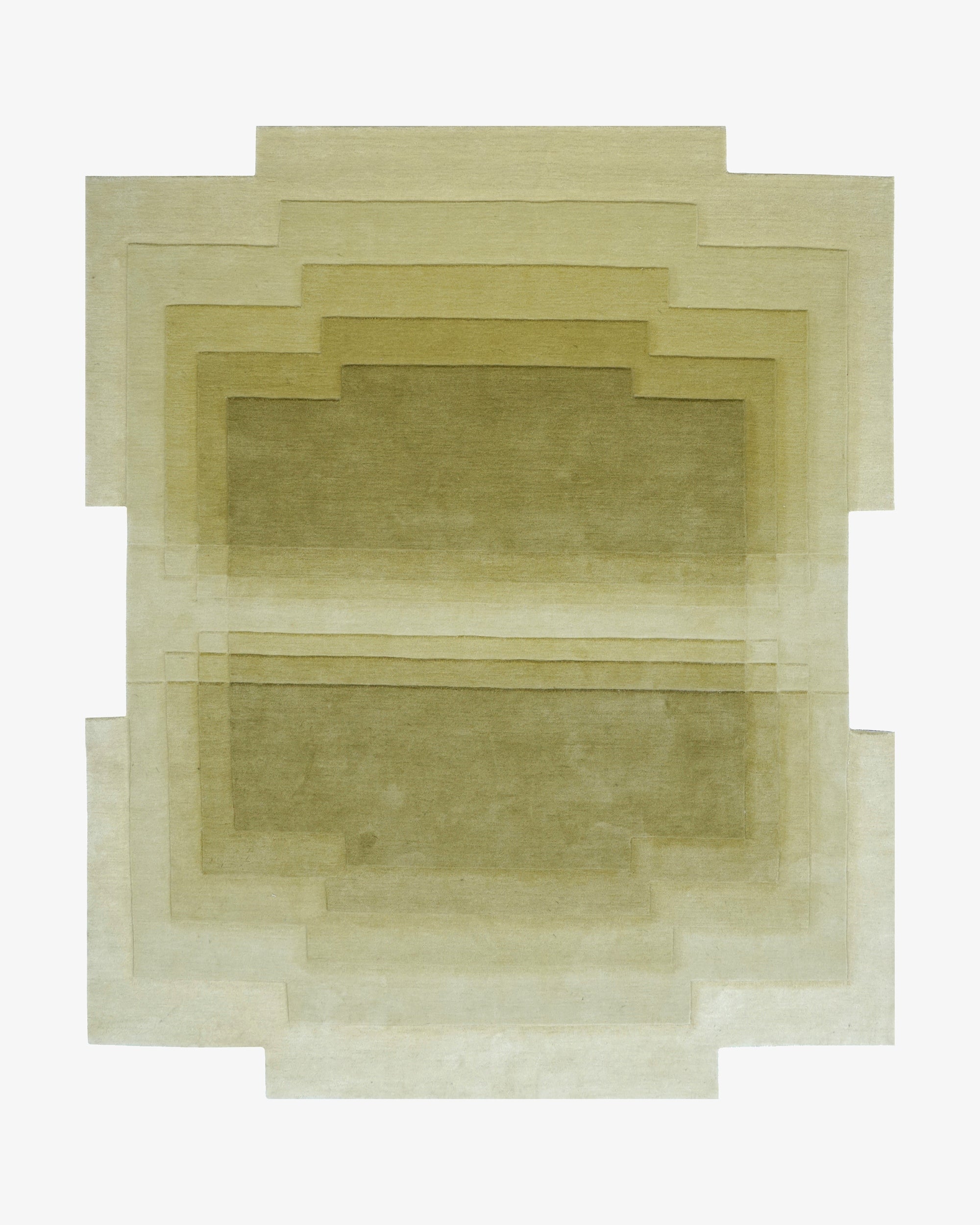
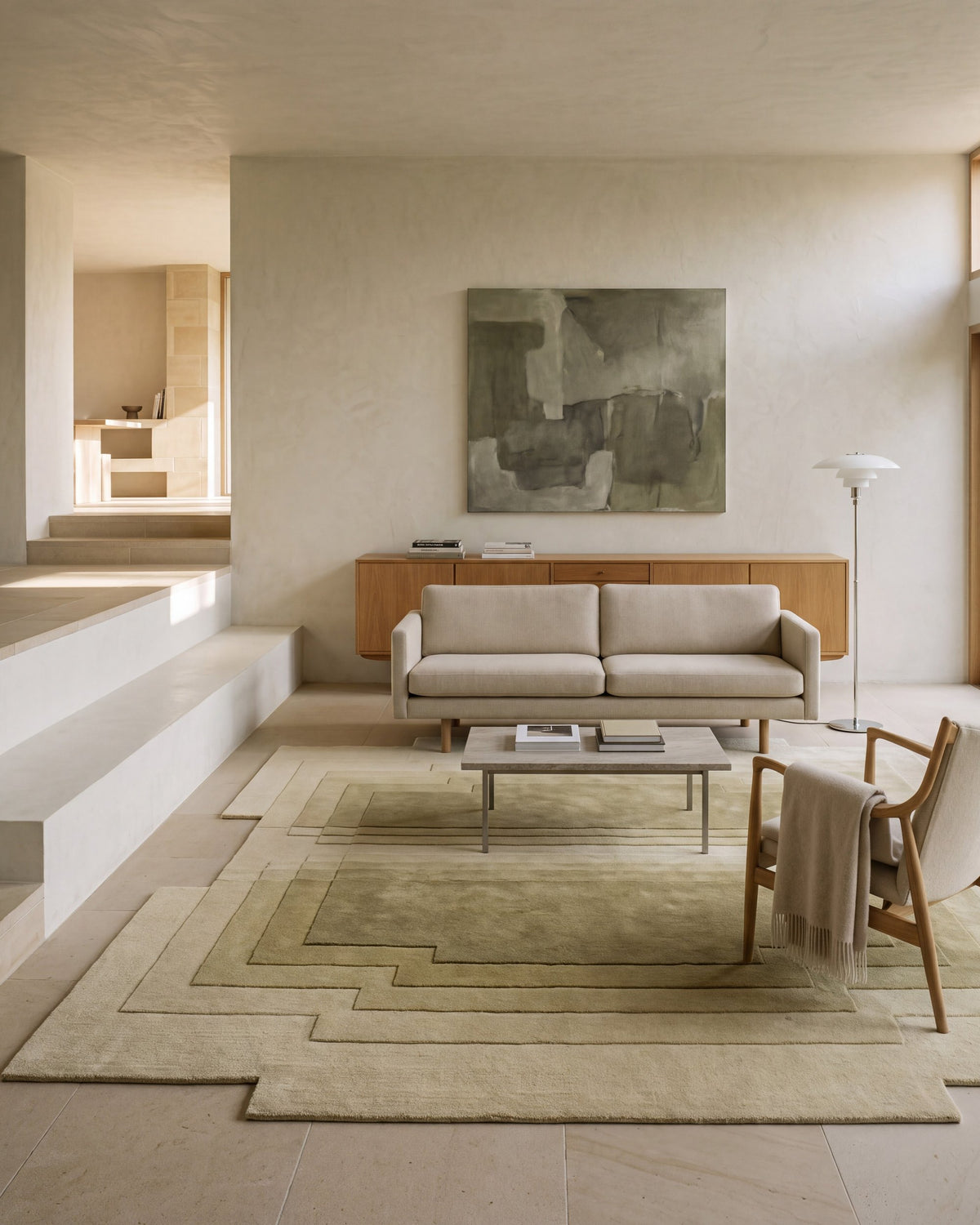
The Talus Wool Rug is hand tufted in New Zealand wool in stepped tiers of green, its carving casting fine shadows that suit a deep green drench, from about ₹33,600, inclusive of GST at the time of writing. The Teal Wool Rug is hand tufted in a deep teal, saturated but easy to live with, from about ₹31,080, inclusive of GST at the time of writing.
How do you test a rug against a drenched wall before buying?
Paint a large sample board, at least A3, and stand it on the floor against the wall where the rug will go, then look at the rug colour beside it at three times of day. Paint swatches the size of a stamp are almost useless in a drench, because the effect comes from the colour's area.
Photograph the board and the rug sample together on your phone in daylight, then turn the room's lamps on and photograph again. Many drenches change more under warm lamps than in daylight, and a rug that matched at noon can look too orange or too grey at night.
Ask about a swatch of the rug before you order, and lay it on the floor rather than holding it against the wall, because a rug is seen from above and at an angle. For general wall and rug pairings outside a drench, our guide to choosing a rug colour for your wall colour covers white, limewash and patterned walls.
Frequently asked questions
Should the rug be lighter or darker than drenched walls?
Usually darker, by one or two steps in the same colour family, so the floor reads as the deepest layer and the room feels grounded. A lighter rug works only when you want to frame the drench rather than continue it.
Does colour drenching work in a small Indian flat?
Yes, and it can make a small room feel larger, because removing the contrast between walls, ceiling and trim blurs the corners. Choose a mid tone colour for a small room you use in the day, and keep the rug in the same family so the floor does not cut the space.
Can I use a patterned rug in a colour drenched room?
Yes, if the pattern is tonal or uses the drench colour as its main shade. A busy multicoloured rug fights the single colour walls, while a pattern made in texture or in two close shades sits well.
What rug suits a green drenched bedroom?
A green or olive rug one step deeper than the walls, with a soft, textured pile, keeps a green bedroom restful. Rugberry's Grain in Sage suits pale greens, and the carved Talus suits deeper ones.
Will a dark drenched room make a rug fade?
The wall colour does not fade a rug; direct sun does. Rotate the rug by 180 degrees every six months and use sheer curtains where hard afternoon sun reaches the floor, whatever the colour of the walls.
One colour, carried from the ceiling to the floor. Material first.





Leave a comment
This site is protected by hCaptcha and the hCaptcha Privacy Policy and Terms of Service apply.