



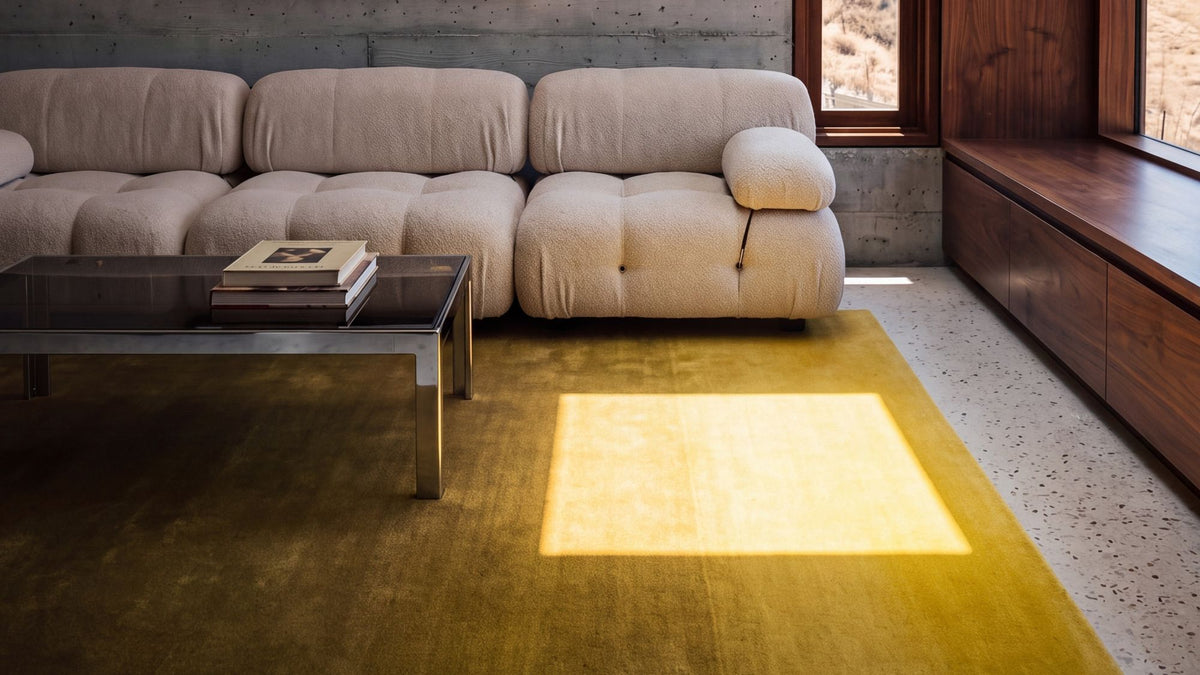
Seventies Style Rugs for a Modern Home
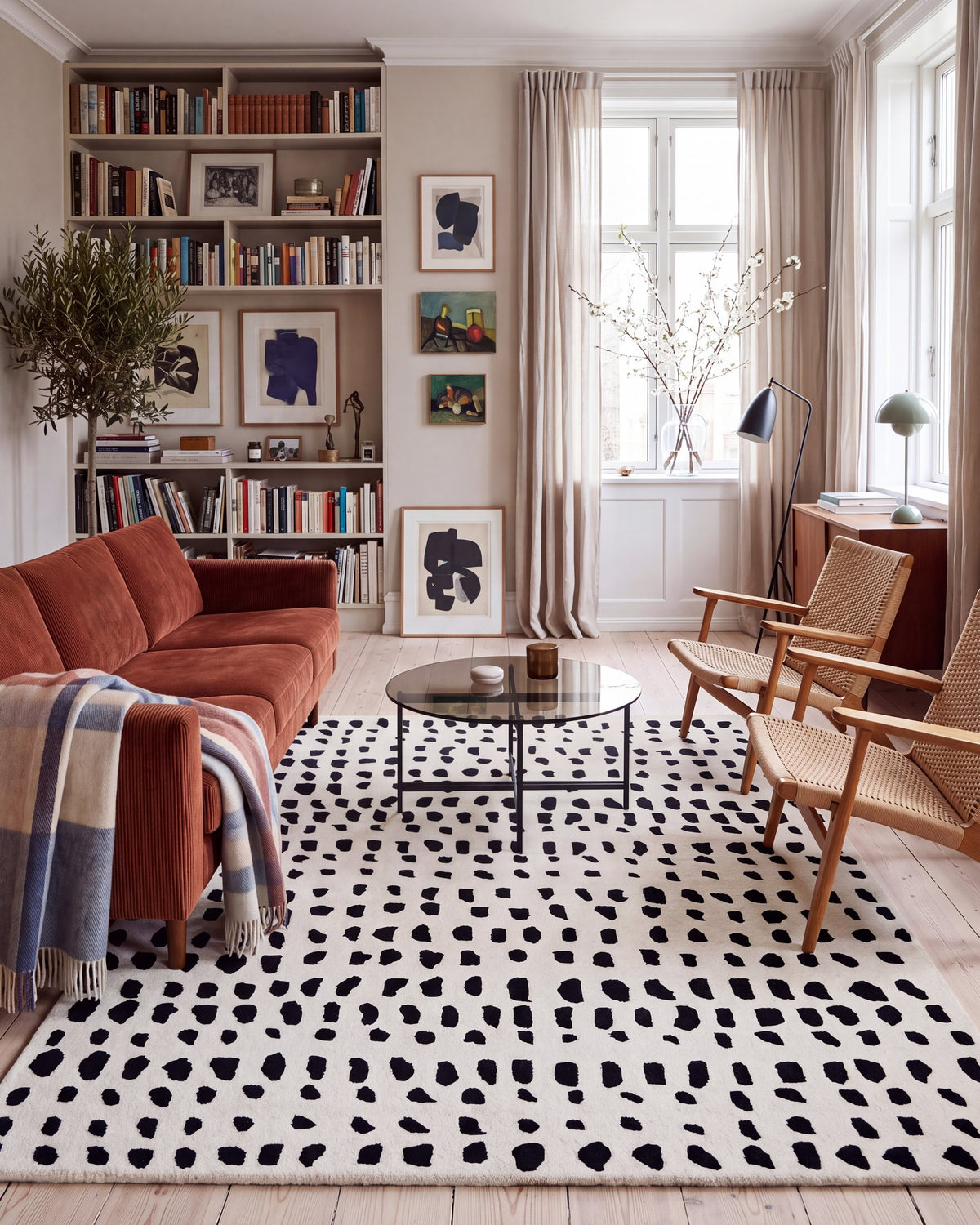
To bring the 1970s into a modern home, choose a rug in one of the decade's warm colours, rust, ochre, umber or olive, with real depth or a soft gradient, and keep everything else in the room simple. One strong seventies element on the floor reads as style; five in one room read as a costume.
In short
- The 1970s interior is known for warm earth colours such as rust, ochre, umber, olive and chocolate, low modular seating, conversation pits, curves and deep pile rugs.
- A seventies style rug looks modern today when it carries one signature of the decade, such as a warm colour, a deep pile or a gradient, rather than all of them at once.
- A deep handloom pile of 18 to 20 mm gives the comfort of a seventies shag without the long, loose strands that trap dust in Indian homes.
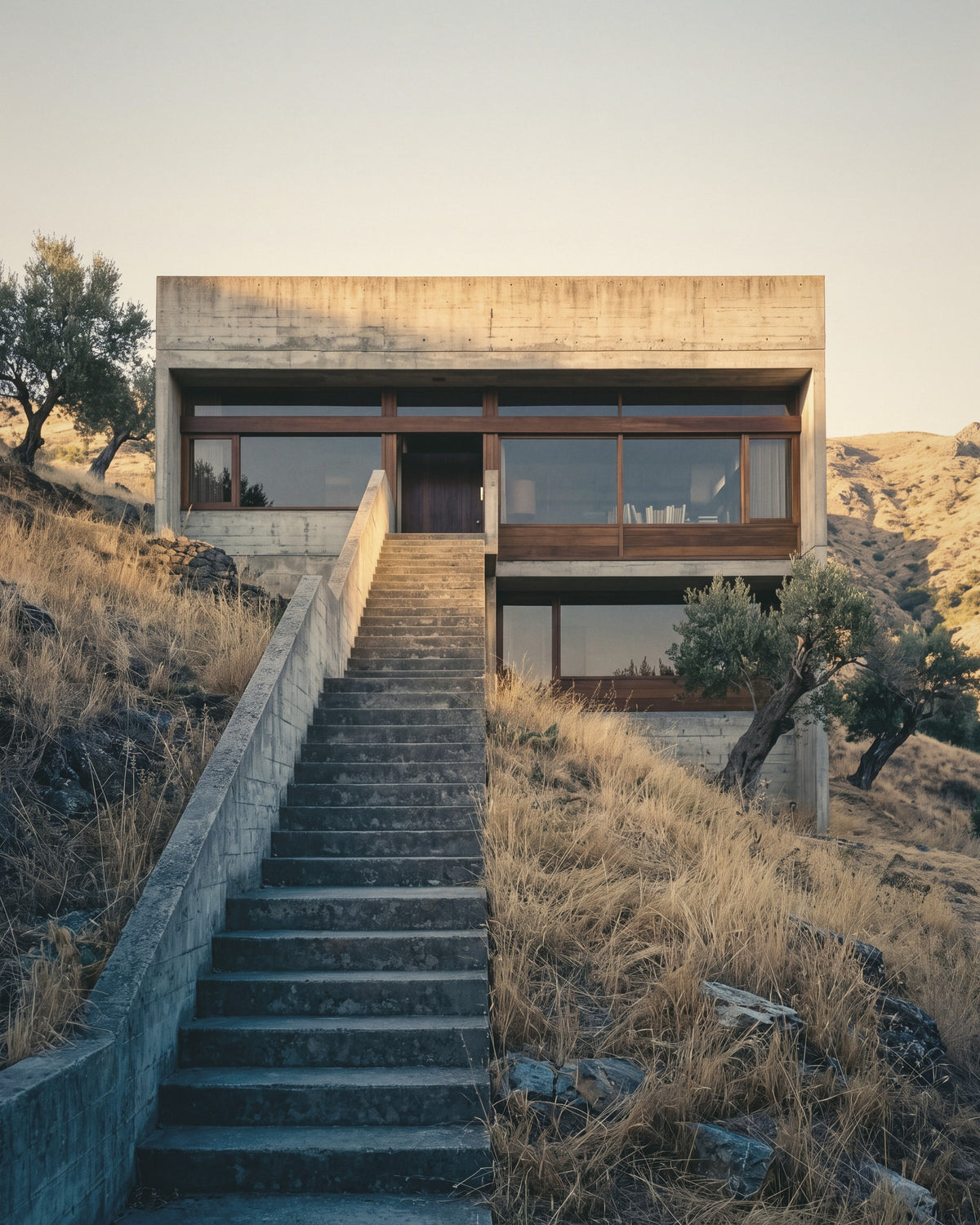
- Rugberry's Solaris collection is nine ombré rugs set in a hillside house built in 1972, each named for one hour of a single day.
What made a 1970s room look like the 1970s?
A 1970s room was warm, low and soft: earth coloured walls and textiles, sofas close to the floor, deep pile underfoot and curves in everything from chairs to lamps. Colour came in families, harvest gold, burnt orange, rust, avocado and chocolate, often all at once.

Living happened lower down. Modular sofas without legs, floor cushions and the sunken conversation pit put people close to the rug, so the floor mattered more than in most decades. Deep shag pile, sometimes wall to wall, was the decade's best known floor.
The architecture played its part too. Board marked concrete, wood panelling, big windows and smoked glass were common in modern houses of the period, and many Indian homes of the time had terrazzo or mosaic floors and teak furniture. Those warm, solid materials are a large part of why the look still appeals.
How do you get the seventies look without pastiche?
Choose one or two seventies signatures and leave the rest of the room in plain, modern materials. A rust rug and a low sofa evoke the decade; a rust rug, a brown and orange print, an avocado chair and a macramé wall hanging recreate it.
Start with the floor, because it carries the most colour in the smallest number of decisions. Then pick a single seventies piece of furniture, such as a low modular sofa, a chrome and smoked glass table or a curved lounge chair, and keep the walls calm in warm white, lime or a soft clay.
Avoid printed patterns that copy the period, such as large repeating circles and stripes in three warm colours. They date a room instantly. Texture, colour and form say seventies more quietly and age far better.
One seventies signature on the floor reads as style. Five in one room read as a costume.
Which colours carry the decade now?
Rust, ochre, umber, olive and chocolate carry the seventies today, used one at a time and paired with cream, sand or warm grey. The decade's full palette worked in its own rooms, but in a modern flat one warm colour with neutrals around it looks deliberate.


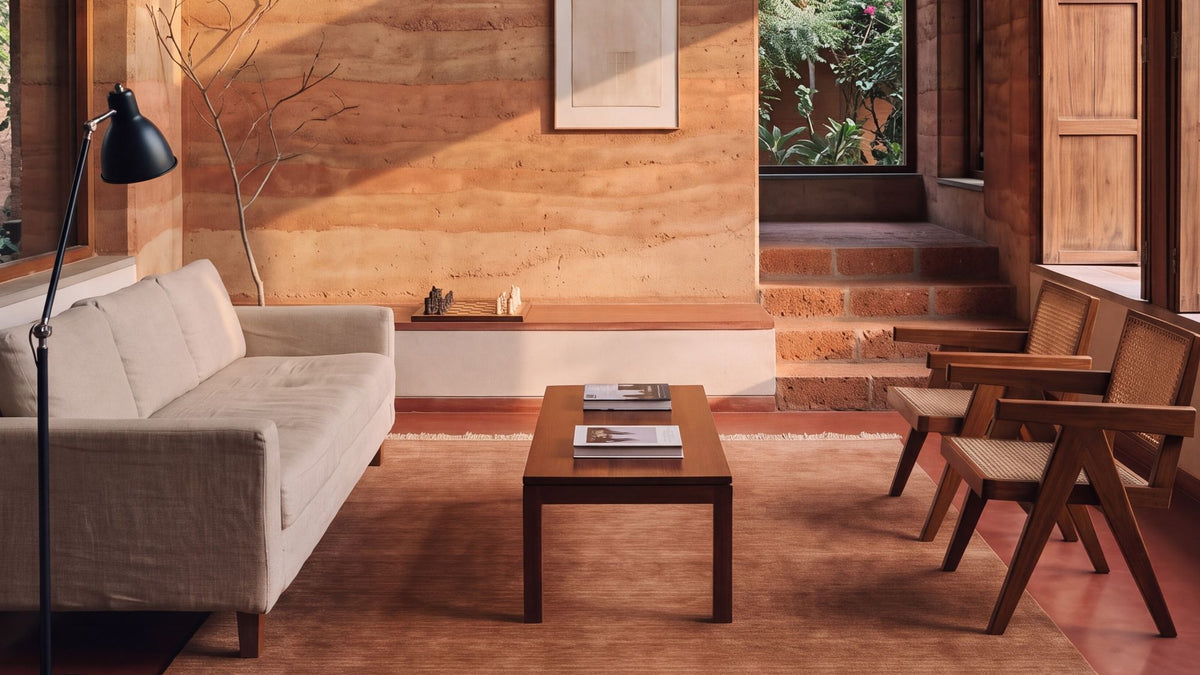
Let the rug be the deepest or the brightest colour in the room. A rust or ochre rug with a cream sofa and warm white walls gives the decade's glow without its weight. An olive or umber rug works better in rooms with teak, leather and books, where it reads as warm rather than loud.
Indian light changes these colours through the day. Ochre and rust glow in late afternoon sun and look deeper at noon, while olive greys a little on monsoon days. Our guide to earth tone rugs covers terracotta, umber and sage in more detail.
Three simple pairings show how one warm rug can set the mood:
- A rust or golden ombré under a cream modular sofa, with a chrome and glass table, for a bright living room that faces west.
- An umber gradient in a study with a leather lounge chair, teak shelves and a desk lamp, for a room used in the afternoon.
- A camel deep pile in a bedroom or media room with low seating and floor cushions, where the softness matters more than the colour.
In each case the walls stay quiet, the furniture keeps to one period piece at most, and the rug carries most of the decade on its own. That balance is what separates a seventies mood from a seventies set.
Deep pile or ombré: which rug says seventies?
Both do, in different ways. A deep pile says seventies through comfort and touch, an ombré through colour, the soft gradient that ran through the decade's posters, glassware and graphics. Choose deep pile for a room you sit low in, and ombré for a room where you want the colour to move.


| Seventies shag | Deep handloom pile | Ombré gradient | Low flat weave | |
|---|---|---|---|---|
| What says seventies | Long, loose strands | Depth and softness | Colour moving from light to deep | Warm colour only |
| Pile | Very long, loose | About 18 to 20 mm, dense | About 14 to 16 mm, even | Under 10 mm |
| Dust and care in India | Traps dust and grit, hard to clean | Vacuum regularly, shake out pile | Vacuum regularly, rotate for even sun | Easiest |
| Floor sitting | Comfortable, but strands mat | Very comfortable | Comfortable | Firm |
| Looks modern today | Rarely | Yes, in one warm colour | Yes, gradients feel current | Yes, but less seventies |
| Rugberry example | Not made | Plush, Camel | Solaris, Pristine, Solitude, Anomaly | Cabra |
Verdict: for a modern room with a seventies mood, choose an ombré or a deep handloom pile over a true shag, because both carry the decade's warmth while staying easy to clean in Indian dust.
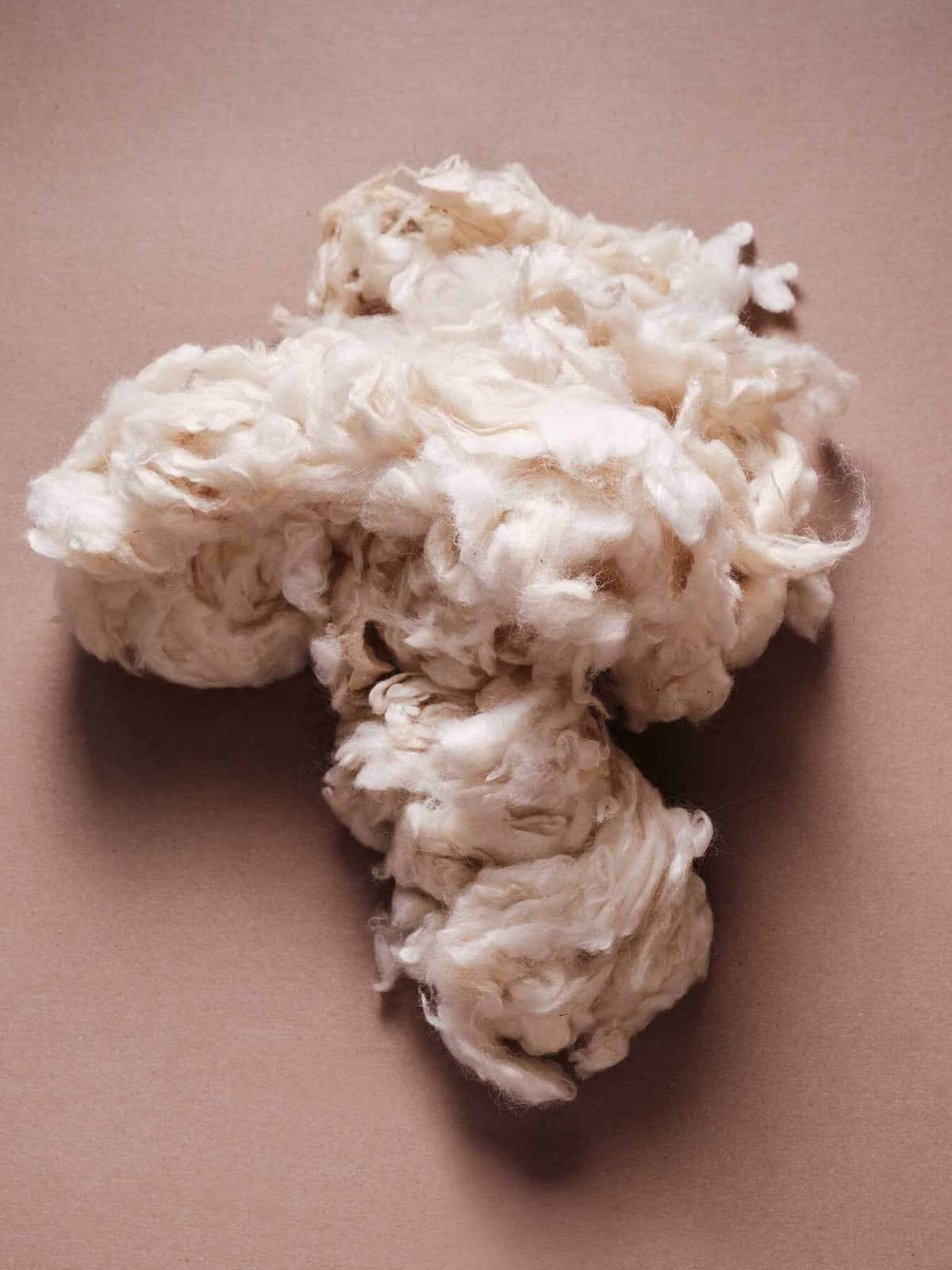
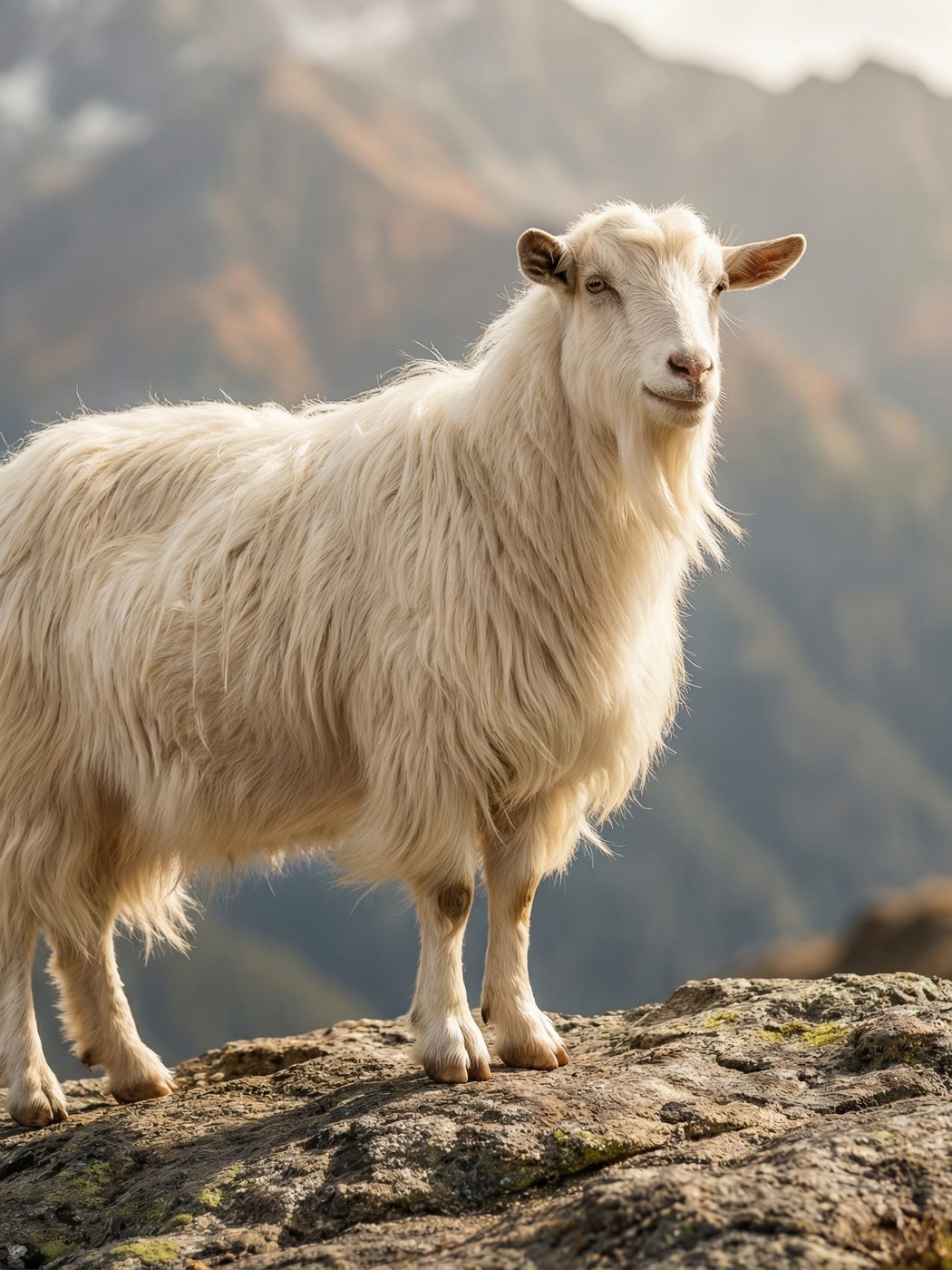
The Plush Wool Rug in Camel is handloom woven in New Zealand wool with a deep, quiet pile of 18 to 20 mm, plush and soft underfoot. It comes in six sizes from 5x8 to 12x15 ft, from about ₹33,600, inclusive of GST at the time of writing, and the full range sits in the Plush collection.
How does the look work in an Indian flat?
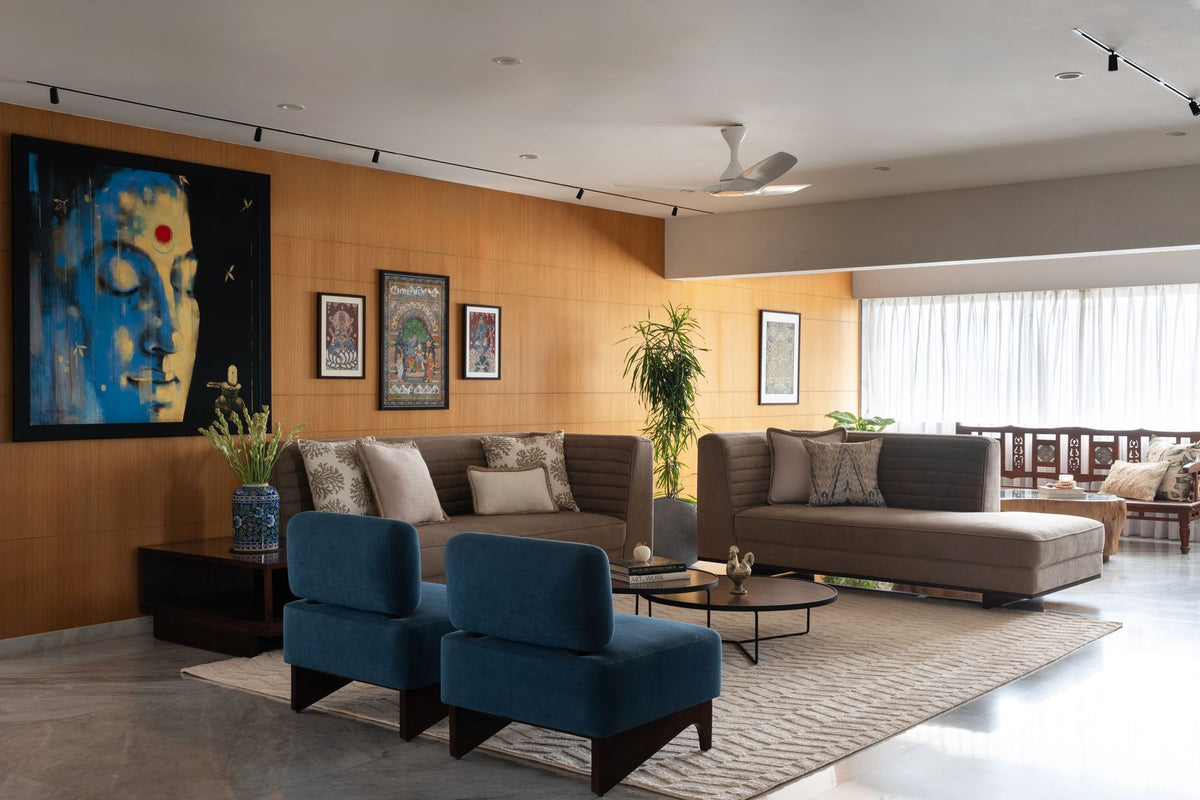
The seventies suits Indian homes well, because so much of Indian living already happens low: floor seating, gaddas, bolsters and a low diwan. A large, soft rug with floor cushions around it creates a modern version of the conversation pit without lowering the floor.

Size the rug generously. A conversation area works best when everyone sits on the rug, so for a living room of about 14 by 16 ft, a 9x12 ft or 10x14 ft rug with a low sofa on one side and cushions on the others gives the right sense of enclosure.
Work with the flat's own floor: on white vitrified tile, a warm rust or ochre rug brings back the warmth the tile lacks. On older terrazzo or mosaic floors, the decade's own floors in many Indian homes, a plain gradient rug lets the floor's flecks stay part of the room. For floor seating in detail, our floor seating guide covers gaddas and bolsters.
What is Solaris, Rugberry's own seventies story?
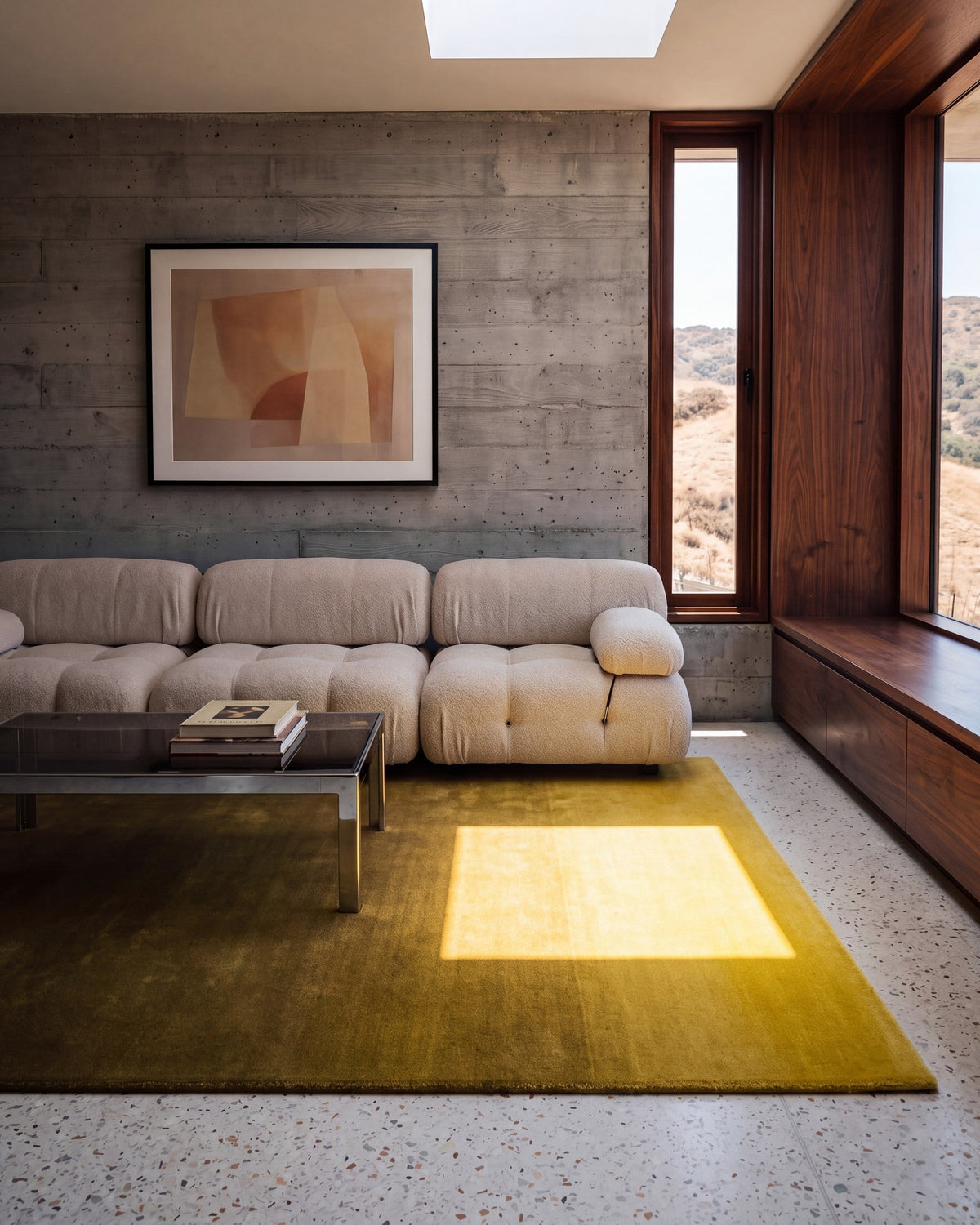
Solaris is Rugberry's collection of nine ombré rugs, set in a hillside house from 1972, concrete and walnut, built to watch the sun move. Each rug is named for an hour of one day, from the blue before dawn to night.

The rugs are hand tufted in New Zealand wool at 14 to 16 mm, dyed in steps from the lightest shade of a colour to its deepest, and tufted row by row so that one tone becomes the next without a line. The Solaris page shows the house hour by hour, with its low sofas, board marked concrete and walnut, very much a seventies interior.
Three hours suit a seventies room especially well. Ombré Solitude is noon in ochre, Ombré Anomaly is the afternoon in umber, and Ombré Pristine is golden hour, saffron turning to rust. All nine share one price, from about ₹36,960, inclusive of GST at the time of writing, in six sizes from 5x8 to 12x15 ft.
All nine hours sit in the Solaris collection, and our guide to choosing a Solaris rug by the hour matches each one to the light of a room.
How do you care for a deep pile or ombré rug?
Vacuum both kinds weekly with a suction only head, rotate them by 180 degrees every six months and keep them out of long hours of direct sun. Deep pile needs its dust lifted out, and an ombré needs even light so its gradient fades evenly, if at all.

Indian dust settles deep in a thick pile. Vacuum slowly in both directions, and once a season take the rug outside, lay it face down on a clean sheet and tap the back lightly to loosen grit. Brush the pile back up with your palm where furniture legs have pressed it.
Warm colours such as ochre and rust can soften in strong sun over years. Use sheer curtains on west facing windows, and when you rotate an ombré, check that its light end and deep end still sit where you want them in the room.
Frequently asked questions
Is a shag rug a good idea in India?
A true long shag traps dust, grit and pet hair and is hard to clean in Indian conditions. A dense deep pile of about 18 to 20 mm gives similar softness and is far easier to keep clean.
Which colours are most seventies for a rug?
Rust, ochre, mustard, umber, olive and chocolate are the decade's best known rug colours. Choose one and pair it with cream or sand to keep the room modern.
Can a seventies style rug work with modern furniture?
Yes, and that pairing is what keeps it from looking like a period set. A warm ombré or deep pile rug under a plain modern sofa and a simple table lets the rug carry the era on its own.
What is an ombré rug?
An ombré rug moves gradually from one shade to another across its surface, with no visible line between tones. In Rugberry's Solaris rugs the colour is dyed in steps and tufted row by row to create that gradient.
Which way should a seventies rug sit in a room with low seating?
Centre it on the seating, with the long side parallel to the sofa, so every seat and floor cushion rests on the rug. For an ombré, put the deeper end where people sit, as it grounds the seating and hides wear best.
Warm colour, a soft floor and a room that sits low. Material first.





Leave a comment
This site is protected by hCaptcha and the hCaptcha Privacy Policy and Terms of Service apply.