



Solaris: Choosing an Ombré Rug by the Hour
Solaris is Rugberry's collection of nine ombré rugs, hand tufted in New Zealand wool, each named for one hour of a single day, from Mystique in indigo before dawn to Taupe in graphite at night. Choose your hour by the light your room actually gets, and the rug will look right at the time you use it most.
In short
- Solaris, Latin for of the sun, is nine Rugberry ombré rugs in hand tufted New Zealand wool, one for each hour of a day, told on the Solaris campaign page.
- The nine are Mystique (indigo, before dawn), Haze (mist), Meadow (olive), Solitude (ochre, noon), Anomaly (umber), Pristine (rust, golden hour), Dusk (slate), Forest (pine) and Taupe (graphite, night).
- Every Solaris rug costs ₹44,000 for 5x8 ft, ₹87,000 for 8x10 ft and ₹1,97,000 for 12x15 ft, regular prices ex GST at the time of writing, and is made in any size to order.
- East facing rooms suit the morning hours, west facing rooms the golden hour, and rooms used mostly at night the evening hours.
What is the Solaris collection?
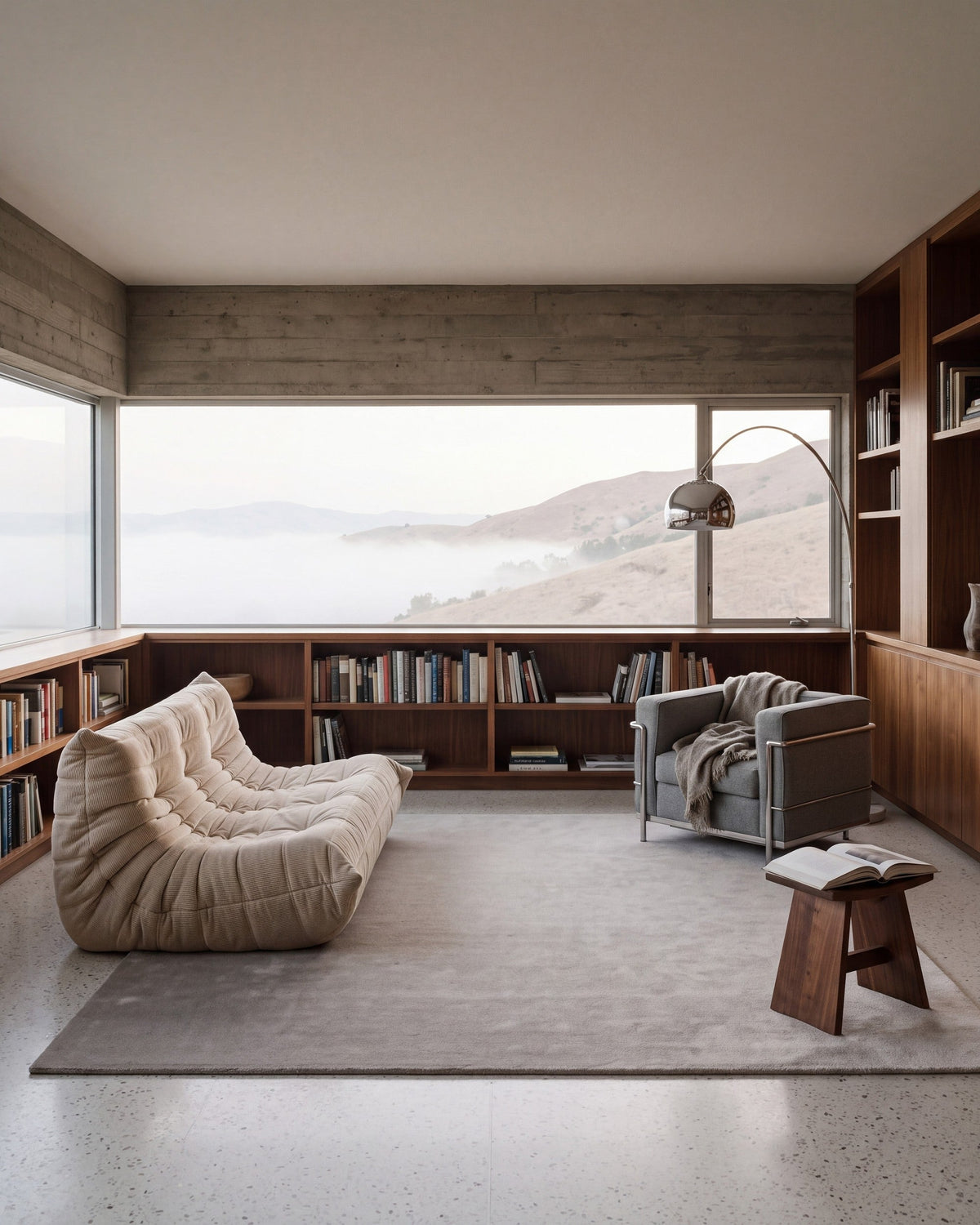
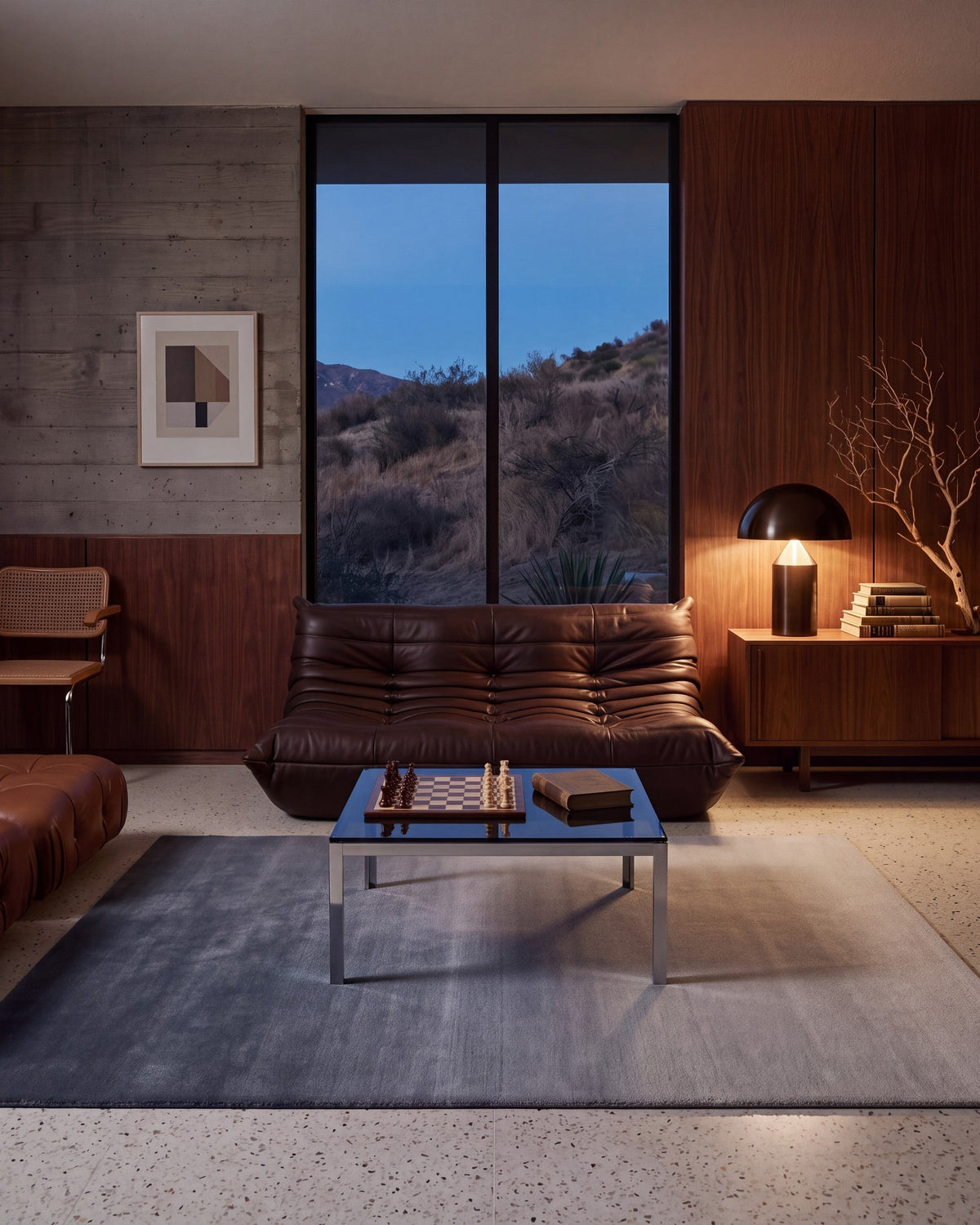
Solaris is a set of nine ombré rugs that follow the sun through one day, each rug given the colour of one hour. Rugberry tells the story on its Solaris page: a hillside house built in 1972, concrete and walnut, watched from the blue before dawn to the last warm light.
The name is Latin for of the sun, and the idea is in the campaign line: a day never changes colour all at once. Light drifts from one colour into the next, and an ombré rug does the same thing in wool, moving from the lightest shade of a colour to its deepest without a visible line.
The rugs themselves are practical, everyday pieces. Each is hand tufted in New Zealand wool at 14 to 16 mm, soft and even underfoot with a dense pile that holds its shape. The whole set sits in the Solaris collection, and Rugberry's earlier guide to the ombré rugs in wool describes each design.
How is a Solaris ombré made?
Each Solaris rug starts from one colour dyed in steps, from its lightest shade to its deepest, and each step is tufted into the next by hand, row by row, so no line ever shows. That is how the Solaris page describes the making, under the headings The wool and The hand.


Hand tufting suits a gradient. The tufter works yarn through a backing cloth with a hand held tool, and can blend one shade into the next by mixing yarns across a few rows. A machine weave would show bands; a hand tufted gradient drifts.
The New Zealand wool matters too. It takes dye evenly and deeply, so each step in the gradient keeps a clean colour rather than going muddy. Rugberry's guide to how ombré gradients are made goes deeper into dyeing in steps, and the glossary defines ombré.
Which hour is which rug?
The nine rugs run through the day in order, and the Solaris page gives each one a time and a colour. The table lists them, with the room each hour suits best in an Indian home.
| Hour | Rug | Colour | Suits |
|---|---|---|---|
| 5:40 AM, before dawn | Ombré Mystique | Indigo | Bedrooms, cool white rooms |
| 6:30 AM, first mist | Ombré Haze | Mist | Pale rooms, white marble, minimal bedrooms |
| 8:15 AM, morning | Ombré Meadow | Olive | East facing living rooms, rooms with plants |
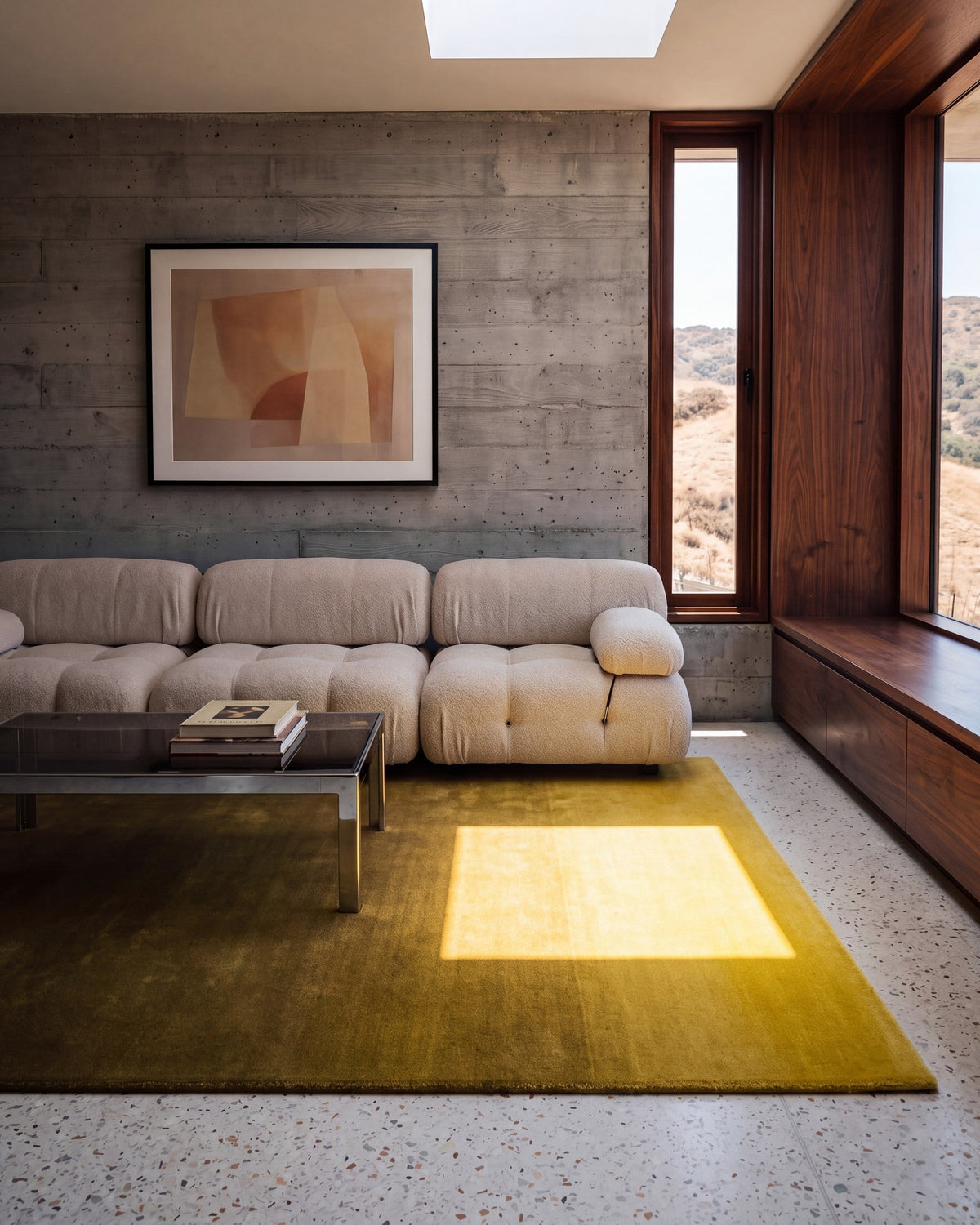
| 12:00 PM, noon | Ombré Solitude | Ochre | Bright living rooms, terrazzo and stone floors |
| 3:30 PM, afternoon | Ombré Anomaly | Umber | Studies, libraries, wood panelled rooms |
| 6:10 PM, golden hour | Ombré Pristine | Rust | West facing living rooms, warm wood |
| 7:20 PM, blue hour | Ombré Dusk | Slate | Rooms lit by lamps, grey and leather schemes |
| 8:30 PM, evening | Ombré Forest | Pine | Garden facing rooms, green and brass palettes |
| 11:00 PM, night | Ombré Taupe | Graphite | Media rooms, dark wood, late living |
All nine share the same price at regular prices ex GST at the time of writing: ₹44,000 for 5x8 ft, ₹59,000 for 6x9 ft, ₹87,000 for 8x10 ft, ₹1,17,000 for 9x12 ft, ₹1,51,000 for 10x14 ft and ₹1,97,000 for 12x15 ft. Choosing the hour costs nothing extra.
How do you match an hour to the direction of your room?
Match the hour to the light your room gets at the time you use it: morning colours for east facing rooms, noon colours for rooms with overhead or south light, golden hour colours for west facing rooms, and night colours for rooms used mostly under lamps.

An east facing bedroom in Pune or Bengaluru fills with cool, clear light from sunrise to mid morning. Mystique, Haze and Meadow look their truest there, and their cool to green tones stay calm when the room is bright. In a west facing living room in Delhi or Jaipur, the light turns gold after four; Pristine and Anomaly are made for that hour.
A north facing room, common in apartment blocks, gets steady, soft light all day with no direct sun. Solitude's ochre warms it up. A room used mostly after dark, a media room or a bedroom you only enter at night, suits Dusk, Forest or Taupe, whose deep tones hold together under warm lamps.
Choose the hour you love most and keep it underfoot. The room will tell you which one it is.
Which end of an ombré rug goes where?
Put the deep end of a Solaris rug where the room is darkest or heaviest, and the light end towards the window or the open side. The gradient then follows the light already in the room, and the rug looks as if the sun made it.

In a living room with a window wall, that usually means the deep end under the sofa and the light end towards the glass. In a long room with windows on the side, run the gradient across the room, deep at the wall and light at the window, so the change follows the light rather than fighting it.
Under a bed, the light end usually goes at the foot, where morning light lands. If the bed faces a window, turn the rug so the deep end sits under the bed and only the paler part shows. A gradient read from the door should brighten as you walk in.
Turning the rug end to end every six months still matters for even wear, but turn it back to its best direction for the season you use the room most.
How do Solaris rugs suit Indian floors?
Solaris rugs suit pale floors best, because the light end of the gradient sits close to the floor and the deep end gives the room its weight. On darker floors, choose a morning or noon hour so the pale end still contrasts.


- White marble. Any hour. Mystique and Dusk give the strongest effect, Haze the softest.
- Beige vitrified tile. Meadow, Solitude or Pristine, whose warm tones sit with the tile.
- Terrazzo. Solitude or Meadow, which pick up the warm chips.
- Teak or walnut. Haze, Meadow or Dusk, cooler tones that stand apart from the wood.
- Grey granite or concrete finish. Pristine or Anomaly, warm against cool.
The Solaris campaign house is board marked concrete and walnut, and those two finishes show how the rugs behave against cool and warm grounds. Rugberry also shows Pristine at the Noida Experiential Centre in 5x8 ft; the store locator lists the centre.
How do you care for a Solaris rug?
Care for a Solaris rug by vacuuming regularly and using professional cleaning only, as its product page states. New Zealand wool is resilient, so a hand tufted ombré in wool handles daily living better than a Botanical Silk rug.
A gradient is where fading shows most, because the eye reads the steps between tones. Place a Solaris so its palest end is away from a west window, use a sheer in the afternoon, and turn it end to end each spring and autumn so the darker and lighter halves share the sun.
Blot spills at once with a white cloth from the edge inward. A spill on the light end shows more than on the deep end, which is another reason to put the pale end towards the window and away from the coffee table. A new hand tufted rug sheds loose fibre for some weeks; regular vacuuming clears it.
See Pristine, Haze, Dusk and Solitude, or walk through all nine hours on the Solaris page.
Can you use two Solaris hours in one home?
Yes, and the collection is built for it: two hours from the same day share a dyeing method, a wool and a pile, so they read as related even in different colours. Pick hours that sit next to each other for a calm home, or hours far apart for contrast between rooms.

Neighbouring hours flow. Meadow in an east facing living room and Solitude in the dining area next to it move from olive to ochre the way a morning moves to noon. Dusk in the living room and Forest in a study off it keep the evening mood running through an apartment.
Distant hours separate. Haze in a bright bedroom and Taupe in the media room make each space feel distinct, which helps in an open plan home where rooms need their own character. Rugberry's guide to choosing a rug colour covers how colours carry from room to room.
Frequently asked questions
What does Solaris mean?
Solaris is Latin for of the sun. Rugberry uses the name for its nine ombré rugs, each named for one hour of a single day, from before dawn to night.
How many rugs are in the Solaris collection?
The Solaris collection has nine ombré rugs: Mystique, Haze, Meadow, Solitude, Anomaly, Pristine, Dusk, Forest and Taupe. Each is hand tufted in New Zealand wool and listed in six sizes from 5x8 to 12x15 ft.
Are the Solaris ombré rugs hand tufted?
Yes. Every Solaris rug is hand tufted in New Zealand wool at 14 to 16 mm, with each shade blended into the next by hand, row by row, so the gradient has no visible line.
Which Solaris rug suits a west facing living room?
Ombré Pristine, the golden hour rug in rust, suits a west facing living room, because its warm colour matches the light that room gets in the late afternoon. Ombré Anomaly in umber is a quieter alternative.
How much does a Solaris ombré rug cost?
The price depends only on size, never on the hour you pick. A 5x8 ft Solaris starts at ₹44,000 and an 8x10 ft is ₹87,000, regular prices ex GST at the time of writing, with GST added at checkout and delivery free in India.
Every hour has its colour. Material first.






Leave a comment
This site is protected by hCaptcha and the hCaptcha Privacy Policy and Terms of Service apply.