




Persian Style or Modern Rug for Your Home?
Choose a Persian style rug when your room is calm and needs one rich, patterned surface, and a modern rug when the room already carries pattern in art, upholstery or architecture. The quickest test is to count the patterned surfaces you can see from the door: two or fewer leaves room for a traditional design.
In short
- A Persian style rug is defined by a central medallion or an all over pattern, framed by borders, with curving floral motifs in several colours.
- A modern rug usually carries one idea, such as a line, a shape or a texture, across an open field in two to four colours.
- A Persian style rug suits a room with plain walls and plain upholstery, while a modern rug suits a room that already holds pattern in art, fabric or stone.
- Rugberry makes modern designs, including hand knotted rugs such as Pazo and Couture, and makes its own designs in custom sizes and colours.
What actually separates a Persian style rug from a modern one?
A Persian style rug is organised around a frame: borders around a field, often with a central medallion, filled with curving flowers, vines and palmettes in many colours. A modern rug drops the frame and usually carries a single idea, a line, a shape or a texture, across an open field.


The word Persian here describes a style, not a place. Rugs in Persian style designs are woven in many countries and in every quality, from fine hand knotted pieces to machine made copies. When you compare, compare the design first, then the construction, because the two decisions are separate.
The other difference is how many colours each one uses. A traditional design commonly works with eight or more shades, and part of its beauty is that no single colour dominates. A modern design more often works with two to four, so each colour has to be chosen against your sofa and floor.
Which suits your room: how do you test it?
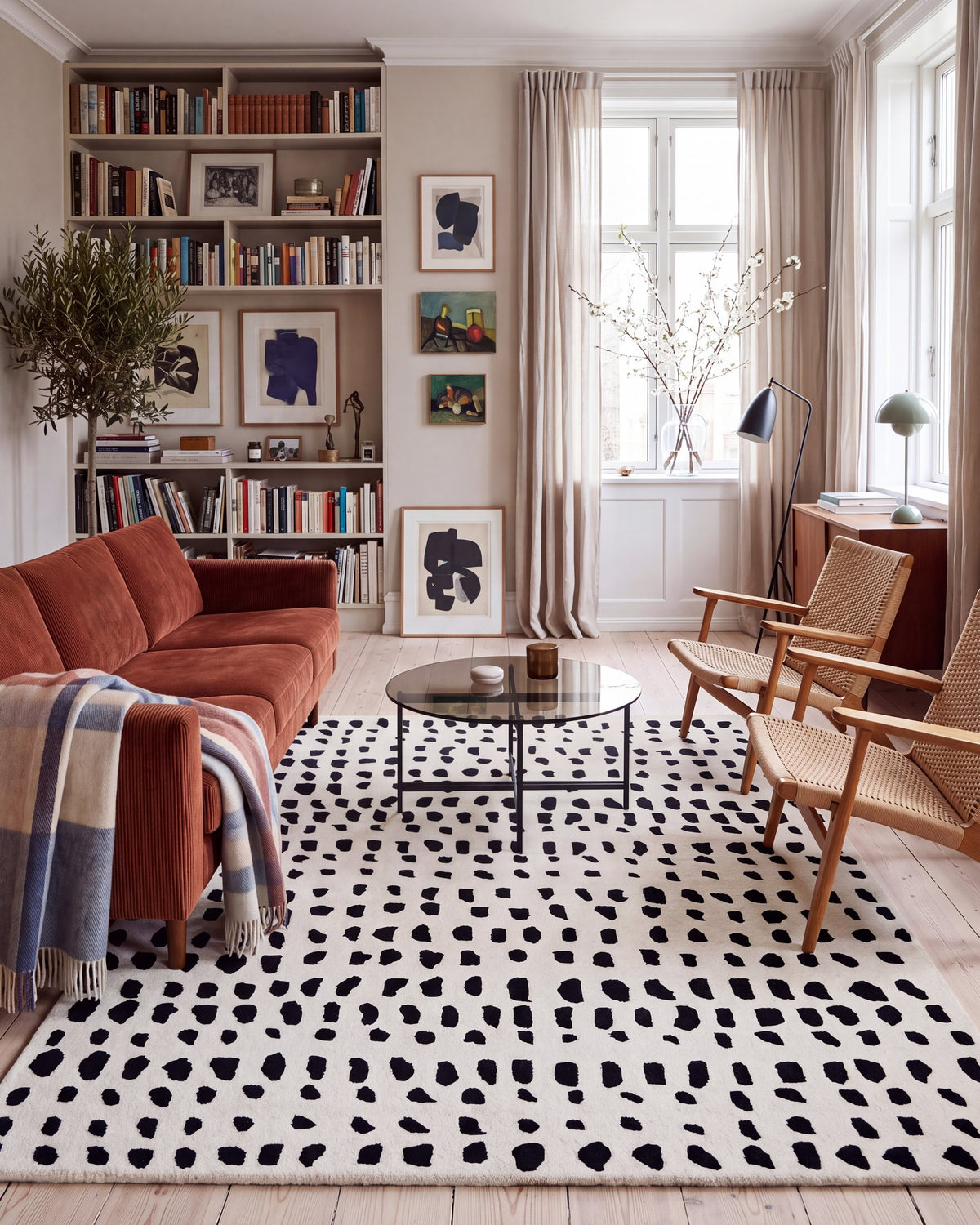
Stand in the doorway and count the patterned surfaces you can see: printed curtains, a patterned sofa, a feature wall, framed art with strong imagery, a veined marble floor. With two or fewer, a Persian style rug can be the room's one rich surface; with three or more, a quieter modern rug will keep the room readable.

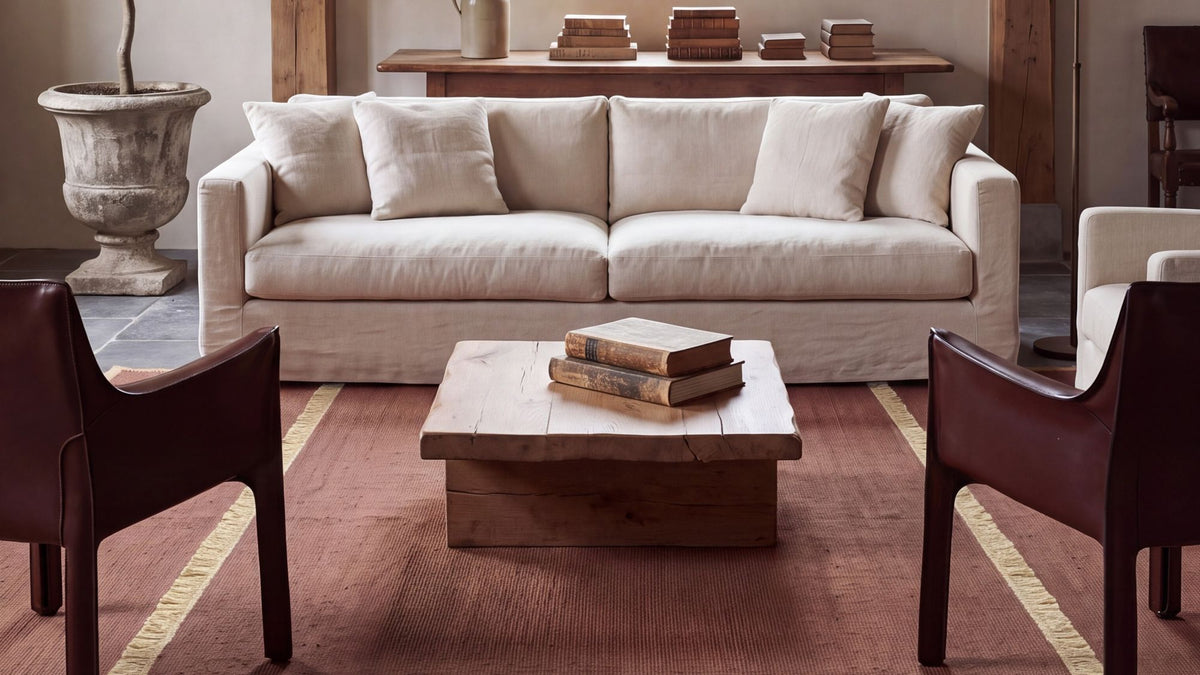
Furniture is the second test. Carved, turned or upholstered pieces with buttoned backs sit naturally on a traditional design, while slim metal legs, low platforms and plain block sofas tend to look busy on top of one. Mixed rooms can go either way, and a quiet modern rug with a soft sheen often bridges them, as our guide to the transitional interior explains.
The third test is light. A deep red and navy traditional rug in a north facing room with small windows can make the floor read as a dark hole, while the same rug in a bright south facing room glows. A pale modern rug works the other way, lifting a dim room and sometimes looking washed out in hard sun.
How does pattern scale change the decision?
Pattern scale matters more than style, because a design that is too small reads as a blur and one that is too large is cut apart by furniture. A traditional medallion needs to be seen whole, so it suits a room where the centre of the rug stays open, such as a formal sitting room with a low table or none.
Small, all over traditional patterns behave differently. From three metres away they read almost as texture, which is why an all over design can work under a dining table or in a busy family room where a medallion would be hidden under chairs. Modern rugs have the same rule: a single large shape needs open floor, a fine repeated line survives being covered.
Before you buy, mark the rug's outline on the floor with masking tape and place the furniture as it will stand. Then look at what is left visible. If the part of the design you love would disappear under the coffee table, choose a different layout or a different rug.
Count the patterns you can see from the door. The rug should add one, not compete with five.
Can a Persian style rug work in a modern Indian flat?
Yes, especially an inherited one, as long as the rug is the only strong pattern in the room. Many Indian homes have a family rug from a grandparent's house, and in a flat with white walls, vitrified tile and a plain sofa it can become the room's centre rather than an odd one out.

Give it room to breathe. Keep the sofa and curtains plain, choose one colour from the rug, often the deepest red or indigo, and repeat it once in a cushion or a print. Let the rest of the palette come from the rug's quieter shades, such as its ivory or camel ground.
Scale the rug to the seating rather than to the room. A small heirloom rug floating in a large living room looks lost; it is better used under a reading chair, at a bedside or in a study, while a larger, quieter modern rug anchors the main seating. Our guide to modern rugs in traditional homes covers the opposite case, a modern rug among old furniture.
Avoid placing a traditional rug directly beside a busy modern one in the same sightline. If both must live in one room, separate them with furniture or a stretch of bare floor, so each is seen on its own terms.
How do cost and construction differ?
Cost depends far more on construction than on style. A hand knotted rug, Persian style or modern, takes the longest to make and costs the most; handloom and hand tufted rugs cost less for the same size; machine made rugs cost least.
The Persian knot and the Tibetan knot are two ways of tying pile by hand, and both can carry either style. Fine curving floral designs need many knots per square inch to draw their curves, which raises the cost, while bold modern designs read clearly at a lower knot count. Our comparison of the Persian and Tibetan knot explains the construction in detail.
| Persian style, hand knotted | Persian style, machine made | Modern, hand knotted | Modern, hand tufted or handloom | |
|---|---|---|---|---|
| What drives the price | Knot count, fibre, size | Machine and synthetic yarn, low labour | Fibre, size, knot count | Fibre, size, finish |
| Pattern detail | Fine curves, many colours | Printed or woven copy of fine curves | Bold lines and fields | Bold shapes, carving, texture |
| Back of the rug | Knots visible, mirror of the front | Regular machine grid | Knots visible | Cloth backing or woven back |
| How it hides wear | Very well, pattern masks marks | Well at first, pile can flatten | Well, if the design has movement | Depends on colour and texture |
| Rugberry example | Not in the range | Not made | Pazo, Couture | Fluid, Insignia |
Verdict: for a busy family room with children and pets, choose a modern rug with a moving, mid tone design over a plain pale one, because it hides daily marks almost as well as a traditional pattern and keeps the room calmer; for a formal room you want to centre on the floor, a traditional design is worth its cost.
How does each style age?
A traditional design ages gracefully because its busy pattern hides stains, fading and wear paths for years. A modern rug ages well when its colour and texture have movement, and less well when it is a single flat, pale shade, which shows every traffic path.


Fibre and construction matter as much as design. A dense knotted pile wears down slowly and evenly, so the pattern stays legible even as the pile lowers. Tufted and handloom rugs last well with care, and the main habit is rotation: turning the rug by 180 degrees every six months so sun and footsteps spread evenly.
Style ages too. Very fashionable modern designs can date within a few years, while traditional patterns have stayed in use for centuries. A modern rug that carries a simple, structural idea, a line, a grid or a carved texture, tends to date far more slowly than one that follows a trend colour.
Which Rugberry rugs sit between traditional and modern?
Rugberry's range is modern in design, but several pieces carry the craft or the structure that traditional rugs are known for. They suit homes that want to keep a sense of tradition without a classic pattern.


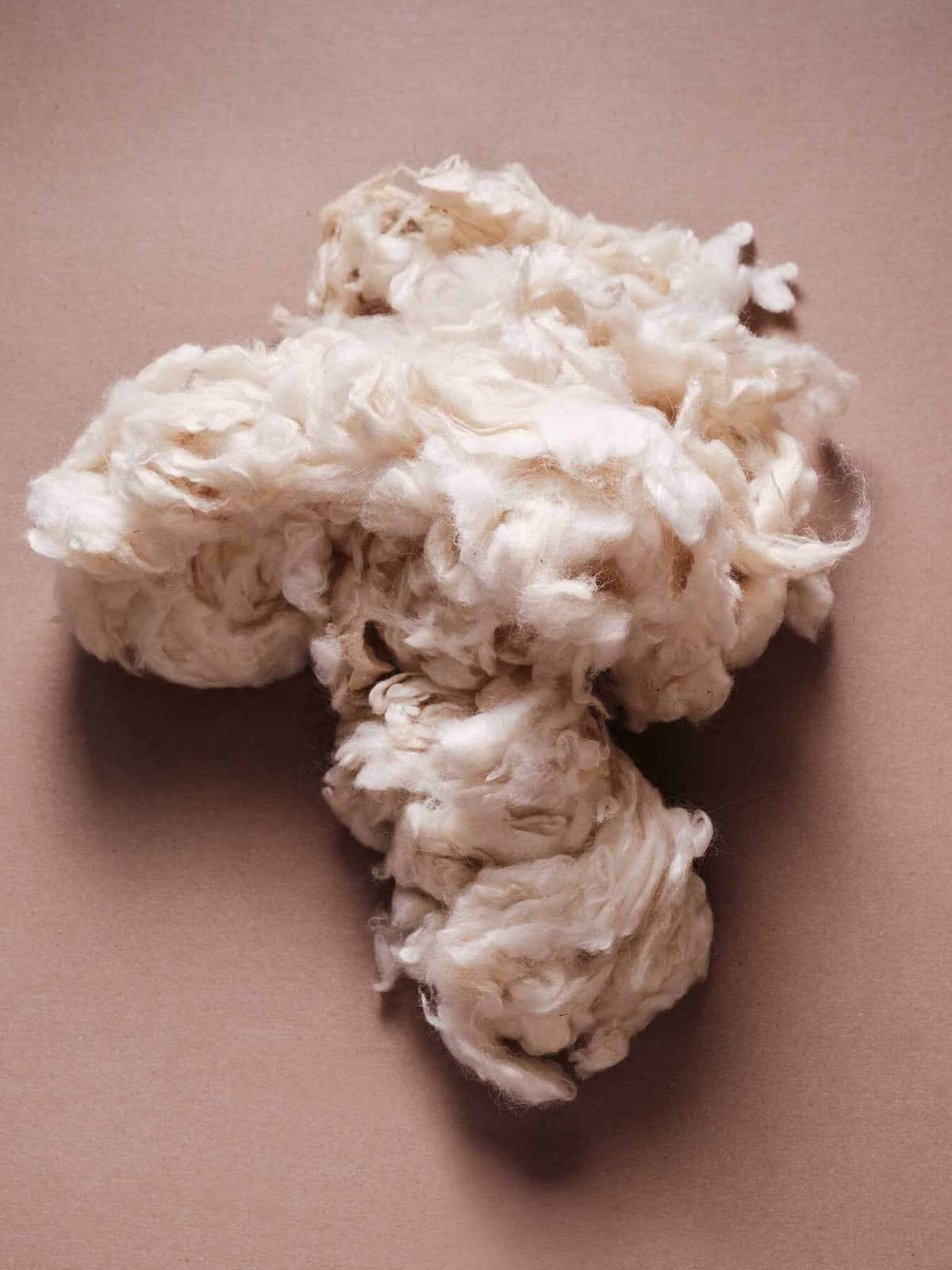
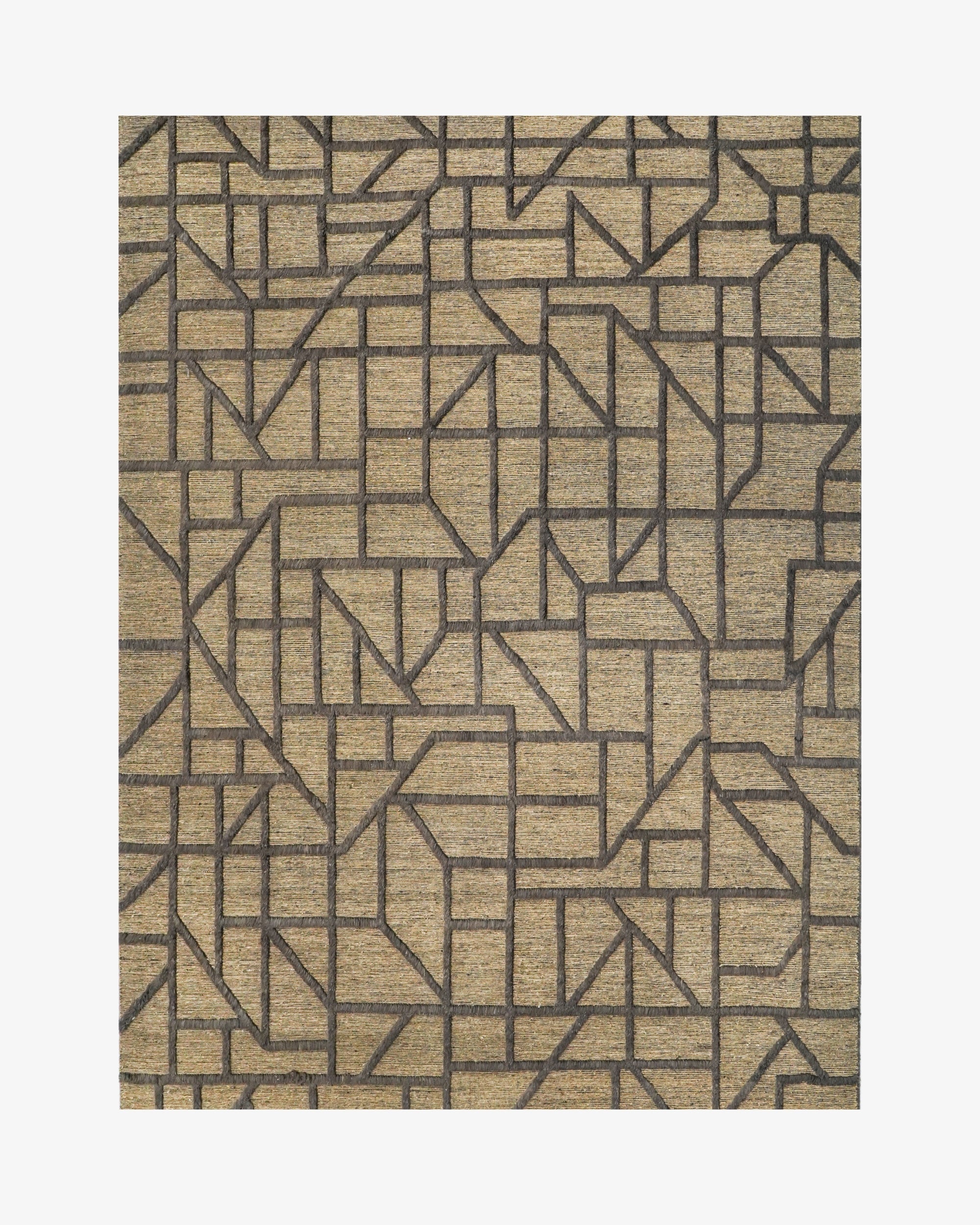
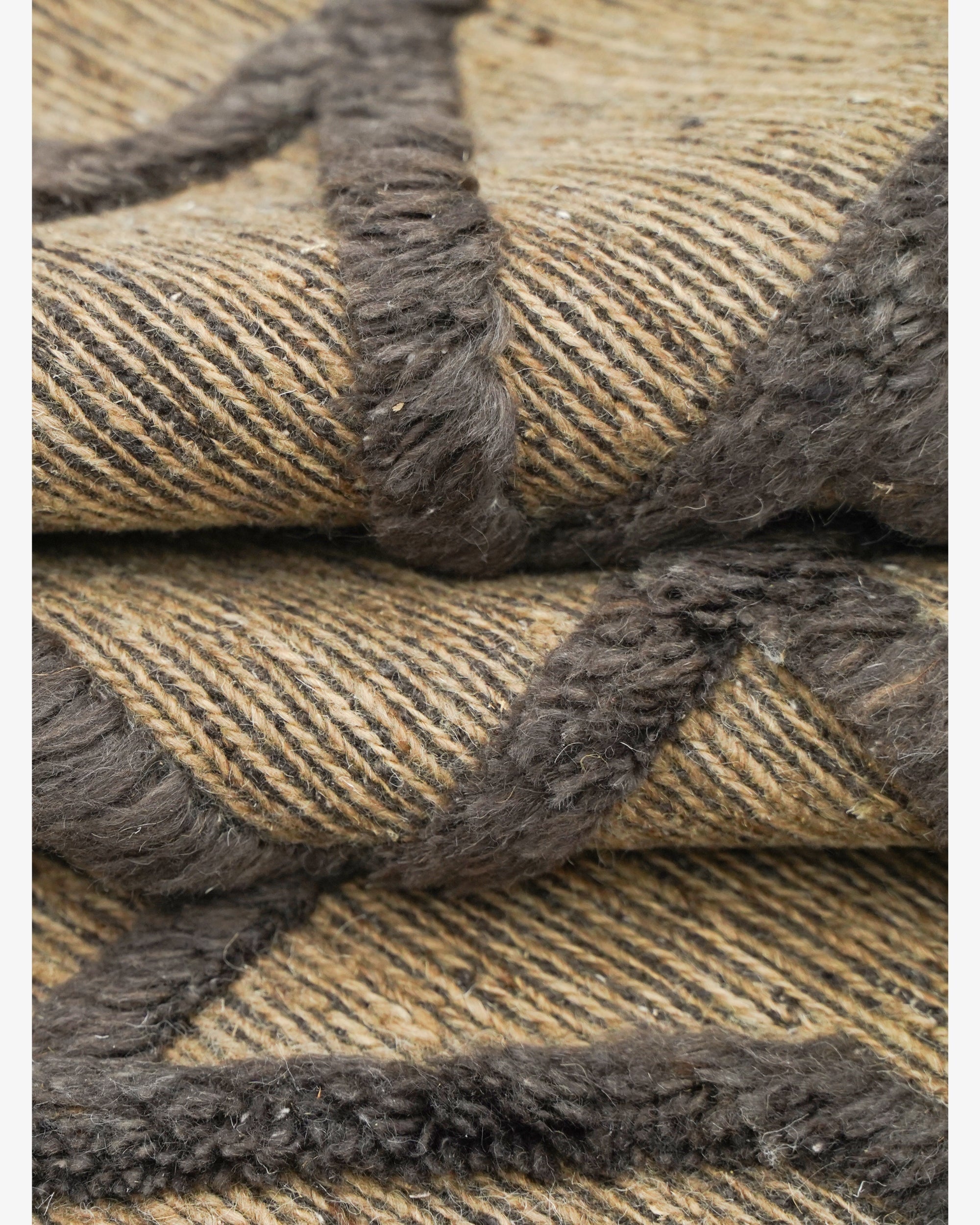
The Pazo Knotted Rug is hand knotted in New Zealand wool, with dark lines drawing irregular panes across a golden field, a modern design made in the most traditional construction. It is listed in 9x12 ft and any size to order, from about ₹1,38,600, inclusive of GST at the time of writing.
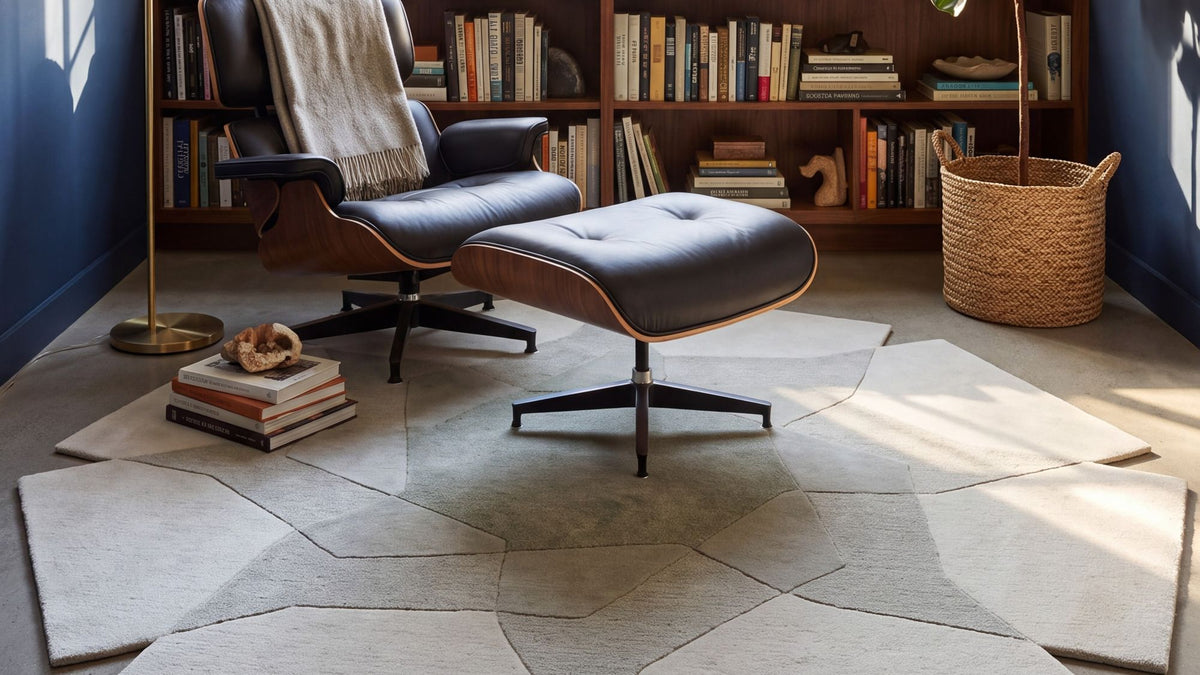
The Couture Silk Rug is hand knotted in silk, with a soft, cloudy field of blue grey, ivory and brown. It is listed in 5x8 ft and any size to order, from about ₹60,480, inclusive of GST at the time of writing, and it suits a room that wants the depth of an old rug without its motifs.
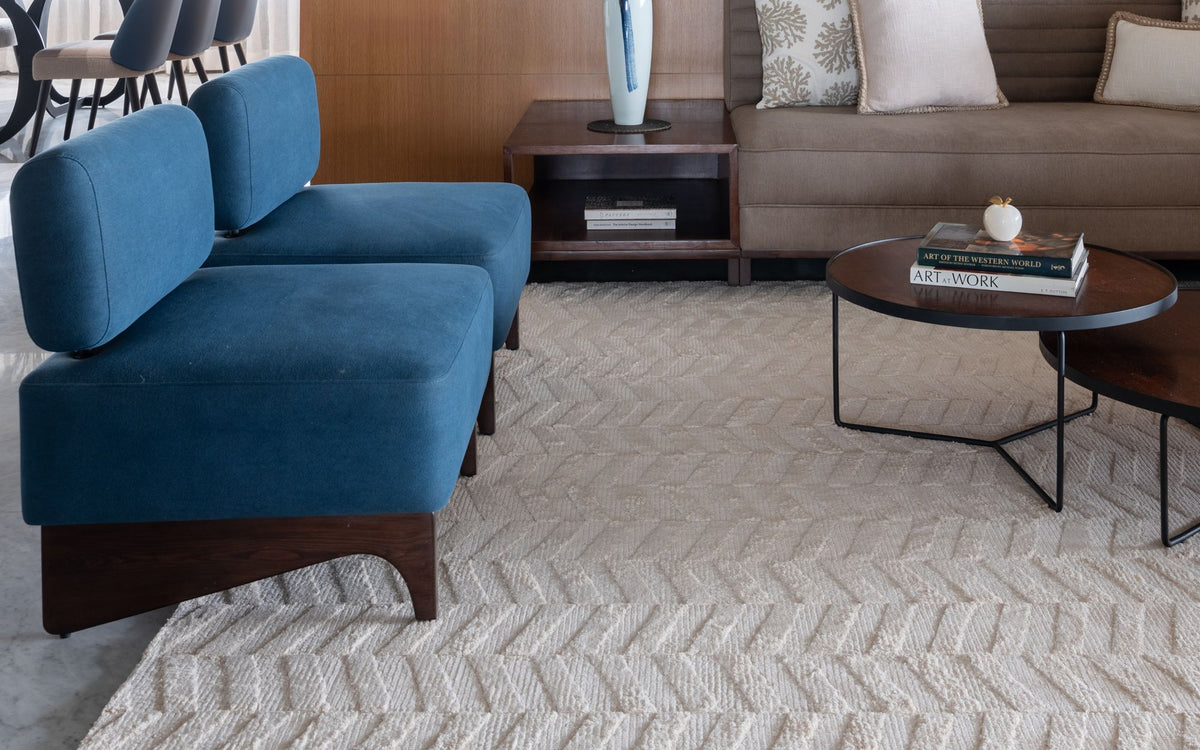
The Insignia Wool and Silk Rug is handloom woven in New Zealand wool and Botanical Silk, 14 to 16 mm, with a quiet texture and a low sheen. In the city apartment shown here, framed traditional paintings carry the pattern on the walls while the rug keeps the floor quiet. It comes in six sizes from 5x8 to 12x15 ft, from about ₹33,600, inclusive of GST at the time of writing.
For a bolder modern line, the Fluid Wool Rug is hand tufted in New Zealand wool, its surface running in slow, continuous curves, from about ₹33,600, inclusive of GST at the time of writing. More hand knotted pieces sit in the hand knotted collection.
Frequently asked questions
Is a Persian style rug out of fashion?
No. Traditional designs have stayed in use for centuries and are often used today as a single rich surface in an otherwise plain, modern room, which keeps them looking current rather than dated.
Can I mix a Persian style rug and a modern rug in the same home?
Yes, as long as they sit in different rooms or are clearly separated within one room. Linking them with one shared colour, such as the ivory of the traditional rug's ground and the ivory of the modern one, makes the home feel planned rather than mixed by accident.
Does a modern rug cost less than a Persian style rug?
Not necessarily, because construction sets the price more than style does. A hand knotted modern rug can cost as much as a hand knotted traditional one of the same size and fibre, while a hand tufted or handloom rug of either style costs less.
What size should an heirloom Persian style rug be in a modern flat?
Use it at the size it is, and choose the spot to suit it. A 4x6 ft family rug works well under a reading chair, beside a bed or in a study, while a larger plain rug anchors the main sofa area.
Can Rugberry make a traditional design?
Rugberry's own designs are modern, and any of them can be made in custom sizes and colours. For a specific traditional brief, speak to the team about what can be made to order before you plan the room around it.
One pattern, read clearly, is worth more than five competing. Material first.





Leave a comment
This site is protected by hCaptcha and the hCaptcha Privacy Policy and Terms of Service apply.