

Persian vs Tibetan Knot: What Differs
The Persian knot wraps yarn around one warp thread and passes behind the next, so knots can sit very close together and draw fine curves. The Tibetan knot loops yarn around a rod laid across the warps and is then cut, which builds a thick, dense pile suited to bold, modern designs.
In short
- The Persian knot, also called the Senneh or asymmetrical knot, is tied around one warp and passed loosely behind the neighbouring warp, so one yarn end rises between each pair of warps.
- The Tibetan knot is made by looping yarn around pairs of warps and over a gauge rod along the row, then cutting the loops free to form the pile.
- Persian knotted rugs usually carry a higher knot count and suit fine, curved detail, while Tibetan knotted rugs usually carry a lower count, a heavier pile and softer outlines.
- Knot type alone does not make a hand knotted rug good; the wool, the knot density and the finishing matter at least as much.
What is a Persian knot?
A Persian knot is a hand tied knot in which the yarn wraps fully around one warp and passes behind the next, so its two ends rise on either side of a single warp. Because it is lopsided it is also called the asymmetrical knot, and many bazaar listings in India name it the Senneh knot, as the glossary entry for the Persian knot notes.
The knot can open to the left or the right, and a weaver keeps to one side throughout a rug. That consistency gives the pile a slight, even lean.
Each Persian knot takes up very little width, so knots can be packed tightly. That is why traditional floral and medallion designs, with fine vines and curves, are usually tied this way.
What is a Tibetan knot?
A Tibetan knot is made by looping yarn around two warps and over a rod laid across the loom, again and again along the row, then cutting the loops free. The rod sets the pile height, so the cut ends stand evenly.


The method comes from the Himalayan weaving tradition and suits thicker wool. Tibetan rugs are often described by counts such as 60 or 100 knots per square inch, while fine Persian knotted rugs commonly sit well above that.
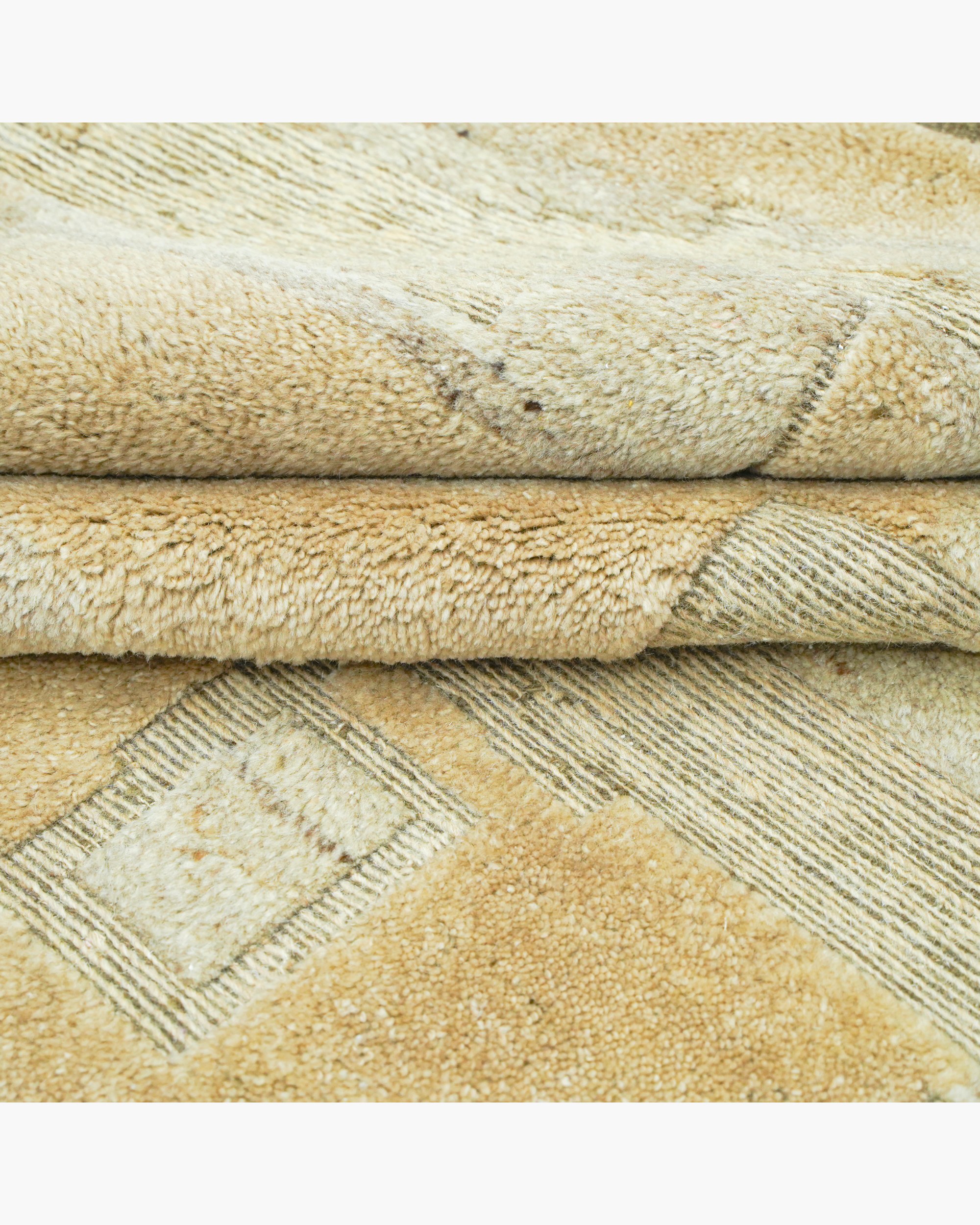
Bold blocks of colour, soft edges and abstract designs sit naturally in a Tibetan knot. The thicker pile blurs fine lines slightly, which suits a modern room.
How do the two knots compare?
The two knots differ mainly in how fine a design they allow and how thick a pile they build.


| Persian knot | Tibetan knot | |
|---|---|---|
| Tied around | One warp, passing behind the next | A pair of warps and a gauge rod |
| Other names | Senneh, asymmetrical | Often called the rod method |
| Typical knot count | Higher | Lower |
| Best at | Fine curves and small motifs | Bold shapes and soft edges |
| Pile | Short to medium, tight | Medium to thick, dense |
| Feel underfoot | Firm and fine | Soft and weighty |
For a traditional floral design with fine lines, choose a Persian knotted rug, and for a plain or bold modern design in thick wool, choose a Tibetan knotted rug, because it puts more depth underfoot for the same budget.
How do modern hand knotted rugs use these knots?
Modern hand knotted rugs use whichever knot suits the design and the wool, and most buyers never need to know which. What changes the rug you live with is the knot density, the pile height and the quality of the wool.
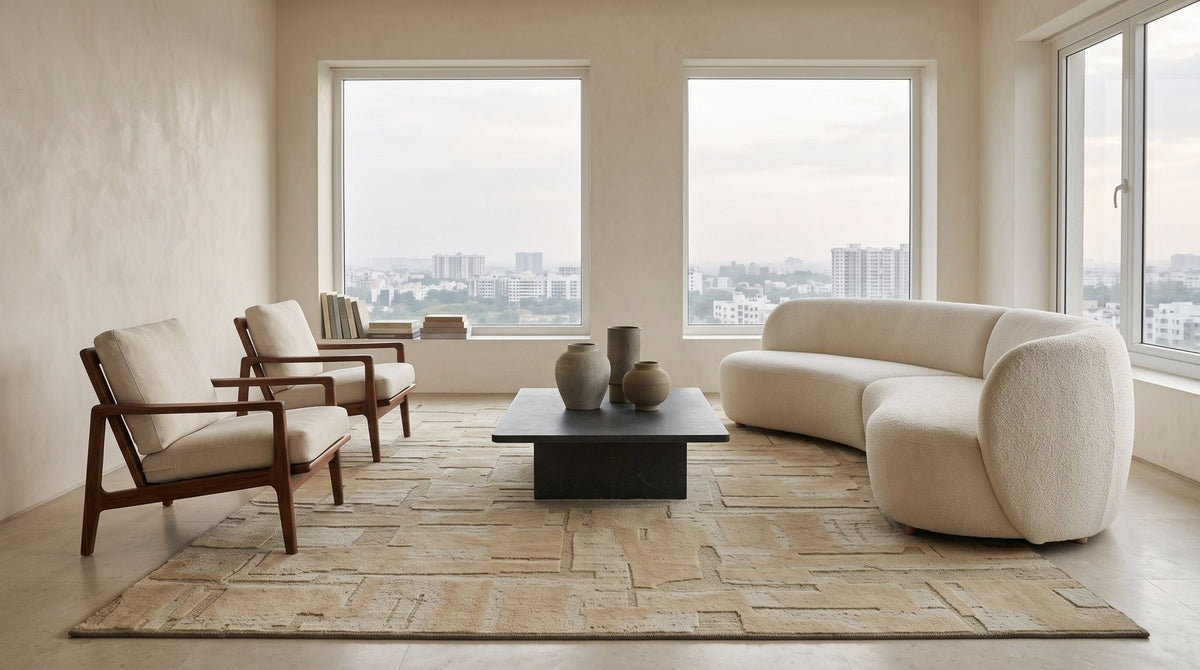
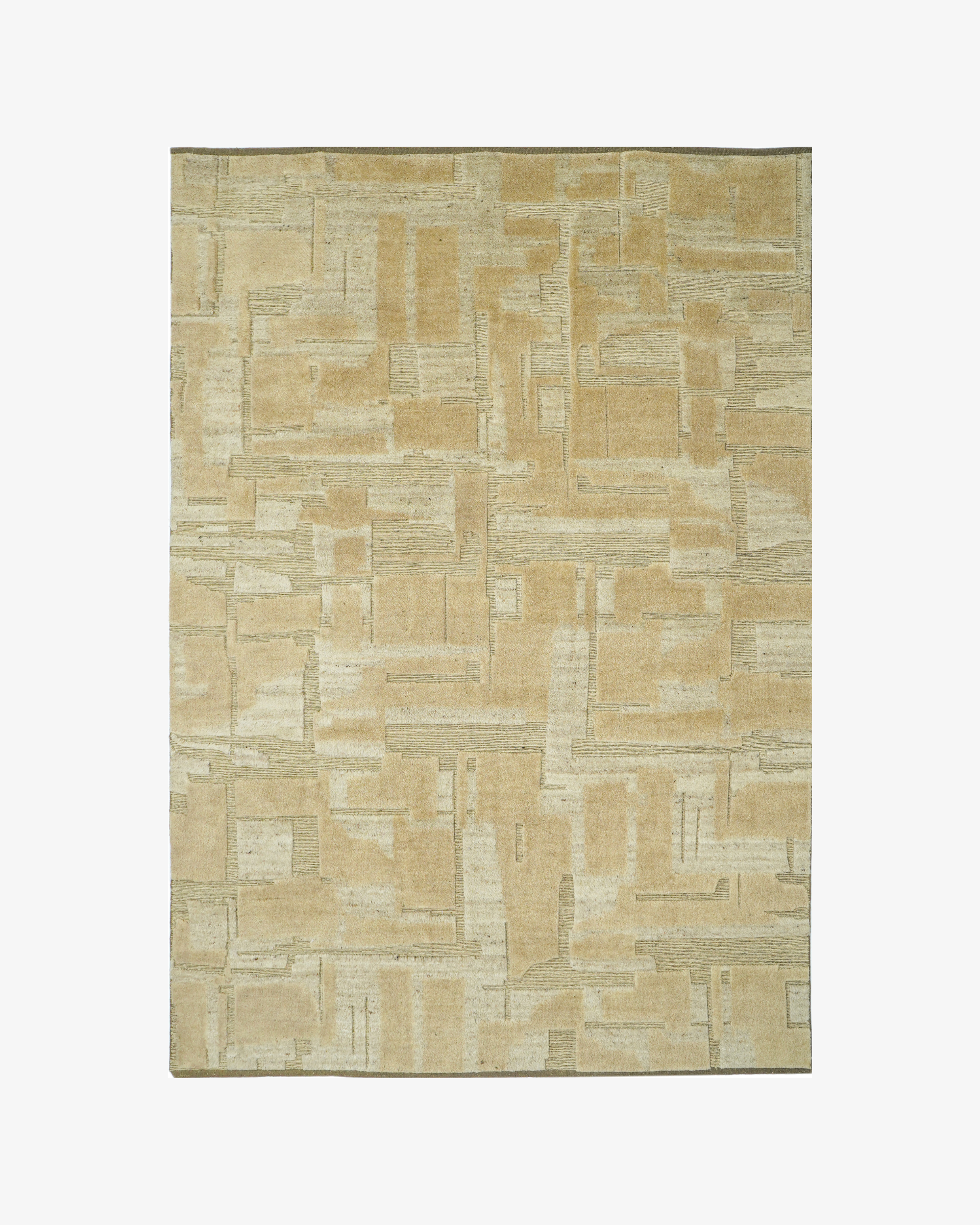
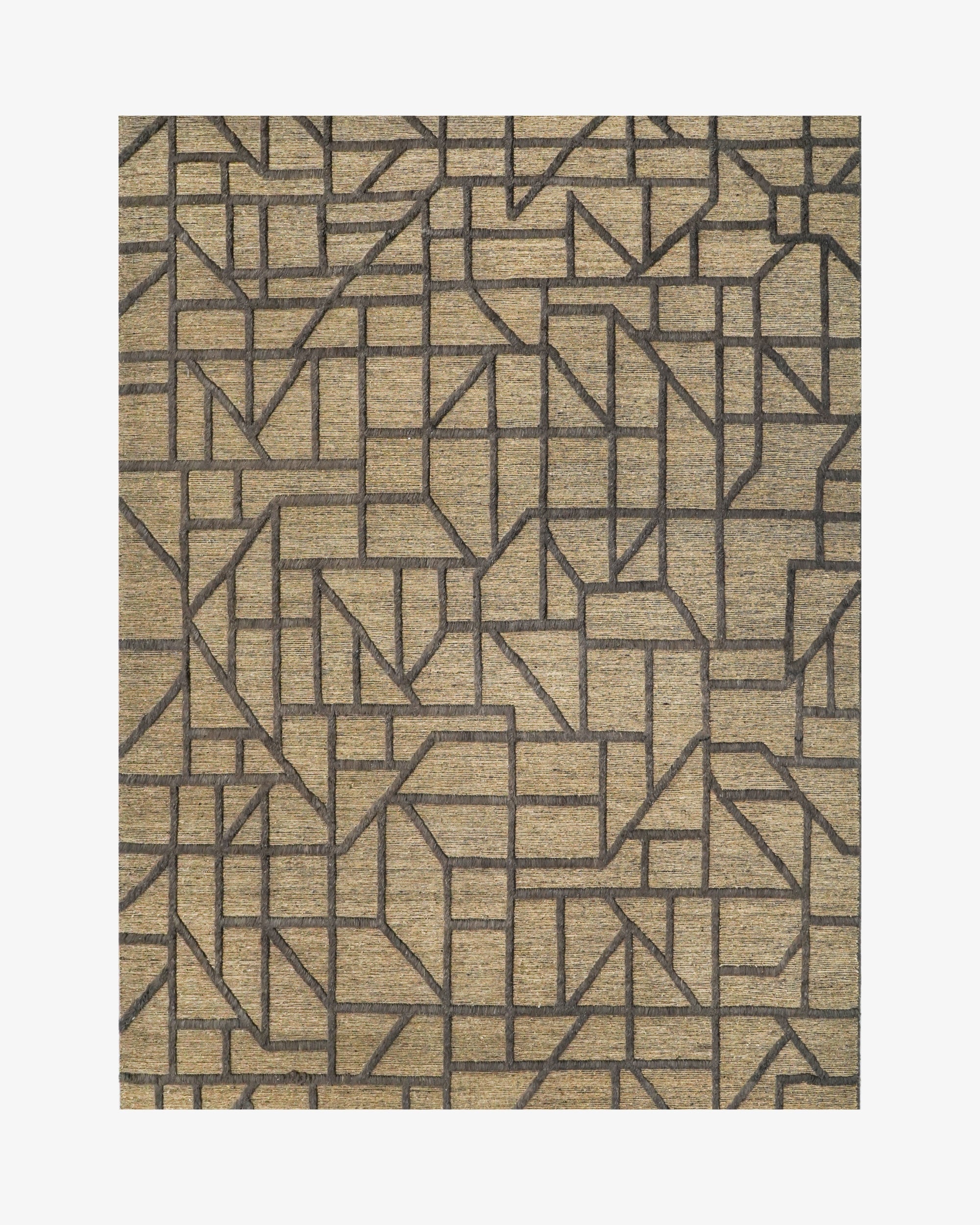
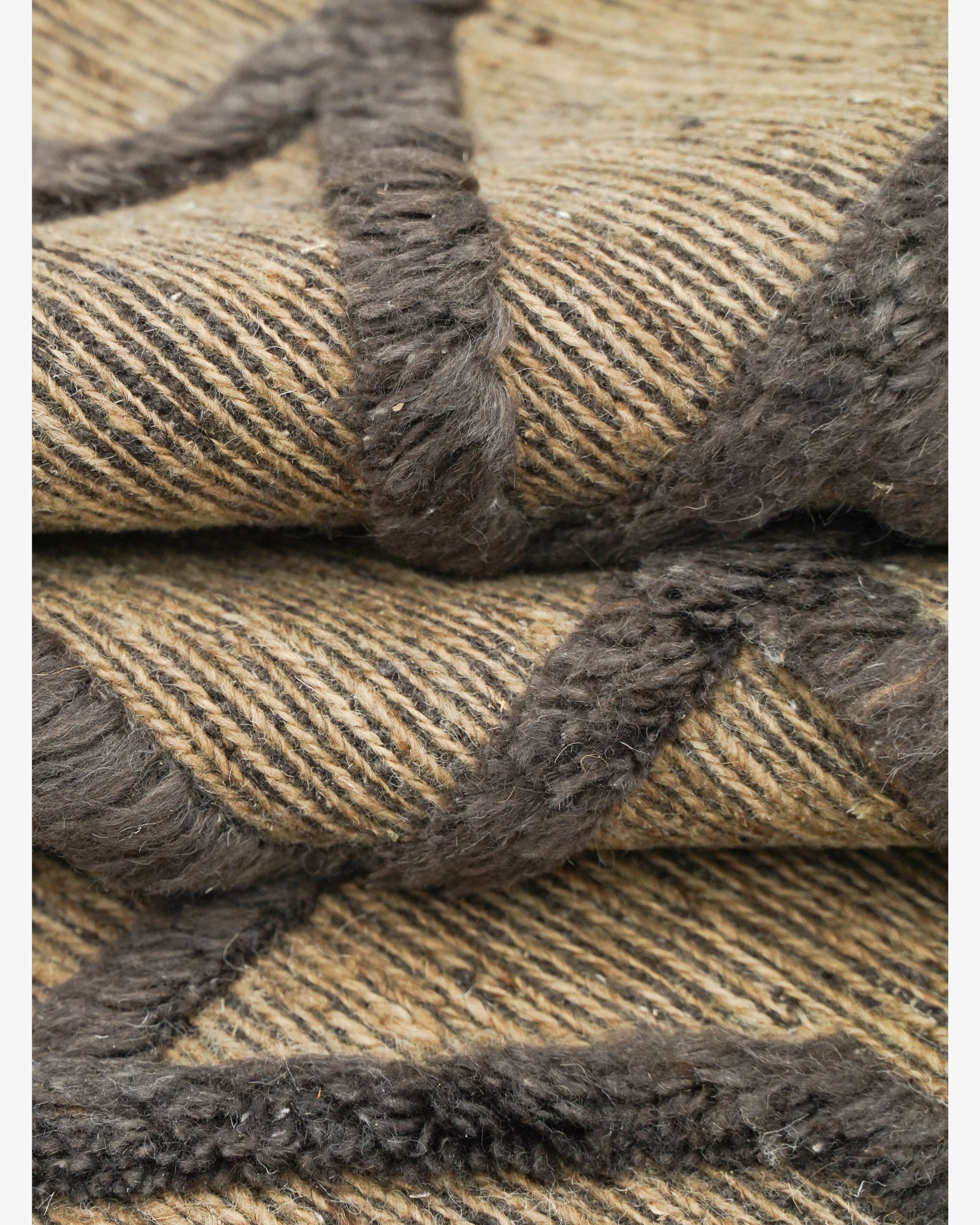
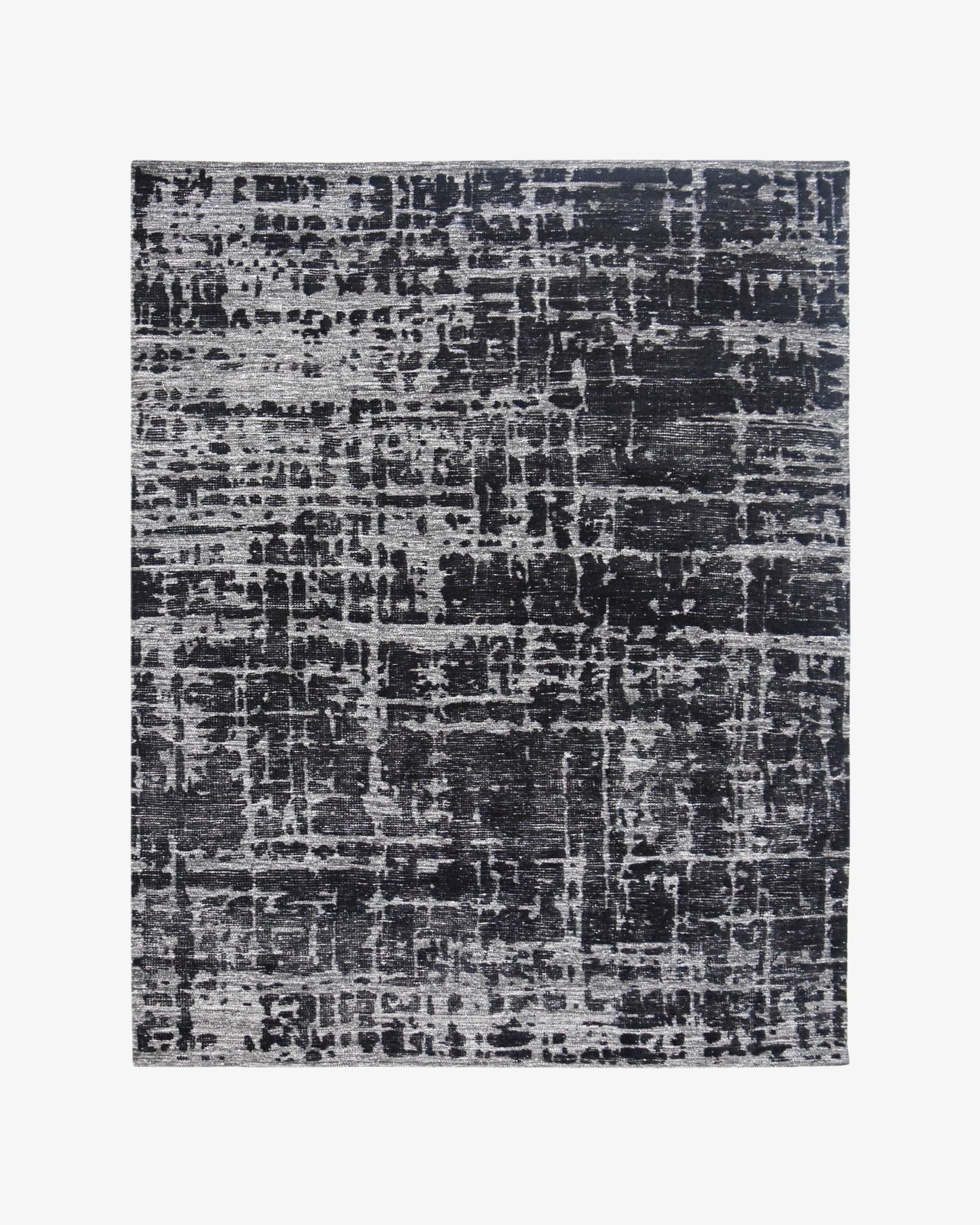
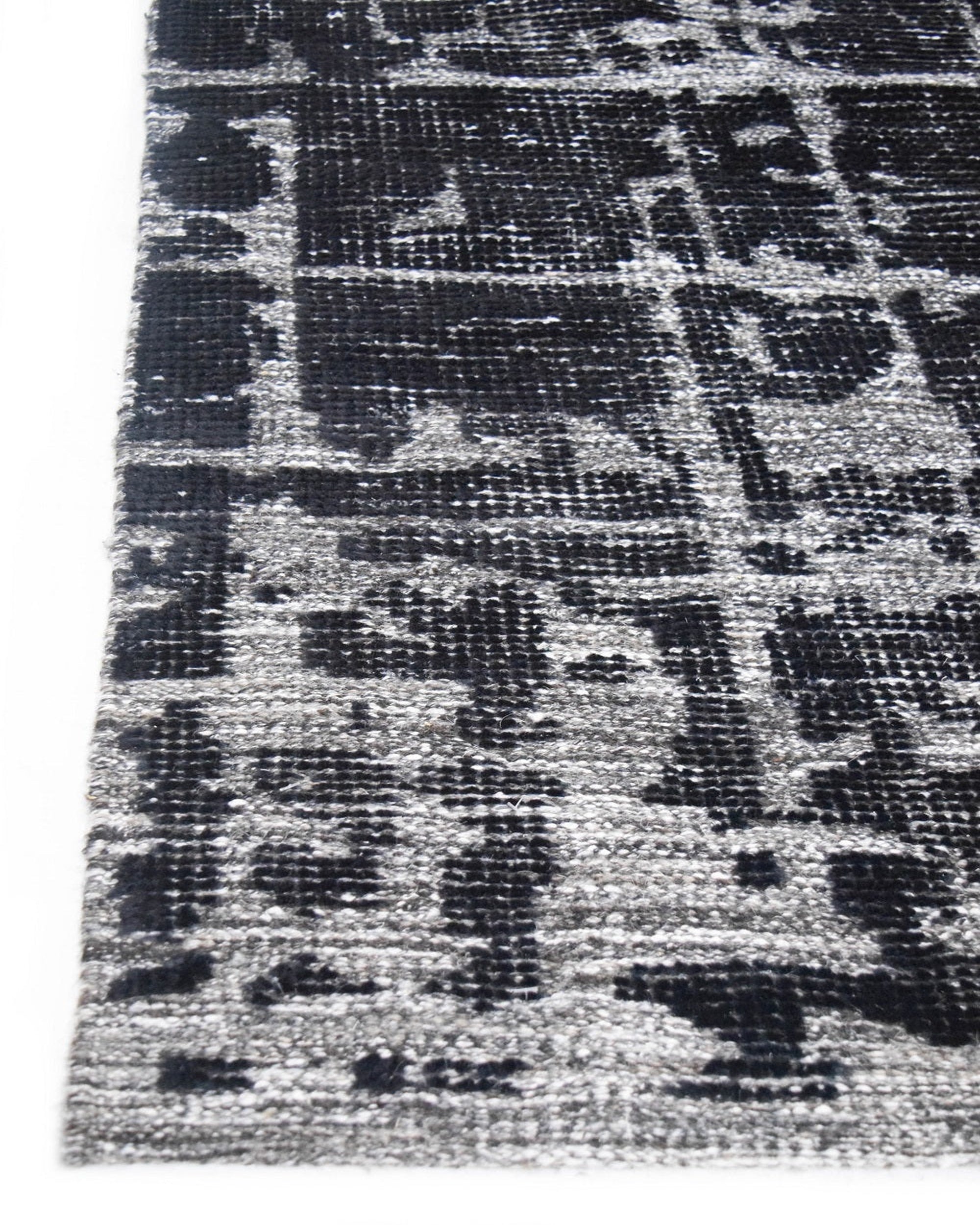
At Rugberry, the Stratum Knotted Rug in dune and the Pazo Knotted Rug are hand knotted in New Zealand wool, and the Ithaca Rug is hand knotted in wool. Their product pages describe the feel as dense and fine, the most durable way a rug can be made.
Rugberry lists these rugs by fibre and construction rather than knot type. If the knot matters for your project, ask before you buy rather than guessing from a photo.
The knot sets how fine a design can be. The wool decides how the rug feels for years.
What can the back of a hand knotted rug tell you?
The back of a hand knotted rug shows every knot as a small dot of colour, a mirror of the design on the front. That makes it the best place to judge density and evenness.

Count the knots along one inch horizontally and one inch vertically, then multiply the two numbers to get knots per square inch. Telling a Persian knot from a Tibetan knot by sight takes a trained eye, but density is something anyone can read in a minute.
Look for small irregularities too. Slightly uneven rows are a sign of hand work, while perfectly identical dots across the whole back point to a machine.
What should you ask when comparing a bazaar rug with a modern one?
Ask four questions of any hand knotted rug, whether it hangs in a bazaar or sits on a product page.


- Which knot, and how many per square inch? A seller who knows will answer both, and a vague answer is a warning.
- What is the wool? No knot makes up for coarse, short wool, which flattens and sheds.
- What is the pile height? A thicker pile feels softer and heavier on a cold marble floor.
- How are the edges and ends finished? Neat, firm edges show care in the last stage of the work.
Traditional floral designs are usually Persian knotted, while many modern pieces favour open fields and a thicker hand. Our piece on the charm of a hand knotted rug covers the wider case for the craft.
Frequently asked questions
Is a Persian knot stronger than a Tibetan knot?
Both knots are secure when tied well, and both make a durable rug. Durability depends more on wool quality, knot density and how firmly the rows are beaten down than on knot type.
Is the Senneh knot the same as the Persian knot?
Yes. Senneh knot, Persian knot and asymmetrical knot are three names for the same knot, tied around one warp and passed behind the next.
Does a higher knot count always mean a better rug?
No. A high knot count allows finer detail, but a bold modern design in good wool at a lower count can feel softer and wear just as well, so match the count to the design.
Which knot does Rugberry use?
Rugberry lists its hand knotted rugs by fibre and construction. If the knot type matters for your project, ask the Rugberry team about the specific rug before ordering.
Judge a hand knotted rug by its wool and density first, and its knot second. See the hand knotted rugs. Material first.


Leave a comment
This site is protected by hCaptcha and the hCaptcha Privacy Policy and Terms of Service apply.