

Durability by Construction: Knotted to Woven
Hand knotting is the most durable rug construction, followed by a tightly woven handloom rug, then hand tufting and flatweaves. The right choice depends on the room as much as on the ranking.
In short
- Hand-knotted rugs are the most durable construction, because every knot is tied around the warp threads and cannot pull out.
- A tightly woven handloom wool rug is the next most durable construction, and it suits dining rooms and busy family spaces.
- Hand-tufted rugs are durable for most homes but rely on a backing and adhesive, so they are less suited to rough handling or frequent wet cleaning.
- Fibre matters as much as construction: New Zealand wool in any construction outlasts a weaker fibre built the same way.
This is a relative ranking, not a promise of years. How long any rug lasts depends on traffic, care, cleaning and sunlight as much as on how it is made.
Which rug construction is the most durable?
Hand knotting is the most durable rug construction. A tightly woven handloom rug comes next, then hand tufting, then light flatweaves.


| Rank | Construction | Why | Rugberry example |
|---|---|---|---|
| 1 | Hand knotted | Each knot locked into the warp and weft | Stratum Knotted Rug |
| 2 | Handloom | Pile and ground woven together as one cloth | Grain Wool Rug |
| 3 | Hand tufted | Dense pile held by backing and adhesive | Lucid Wool Rug |
| 4 | Light flatweave | No pile to take wear, lighter body | Reversible rugs |
These are tendencies across each construction. A well made rug from a lower rank can outlast a poorly made one from a higher rank.
Why does hand knotting last the longest?
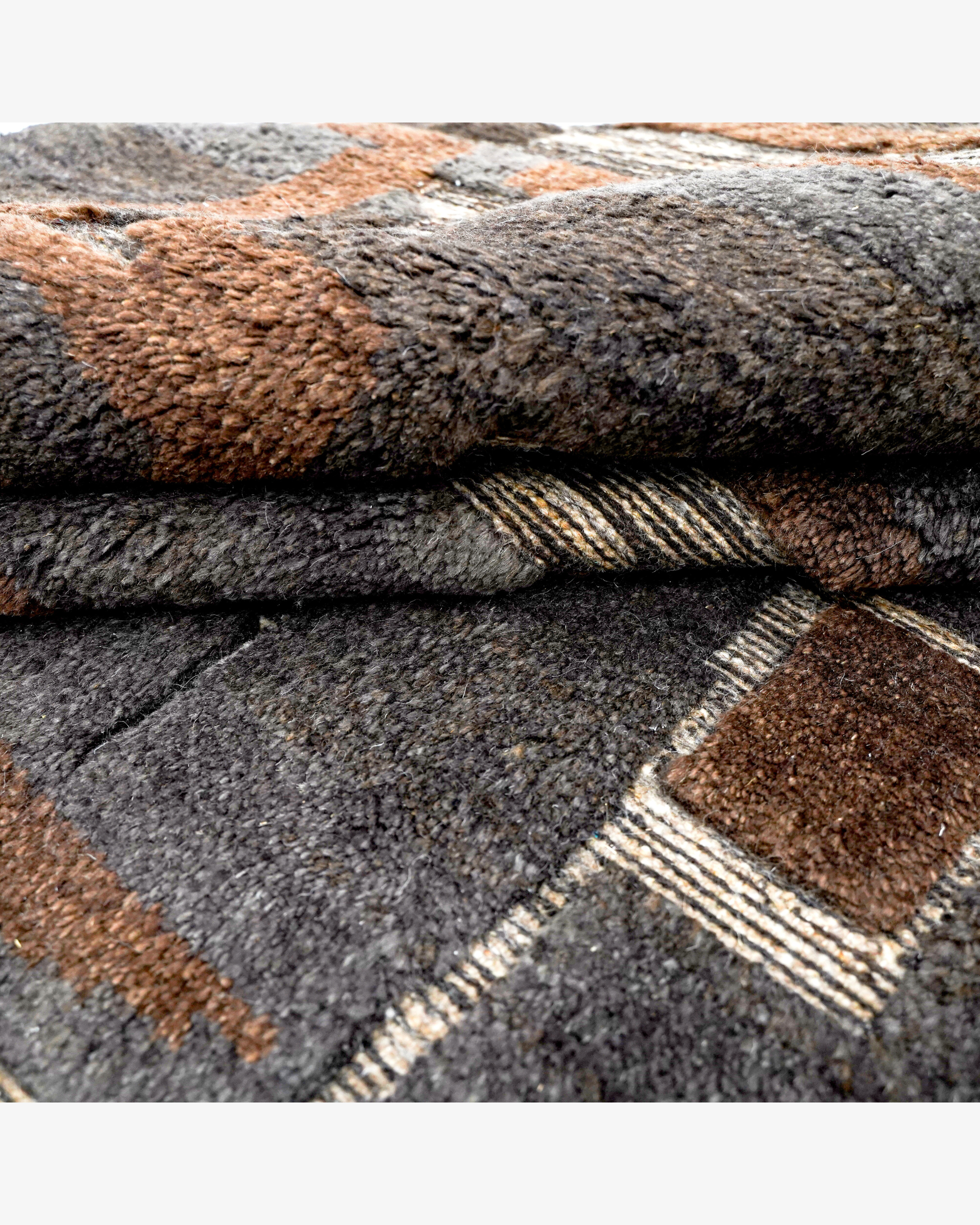
Hand knotting lasts the longest because every tuft of pile is tied around the warp and locked by the weft, so the pile and the structure are one. There is no glue to age and no backing to separate.

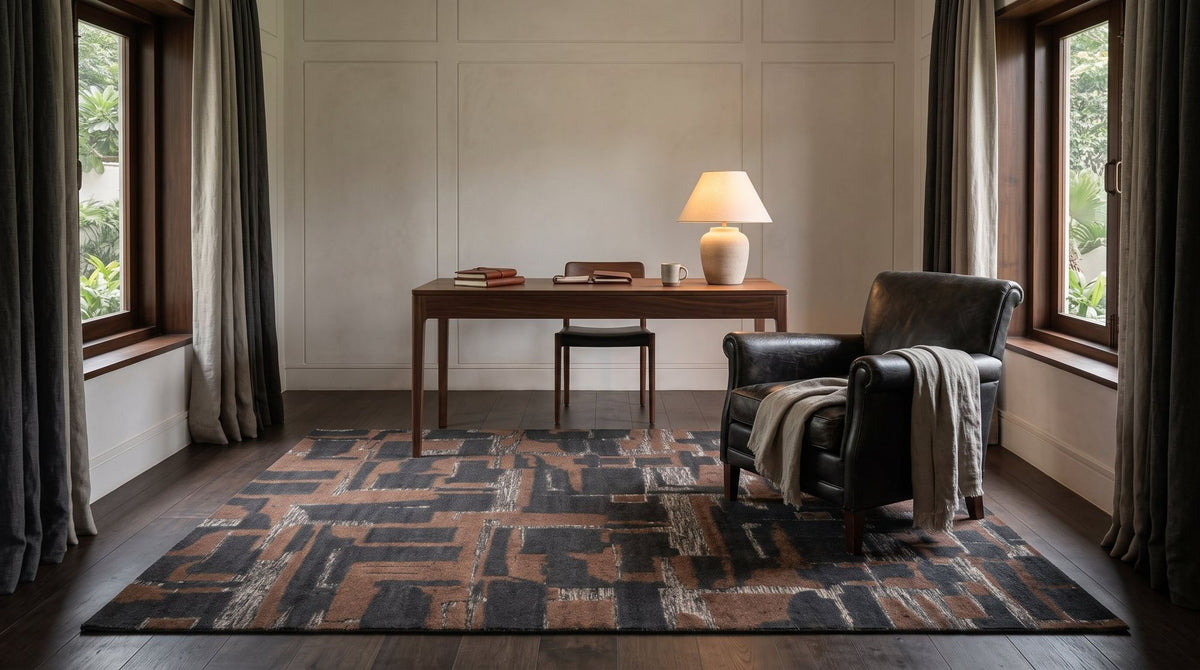
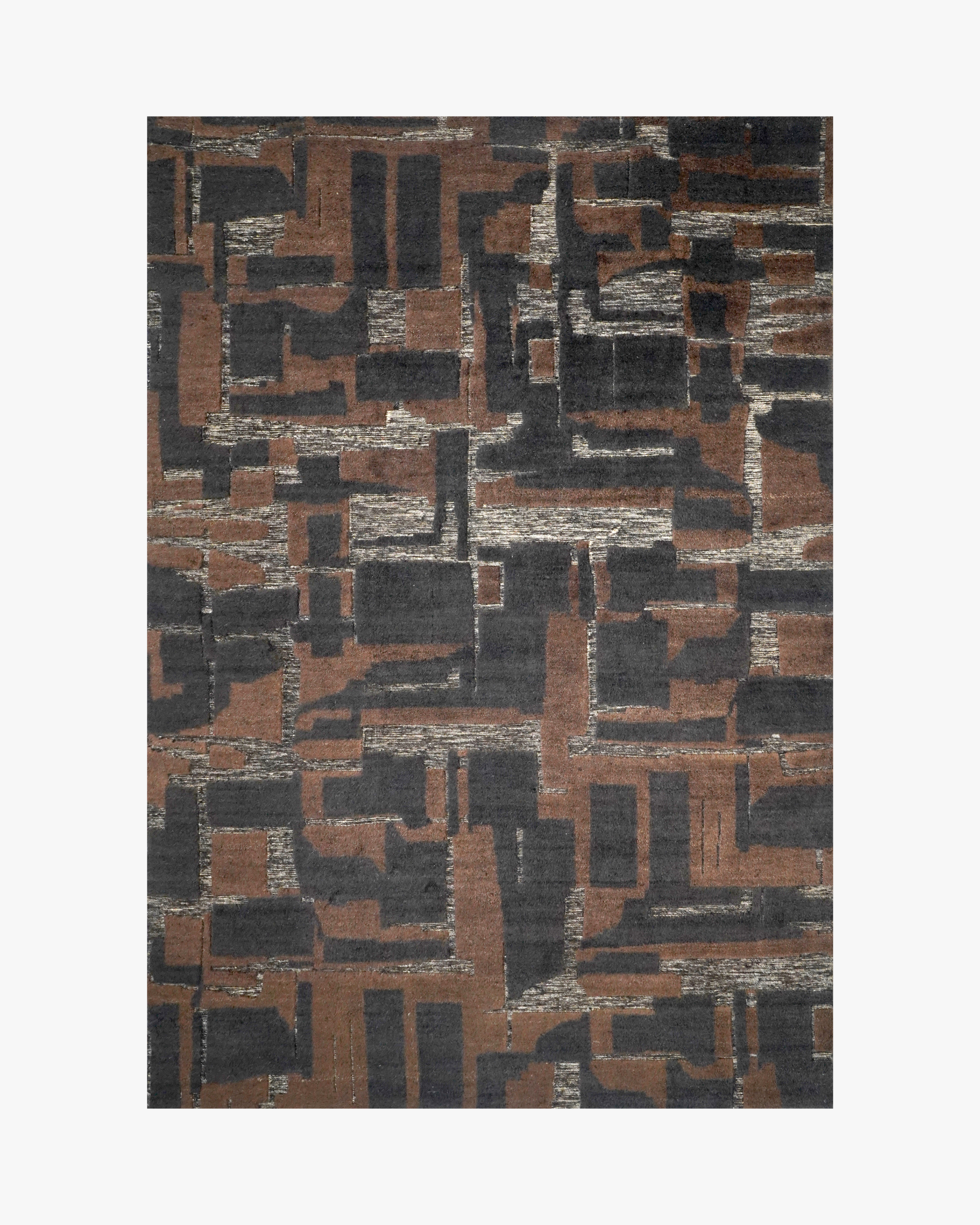
The Stratum Knotted Rug in Cinder, hand-knotted in New Zealand wool and about ₹1.75 lakh in 9x12 ft, is described as dense and fine, the most durable way a rug can be made. A knotted rug can also be washed, repaired and restored more easily than other types, because the structure is all yarn.
Our guide to hand-knotted rugs covers the craft side, and warp and weft explained shows the frame underneath.
Where does handloom wool rank?
Handloom wool ranks second. The pile and the woven ground are made together on the loom, so the rug is a single, tight cloth.


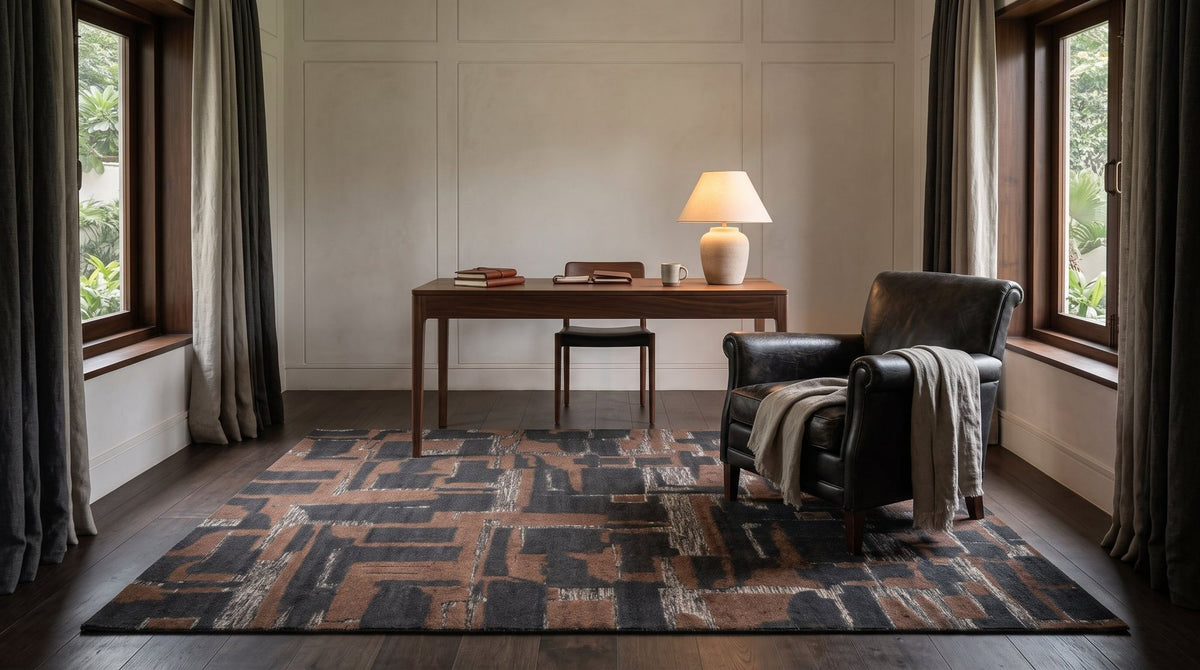
The Grain Wool Rug in Umber, handloom New Zealand wool with a low, closely worked surface from about ₹37,000, is a strong everyday rug. The low surface does not crush under chairs, and a darker umber forgives dust and the odd spill. For a dining room or a passage in a joint family home, it is a practical, durable choice.
For a busy room, choose the construction that suits the traffic, not only the one that ranks first.
How durable are hand-tufted rugs?
Hand-tufted rugs are durable enough for most living rooms and bedrooms, and they offer a dense, even pile at a lower cost than knotting. Their weak point is the backing, not the yarn.


The Rugberry Lucid Wool Rug, hand-tufted in New Zealand wool from about ₹40,000, has a dense pile that holds its shape. In a tufted rug, the yarn is held in a cloth by adhesive with a second cloth over it. That backing can weaken if the rug is soaked repeatedly or left on a damp floor, so tufted rugs should be spot cleaned and kept dry. Read how hand-tufted rugs are made for the full picture.
How do flatweaves and jute compare?
Flatweaves and jute rugs take heavy dry traffic well, but they are thinner and show wear sooner than pile rugs. They are the right choice for some rooms and the wrong one for others.
- Flatweaves have no pile, so wear goes straight into the weave. A reversible flatweave can be turned over to share the wear across two faces.
- Jute is firm and hard-wearing in dry rooms. It dislikes water, so keep it away from bathroom doors and monsoon balconies.
For an entrance where shoes come off, a jute or flatweave rug is sensible. For a kitchen doorway with frequent spills, wool is the safer choice.
Which construction suits which room?
Match the construction to the traffic and the risks of the room. For a home with pets and children, choose handloom or hand-knotted wool over a light flatweave, because a dense wool construction recovers from claws and spills better.

| Room | Best construction |
|---|---|
| Main living room | Hand knotted or hand tufted wool |
| Dining room | Handloom wool with a low surface |
| Bedroom | Hand tufted or deep handloom pile |
| Entrance or passage | Jute or handloom wool |
Whatever the construction, rotation, regular vacuuming and a rug pad add years of good looks. Browse Rugberry handloom rugs for hard-working wool, or hand-knotted rugs for the most durable end of the range.
Frequently asked questions
What is the most durable type of handmade rug?
A hand-knotted wool rug is the most durable type of handmade rug, because each knot is tied into the structure rather than glued. A tightly woven handloom wool rug is the next most durable.
Are hand-tufted rugs durable enough for a family home?
Yes, for most rooms. A hand-tufted New Zealand wool rug wears well in living rooms and bedrooms, as long as it is kept dry and spot cleaned rather than soaked.
Does fibre matter more than construction for durability?
Both matter. A strong fibre such as wool improves any construction, and a strong construction protects any fibre, so the most durable carpet or rug combines good wool with hand knotting or a tight handloom weave.
Build for the room, then care for the build. Material first.



Leave a comment
This site is protected by hCaptcha and the hCaptcha Privacy Policy and Terms of Service apply.