

Hand Spun vs Machine Spun Yarn
Hand spun yarn is twisted on a wheel or spindle by a person, so its thickness and twist vary slightly along its length. Machine spun yarn is even from end to end, and that single difference changes how a rug looks, feels and takes colour.
In short
- Hand spun wool yarn varies in thickness and twist along its length, while machine spun yarn is uniform.
- Hand spun yarn takes dye unevenly, which creates abrash, the gentle bands of colour seen in many hand knotted rugs.
- Machine spun yarn gives a cleaner, more even surface and more consistent colour across the rug.
- Rugberry product pages state the fibre and construction, so ask Rugberry directly if spinning method matters to you.
What is hand spun yarn?
Hand spun yarn is fibre drawn out and twisted by hand, on a spinning wheel or a drop spindle. The spinner feeds the fibre by feel, so each stretch of yarn is a little thicker or thinner, tighter or looser, than the one before.


If you have worn khadi, you already know the result. Hold a khadi kurta to the light and you see slubs and thin places in the weave. That is the yarn telling you a person made it. Hand spun rug wool shows the same character, scaled up.
How is machine spun yarn different?
Machine spun yarn is drawn and twisted by rollers and spindles set to exact settings, so it comes out the same thickness and twist along its whole length.


That evenness is a real advantage. It gives a rug a clean, uniform surface, sharp pattern edges and consistent colour from one end to the other. Most contemporary rugs, including most hand tufted and handloom rugs, use machine spun yarn for exactly this reason.
| Hand spun yarn | Machine spun yarn | |
|---|---|---|
| Thickness | Varies along the strand | Even |
| Surface of the rug | Textured, slightly irregular | Smooth and uniform |
| Colour | Gentle banding, abrash | Consistent |
| Pattern edges | Softer | Crisp |
| Cost | Higher, slow to make | Lower |
For a crisp modern design with clean lines, choose machine spun yarn, because evenness lets the pattern read sharply. For a quiet, textured field that looks alive in changing light, hand spun yarn suits better.
Why does hand spun yarn create abrash?
Hand spun yarn creates abrash because thicker and thinner stretches absorb dye differently. When that yarn is knotted into a rug row by row, the small differences appear as soft horizontal bands of lighter and darker colour.

Abrash is not a flaw. In a plain or lightly patterned rug, it is often the thing that makes the field look deep rather than flat. Our post on abrash in rugs looks at it closely.
Even yarn gives a rug precision. Uneven yarn gives it a pulse.
Does hand spun mean better quality?
No. Hand spun and machine spun are two different characters, not two grades. A well made machine spun yarn from good wool outperforms a poorly made hand spun one.
What matters for wear is the wool itself, its staple length and fineness, and how densely the rug is built. Spinning method mainly changes texture and colour. Pay for hand spun if you want that look, not because you expect it to last longer.
Where does hand knotting fit in?
Hand knotting is the construction most often paired with hand spun yarn, because the slow, row by row knotting suits irregular yarn and shows its character well. But knotting and spinning are separate steps, and one does not require the other.
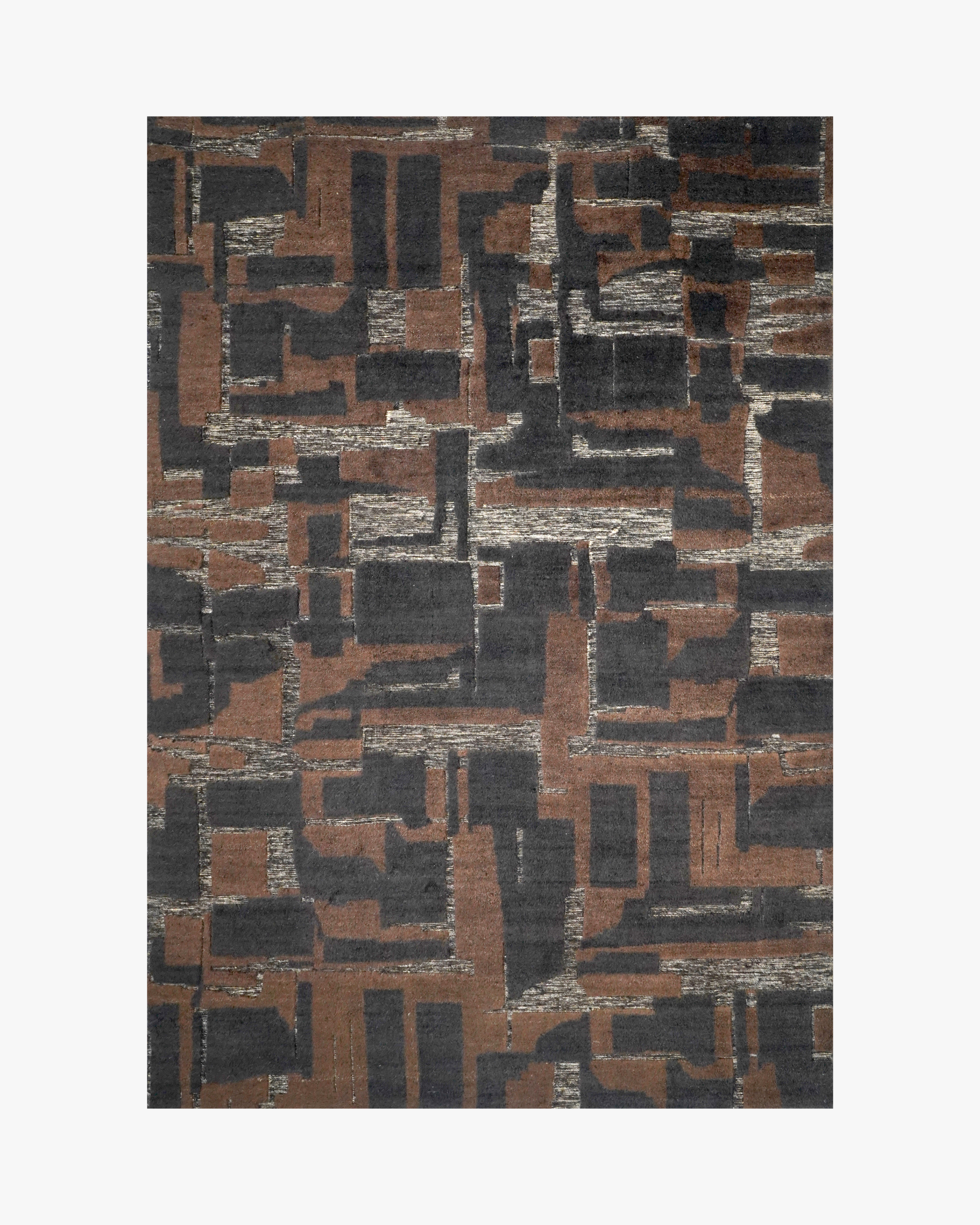
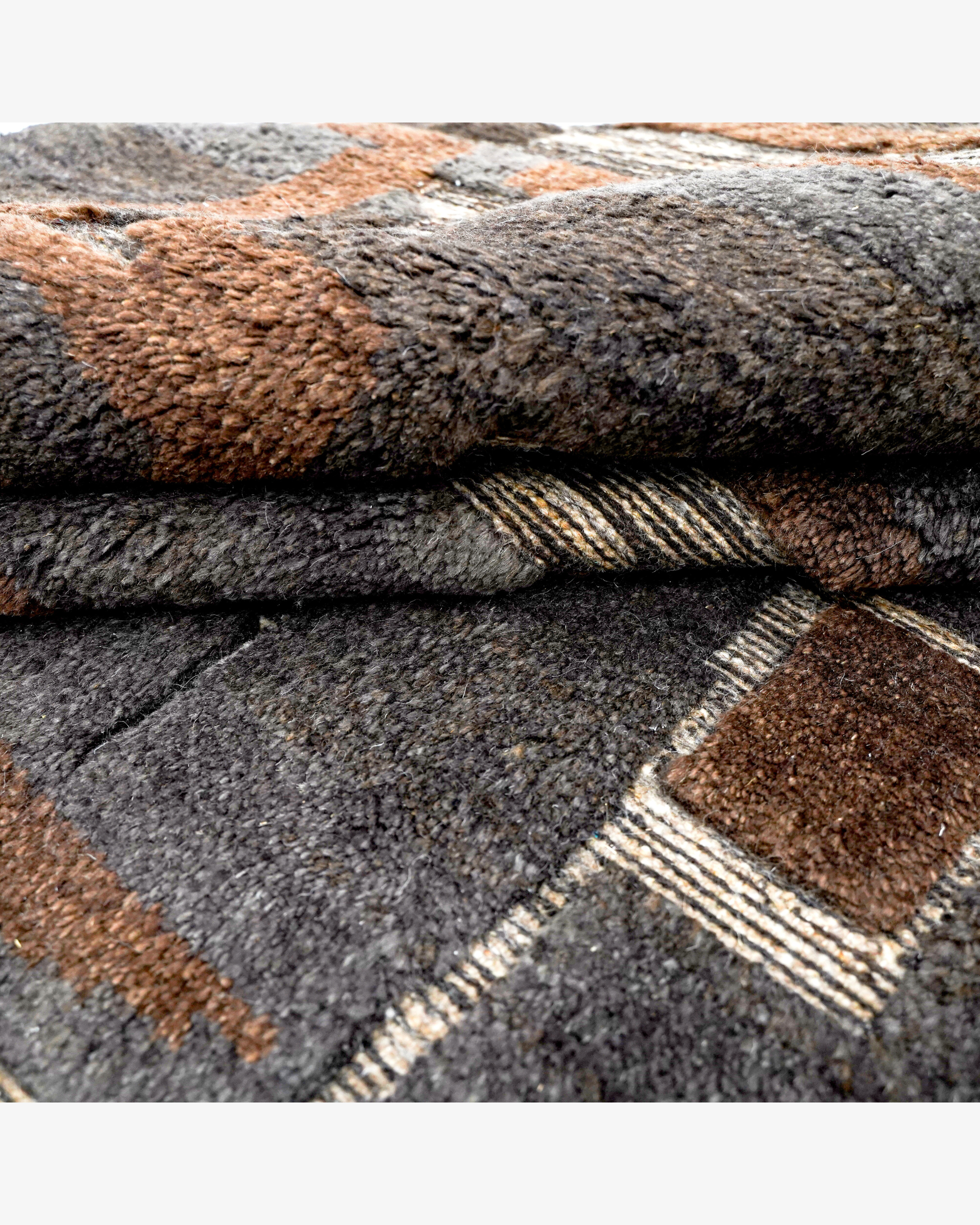
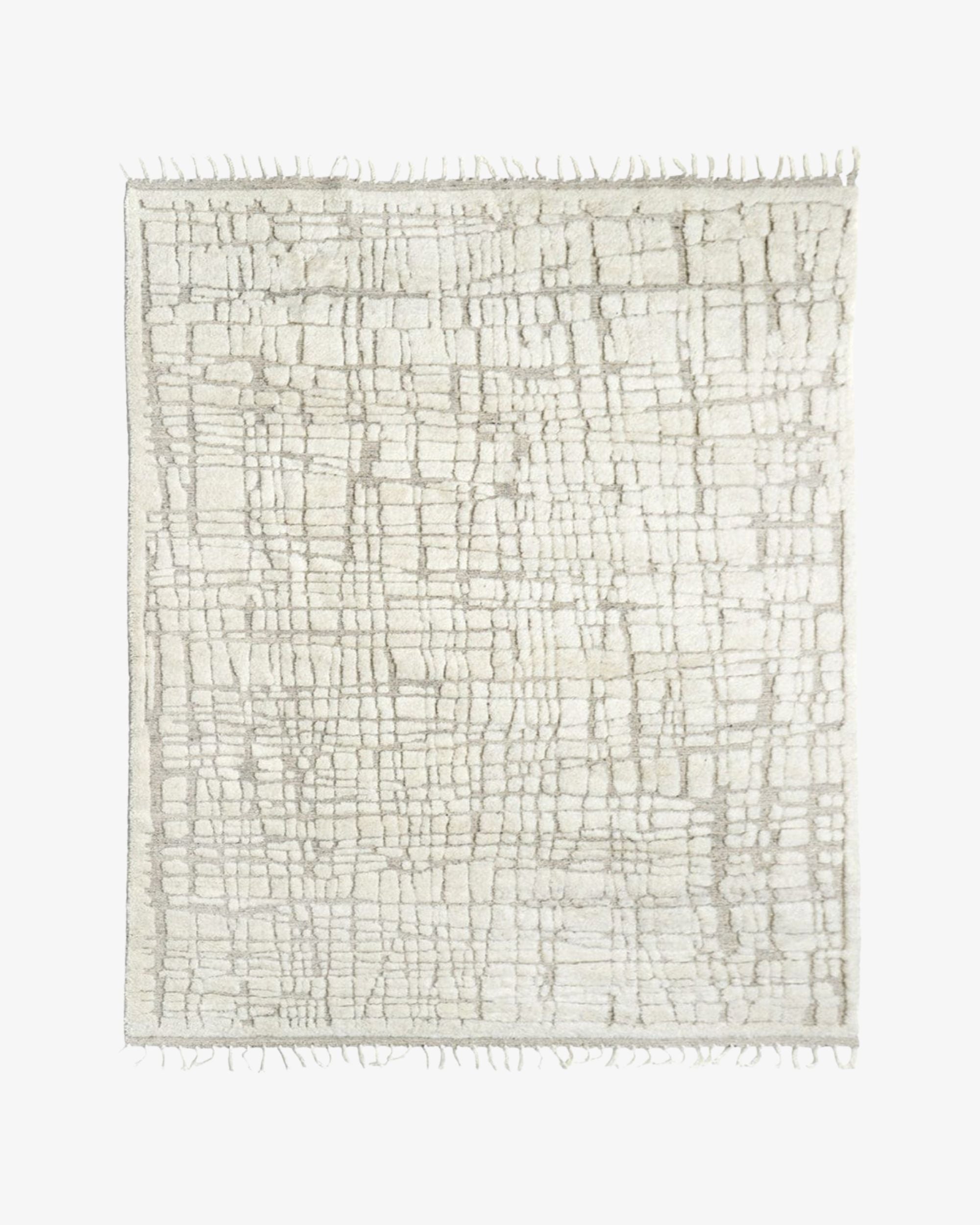
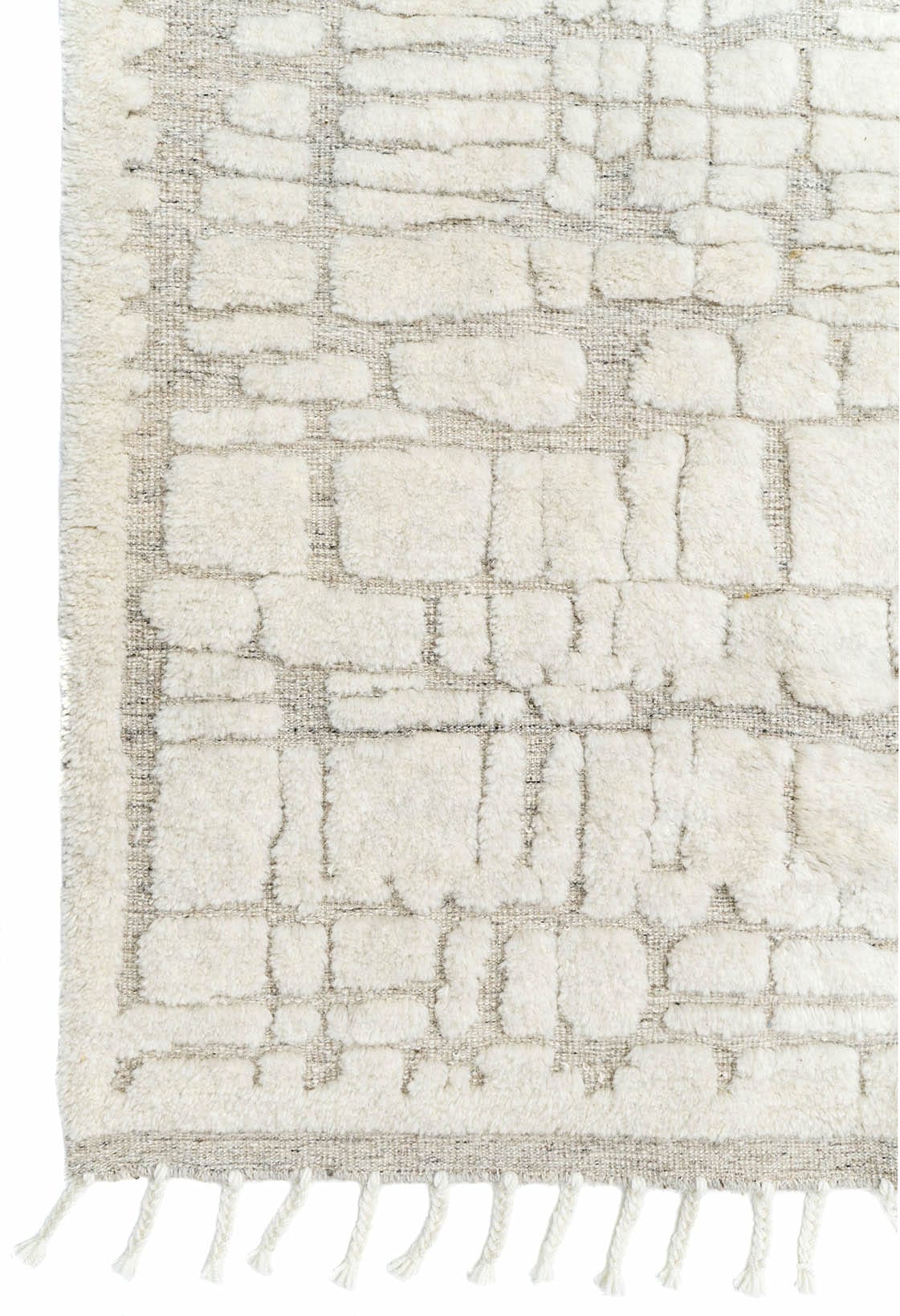
The Stratum Knotted Rug in cinder is hand knotted in New Zealand wool, dense and fine, the most durable way a rug can be made. It is about ₹1.75 lakh in 9x12 ft. The Fern Hand Knotted Wool Rug, hand knotted in wool, starts from about ₹1,12,500 in 8x10 ft. Rugberry lists their fibre and construction, not their spinning method. See all hand knotted rugs.
How can you spot the difference in a rug?
Look along the rug in low, raking light, then look at the back. Irregular yarn shows up quickly once you know what to look for.

- Kneel and look across the pile toward a window. Hand spun yarn shows soft ridges and variation, machine spun looks level.
- Check the field for gentle horizontal colour bands, a sign of uneven dye uptake.
- Turn a corner over. On a knotted rug, irregular yarn makes the knot rows on the back look slightly uneven.
- Ask the seller directly how the yarn was spun. A good seller will know or will find out.
A handloom rug like the Grain Wool Rug in umber, with its low, closely worked surface, is a good reference for what an even, consistent wool surface looks like. Our earlier post on the art of hand knotted rugs shows more of the craft.
Frequently asked questions
Is hand spun wool softer than machine spun?
Not by itself. Softness comes mainly from the fineness of the wool and how tightly it is twisted, so a fine machine spun yarn can feel softer than a coarse hand spun one.
Why are hand spun rugs more expensive?
Spinning by hand is slow, and the yarn for one large rug represents many days of spinning work before knotting even begins. That labour is in the price.
Are Rugberry rugs hand spun?
Rugberry product pages list the fibre and the construction, such as hand knotted or handloom, but not the spinning method. If spinning matters to your decision, ask Rugberry about the specific rug before ordering.
Choose the texture you want to live with. Material first.




Leave a comment
This site is protected by hCaptcha and the hCaptcha Privacy Policy and Terms of Service apply.