

Reading the Back of a Rug
The back of a rug tells you how it was built more honestly than the front. A knotted rug shows its knots, a tufted rug shows a cloth, and a woven rug shows its weave.
In short
- The back of a hand-knotted rug shows the pattern in small rows of knots, almost like a blurred copy of the front.
- The back of a hand-tufted rug is usually covered with a backing cloth, which holds the tufts in place and protects the floor.
- The back of a handloom or handwoven rug shows the weave itself, often looking close to the front.
- A cloth back does not mean a lower quality rug. It means a different construction with its own strengths.
Knowing what you are looking at helps you check a delivery calmly, and it helps you compare rugs that look alike from the top.
Why look at the back of a rug?
Look at the back because it confirms the construction named on the product page and shows how carefully the rug was finished. It takes thirty seconds and needs no tools.
From the front, a hand-knotted rug and a hand-tufted rug in similar colours can look close. Fold back one corner and the difference is clear. Our piece on the charm of hand-knotted rugs covers why that construction is valued, and the back is where you see it.
What does the back of a hand-knotted rug look like?
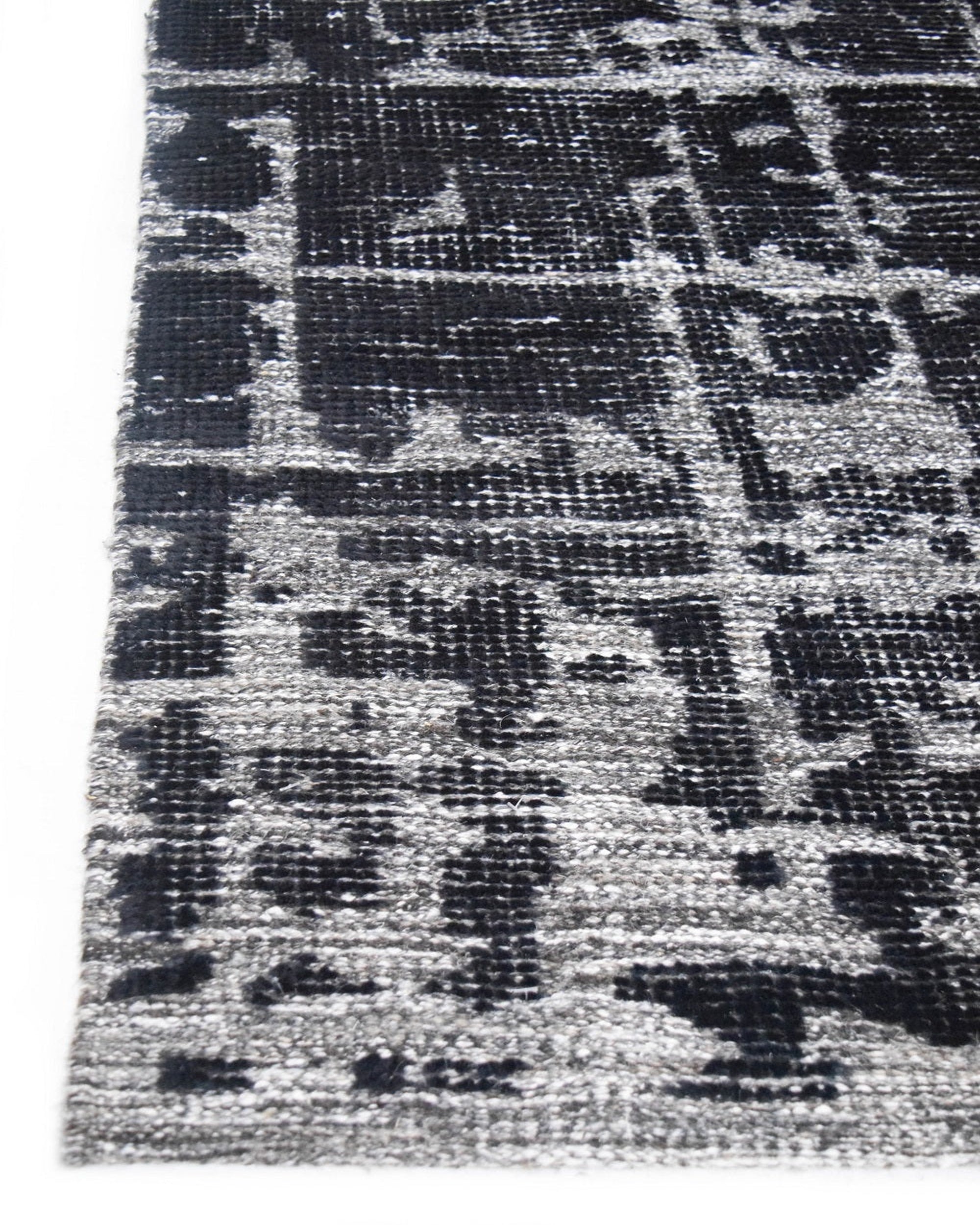
The back of a hand-knotted rug shows the full pattern as a grid of tiny knots, slightly softer in outline than the front. You can see each knot as a small bump.


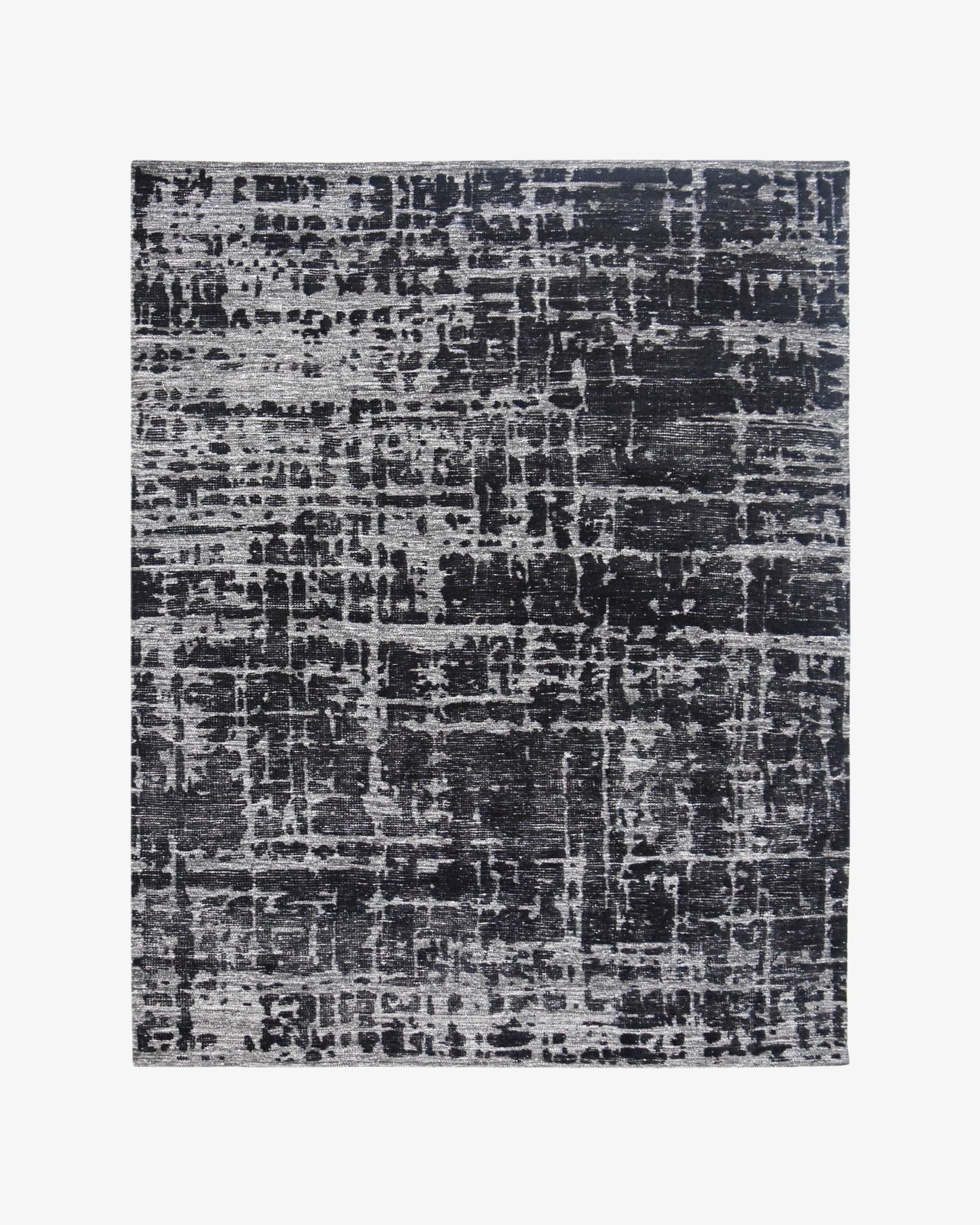
The Rugberry Ithaca Rug, hand-knotted in wool from about ₹1,15,500 in 8x10 ft, is a good example. Turn a corner and the design lines carry through to the back, because every knot wraps around the warp threads and shows on both sides.
What to look for
- Even rows. Knots should sit in lines without large gaps or bunched areas.
- A clear pattern. If the design is legible from behind, the knots go all the way through.
- Small variation. Slight differences in knot size are the mark of hand work. Our guide to handmade rug irregularities explains what is expected.
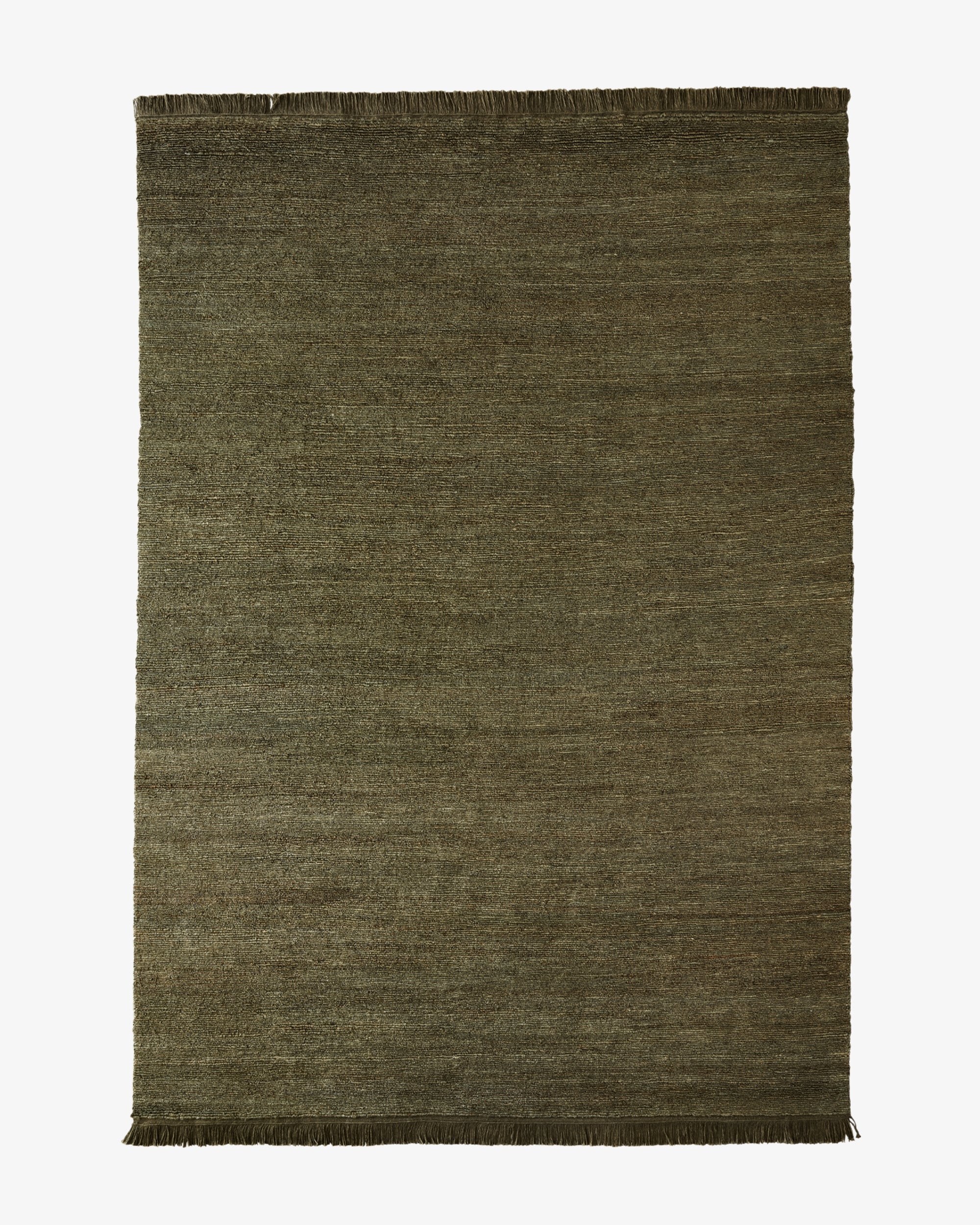
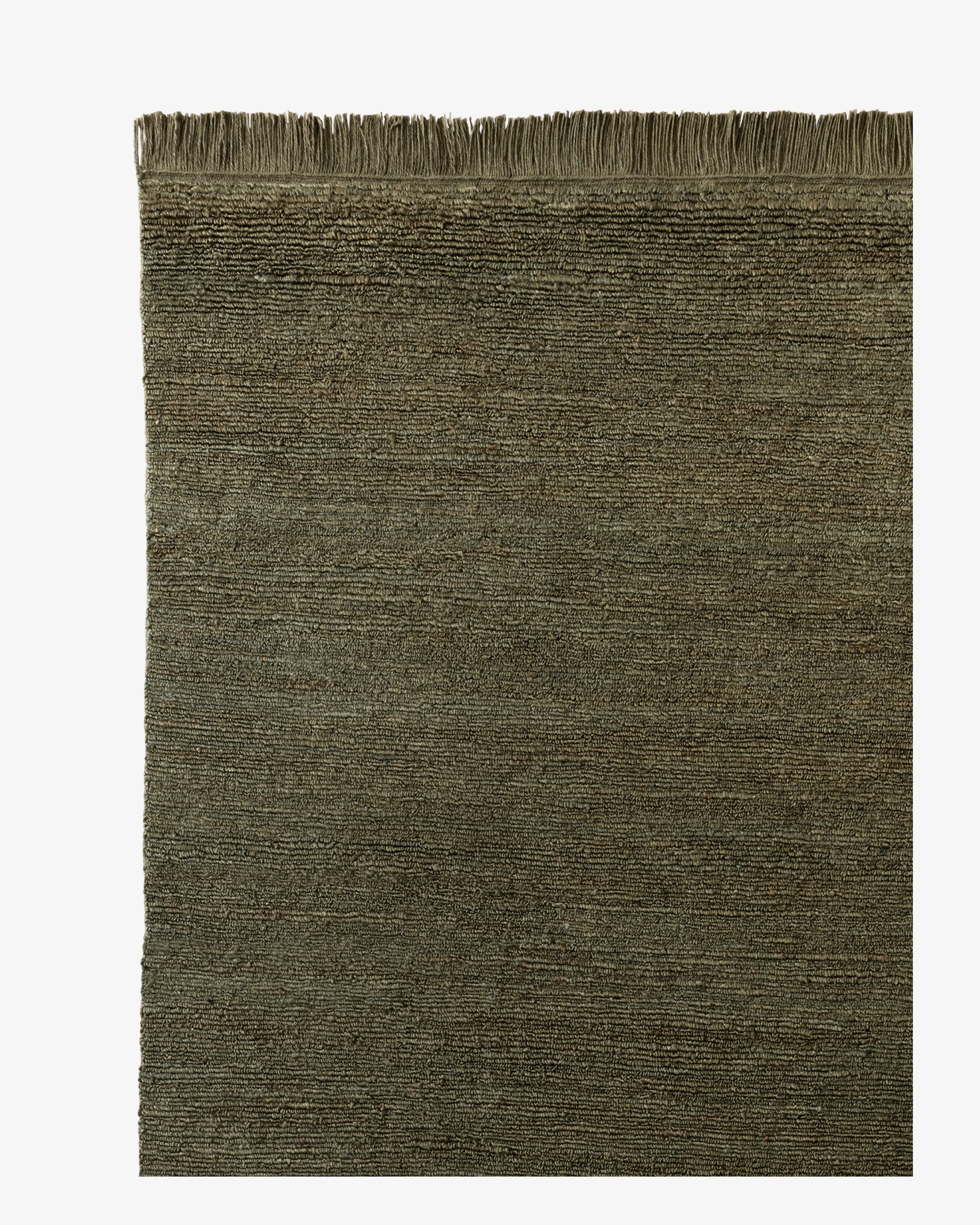
The Savannah Jute Rug in Olive is also hand-knotted, in jute, from about ₹41,000. Its back is firmer and more textured than a wool rug's, with the natural irregularity of the fibre showing through.
What does the back of a hand-tufted rug look like?
The back of a hand-tufted rug is usually a smooth cloth, often with a bound or stitched edge. You will not see the pattern clearly from behind.


A hand-tufted rug is made by punching yarn through a cloth stretched on a frame. The yarn is then held in place with an adhesive layer, and a second cloth goes over the back to cover it. The glossary entries for backing cloth and latex explain each layer.
The Rugberry Arctic Wool Rug, hand-tufted in New Zealand wool from about ₹37,000, is built this way. What matters on a tufted back is that the cloth lies flat, sits tight to the edges and has no bubbles or loose corners.
What does the back of a handloom or handwoven rug look like?
The back of a handloom or handwoven rug shows the weave itself, and it often looks close to the front. There is no extra cloth to hide anything.


On a handloom wool rug with a low pile, the back shows the woven ground with the pile tucked into it. On a flatweave there is no pile, so the two faces can be almost the same, which is why some flatweaves are sold as reversible. See warp and weft explained for how that structure works.
What should you check on the back when the rug arrives?
Check the back for the right construction, a secure edge and a dry, clean surface. Do it before the furniture goes on.

Turn one corner of a new rug before the sofa goes on it. The back will tell you what you bought.
- Match the construction. Knots for hand knotted, a cloth for hand tufted, a visible weave for handloom or handwoven.
- Check the edges. The binding or selvedge should be firm along all four sides, with no loose stitching.
- Feel for damp. A rug that has travelled through a monsoon city should be dry to the touch. If it is cool and heavy, let it air before laying it.
- Look for a flat lie. Some ripple at the corners is normal after rolling. Our note on why rug edges ripple explains how they settle.
Does a cloth back mean a lower quality rug?
No. A cloth back means the rug is hand tufted, which is a different construction, not a lesser one. For a family living room on a marble floor, a hand-tufted wool rug is a sound choice because it gives a dense, even pile at a far lower price than knotting.

Each construction trades something. Hand knotting gives the longest life and a pattern that runs through the rug. Hand tufting gives a soft, dense surface and room for bold, carved designs. A rug pad under either one protects the back and stops slipping on smooth floors, and Rugberry sells them in rug underlays.
Frequently asked questions
How can I tell if a rug is hand knotted from the back?
Turn over a corner. A hand-knotted rug shows the pattern on the back as rows of small knots, while a hand-tufted rug shows a plain cloth covering the base.
Is it normal for the back of a jute rug to feel rough?
Yes. Jute is a firm plant fibre, and the back of a jute rug is coarser than wool. A rug pad underneath protects polished floors from abrasion.
Should a rug back be glued or stitched to the floor?
No. A rug should lie free on a pad so air can move underneath, which matters in humid Indian cities. Fixing the back down traps moisture and makes the rug hard to clean or turn.
Read the back, then trust the front. Material first.



Leave a comment
This site is protected by hCaptcha and the hCaptcha Privacy Policy and Terms of Service apply.