

Warp and Weft Explained
Warp threads run the length of a rug and weft threads run across it, over and under the warp. Together they form the frame that every knotted, handloom and flatweave rug is built on.
In short
- In a rug, the warp is the set of threads stretched lengthwise on the loom, and the weft is the thread passed across them from side to side.
- In a hand-knotted rug, each knot is tied around a pair of warp threads, and rows of weft lock each row of knots in place.
- In a handloom or flatweave rug, the weft carries the colour and texture, and the warp holds the rug together.
- The fringe at the end of many rugs is the warp threads left loose after weaving.
If you have ever looked closely at a handloom sari, you already know the idea. A rug uses the same two sets of threads, made heavier and tighter to take feet instead of drape.
What are warp and weft in a rug?
The warp is the set of strong threads stretched along the length of the loom before work begins. The weft is the thread the weaver passes across them, over one and under the next, row by row.


The warp sets the length and the width of the rug, and it carries the tension. The weft fills in, packs the structure tight and, in many rugs, gives the colour. A sari weaver calls these the tana and the bana, and the logic in a rug is the same.
How do warp and weft work in a hand-knotted rug?
In a hand-knotted rug, the weaver ties each knot of pile yarn around warp threads, then passes one or more weft threads across to lock that row. Knot, weft, beat down, and repeat.

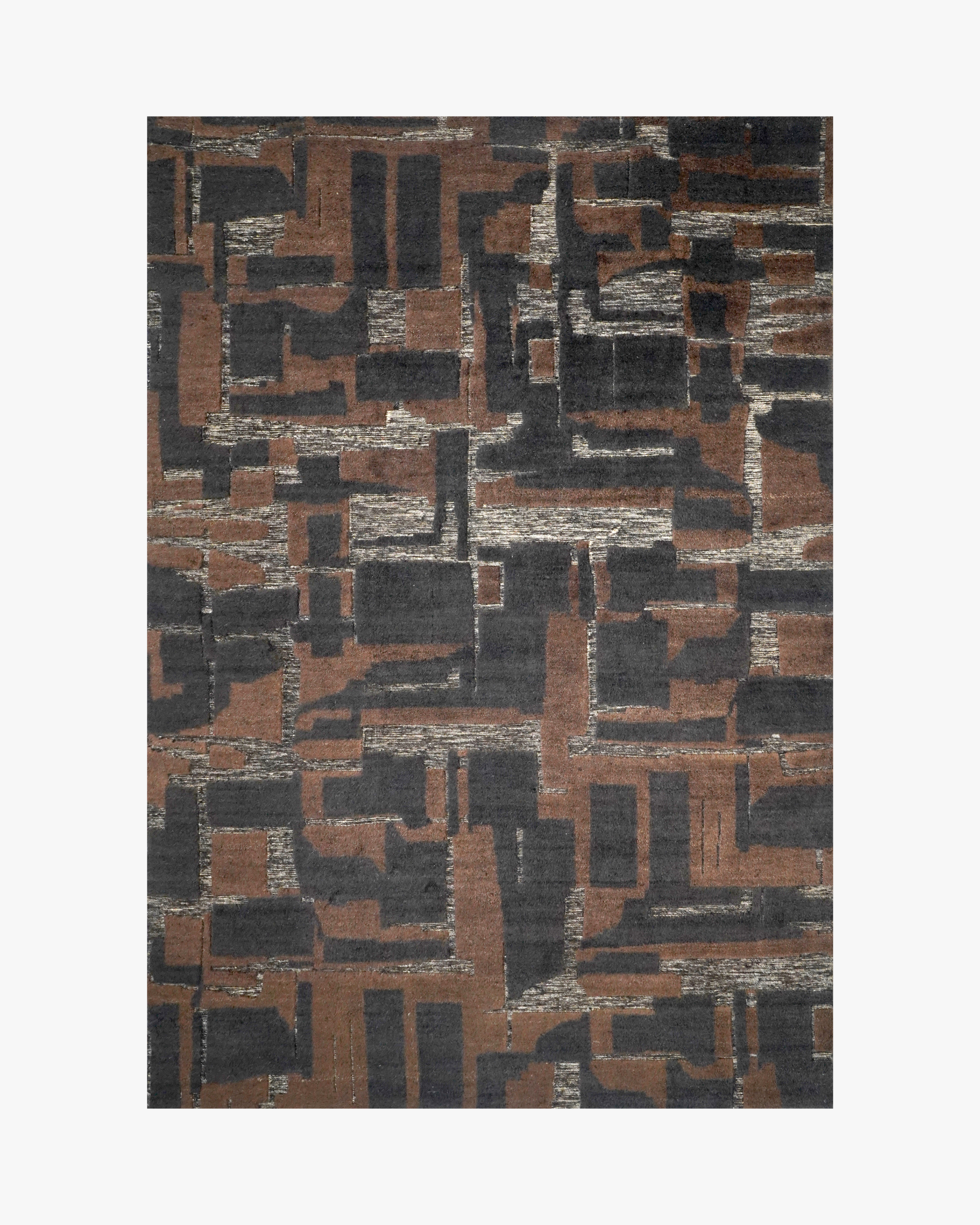
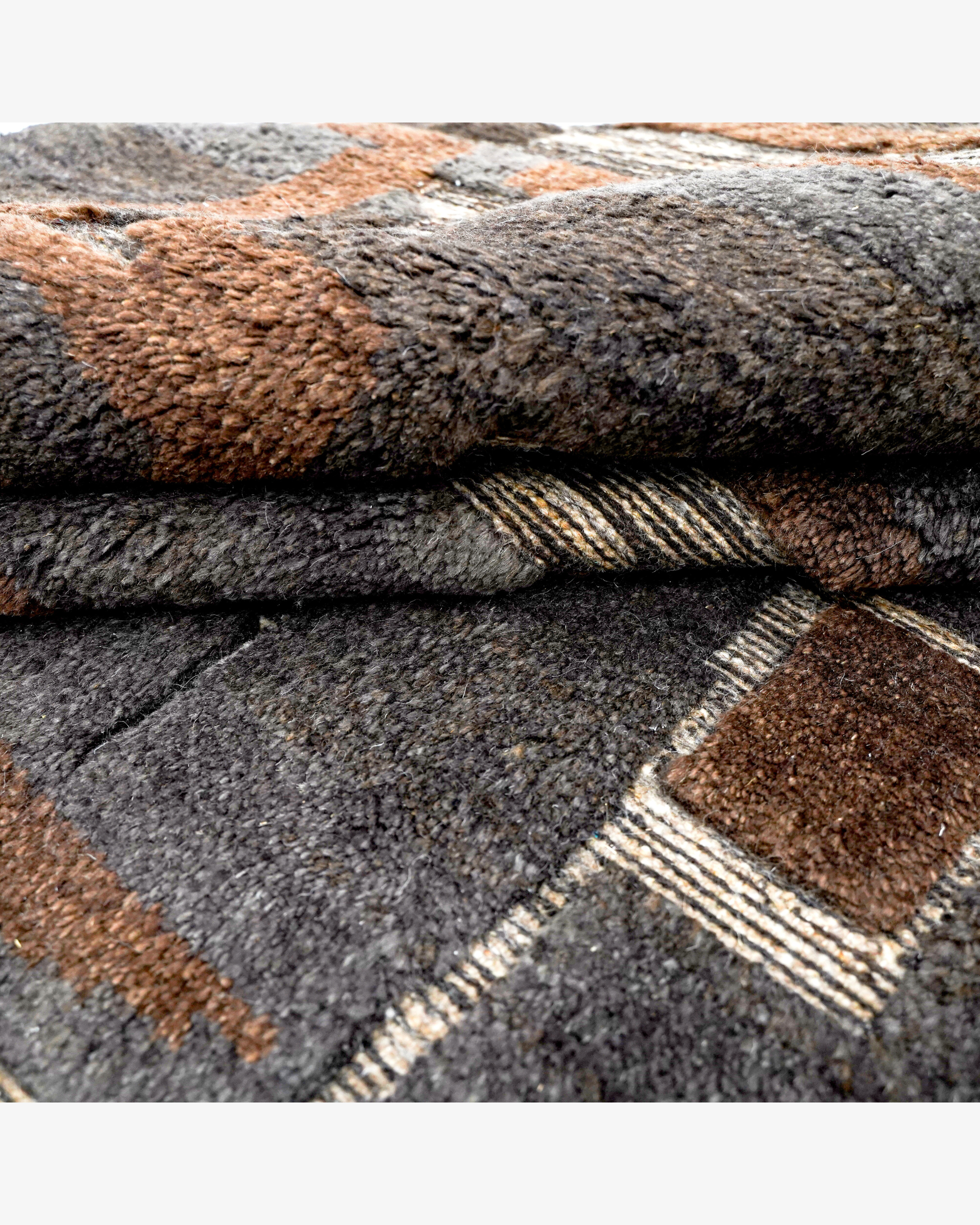
The Rugberry Stratum Knotted Rug in Cinder, hand-knotted in New Zealand wool and about ₹1.75 lakh in 9x12 ft, is built this way. The pile you walk on is the knots. The warp and weft sit underneath as a hidden grid, and that grid is why a knotted rug holds its shape for so long.
Why the grid matters
Because every knot is anchored to the warp, it cannot pull out the way a loose tuft can. The more warp threads there are across each inch, the more knots fit, which is what knot density measures. Our guide to hand-knotted rugs explains why that matters for wear.
How do warp and weft work in a handloom rug?
In a handloom rug, the weaver works the loom with treadles to lift sets of warp threads, then passes the weft through the gap. The result is a tight, even cloth, made thick enough to be a rug.

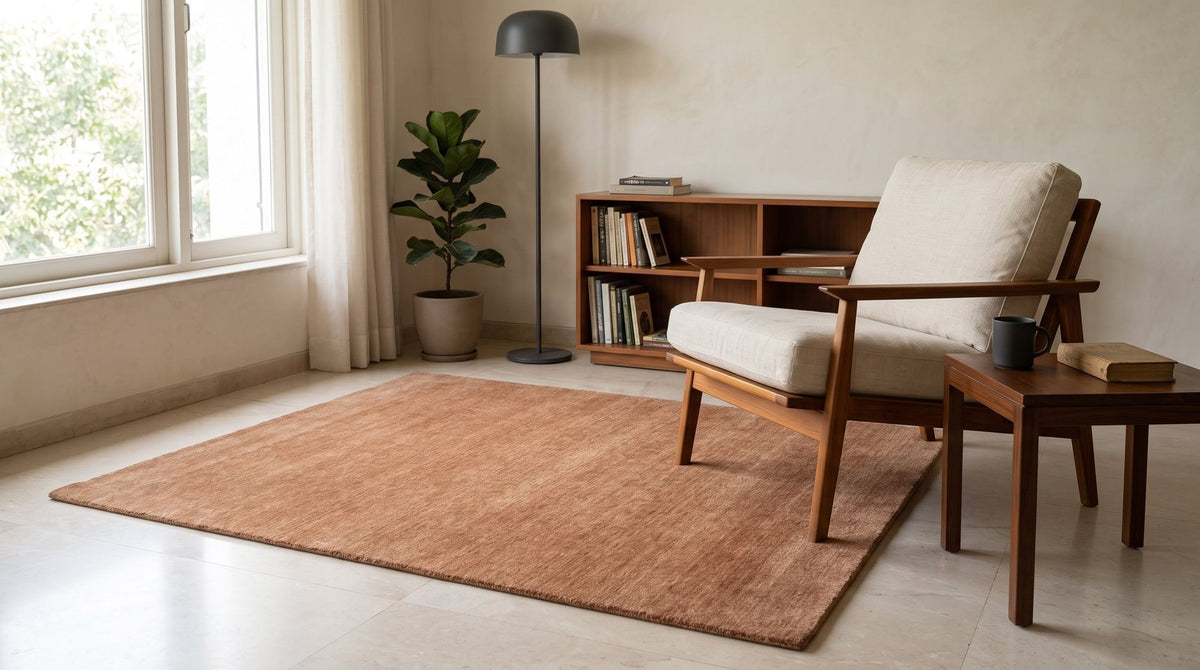
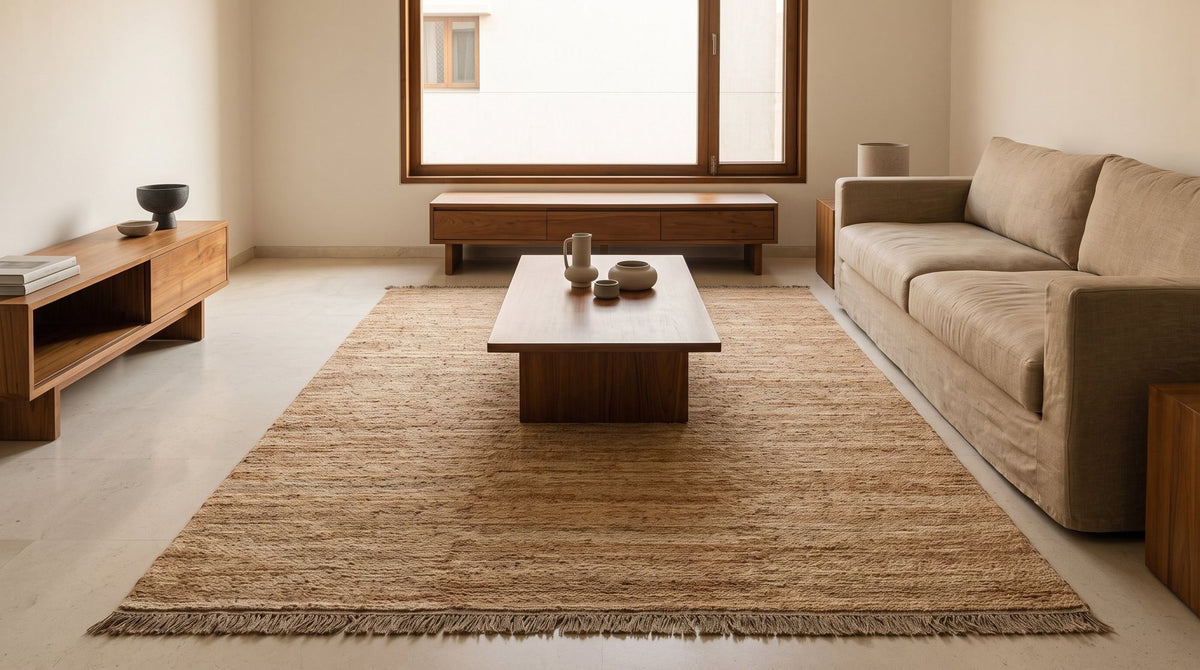
The Grain Wool Rug in Russet is handloom woven in New Zealand wool with a low, closely worked surface, from about ₹37,000. On a rug like this the weave is visible underfoot, so you can see the rhythm of the rows. Read more in our note on handloom rugs.
The pile is what you see. The warp and weft are what keep it there.
What about flatweave and reversible rugs?
In a flatweave there is no pile at all, so the weft is the whole surface. The weft is packed so tightly that it covers the warp completely.


That is why many flatweaves look the same on both sides. The Sandstorm Reversible Rug, handwoven in recycled and natural fibres from about ₹24,000, is flat and light with two usable faces. Turn it over when one side shows wear and you have a fresh face. The rug glossary has a short definition of flatweave and the other weaving terms.
| Construction | What the warp does | What the weft does |
|---|---|---|
| Hand knotted | Anchors every knot | Locks each row of knots |
| Handloom with pile | Carries tension and length | Builds the woven ground |
| Flatweave | Hidden frame | Forms the whole visible surface |
| Hand tufted | Not used, the yarn goes into a cloth | Not used |
The last row matters. A hand-tufted rug is not woven on warp and weft. Its yarn is punched into a backing cloth instead, which is a different structure with its own strengths.
Where can you see the warp and weft on a finished rug?
You can see the warp at the ends and the weft along the sides. Look at the four edges of the rug before anything else.

- At the short ends. On many knotted and woven rugs, the warp threads are left loose or knotted off as a fringe.
- Along the long sides. The weft turns back at each edge, forming the selvedge, which is often wrapped for strength.
- On the back. On a knotted rug, the rows of knots and weft are plain to see. Our guide to reading the back of a rug shows what to look for.
Rugberry does not list the warp material for each rug, so the safest check is your own eye at the edges and back.
Why does the structure matter when you buy?
The structure tells you how a rug will behave over years: whether it holds its shape, whether it can be turned over, and how it should be cleaned. For a dining room where chairs drag daily, choose a tightly woven handloom rug over a deep pile, because the closed weave takes the scraping without matting.
A firm warp and a well packed weft are what stop a rug from stretching, rippling or losing its edges. When you compare two rugs at similar prices, ask how each one is built before you ask what colour it comes in. Browse the Rugberry handloom rugs to see the woven structure across colours.
Frequently asked questions
Is the fringe on a rug part of the warp?
On most hand-knotted and woven rugs, yes. The fringe is the ends of the warp threads, left after the rug comes off the loom, so cutting it off can weaken the end rows.
Do hand-tufted rugs have warp and weft?
No. A hand-tufted rug is made by punching yarn into a backing cloth on a frame, not by weaving it on a loom. The backing cloth itself is woven, but the rug is not built on a warp and weft.
Can I use both sides of a woven rug?
Only if it is made as a reversible flatweave, where the weft forms both faces. A knotted or pile rug has a clear top and back and should be laid one way.
Two sets of threads, crossed by hand, hold everything else. Material first.





Leave a comment
This site is protected by hCaptcha and the hCaptcha Privacy Policy and Terms of Service apply.