


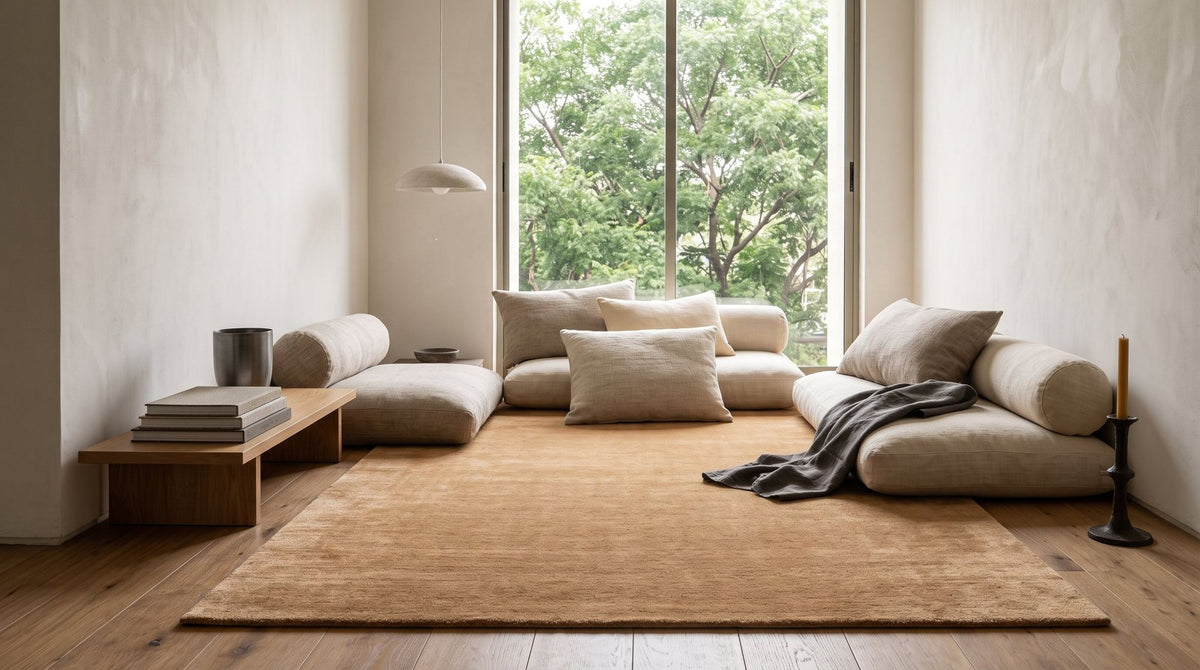
Handloom, Hand Knotted, Hand Tufted, Hand Woven
Rugberry makes rugs in four constructions: handloom, hand knotted, hand tufted and hand woven. Handloom gives a calm, even pile, hand knotting the densest and longest lasting rug, hand tufting the freedom to carve and shape, and hand weaving firm, flat rugs. The right one depends on the room, the design and how long you want the rug to last.
In short
- Handloom rugs are woven on a loom worked by hand, giving an even, closely worked pile; Rugberry's Plush, Grain, Insignia, Luma, Meraki, Cabra and Cashmere Blend rugs are handloom.
- Hand knotted rugs tie each knot by hand around the warp threads; they are the densest and longest lasting construction, as in Rugberry's Savannah and Stratum rugs.
- Hand tufted rugs push yarn through a backing cloth with a hand held tufting gun, which allows carving and changes of height, as in Rugberry's Lamina collection.
- Hand woven flatweaves interlace warp and weft with no pile, giving firm, low rugs such as Rugberry's Kora Jute Rug.
Why does construction matter as much as fibre?
Construction decides how a rug's fibre is held, so it shapes the feel, the look, the weight and the lifespan of the rug. The same New Zealand wool can make a soft deep pile, a firm knotted surface or a carved relief, depending on how it is worked.
Rugberry names construction on every rug, alongside fibre and grade, for that reason. A client who knows the construction can predict how the rug will behave on a marble floor, under a dining chair or after ten monsoons.
The four constructions below are all made by hand. They differ in how the hand works: at a loom, knot by knot, with a tufting gun or across warp and weft.
What is a handloom rug?
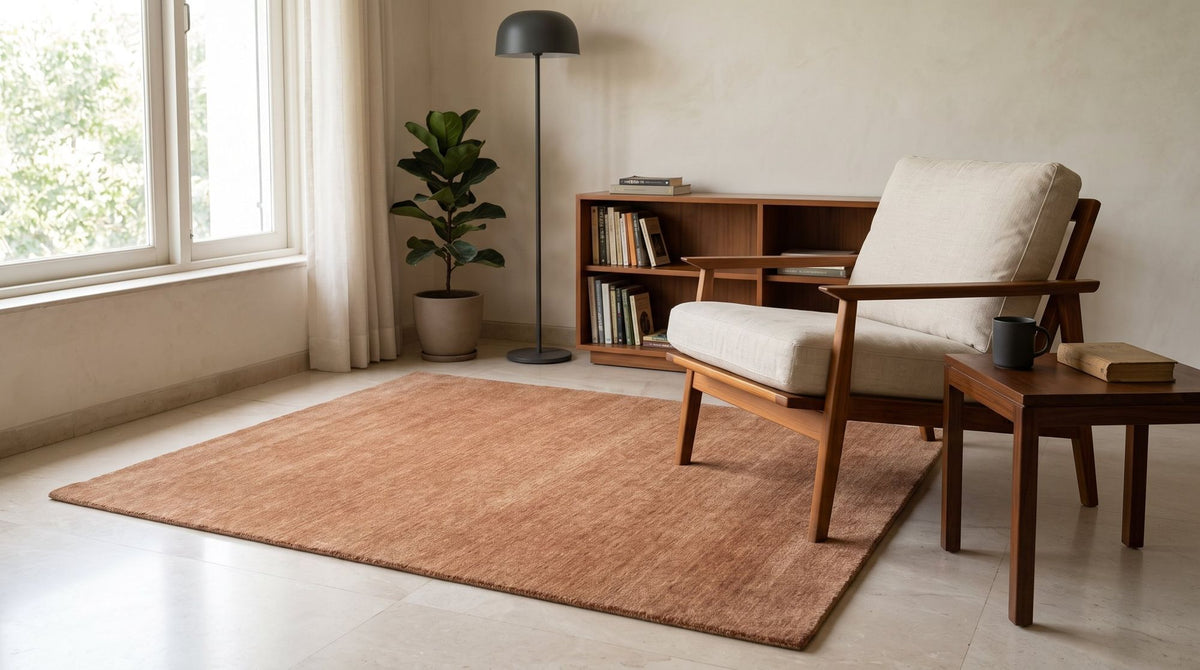
A handloom rug is woven on a loom operated by hand, with the pile yarn worked into the weave row by row. The result is an even, closely built surface with a calm, regular look, well suited to plain and tonal designs.

Handloom is Rugberry's most used construction. It covers the Plush, Grain, Insignia, Luma, Meraki, Cabra and Cashmere Blend rugs. Each has its own pile, from 7 to 8 mm in Cabra to 18 to 20 mm in Plush, but they share a quiet, consistent surface and a finished edge.
The Plush Wool Rug in Camel is a good handloom reference. It is handloom woven in New Zealand wool with a deep pile of 18 to 20 mm, from ₹32,000 for 5x8 ft, ex GST, at the time of writing. The glossary entry on handloom and our guide to handloom rugs in India go further.
What is a hand knotted rug?
A hand knotted rug is made by tying each knot of pile yarn by hand around the warp threads on an upright loom, row after row, then beating it down and shearing it level. It is the slowest construction and the densest, which is why hand knotted rugs last the longest.


Because every knot is tied separately, a hand knotted rug has no glued backing. The back shows the same design as the front, and the rug can be washed, restored and passed on. Knot density, measured in knots per square inch, tells you how fine the work is. See knot density in the glossary.
The Savannah Jute Rug in Cashew is hand knotted in jute, 15 to 16 mm, from ₹32,800 for 5x8 ft. At the other end of the range, the Stratum Knotted Rug is hand knotted in New Zealand wool in 9x12 ft, listed at ₹1,40,000.
What is a hand tufted rug?
A hand tufted rug is made by pushing yarn through a stretched backing cloth with a hand held tufting gun, following a design drawn on the cloth. The loops are then cut or left, sheared to height, and a second cloth is fixed to the back.


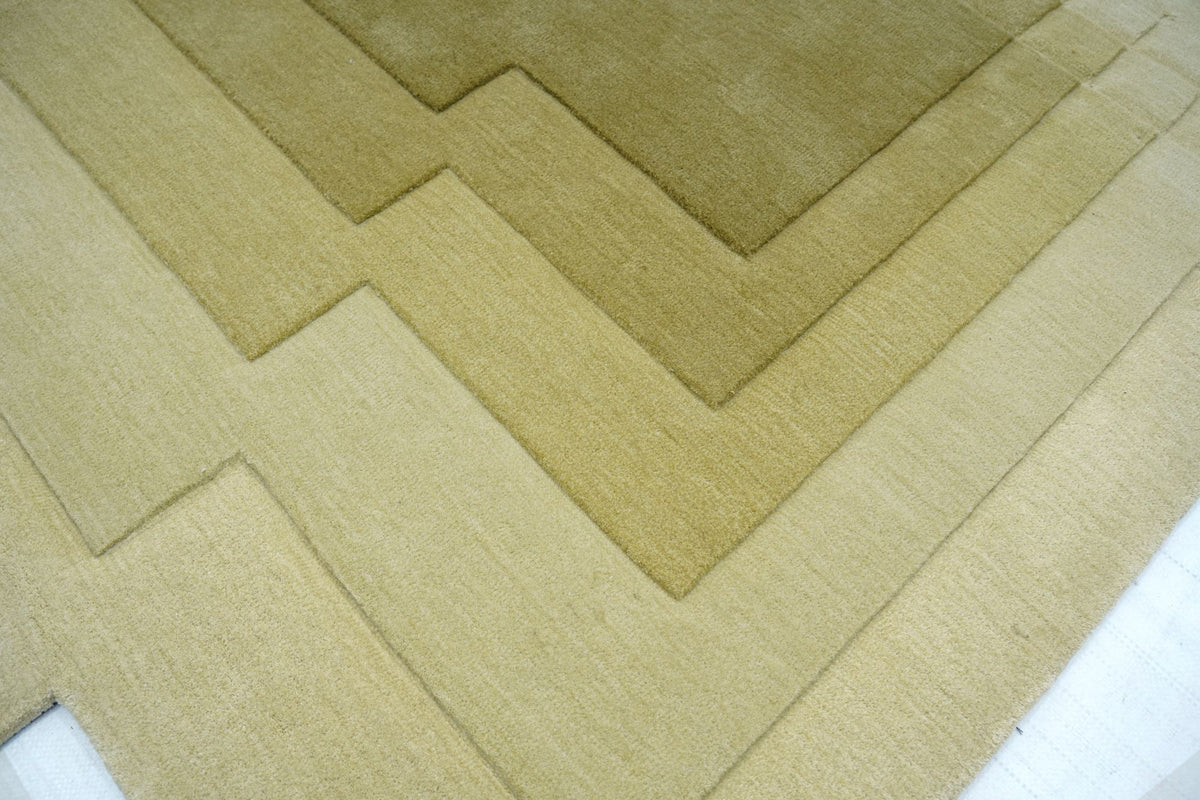
Tufting gives designers freedom. The pile can be carved, set at different heights, or changed from wool to Botanical Silk within a single line, which is why so many contemporary designs are hand tufted. It is also quicker to make than knotting, so prices are lower for the same size.
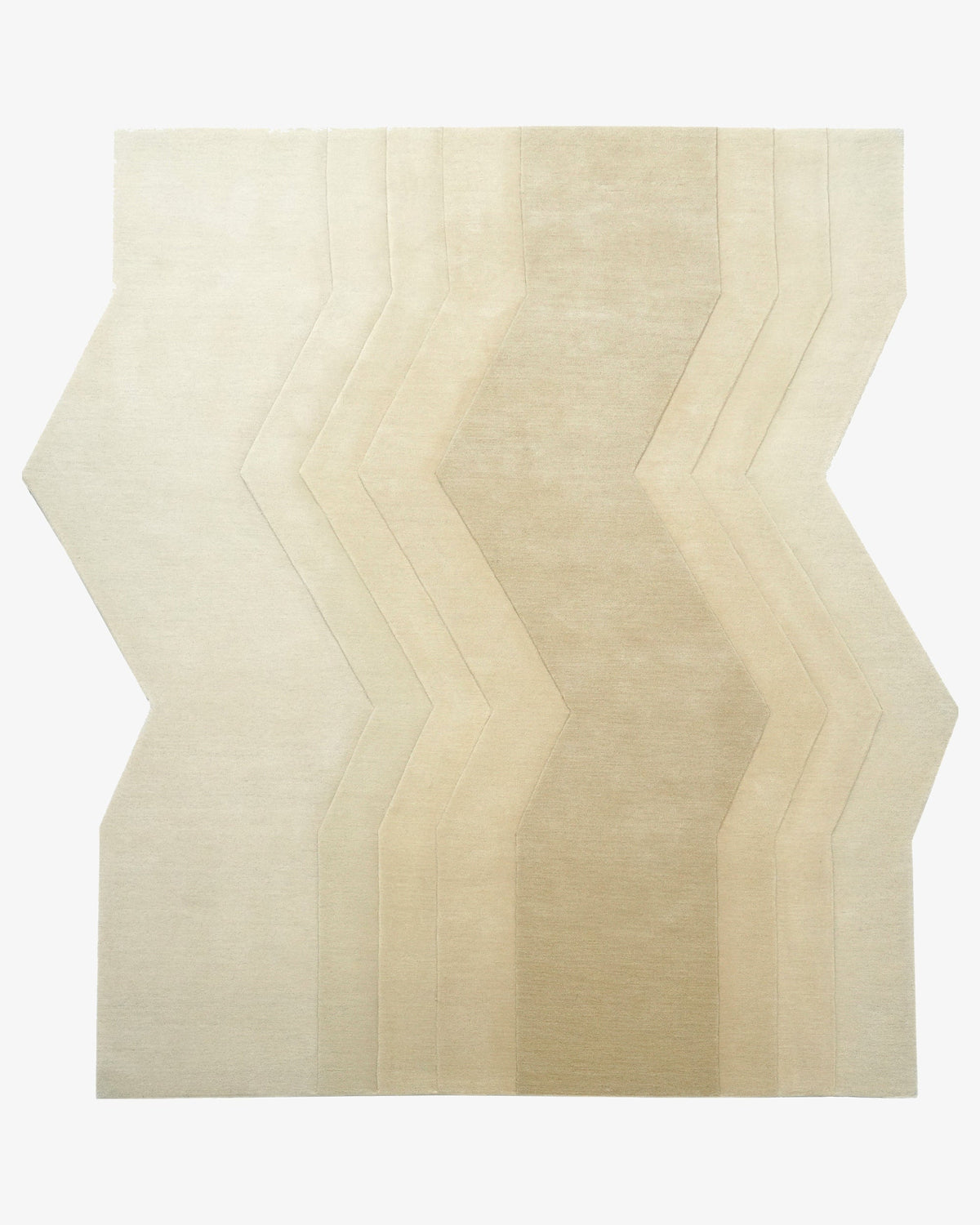
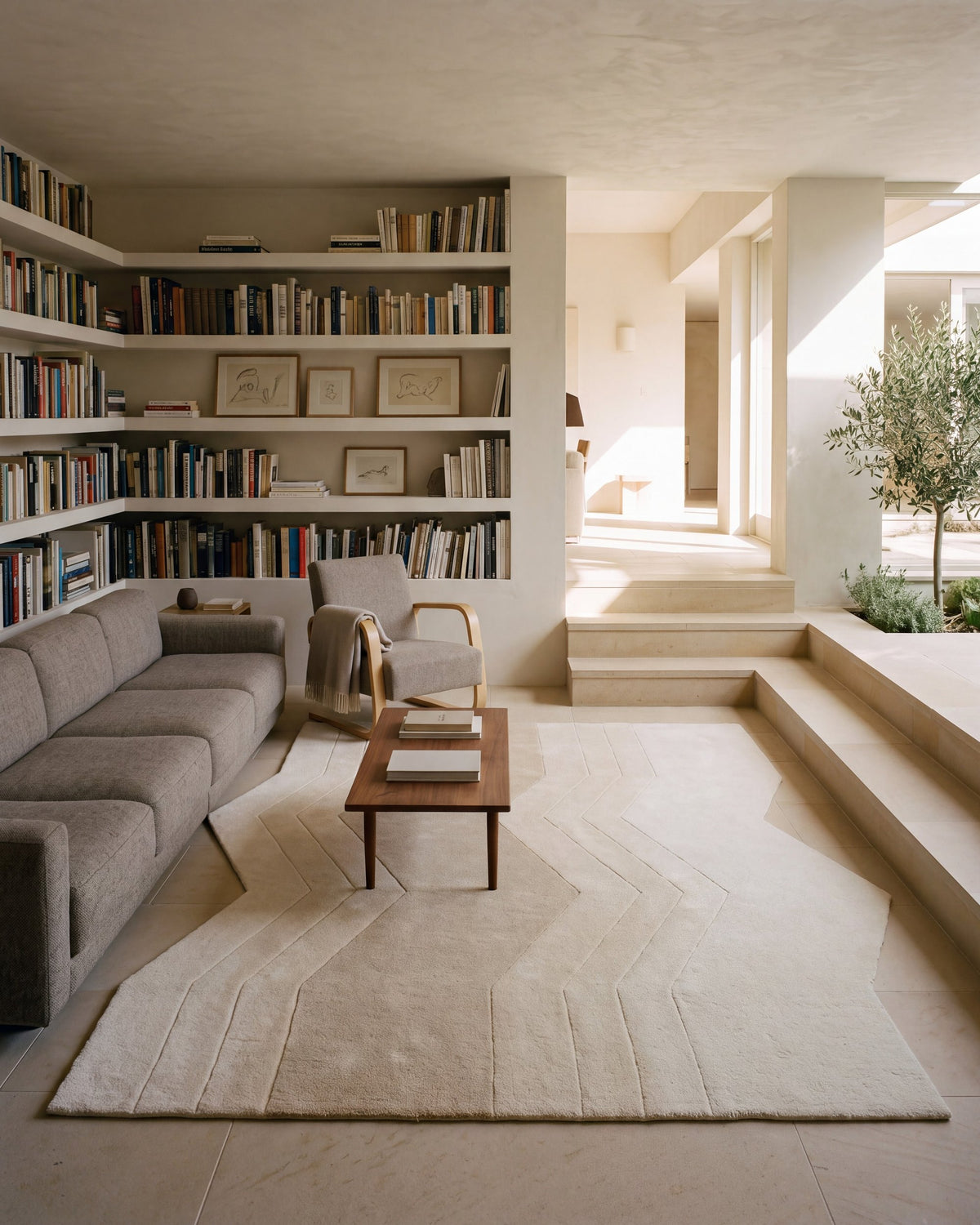
The Cadence Wool Rug shows what tufting allows. It is hand tufted in New Zealand wool, 14 to 16 mm, chalk to sand in six steps, each one carved apart by hand. It starts at ₹32,000 for 5x8 ft and belongs to the Lamina collection.
The same New Zealand wool can make a deep pile, a knotted surface or a carved relief. The construction decides.
What is a hand woven flatweave?
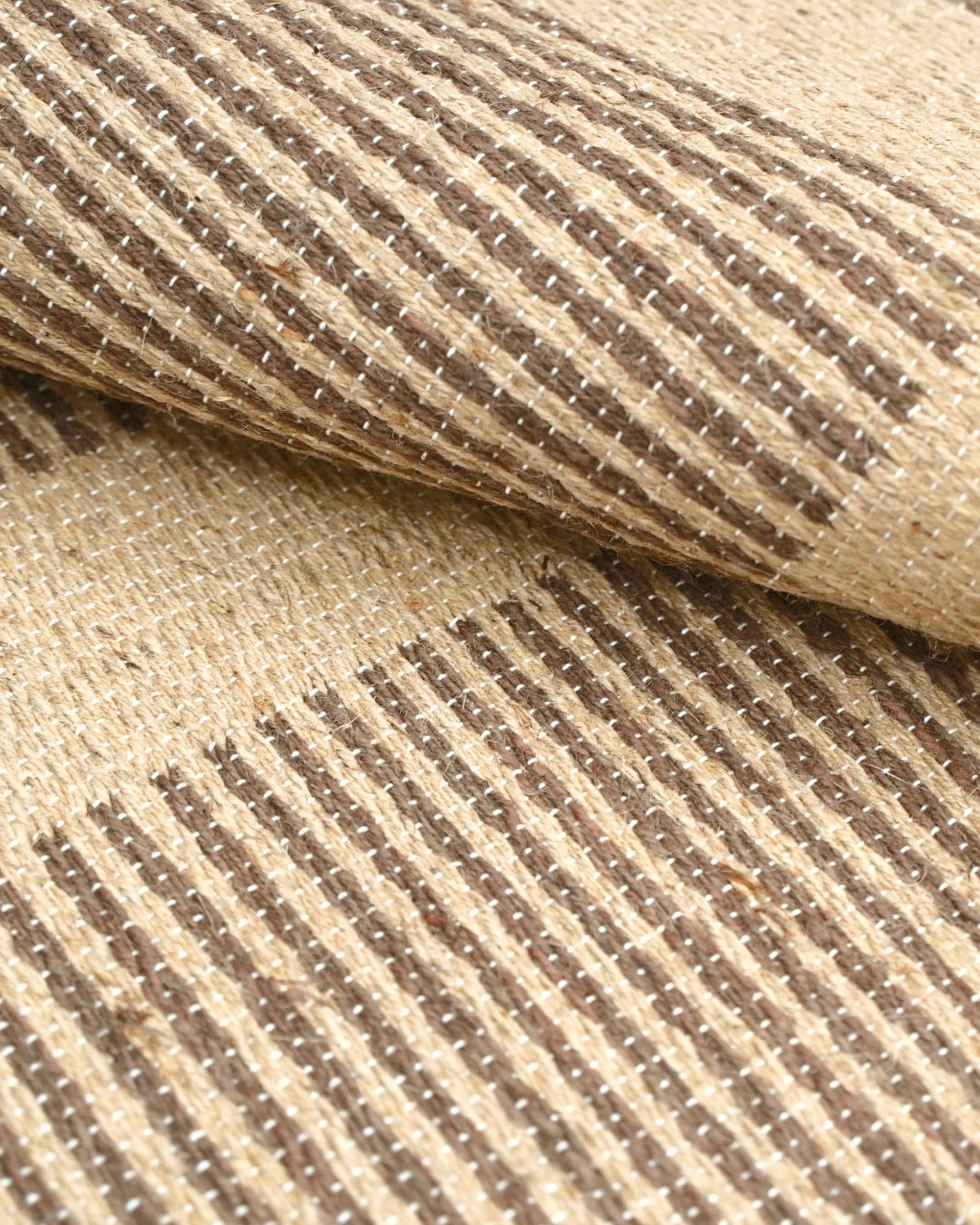
A hand woven flatweave is made by interlacing warp and weft threads by hand with no pile at all, so the design lives in the weave itself. Flatweaves are thin, firm and reversible in many cases, and they are easy to move and clean.

Flatweaves suit entrances, dining rooms and verandas, where chairs slide and grit needs to fall through. They also suit hot months, because they sit cool and light on the floor. Dhurries and kilims are traditional relatives of the construction.
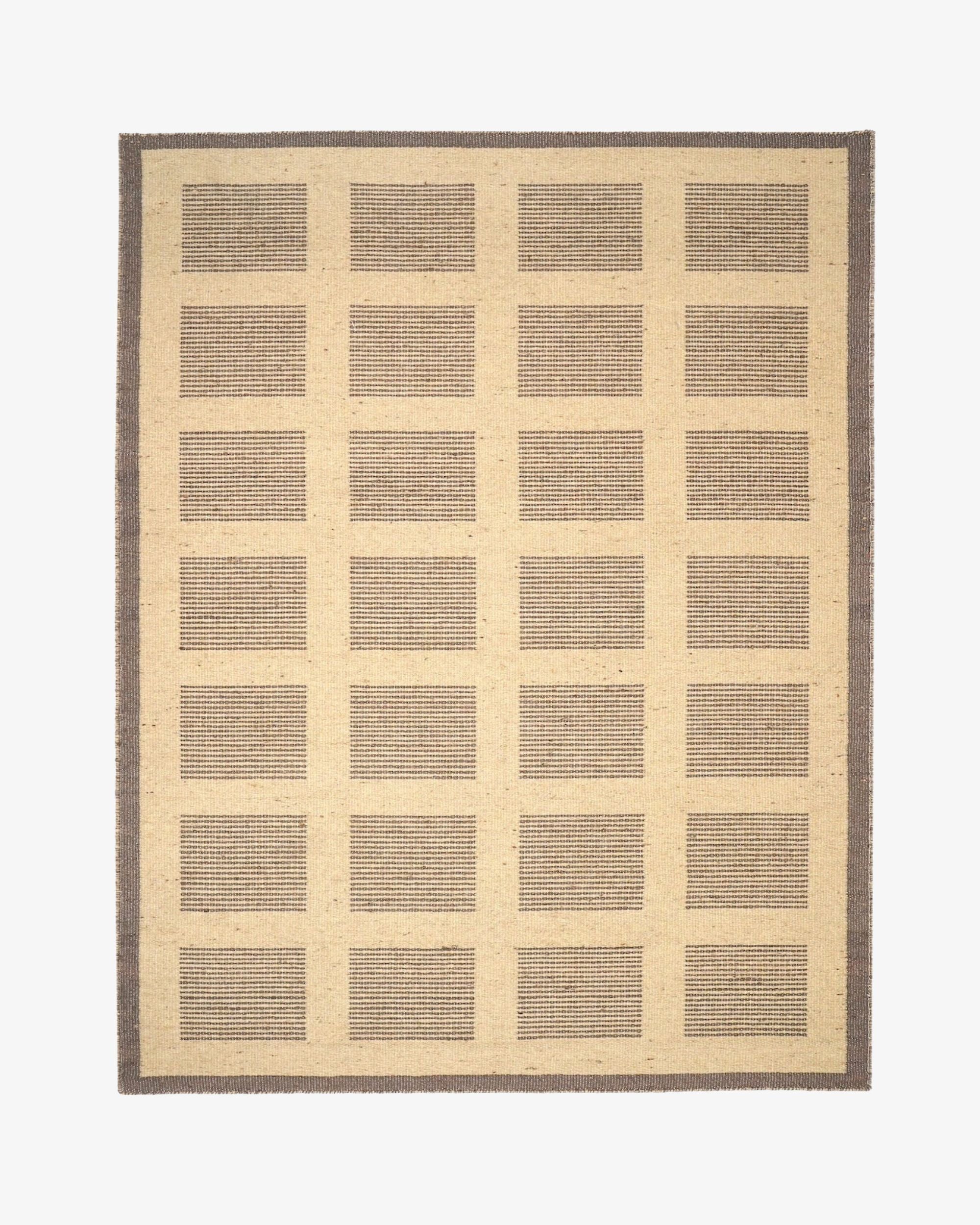
The Kora Jute Rug is handwoven in jute, 10 mm thick, in 5x8, 6x9 and 8x10 ft, from ₹22,400 at the time of writing. Read about the handwoven flatweave for more on how these rugs behave.
How do the four constructions compare?
The four constructions trade off softness, density, design freedom and price. This table shows how they compare using Rugberry rugs as reference points.
| Construction | How it is made | Rugberry reference | Thickness | Feel | From (ex GST, at the time of writing) | Best room |
|---|---|---|---|---|---|---|
| Handloom | Woven on a hand operated loom | Plush, Grain, Cabra, Luma | 7 to 20 mm | Even, calm | ₹27,200 for 5x8 ft | Living, bedroom, dining |
| Hand knotted | Each knot tied by hand | Savannah, Stratum | 15 to 16 mm (Savannah) | Dense, firm | ₹32,800 for 5x8 ft | Living, heirloom rooms |
| Hand tufted | Yarn pushed through cloth by tufting gun | Lamina, Cabella, Terraform | 14 to 16 mm | Dense, can be carved | ₹22,700 (Facet, 6 ft round) | Living, bedroom |
| Hand woven | Warp and weft interlaced, no pile | Kora, Masai | 10 mm | Flat, firm | ₹22,400 for 5x8 ft | Entrance, dining, veranda |
The verdict: for a rug you want to pass on, choose hand knotted. For a carved or sculptural design at a sensible price, choose hand tufted. For a calm everyday rug, choose handloom, and for entrances and dining rooms, choose a hand woven flatweave.
Which construction should you choose for each room?
Match the construction to what the room asks of the rug: footfall, chairs, bare feet and how long it must last. Most Indian homes use two or three constructions across rooms.
- Entrance and passage: hand woven jute such as Kora, or handloom wool and jute such as Cabra. Flat and quick to clean.
- Living room: handloom wool such as Grain or Plush, or a hand tufted design from Lamina.
- Dining room: low handloom or a flatweave, so chairs slide out without catching.
- Bedroom: deep handloom such as Plush, or Cashmere Blend for the softest feel.
- Heirloom piece: hand knotted, such as Stratum, where the rug will be in the family for decades.
For two of the most asked comparisons, read hand knotted vs hand tufted and handloom vs hand tufted.
How does construction change care and lifespan?
Construction changes how a rug should be cleaned and how long it lasts. Hand knotted rugs can be fully washed and restored, handloom and hand woven rugs clean well with regular vacuuming, and hand tufted rugs need gentle care because of their backing.
A hand tufted rug's backing cloth is held with latex, so it should never be soaked or steam cleaned at home. Vacuum it regularly, blot spills, and send it to a professional for deep cleaning. Handloom wool forgives more and can be spot cleaned with cool water and a mild wool detergent.
Lifespan follows density and care. A well kept handloom or hand tufted wool rug serves a living room for many years, while a hand knotted rug can last for generations. Our article on how long a rug lasts gives realistic ranges.
How do you tell the constructions apart by looking at the back?
Turn a corner of the rug over: the back tells you the construction faster than the front. Each construction leaves a different signature.
- Hand knotted: the back shows the design clearly, knot by knot, with slight irregularities. There is no cloth backing.
- Hand tufted: the back is covered by a plain cloth, often with a bound or serged edge. You cannot see the design.
- Handloom: the back shows the weave structure in lines, usually with the pile yarn visible between warps, and a firm finished edge.
- Hand woven flatweave: front and back look much the same, because there is no pile. Many are reversible.
Knowing the back also helps with care. A cloth backed tufted rug should never be soaked, while a knotted or flatwoven rug can be washed by a professional. The glossary entry on backing cloth and our article on the back of a rug show examples.
Edges give a final clue. Handloom and knotted rugs usually have a woven or bound selvedge, while tufted rugs are finished with a sewn binding over the backing cloth.
Weight is another clue. Hand knotted rugs feel heavy and supple, hand tufted rugs heavy and stiffer, handloom rugs medium and even, and flatweaves light. Lift a corner and you will feel the difference at once.
Frequently asked questions
What are the four rug constructions Rugberry uses?
Rugberry uses four constructions: handloom, hand knotted, hand tufted and hand woven. Handloom covers Plush, Grain, Insignia, Luma, Meraki, Cabra and Cashmere Blend, hand knotted covers Savannah and Stratum, and hand tufted covers the Lamina collection and many patterned rugs.
Which rug construction lasts the longest?
Hand knotted rugs last the longest, because each knot is tied separately around the warp, with no glued backing. They can be washed, restored and passed on.
Is a hand tufted rug a handmade rug?
Yes. A hand tufted rug is made by hand with a hand held tufting gun, following a drawn design. It is quicker to make than a hand knotted rug, which keeps prices lower.
What is the difference between handloom and hand woven?
A handloom rug at Rugberry has a pile worked into the weave on a hand operated loom. A hand woven flatweave interlaces warp and weft with no pile, giving a thinner, firmer rug.
Which construction is best for a dining room?
A low handloom rug or a hand woven flatweave is best for a dining room, because chairs slide out easily and crumbs lift with a vacuum. Rugberry's Grain Wool Rug and Kora Jute Rug both suit dining rooms.
Know how it was made, and you will know how it will live. Material first.



Leave a comment
This site is protected by hCaptcha and the hCaptcha Privacy Policy and Terms of Service apply.