


What Makes a Rug Design-Led
A rug is design-led when its fibre, surface, proportion and colour were decided together to serve one idea, and the maker can tell you what it is made of and why. Rugberry's design-led handmade rugs start from the fibre, so the material is the design rather than a base for a printed pattern.
In short
- A design-led rug passes five tests: a named fibre, an intended surface, considered proportion, a disciplined palette and clear provenance.
- Decoration sits on top of a rug; design runs through it, so a design-led rug looks right both from across the room and up close.
- Rugberry's design-led rugs on rugberry.in include the carved Lamina collection, the handloom Grain and Insignia rugs and the jute and Botanical Silk Meraki rug, from about ₹26,600 for 5x8 ft at the time of writing.
- Design-led does not mean expensive; it means every decision, from fibre to edge, has a reason.
What is the difference between a design-led rug and a decorative rug?
A decorative rug applies a pattern to a surface, while a design-led rug builds its look from the material and the making. The difference shows when you crouch down: a decorative rug often looks flat and printed up close, and a design-led rug gets more interesting.
Take two rugs with stripes. In one, the stripes are simply two colours of the same pile. In the other, the stripes change height, or one band is wool and the next is Botanical Silk, so the stripe is something you feel underfoot. The second is design-led.
This matters for value. A design-led rug ages into its room, because its interest comes from texture and fibre that wear well. A decorative rug dates as soon as its pattern goes out of fashion.
Test 1: Does the rug name its fibre?
A design-led rug names its fibre precisely, because the fibre is the first design decision. "Wool" is not enough; "New Zealand wool" or "a wool and cashmere blend" tells you how the rug will feel, take colour and age.


Rugberry grades its nine fibres in three tiers. Terra covers New Zealand wool, Lincoln and jute for everyday living. Fina covers merino and silk. Rara covers mohair, alpaca, cashmere and llama, offered in Rugberry Reserve. Where real silk is not used, Rugberry says Botanical Silk.
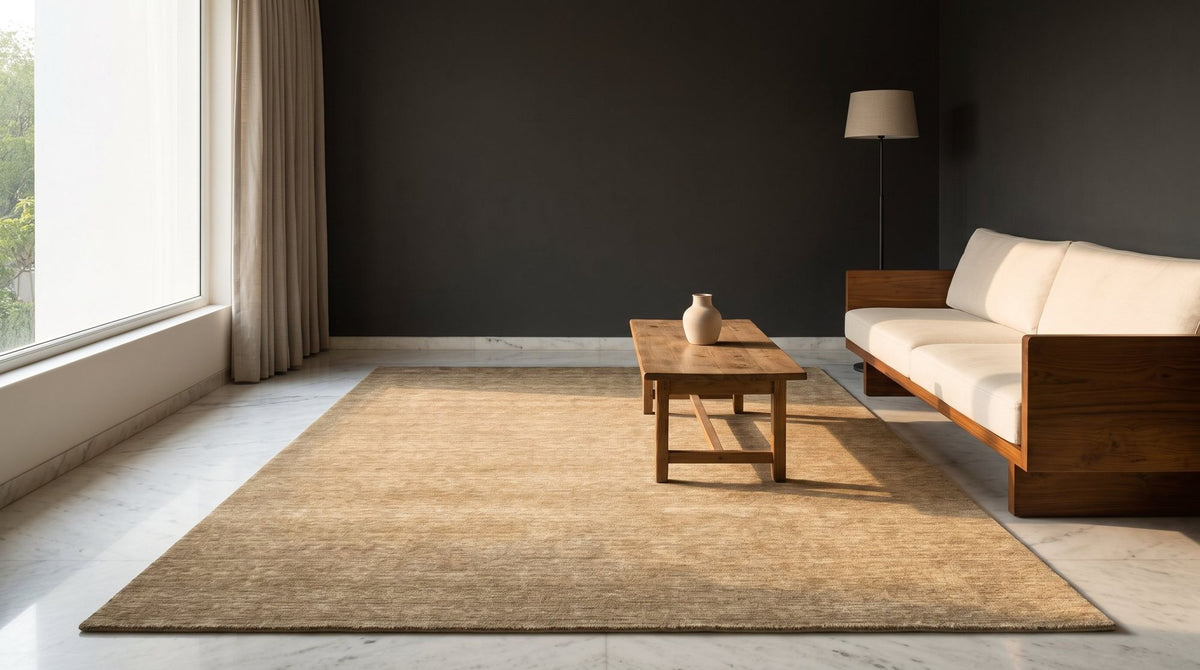
The Meraki Jute & Silk Rug in Sage is a clear example. It is handloom woven in jute lifted with threads of Botanical Silk, 12 to 14 mm, from ₹26,600 for 5x8 ft. The design exists only because of that pairing: firm plant fibre and a quiet shine. Our guide to Terra, Fina and Rara explains the grades.
Test 2: Is the surface intended?
In a design-led rug, the surface is chosen on purpose: cut pile or loop, one height or several, matte or sheen. You should be able to say why the rug has the texture it has.


Rugberry works in ten textures, five cut pile and five loop pile. Cut pile textures include ombré, carving, high-low, two colour mottling and Gabbeh dyeing. Loop pile textures include two colour mottling, overtuft scattered, micro loop, tip shear and straight line.
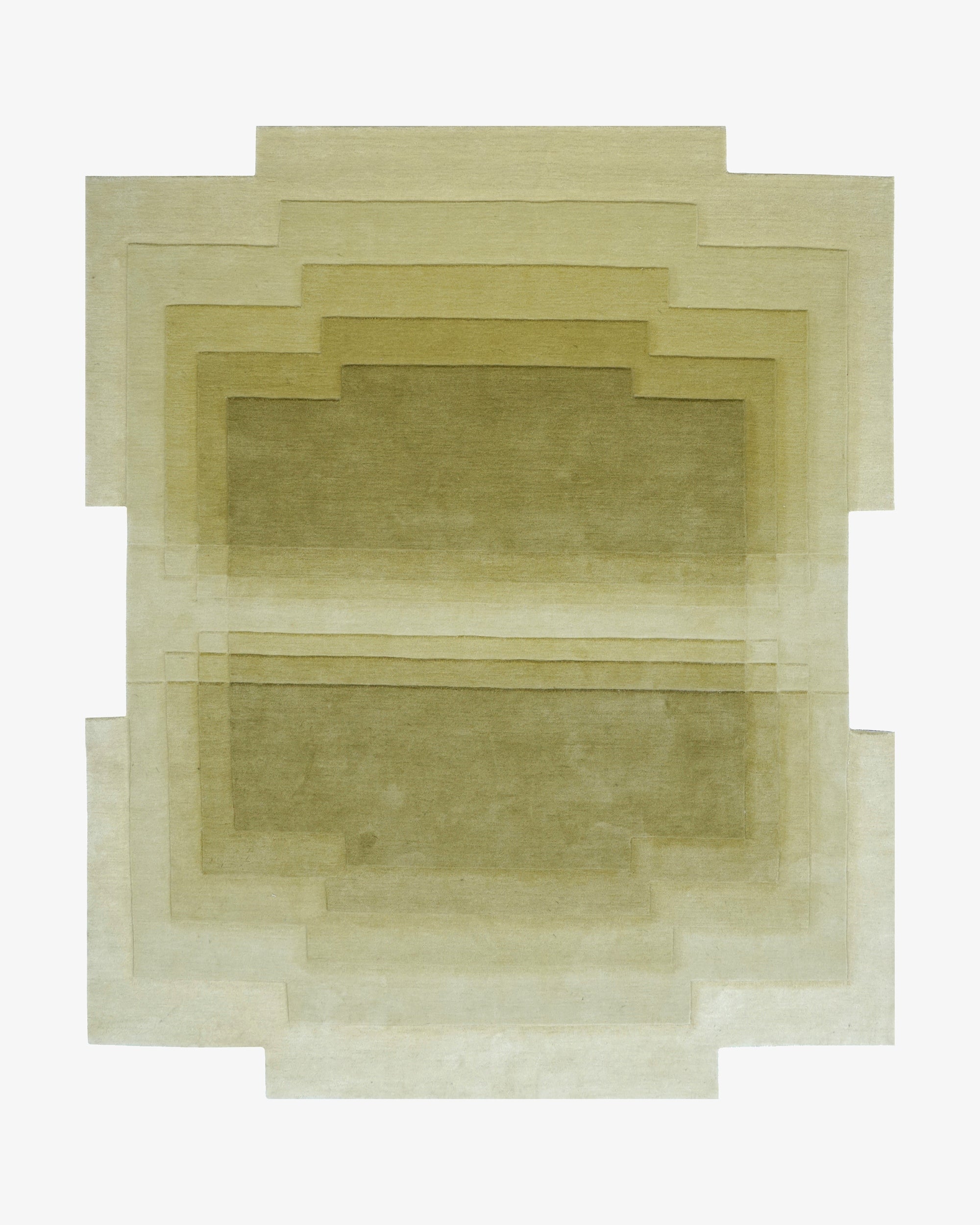
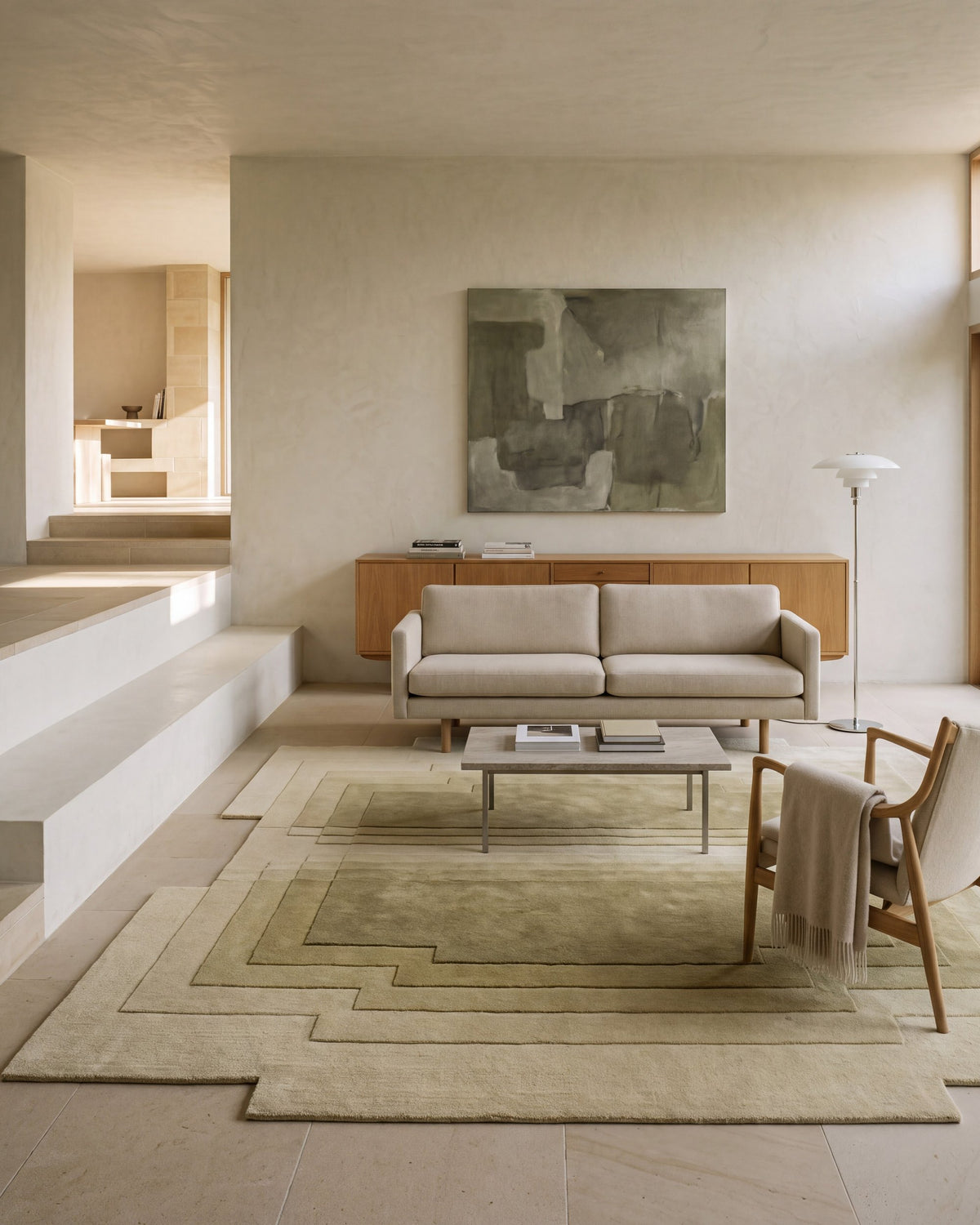
The Talus Wool Rug from the Lamina collection shows intended surface at work. It is hand tufted in New Zealand wool, 14 to 16 mm, with straw deepening to moss toward the centre, and every change of tone is carved apart by hand, so the colour step is also a step in the pile. It starts at ₹32,000 for 5x8 ft. The glossary entry on carving describes the technique.
Test 3: Are the proportions considered?
A design-led rug is drawn for real rooms, so its motifs, margins and bands keep their balance across sizes. If a design only works in one size, or loses its centre under a coffee table, the proportion was not thought through.

Look at how the design meets the edge. In a considered rug, the border, the last band or the edge of a motif lands with intent, not where the loom happened to stop. Look also at the scale of the drawing against the furniture: big shapes for big rooms, finer rhythms for small ones.
The Insignia Wool & Silk Rug is drawn with a single emblematic form at its centre. It is handloom woven in New Zealand wool and Botanical Silk, 14 to 16 mm, from ₹32,000 for 5x8 ft. In a large size, the emblem reads clearly around a low table, which is how it was drawn to be seen.
Decoration sits on top of a rug. Design runs all the way through it.
Test 4: Is the colour disciplined?
A design-led rug uses a small, related palette, usually two to four tones, so colour supports the surface instead of competing with it. Too many unrelated colours are the quickest sign of a decorative rug.


Disciplined colour also means honest colour. Handmade rugs show slight tonal shifts between dye lots and across the field, called abrash, and a design-led maker plans for that rather than hiding it. Rugberry uses mottled and melange yarns where a softer, living colour suits the design.
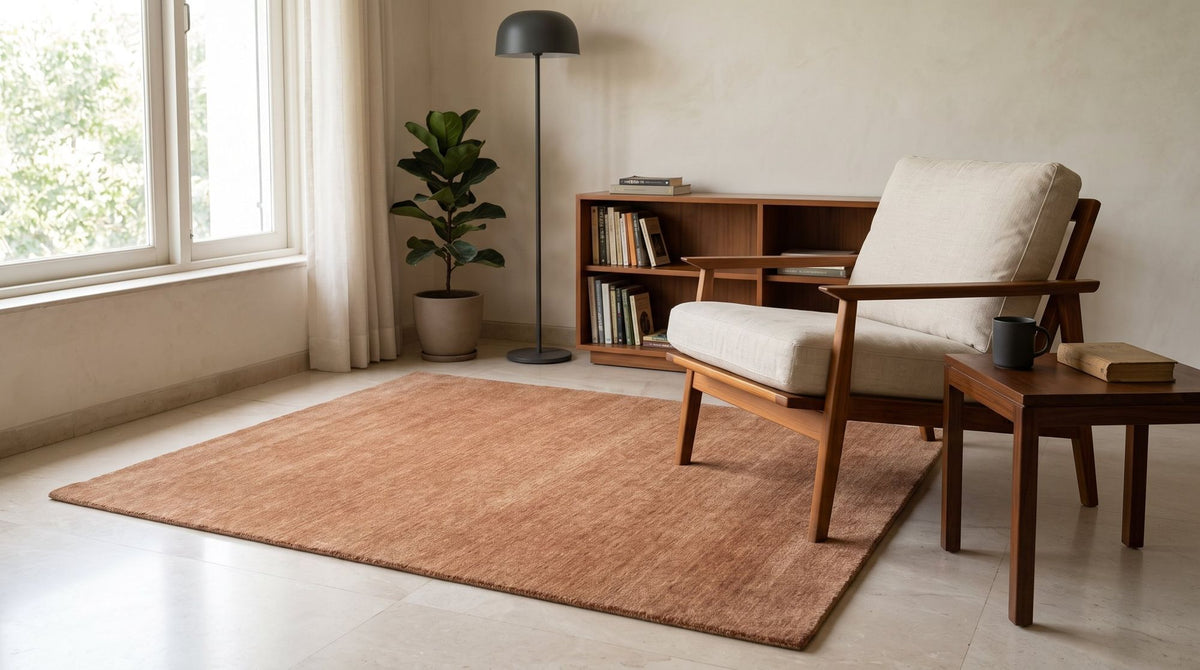
The Grain Wool Rug in Russet is a single colour story: handloom New Zealand wool, low and closely worked at 12 to 14 mm, in a warm earth tone. It starts at ₹29,600. Its interest comes from the weave, not from added pattern. Read colour variation in rugs for more.
Test 5: Is the provenance clear?
A design-led rug comes with a clear record of what it is and how it was made. Rugberry calls this the provenance card: fibre, grade, origin, character, construction, technique, made and care, eight facts on every piece.
Provenance lets you compare rugs on substance. Two rugs at the same price can differ entirely in fibre and construction, and only the card makes that visible. It also tells a future cleaner or restorer exactly what they are handling.
Behind Rugberry stands a weaving family since 1947, three generations at the loom. Ibrahim Ansari, the third generation, founded Rugberry to give that knowledge a name and bring it straight to homes and designers. The lineage is the proof; the card is what you use.
How do design-led and decorative rugs compare in practice?
The two differ most in how they age, how they suit a room and how much you learn about them before buying. This table puts the differences side by side.
| Quality | Design-led rug | Decorative rug |
|---|---|---|
| Fibre | Named and graded, such as New Zealand wool, Terra | "Wool blend" or not stated |
| Surface | Chosen texture: carving, loop, high-low, sheen | One flat pile, pattern by colour only |
| Proportion | Drawn to work across sizes | Cropped or stretched between sizes |
| Colour | Two to four related tones | Many unrelated tones |
| Provenance | Construction, thickness and care stated | Little or none |
| Ageing | Texture and fibre wear in gracefully | Pattern dates, surface flattens |
The verdict: if you plan to keep a rug for ten years or more, choose a design-led rug over a decorative one, because its interest lives in material that ages well rather than in a pattern that dates.
How do you find a design-led rug in India?
Look for makers who publish fibre, construction and thickness for every rug, who offer swatches, and who will make a design to measure. Those three habits usually go with design-led work.
On rugberry.in, every product page lists what the rug is made of, how it was made and its thickness in mm. Swatches and sample boxes let you feel the fibre before ordering, and any design can be made to measure in another size, shape or colour. The Rugberry Design Lab lets you recolour a rug online.
You can also see rugs in person at the Noida Experiential Centre and at partner stores listed on rugberry.in. For a broader view, read the guide to modern rugs in India and our notes on checking rug quality.
Does design-led mean pattern or plain?
Design-led can mean either, because the test is whether every decision has a reason, not how much drawing there is. A plain rug can be fully design-led if its fibre, pile height, colour and edge were chosen with care.
Plain design-led rugs depend on material and making. The Grain Wool Rug and the Plush Wool Rug, both handloom New Zealand wool, have no pattern at all, yet they differ completely underfoot: Grain is low and closely worked at 12 to 14 mm, Plush deep and quiet at 18 to 20 mm. Choosing between them is a design decision.
Patterned design-led rugs add drawing, but the drawing still comes from the making. In Lamina, the pattern is the carving. In Insignia, the emblem is formed where wool meets Botanical Silk. In Meraki, the sheen of Botanical Silk threads lifts the jute.
Either way, a design-led rug should feel resolved when the room is empty and still hold its own when the room is full of people and furniture.
How designers use the five tests
Interior designers often use these tests as a checklist when shortlisting rugs for a client. Start with fibre and surface, because those rule out most options for a given room. Then check proportion against the furniture plan, colour against the material board, and provenance against the client's expectations.
A rug that passes all five is rarely the wrong choice, even if it is not the most striking one on the shortlist. Our guide to choosing a designer rug turns the tests into seven steps for a real project.
Frequently asked questions
What does design-led mean for a rug?
A design-led rug is one where the fibre, surface, proportion and colour were decided together to serve one idea. Its design runs through the material, so it looks right both from across the room and up close.
Are design-led rugs always expensive?
No. Design-led describes how a rug is conceived, not its price. At Rugberry, design-led handmade rugs start from about ₹26,600 for a 5x8 ft Meraki Jute & Silk Rug, ex GST, at the time of writing.
How can I tell a design-led rug from a printed one?
Crouch and look along the pile. A design-led rug shows changes in height, fibre or sheen that follow the design, while a printed or decorative rug shows the same flat pile in different colours.
Why does Rugberry name the fibre first?
Rugberry names the fibre first because the fibre decides how a rug feels, takes colour and ages. Its brand essence is material first, and every rug is described by fibre, grade and construction.
Can I change the colours of a Rugberry design?
Yes. The Rugberry Design Lab on rugberry.in lets you recolour a design online from a pom box of 200 colours, and the result can then be made to measure in any size or shape. You can also upload your own design as the starting point.
Start with the fibre, and the design has somewhere to begin. Material first.



Leave a comment
This site is protected by hCaptcha and the hCaptcha Privacy Policy and Terms of Service apply.