



How to Choose a Designer Rug for an Indian Home
To choose a designer rug, start with the room's brief, then fix the fibre and construction, and only then fall in love with a design. A designer rug earns its price through a named material, a considered surface and the right scale, and Rugberry describes every piece by fibre, grade and construction so you can judge it on those terms.
In short
- A designer rug is a rug where the design, the fibre and the making were decided together, not a rug with a famous name on the label.
- The seven checks for a designer rug are brief, fibre, construction, scale, colour, light and provenance.
- Rugberry's designer rugs on rugberry.in include collaborations with Marie Ducept, Khaled Hashem and Nina Brunn, and Studio pieces such as Insignia and Terraform, from about ₹29,600 for 5x8 ft at the time of writing.
- Any Rugberry design can be made to measure in another size or colour, which is often the point of buying a designer rug.
What counts as a designer rug?
A designer rug is one where a designer's intention shapes the fibre, the surface and the proportions together, so the rug reads as a finished piece rather than a printed pattern. The name on the label matters less than whether those decisions hold up close.
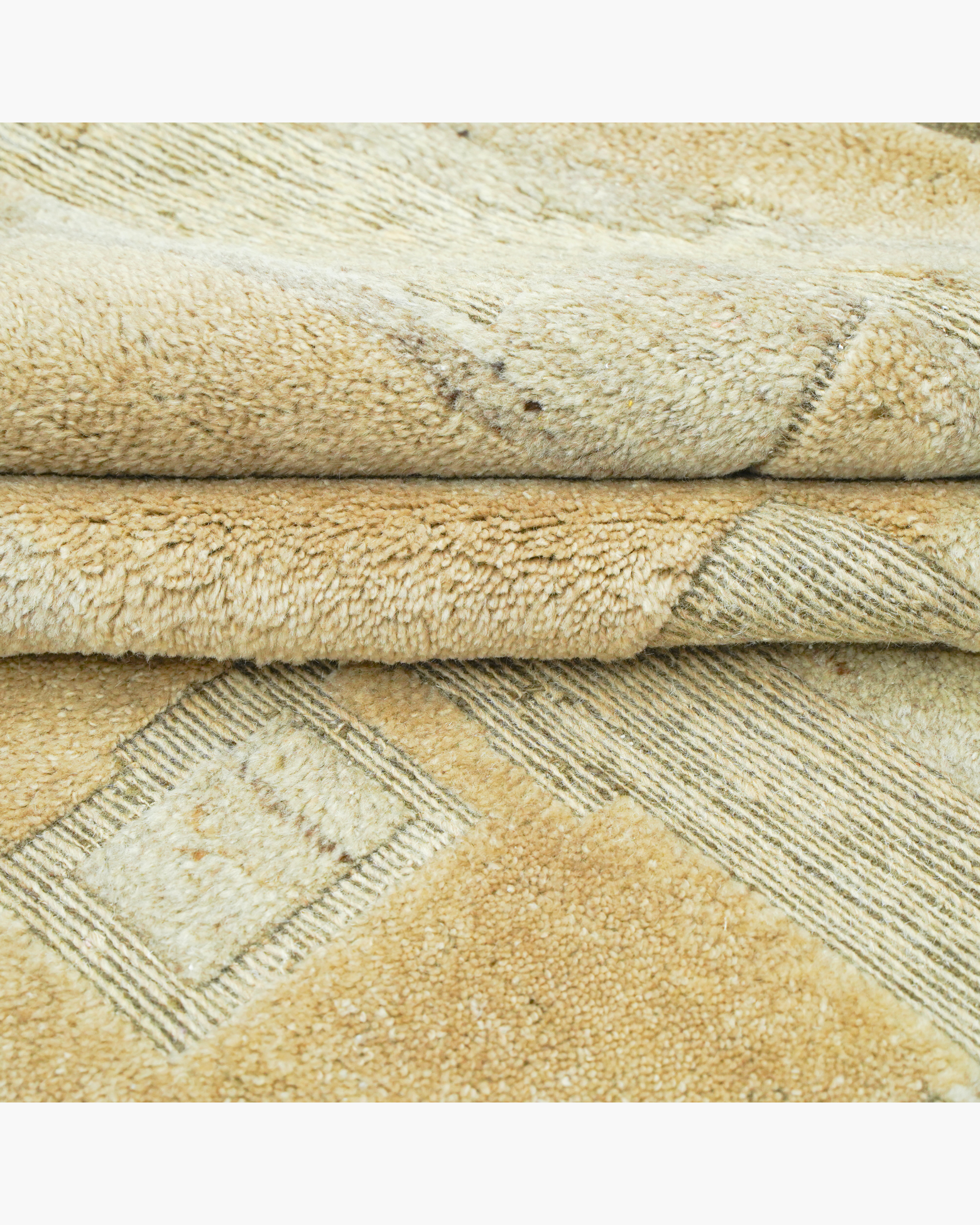
You can test this in a minute. Look at the rug from standing height, then crouch and look along the pile. In a designer rug, the drawing at a distance and the texture up close tell the same story, through carving, a change of pile height or a shift from matte wool to sheen.
A good designer rug also explains itself. It names its fibre, its construction and its thickness. If a seller cannot tell you what a rug is made of, it is a decorative rug with a designer price.
Step 1: What should your brief say before you look at rugs?
Your brief should fix the room, the seating plan, the floor, the light and the traffic before you browse a single design. Writing it down takes ten minutes and saves the most common mistake, choosing a beautiful rug for the wrong room.
- Room and size: length and width in feet, door swings and fixed furniture.
- Floor: marble, vitrified tile, Kota stone, wood or microcement.
- Traffic: shoes or barefoot, children, pets, dining chairs.
- Light: which way the windows face and how the room is lit at night.
- Role: is the rug the quiet base of the room or its main piece?
Interior designers will recognise this as a short specification. The guide for interior designers goes further, with tolerances and sampling.
Step 2: Which fibre and construction suit the brief?
Choose the fibre for the traffic and the feel, then the construction for the surface you want. A designer rug in the wrong fibre will look tired in two years, however good the drawing.


Rugberry grades its fibres in three tiers: Terra (New Zealand wool, Lincoln, jute) for everyday living, Fina (merino, silk) for softness and sheen, and Rara (mohair, alpaca, cashmere, llama) for the rarest pieces in Rugberry Reserve. Most living rooms want Terra wool, often with Botanical Silk accents for sheen.
Construction decides how the design is drawn. Hand tufting allows carving and sharp changes of pile height, which is why so many contemporary designs use it. Handloom gives a calm, even surface. Hand knotting gives the densest, longest lasting pile. Our page on the four rug constructions sets out each one.
Step 3: How do you judge scale and proportion?
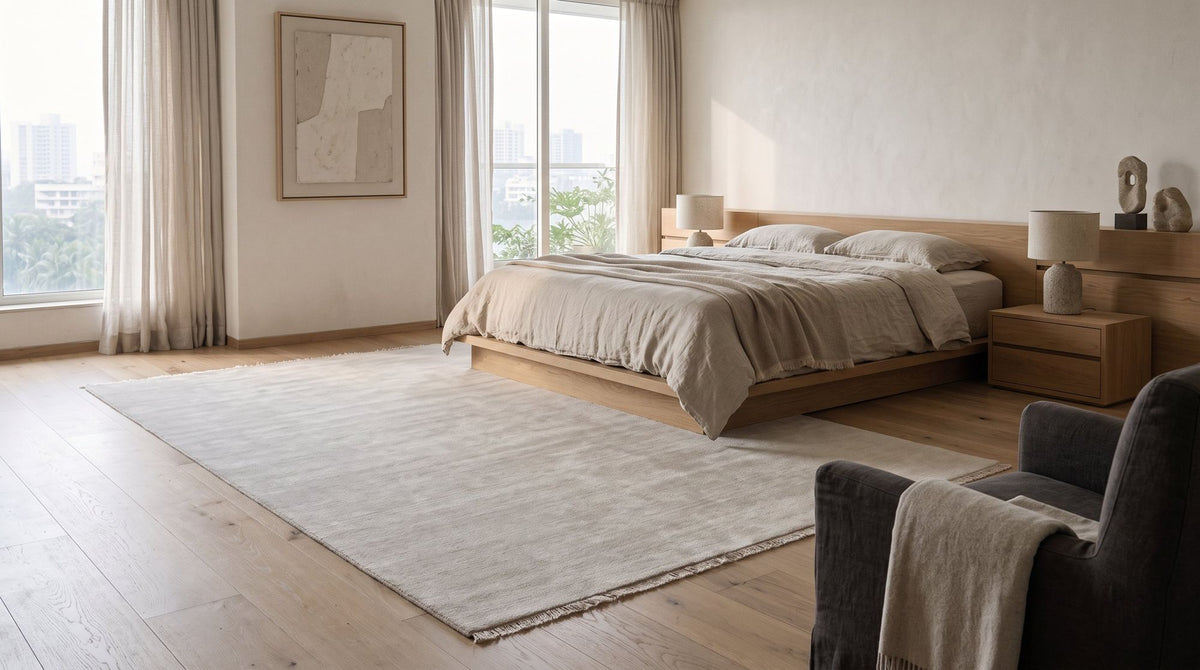
Judge scale by the furniture, not by the room: a designer rug should hold the whole seating group or the whole bed, with an even margin of floor around it. A small rug, however fine, looks like an afterthought in a large room.

The design's own scale matters too. A large motif, such as the single emblem at the centre of the Insignia Wool & Silk Rug, needs a size where the emblem stays visible around the coffee table. In 5x8 ft it becomes a centrepiece under a table, and in 9x12 ft it reads across the whole room.
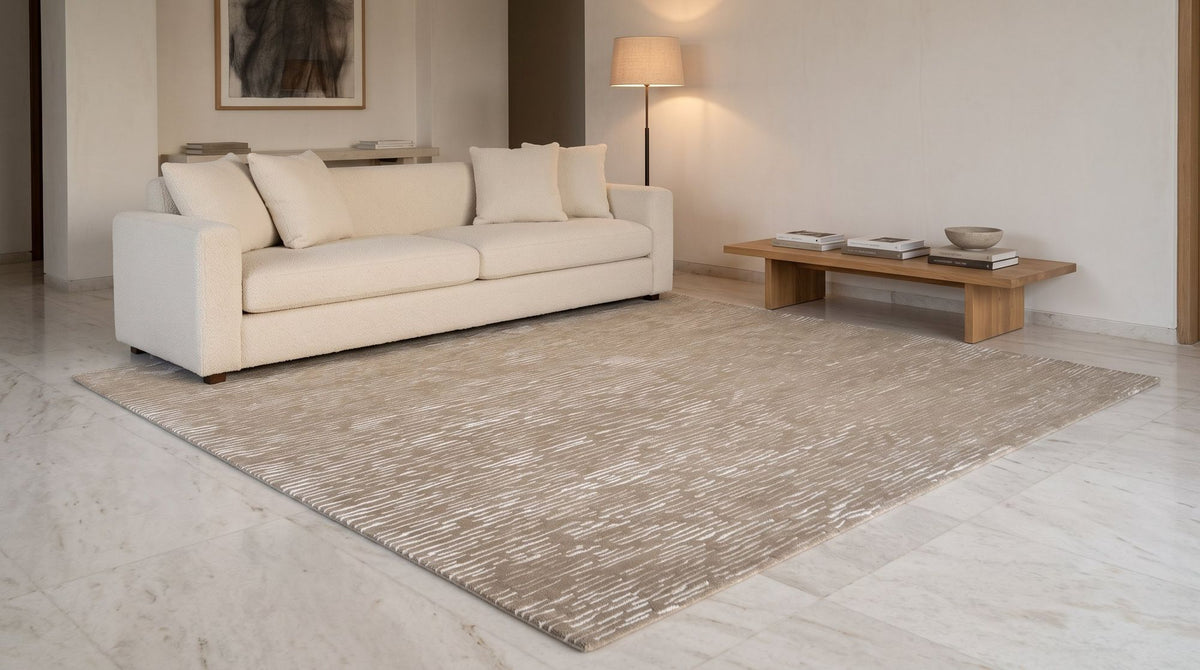
For contour or linear designs, such as the Terraform Wool & Silk Rug, scale is more forgiving, because the lines run edge to edge. Terraform is hand tufted in New Zealand wool and Botanical Silk, 14 to 16 mm, from ₹32,000 for 5x8 ft at the time of writing.
If a seller cannot tell you what a rug is made of, it is a decorative rug with a designer price.
Step 4: How should colour and light guide the choice?
Pick colour in the room's own light, at the hour you use the room most, because the same rug can read two shades apart between noon and evening. This matters more for designer rugs, where Botanical Silk or carved pile changes with the angle of the light.


A practical method is to order a swatch and leave it on the floor for three days. Look at it in the morning, at noon and under your evening lamps. North light is cool and even, south and west light warms everything, and warm LED at 2,700 K makes beige read close to camel.
Keep the palette disciplined. Most strong designer rugs work in two or three related tones, which is why they sit easily with Indian art, teak and stone. Our guide to choosing rug colour has more on undertones.
Step 5: Which Rugberry designer rugs fit Indian homes?
Rugberry's designer rugs fall into two groups: collaborations with outside designers and Studio pieces drawn in house. Both are made in the same fibres and to the same standard, and most can be made to measure.


| Rug | Designer or line | Fibre | Construction | Stock size | Price (ex GST, at the time of writing) |
|---|---|---|---|---|---|
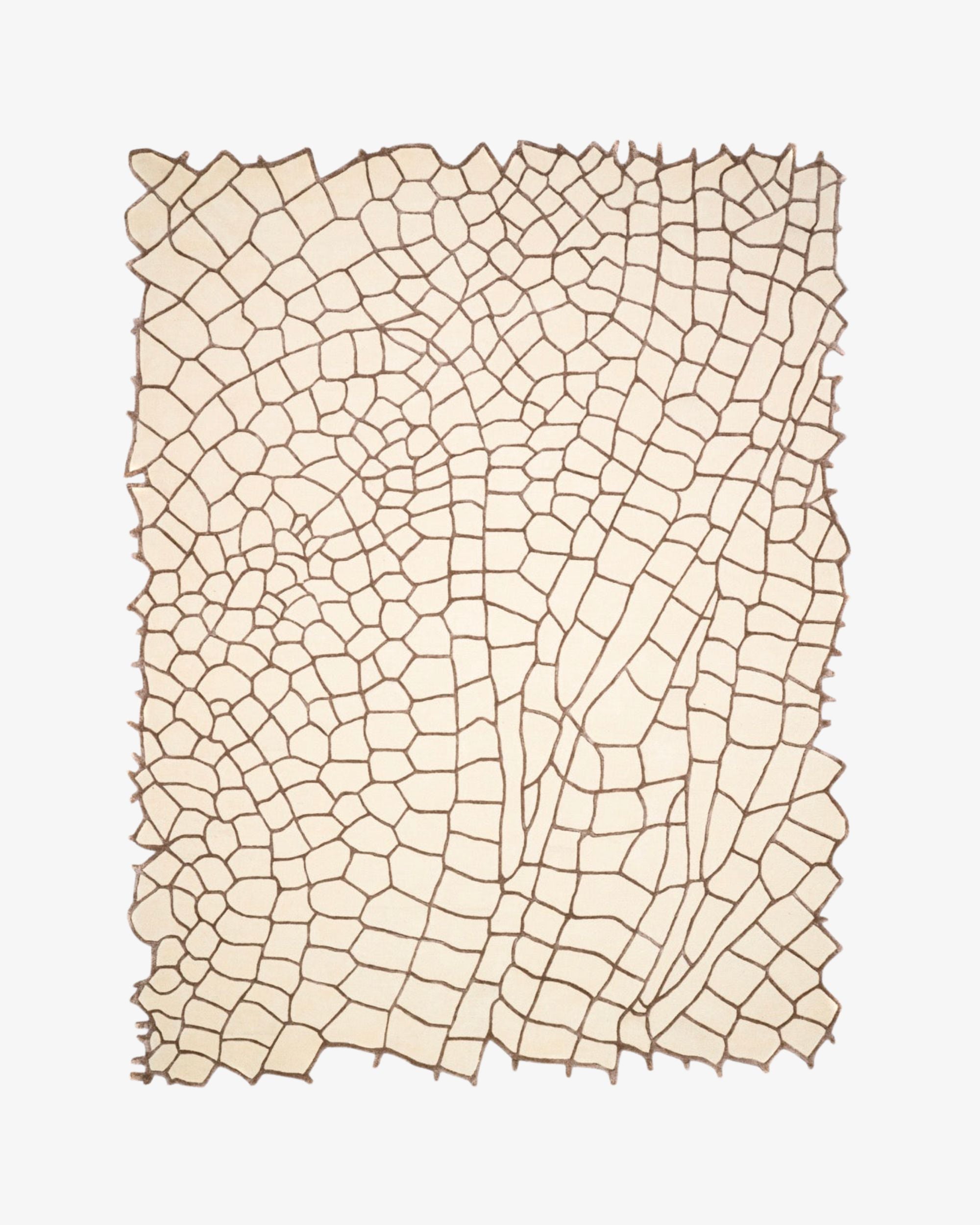
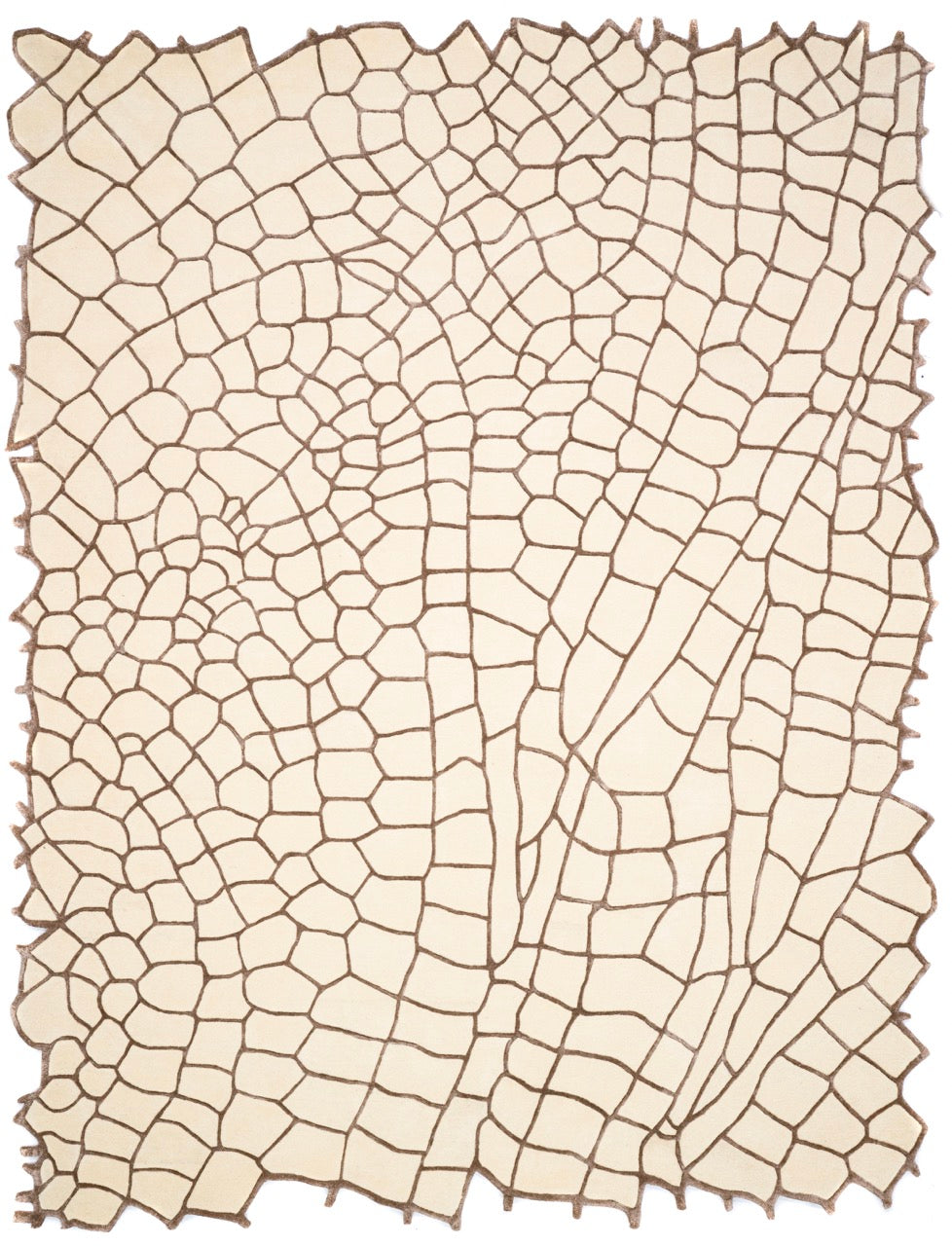
| Empreinte Rug | Marie Ducept x Rugberry | New Zealand wool, Botanical Silk | Hand tufted, 14 to 16 mm | 9x12.5 ft | ₹1,40,000 |
| Congrand Wool Rug | Nina Brunn x Rugberry | New Zealand wool | Hand tufted, 14 to 16 mm | 5x8 to 12x15 ft | From ₹29,600 |
| Amal Rug | Khaled Hashem x Rugberry | New Zealand wool, Botanical Silk | Hand tufted, 14 to 16 mm | One size | ₹38,400 |
| Insignia Wool & Silk Rug | Studio Collection | New Zealand wool, Botanical Silk | Handloom, 14 to 16 mm | 5x8 to 12x15 ft | From ₹32,000 |
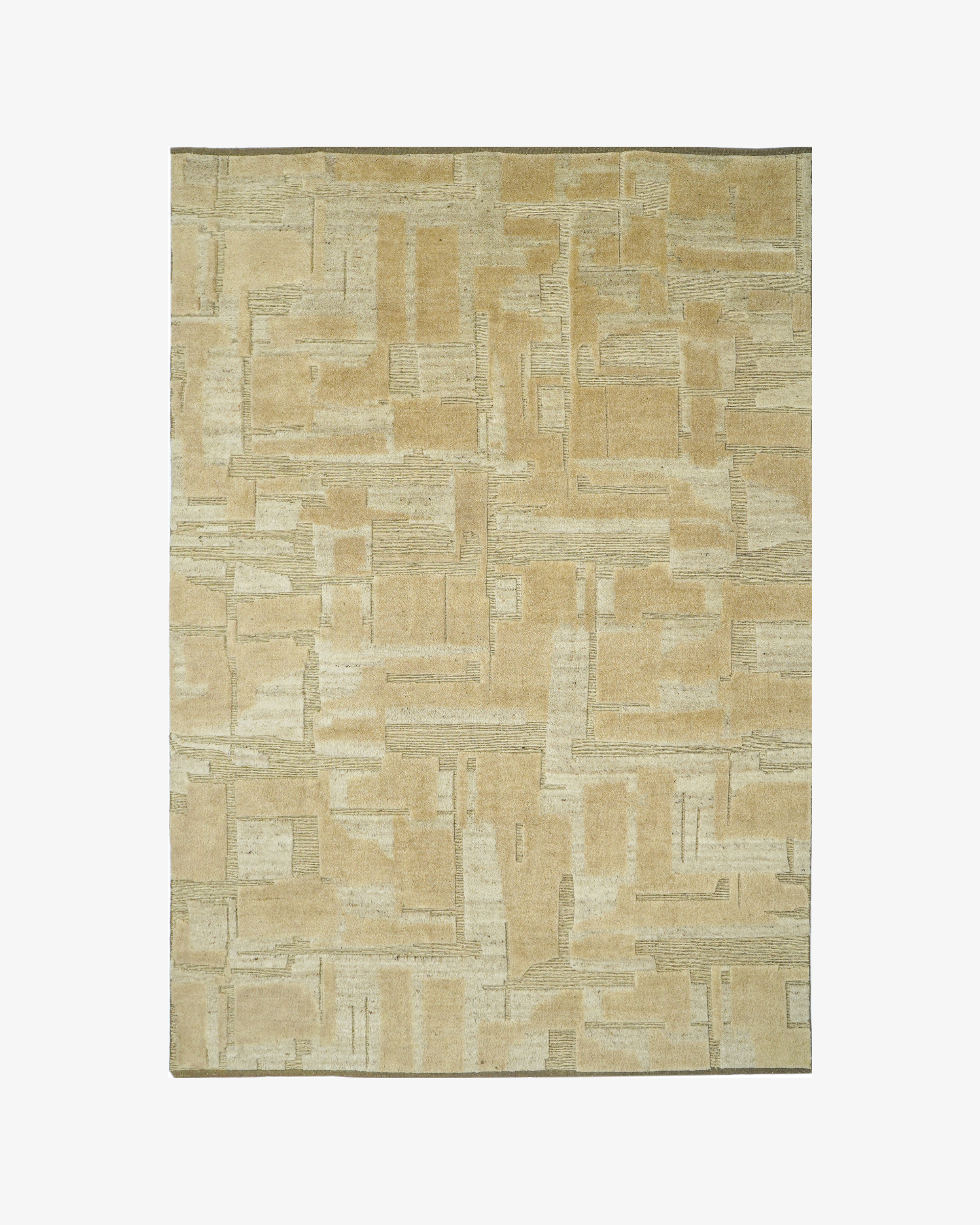
| Stratum Knotted Rug | Studio | New Zealand wool | Hand knotted | 9x12 ft | ₹1,40,000 |
The verdict: for a statement living room, choose a large collaboration piece such as the Empreinte Rug. For a room that must also take daily life, choose a Studio piece in six sizes, such as Insignia, or the hand knotted Stratum Knotted Rug in Dune for the longest life.
The collaborations each have their own page: Marie Ducept x Rugberry, Khaled Hashem x Rugberry and Nina Brunn x Rugberry.
Step 6: What provenance should a designer rug come with?
A designer rug should come with a clear record of what it is: fibre, grade, origin, character, construction, technique, where it was made and how to care for it. Rugberry calls this the provenance card, eight facts that let you compare rugs the way you would compare cloth.
The card protects you as a buyer. It tells you whether a sheen is silk or Botanical Silk, whether a pile is knotted or tufted, and how the rug should be cleaned. It also helps years later, when you want to match a second rug or have the first one restored.
Behind the card stands a weaving family since 1947, three generations at the loom. That lineage is the proof, not the pitch. What matters for your room is the fibre on the card.
Step 7: Should you buy the design as listed or customise it?
Customise a designer rug when the listed size or colour does not suit your room, because a design that fits only most of the brief will always look slightly wrong. Rugberry makes any Studio design to measure in any size, shape or colour.
The Rugberry Design Lab, an online tool on rugberry.in, lets you recolour a Rugberry rug or upload your own design. Designers and architects can work through the Rugberry trade programme, a professional account with one trade rate. The customisable rugs collection lists which pieces can be changed.
If you are unsure, see the rugs in person first. Rugberry rugs are on view at the Noida Experiential Centre and at partner stores listed on rugberry.in. Our note on designer rug collaborations explains how those pieces come together.
What mistakes do people make when buying a designer rug?
The most common mistake is choosing the design first and the size last, which leaves a beautiful rug floating in the wrong place. The second is buying a delicate fibre for a room with heavy traffic.
- Too small: a designer rug that does not reach the seating looks like a mat. Size up rather than down.
- Wrong fibre for the room: Botanical Silk in a dining room or an entrance will mark quickly. Keep it for low traffic rooms.
- Ignoring the floor: a pale rug on pale marble disappears, and a busy rug on patterned tile fights it.
- Judging from a screen: sheen and carving flatten in photographs. See a swatch or the rug itself.
- No underlay: on stone and tile, an underlay stops creep and protects both rug and floor.
Each of these is easy to avoid with the brief in Step 1 and a swatch in your own light. Our list of rug size mistakes covers the sizing side in more detail.
A last point on value. A designer rug should be judged per year of use, not per purchase. A hand knotted or well made handloom wool rug that serves a living room for fifteen years often costs less per year than two cheaper rugs replaced along the way.
Frequently asked questions
How do I know if a designer rug is worth the price?
Check that the rug names its fibre, construction and thickness, and that the design reads both from a distance and up close. Rugberry lists those facts on every product page so the price can be judged against the material.
Which designers have collaborated with Rugberry?
Rugberry has collaborated with Marie Ducept, Khaled Hashem and Nina Brunn. Their rugs are listed on rugberry.in in the collaboration collections, in New Zealand wool and Botanical Silk.
Can a designer rug be made in a custom size?
Yes. Rugberry makes its designs to measure in any size, shape or colour, and the Rugberry Design Lab lets you recolour a rug or upload your own design online.
What is the best construction for a designer rug?
Hand tufting suits designs with carving and changes of pile height, handloom suits calm, even surfaces, and hand knotting gives the densest and longest lasting pile. The right one depends on the design and the room's traffic.
Do interior designers get trade pricing at Rugberry?
Yes. Rugberry runs a trade programme for interior designers and architects, a professional account with one trade rate, plus swatches and made to measure orders for projects.
Brief first, fibre second, design third. Material first.




Leave a comment
This site is protected by hCaptcha and the hCaptcha Privacy Policy and Terms of Service apply.