


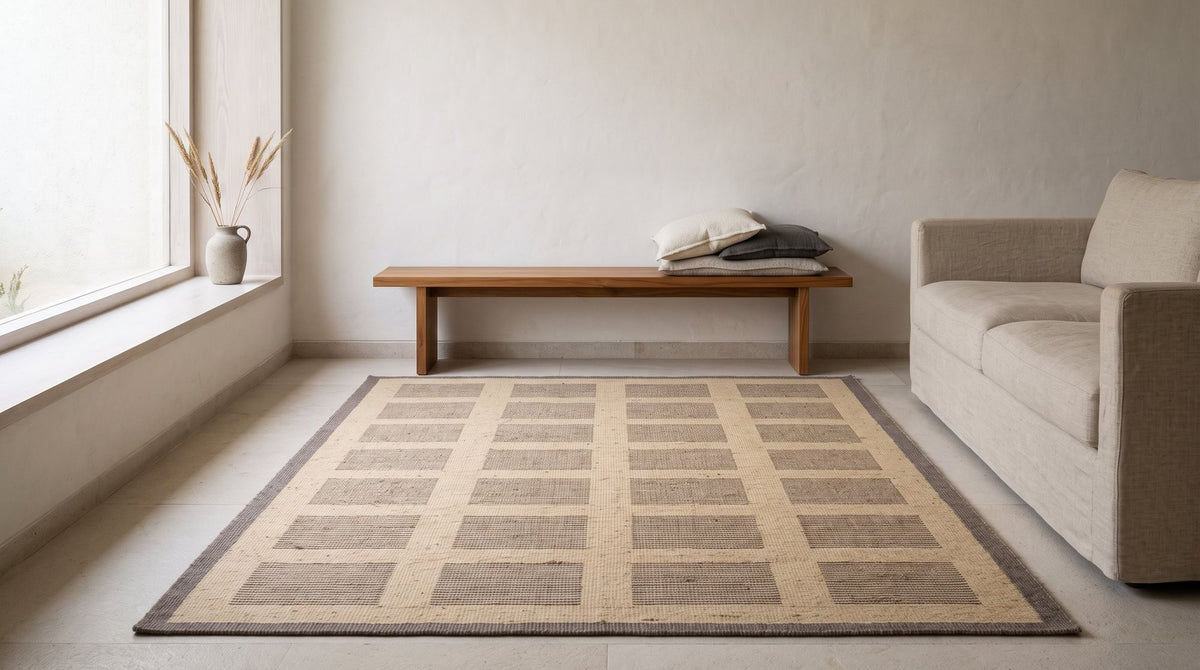
Handwoven Flatweave Rugs Explained
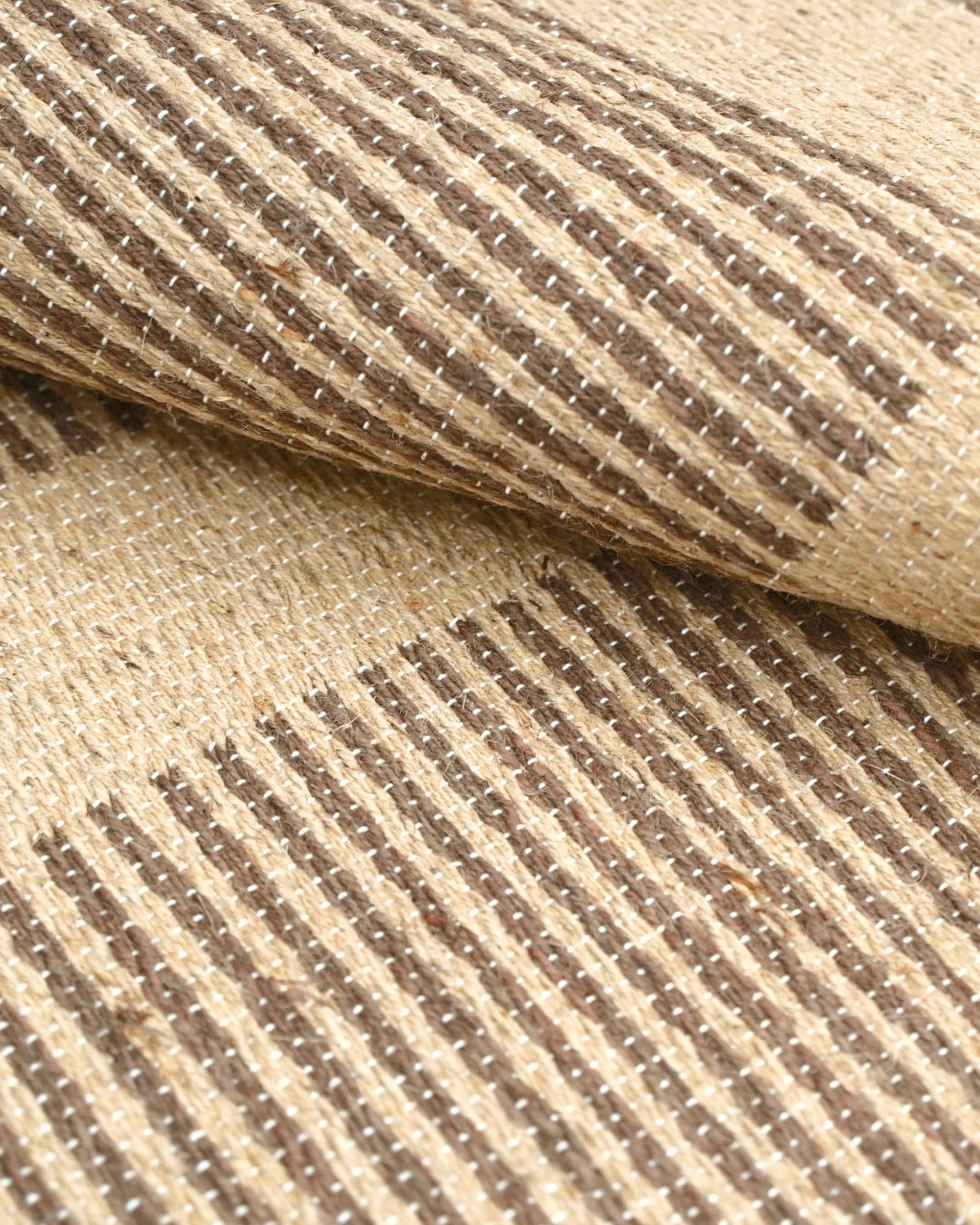
A handwoven flatweave is a rug made only of warp and weft, woven tightly on a loom so that nothing stands up as pile. The surface you walk on is the weave itself, which makes a flatweave thin, firm and often usable on both sides.
In short
- A flatweave rug has no pile: the weft yarn is packed tightly over and under the warp, and that woven surface is what you walk on.
- The cotton dhurrie found in many Indian homes is a flatweave, and so are kilims.
- Flatweave rugs are thinner and lighter than pile rugs, so they suit doorways, dining rooms and homes that move rugs often.
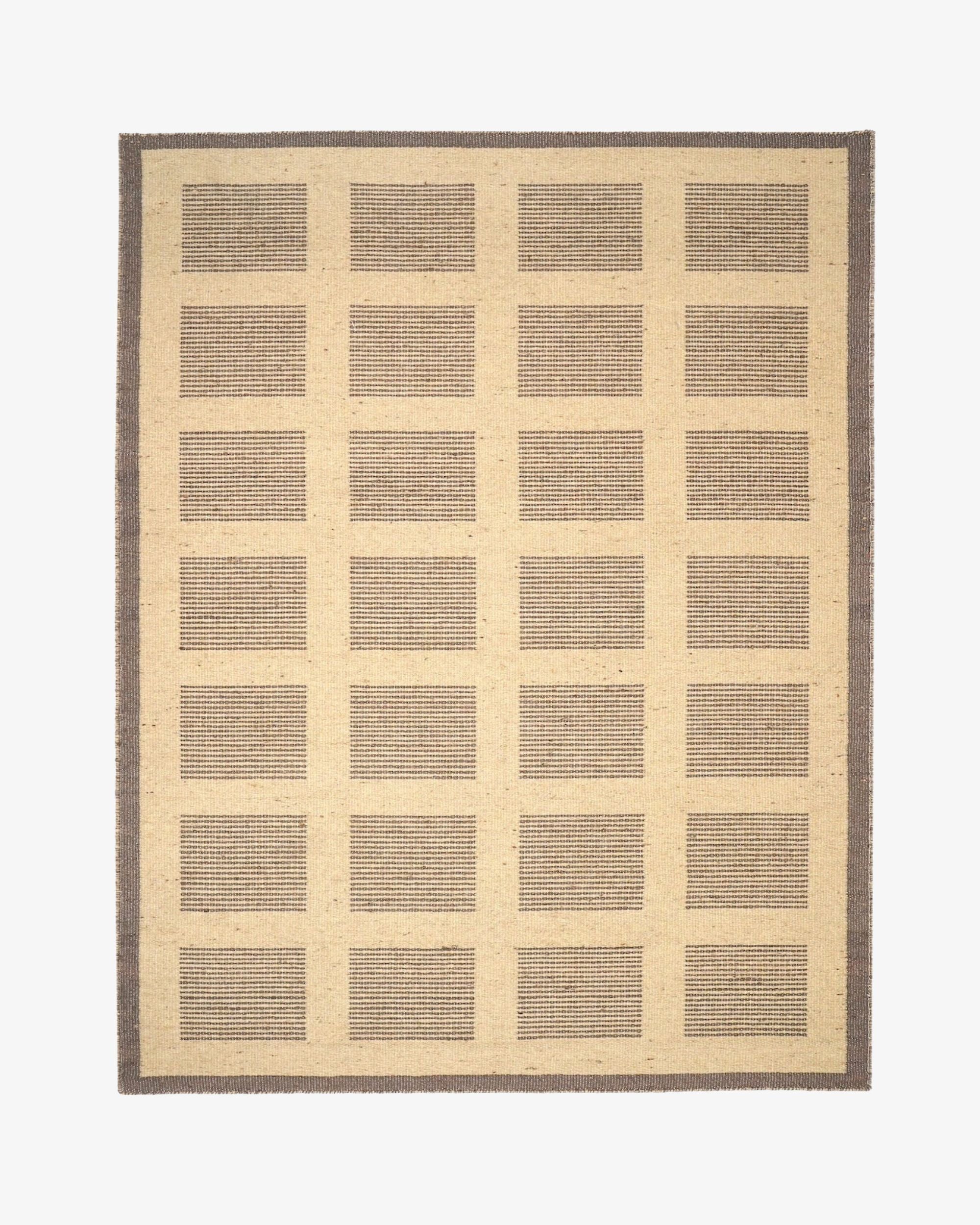
- At Rugberry, handwoven flatweaves include the Sandstorm Reversible Rug from about ₹24,000 and the Kora Jute Rug from about ₹28,000 in 5x8 ft.
Most Indian homes have owned one without calling it that. The striped dhurrie rolled out for guests, folded away after the function, is the oldest flatweave most of us know.
What makes a rug a flatweave?
A rug is a flatweave when its face is made by the weft alone, beaten down so firmly over the warp that it hides it. There are no knots and no tufts, so there is nothing to crush or flatten.


You can test this on any rug. Run a fingernail across the surface: on a flatweave it rides over ridges of weft, on a pile rug it sinks between yarn ends. Fold a corner back, and a flatweave bends like heavy cloth, showing the same weave on both faces.
That is the whole difference from a pile rug. A pile rug adds a layer of yarn ends on top of the woven base, and a flatweave stops at the base.
How is a flatweave different from a dhurrie or a kilim?
A dhurrie and a kilim are both flatweaves, named for where and how they are traditionally made. A dhurrie is the Indian cotton or wool flatweave, usually in bands and simple geometry, and a kilim is a tapestry woven flatweave from further west.


A modern Rugberry handwoven flatweave uses the same structure with different yarns. Jute, wool and recycled fibres all change how heavy the rug feels and how it handles daily use. Our post on dhurries and rugs covers the Indian tradition in more depth.
What does a jute flatweave feel like?
A jute flatweave feels firm and textured, with the natural irregularity of a plant fibre under bare feet. It is not soft, and it is not meant to be.
The Kora Jute Rug is handwoven in jute, plant-spun and hard-wearing, and better looking as it ages. It starts from about ₹28,000 in 5x8 ft and comes in 6x9 and 8x10 ft. For an entrance where shoes come off, choose a jute flatweave over a soft pile rug, because grit falls through the weave instead of grinding into a pile.
Why are some flatweaves reversible?
A flatweave can be reversible because the weft shows on both faces, so there is no plain back. When one face fades in sun or marks in use, you turn the rug over.


The Sandstorm Reversible Rug is handwoven in recycled and natural fibres, flat and light, with two usable faces. It starts from about ₹24,000 in 5x8 ft. Our earlier post on Rugberry reversible rugs shows how the two sides differ.
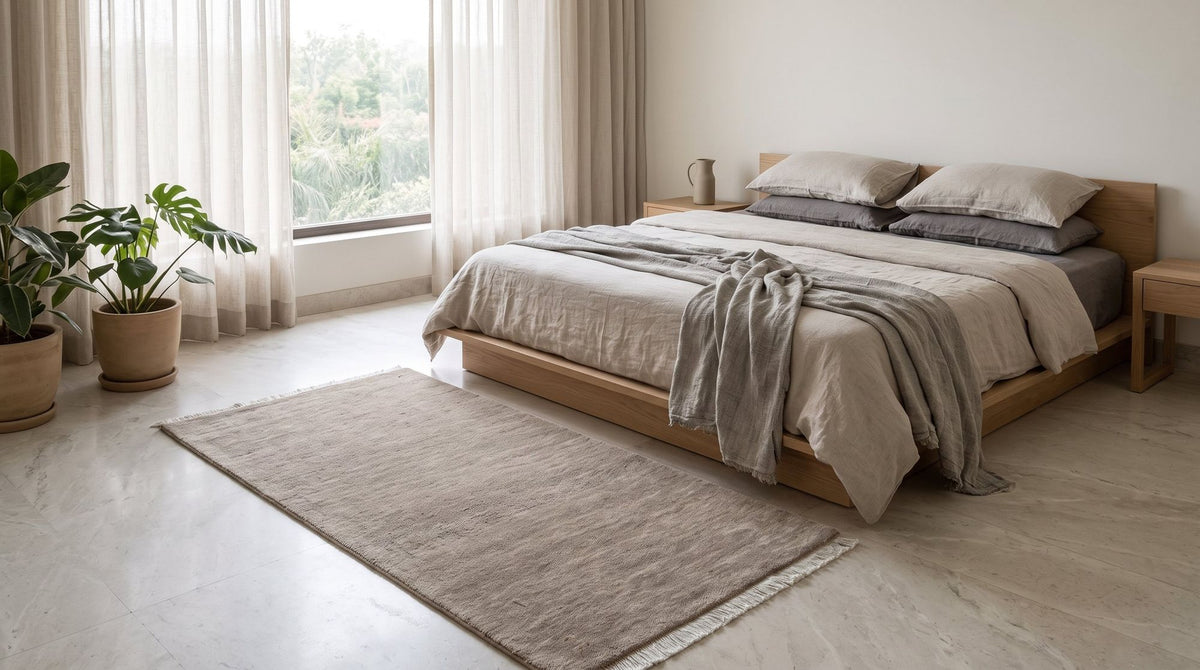
A flatweave stops at the woven base, so there is no pile to crush, flatten or trap grit.
Is a flatweave always pile free?
Almost always, though some handwoven rugs sit between flat and pile. A close, low weave can be a little raised without having a true cut pile.

The Cobble Wool Rug is handwoven in wool and described as close and even, flatter than a tufted pile. It shows how a handwoven rug can feel warmer than jute while staying low. It starts from about ₹31,000 in 5x8 ft.
Where does a flatweave work in an Indian home?
A flatweave works best where a thick rug would be a nuisance: under a dining table, inside a door that opens over the rug, in a passage, or on a floor that is mopped daily. It also rolls up small for storage before guests arrive or during a long trip.

- Dining rooms. Chair legs slide over a flat surface and do not catch.
- Doorways. A thin rug clears most door gaps, which a deep pile may not.
- Rented homes. A flatweave is light, so it moves easily between flats.
Use a thin rug underlay on marble or vitrified tile, since a flatweave is light enough to slide on a polished floor. Every Rugberry flatweave named here can be made in any size to order, which helps in narrow passages that standard sizes do not fit.
For a joint family home that hosts often, a flatweave is also the practical rug to roll out on the floor for extra seating during a puja or a festive lunch, then roll back once guests leave.
Frequently asked questions
Is a flatweave rug comfortable underfoot?
A flatweave rug is firm rather than cushioned, because it has no pile. An underlay adds softness and grip if you want both.
Can a flatweave rug be washed?
Flatweaves are easier to clean than pile rugs because dirt sits on the surface. Wool and recycled fibre flatweaves handle careful spot cleaning, while jute should be kept dry and cleaned with minimal water.
Does a flatweave rug shed?
A flatweave sheds much less than a pile rug, since there are no cut yarn ends on the surface. Jute can release a little fibre dust in the first weeks.
Warp, weft and nothing more. Material first, and the handwoven collection when you want to see the range.





Leave a comment
This site is protected by hCaptcha and the hCaptcha Privacy Policy and Terms of Service apply.