

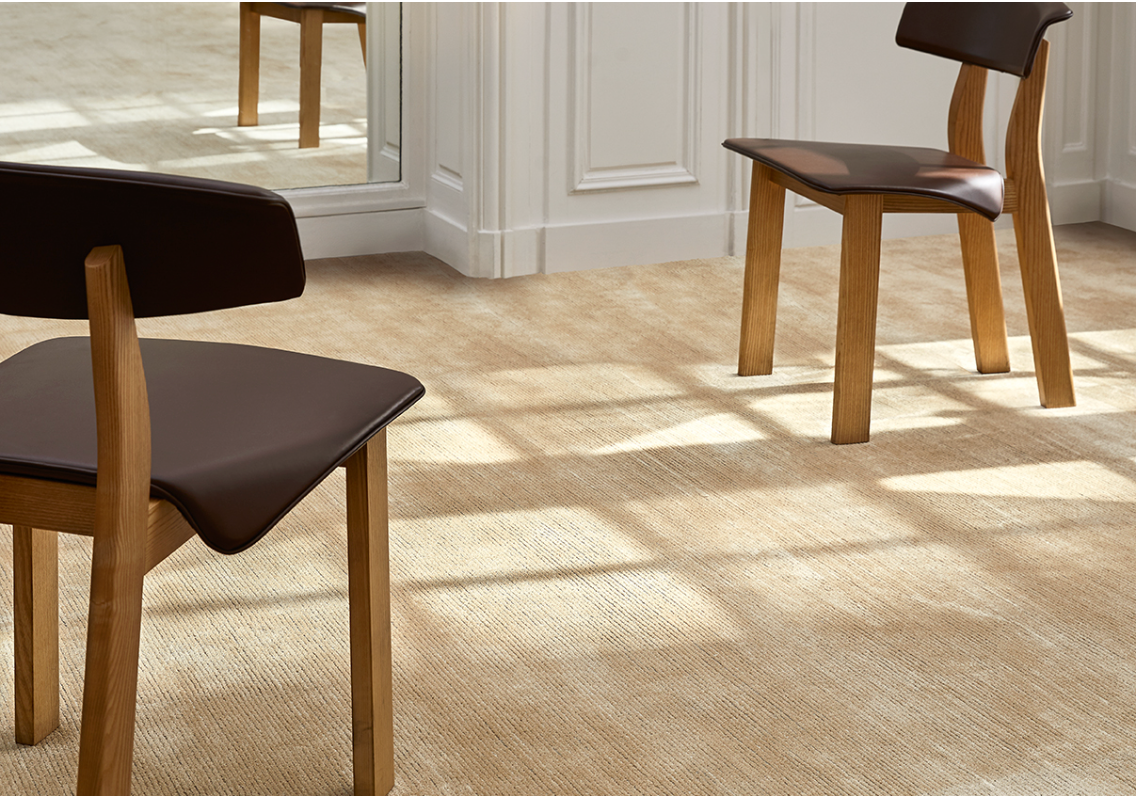

Dhurrie vs Rug: What Is the Difference
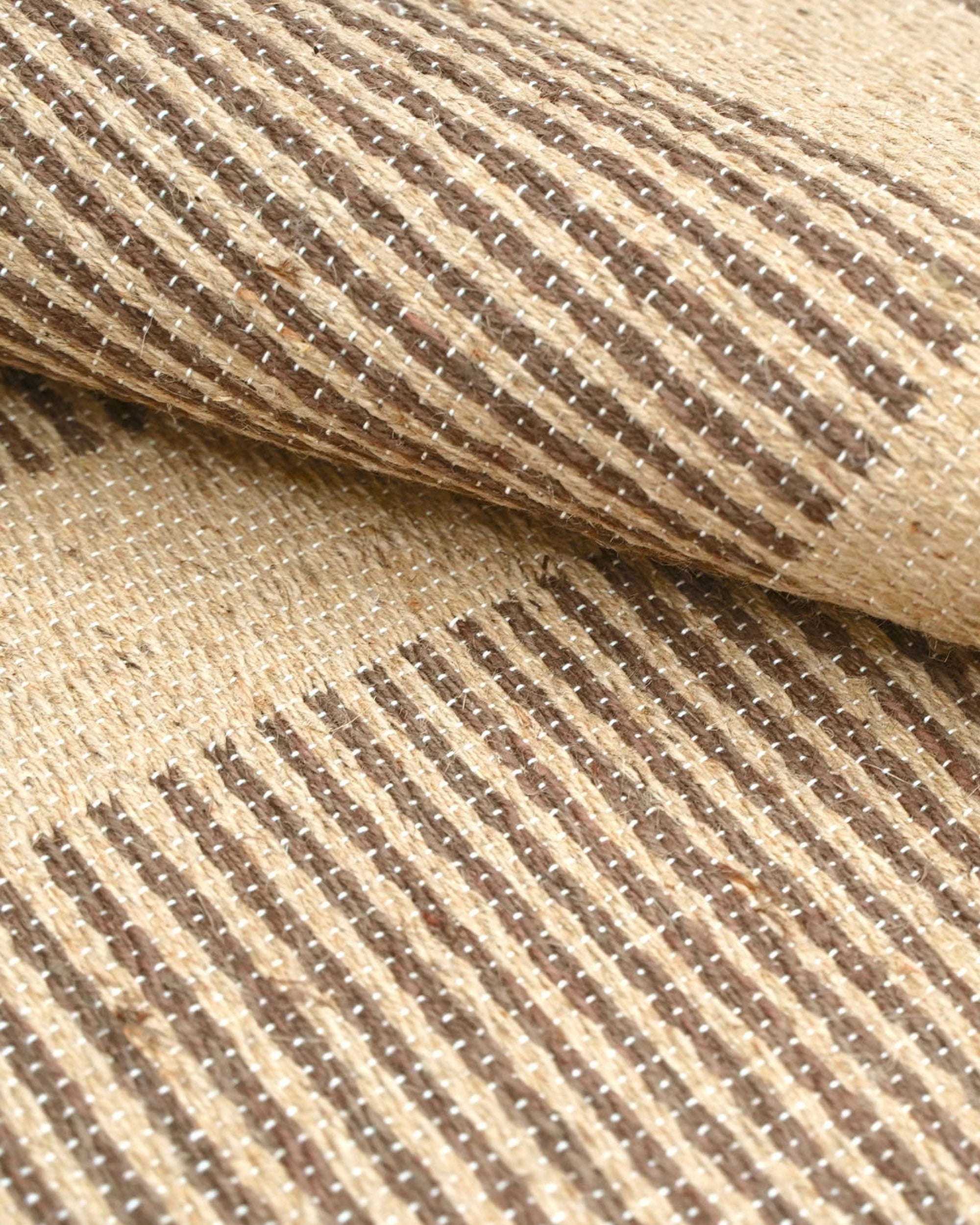
A dhurrie is a flat woven floor covering with no pile: its pattern is made by the weft threads themselves, so both faces are usually usable. A pile rug has yarn standing up from a base, which makes it thicker, softer and heavier.
In short
- A dhurrie is a flatweave, meaning its colour and pattern come from weft threads woven over and under the warp, with no pile standing above the surface.
- A pile rug, whether hand knotted, hand tufted or handloom, has yarn ends standing above the base, which gives softness, depth and warmth underfoot.
- Dhurries are light, easy to lift and shake out, and often reversible, which suits Indian homes with daily sweeping and floor seating.
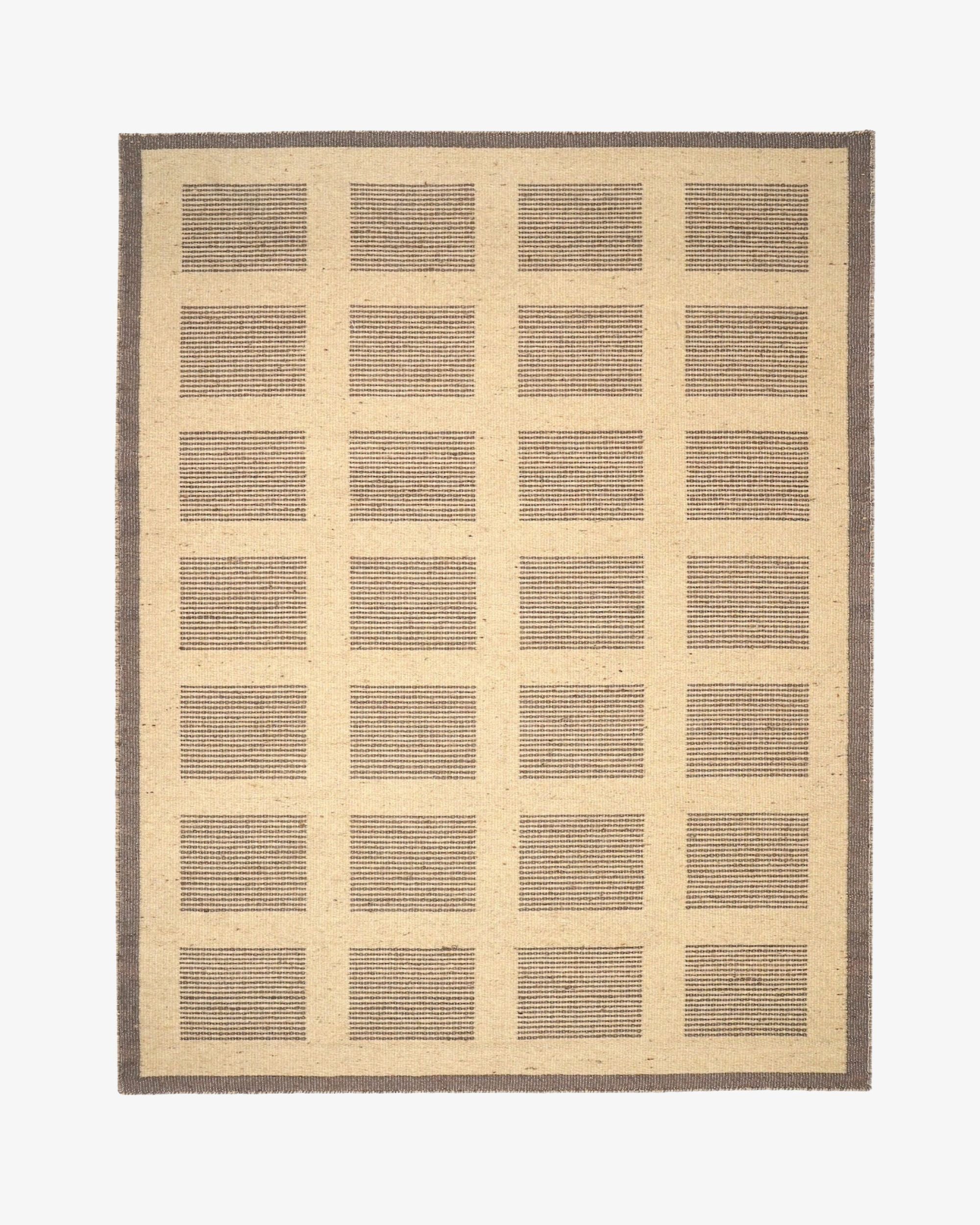
- Rugberry flat rugs such as the Sandstorm Reversible Rug share the flatweave structure but are handwoven in recycled and natural fibres rather than the classic cotton of a dhurrie.
What is a dhurrie?
A dhurrie is a flat woven floor covering from the Indian subcontinent, made on a loom with no knots and no pile. The spelling varies, durrie, dhurry or dari, and in many homes it is simply the dari spread out for guests or a puja.


Classic dhurries are woven in cotton, sometimes in wool or jute, and often carry bold stripes or geometric bands. Because the pattern is woven through, the back is usually a mirror of the front.
A dhurrie is light enough for one person to lift, fold and carry to the terrace for a shake. That everyday handling is a large part of why dhurries are in so many Indian homes.
How is a dhurrie different from a pile rug?
The difference is the surface: a dhurrie is flat, while a pile rug has yarn standing up from its base.


| Dhurrie or flatweave | Pile rug | |
|---|---|---|
| Surface | Flat, woven pattern | Raised pile, cut or loop |
| Thickness | Thin | From low to deep pile |
| Weight | Light, can be folded | Heavier, rolled for moving |
| Reversible | Usually | Rarely |
| Feel | Firm and cool | Soft and warmer |
| Daily care | Shake and spot clean | Vacuum along the pile |
| On smooth tiles | Moves easily, needs an underlay | Grips better by its weight |
For a floor seating area or a room swept every morning, choose a flatweave over a pile rug, because it lies flat, lifts in one movement and takes daily handling.
Where do flat rugs fit in the Rugberry range?
The Rugberry handwoven range includes flat, two faced rugs and textured jute, alongside handloom wool with a low surface. These share the flat build of a dhurrie, but they are sold as rugs, by their fibre and weave.


The Sandstorm Reversible Rug is handwoven in recycled and natural fibres, flat and light, with two usable faces, from about ₹24,000 in 5x8 ft. The Kora Jute Rug is handwoven in jute, firm and textured, from about ₹28,000.
The Grain Wool Rug in flax sits between the two worlds. It is handloom woven in New Zealand wool with a low, closely worked surface, so it feels like wool but stays low enough for dining chairs to slide over it.
A dhurrie is built for daily handling. A pile rug is built for comfort. Many homes need both.
Which is better for an Indian home?
A flatweave is better for heavy daily use, floor seating and homes that sweep every day, while a pile rug is better where comfort, warmth and quiet matter.

- Floor seating and festivals. When the family sits on the floor for a puja or a meal, a flat surface stays level under thalis and cushions.
- Jhadu and pochha. A flatweave lifts in one movement so the floor beneath can be mopped, then goes straight back once dry.
- Summer. A flat surface feels cooler underfoot in May and June than a dense pile.
- Bedrooms and AC rooms. A pile rug softens footsteps and feels warmer on a cold marble floor in winter.
Many homes use both: a flatweave in the living area that sees guests, and a pile rug beside the bed. Our flatweave vs pile rug comparison goes further into the trade offs.
How do you care for a flat rug compared with a pile rug?
A flat rug is shaken out and spot cleaned, while a pile rug is vacuumed in the direction of the pile and washed professionally when needed.

Flat rugs travel on polished tiles, so use an underlay, especially in homes with children and elders. Turn a reversible rug every few months so both faces wear and fade evenly, a point our note on Rugberry reversible rugs explains well.
Jute should stay dry, so keep a jute rug away from wet balconies and freshly mopped floors in the monsoon.
Frequently asked questions
Is a dhurrie a rug?
Yes, a dhurrie is a type of rug, a flat woven one with no pile. In everyday English, rug often means a pile rug, which is why the two are compared.
Can a dhurrie be used in a living room?
Yes. A dhurrie or other flatweave works well in a living room, especially with floor seating or small children, as long as an underlay stops it sliding on tiles.
Are dhurries reversible?
Most are, because the pattern is woven through and the back mirrors the front. Turning one regularly spreads wear and sun fading across both faces.
Is a dhurrie cheaper than a pile rug?
Usually, because a flatweave uses less yarn and has no pile to finish. Price still depends on the fibre, the size and the fineness of the weave.
Choose flat for handling and pile for comfort. See the hand woven rugs. Material first.





Leave a comment
This site is protected by hCaptcha and the hCaptcha Privacy Policy and Terms of Service apply.