



Hand Tufted vs Machine Made: What You Are Paying For
A hand tufted rug costs more than a machine made rug because a person works every row of yarn into it with a hand held tool, usually in a denser, natural fibre, and the design can be carved, shaped or recoloured to order. A machine made rug is faster and cheaper to produce, and suits short term or budget needs.
In short
- A hand tufted rug is made by a person pushing yarn through a stretched backing cloth with a hand held tufting gun, then shearing, carving and finishing it by hand.
- Most machine made rugs are woven on power looms, often in synthetic yarn, and are made in fixed designs and sizes at high speed.
- Hand tufting allows carving, mixed pile heights, wool and Botanical Silk in one rug, and any size or colour to order.
- Rugberry's hand tufted Arctic Wool Rug in New Zealand wool costs ₹37,000 for 5x8 ft, regular price ex GST at the time of writing.
What is the difference between hand tufted and machine made?
The difference is who, or what, places the yarn. In a hand tufted rug a person guides a tufting gun across a stretched cloth, following the design line by line; in a machine made rug a power loom weaves or tufts the whole width at once, at speed, from a programmed pattern.
Both methods can produce a rug that looks neat in a product photo. The differences appear in how the rug feels, how it is finished at the edges, what fibre it uses and how it ages after a few monsoons.
A machine made rug is not a bad rug. It is a different product, designed for low cost and quick replacement. A rented flat, a children's play corner or a temporary office may be well served by one.
A hand tufted rug is made for a room you intend to live with for years. You are paying for hours of skilled work, more and better fibre, and a design that can be shaped to your room. Rugberry's guide to why handmade rugs cost more gives the wider picture.
How is a hand tufted rug made?
A hand tufted rug is made in stages: the design is drawn on a cloth stretched on a frame, a weaver fires yarn through it with a hand held tufting gun, the back is sealed with latex and covered with a second cloth, and the face is then sheared, carved and bound by hand.


Each stage takes judgement. The weaver sets the pile height, changes yarn colour at each line of the design and keeps the density even. Carving, where grooves are cut between colours or planes, is done afterwards with hand shears and gives the relief seen in rugs like Cavea.
The backing cloth and latex hold the tufts in place. That is why a hand tufted rug has a plain cloth back rather than a woven one, and why it should be cleaned by professionals rather than soaked at home.
A machine compresses most of these steps into one pass. It can be very consistent, but it cannot easily carve one plane deeper than another, mix wool and Botanical Silk line by line, or make one rug in a size nobody has ordered before.
What are you paying for in a hand tufted rug?
In a hand tufted rug you are paying for four things: hours of hand work, a denser pile, a natural fibre such as New Zealand wool, and finishing such as carving, shearing and binding. Each one shows in use more than in a photo.

| What you pay for | Hand tufted, Rugberry | Typical machine made | What it changes at home |
|---|---|---|---|
| Work | Many hours of hand tufting, shearing and carving per rug | Minutes of machine time per rug | Detail, relief and edges |
| Fibre | New Zealand wool, or wool and Botanical Silk | Often polypropylene or polyester, sometimes wool blends | Feel, recovery, ageing |
| Pile | 14 to 16 mm, dense | Varies, often lower and lighter | Spring underfoot, crushing |
| Design | Carving, mixed heights, any size or colour | Fixed patterns and sizes | Fit to your room |
| Finish | Hand sheared and bound | Machine cut and serged | Edge life, look of the border |
| Price, 5x8 ft | Arctic ₹37,000, Turmoil ₹31,000 | Usually much lower | Cost per year of use |
For a living room rug you plan to keep for ten years, choose hand tufted wool over machine made synthetic, because wool springs back from furniture and footfall while most synthetics flatten and cannot be restored.
These are list prices before GST at the time of writing, and a sale on the product page may show less.
How can you tell them apart at home?
You can tell a hand tufted rug from a machine made one with a three minute test: turn the rug over, part the pile, and look at the edge. Each tells you something a photo cannot.
- Turn a corner over. A hand tufted rug has a plain cloth back, with no pattern showing through. A power loom rug usually shows a tight, perfectly even grid of the pattern on its back.
- Part the pile. Push the pile apart with two fingers. In a dense hand tufted wool rug you see little of the base. In a lighter rug the base shows easily.
- Press and release. Press your palm into the pile for ten seconds. Good wool springs back almost at once; many synthetics stay flattened for a while.
- Look at the edge. A hand bound edge is wrapped and stitched, and follows any curve. A machine edge is often serged in one continuous overlock.
- Check the label. A good product page names the fibre, construction and pile height. Rugberry's guide to reading a rug spec sheet shows what to look for.
Rugberry's guide to handmade vs machine made rugs covers the backs of all four hand constructions in more detail, including knotted and handloom rugs.
Turn the corner, part the pile, press the palm. A rug tells you how it was made in three minutes.
Which Rugberry hand tufted rugs show the difference best?
The Rugberry rugs that show what hand tufting can do are those with carving, relief or sharp changes of colour, such as Cavea, Arctic and Turmoil, all hand tufted in New Zealand wool at 14 to 16 mm. Each shows a detail a power loom would struggle to make.


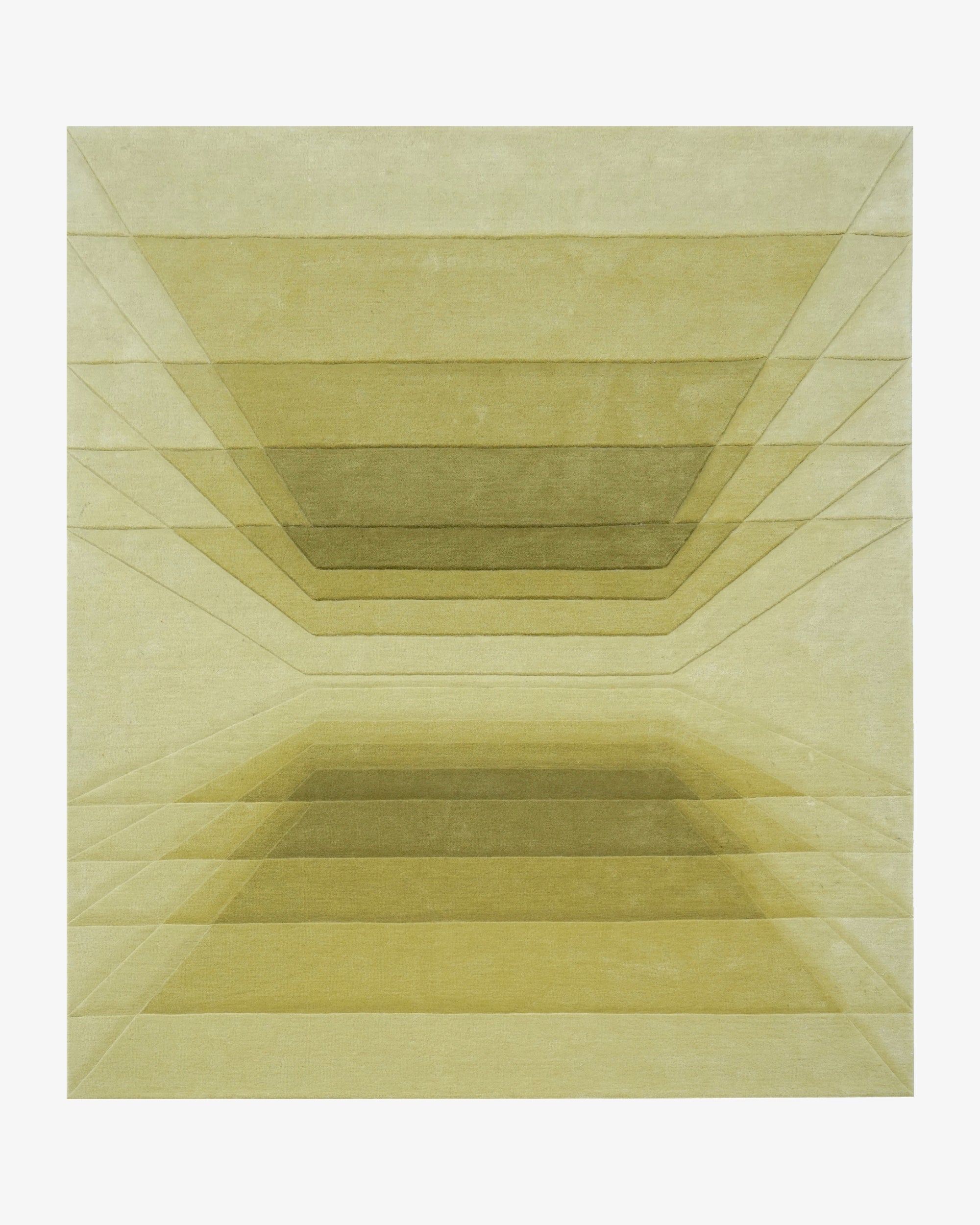
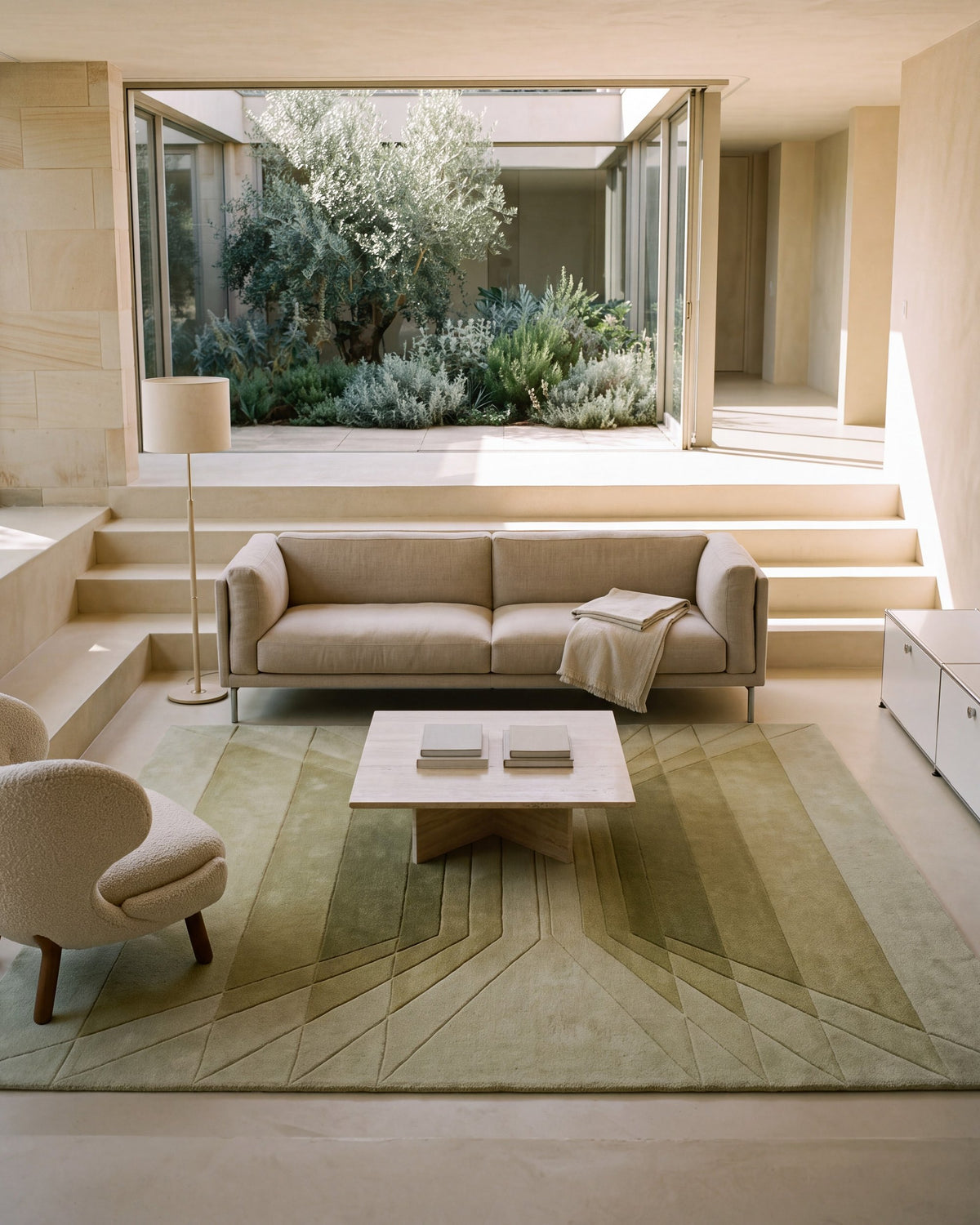
The Cavea Wool Rug is part of Rugberry's Lamina collection, where one colour is carved into layers. The carved grooves catch light at a low angle, which is exactly the hand finish a machine skips.
The Arctic Wool Rug places dark brushstroke marks on a pale field, each mark tufted to its own outline. Look closely at where black meets ivory: the line is crisp but slightly alive, the sign of a hand following a drawing.
The Turmoil Wool Rug is turbulent in surface and held to a single charcoal tone, from ₹31,000 for 5x8 ft. Its movement is tufted line by line, the kind of drawn detail a power loom struggles to follow.
How do you look after a hand tufted rug?
Look after a hand tufted rug by vacuuming it with suction only once or twice a week, turning it every three to six months and sending it for professional cleaning once a year. Never soak it or wash it at home, because water can weaken the latex that holds the tufts in the backing.


Expect some loose fibre in the first months. Short ends of wool from the cut pile work loose and settle in the vacuum bag. This is normal and slows down with time, unlike a loop that pulls out in a long strand.
If a single tuft stands up above the pile, trim it level with sharp scissors. Never pull it, since pulling can draw out the yarn beside it. Rugberry's glossary entry on sprouting explains why this happens.
Put a non-slip underlay beneath the rug on marble or vitrified tile, and furniture cups under heavy legs. A carved rug like Cavea also benefits from a soft brush along its grooves after vacuuming, so the relief stays crisp.
When does a machine made rug make sense?
A machine made rug makes sense when the rug is short term, low risk or likely to be damaged: a rented flat you will leave within a year, a children's craft corner, or a room where pets and paint are a daily event. In those rooms, cost per year matters more than longevity.

Think about cost per year rather than price. A hand tufted wool rug at ₹37,000 that serves a living room for ten years costs about ₹3,700 a year. A synthetic rug at a fraction of that price that flattens and is replaced every two or three years can end up close in cost, with more waste.
A hand tufted rug also gives you choices a machine made rug does not. Every Rugberry hand tufted design can be made in any size and colour, so the rug fits the room rather than the other way round. Rugberry's guide to how long a rug lasts compares the constructions over time.
For a first home, a sensible plan is one hand tufted wool rug for the living room, where it is seen and used most, and simpler rugs elsewhere until the home settles. Browse the hand tufted rugs to compare designs.
Frequently asked questions
Is hand tufted better than machine made?
Hand tufted is better for a rug you plan to keep for years, because it is usually denser, made in natural wool and can be carved or made to any size. A machine made rug is better for short term or low budget use.
Why are hand tufted rugs so expensive?
Hand tufted rugs cost more because a person tufts, shears, carves and binds each one by hand, often in New Zealand wool with a dense 14 to 16 mm pile. The price reflects hours of skilled work and more fibre per square foot.
Is a hand tufted rug handmade?
A hand tufted rug is handmade, since a person guides the tufting gun and finishes the rug by hand, but it is a different construction from hand knotting. Its back is a sealed backing cloth rather than a woven structure.
How long does a hand tufted wool rug last?
A hand tufted wool rug cared for with regular vacuuming, rotation and professional cleaning typically lasts many years in a living room. Its life depends on footfall, care and fibre more than on construction alone.
How can I tell if a rug is machine made?
A machine made rug often shows a tight, perfectly regular grid of the pattern on its back and a continuous serged edge. A hand tufted rug has a plain cloth back and a bound edge that follows any curve.
Turn it over before you trust the photo. Material first.




Leave a comment
This site is protected by hCaptcha and the hCaptcha Privacy Policy and Terms of Service apply.