



A Rug for a Home Gym or Workout Corner
A handmade rug is not a gym mat, so it should never go under weights, benches, a treadmill or a cycle. In a home gym, a rug belongs only in the stretching, yoga or cool down zone, where a low, firm wool or wool and jute weave of 7 to 14 mm makes the floor warmer and quieter.
In short
- A handmade wool or jute rug should not be used under free weights, a weight bench, a treadmill or an exercise cycle, because dropped weights and machine feet crush and tear the pile.
- In a home gym, a rug belongs in a separate zone for stretching, yoga, foam rolling and cool down, usually 5x8 ft or 6x9 ft.
- For yoga, place a yoga mat on top of a low, firm rug such as the Rugberry Grain at 12 to 14 mm or Cabra at 7 to 8 mm, because a mat on a deep pile feels unstable in balance poses.
- Rubber gym flooring or interlocking tiles should cover the weights and machine area, with the rug kept at least 2 ft away from it.
Can you put a handmade rug in a home gym?
You can put a handmade rug in a home gym, but only in the part of the room used for floor work and rest. A rug is a textile for bare feet and sitting, not an impact surface, and treating it as one ruins it quickly.

Many Indian homes now give a spare bedroom, a terrace room or a corner of the basement to exercise. A rubber floor and a mirror make it functional, and a rug in one corner makes it a room you want to spend time in, for stretching after a run or ten quiet minutes of breathing.
Rugberry makes rugs for living, not for lifting. This guide is honest about that, because the most useful advice for a home gym is where the rug should not go.
Where should a rug never go in a home gym?
A rug should never go under free weights, kettlebells, a weight bench, a squat rack, a treadmill, an exercise cycle, a rowing machine or a cross trainer. Each of these concentrates force on a small area, and a handmade pile cannot recover from it.
| Gym zone | Rug or not | What to use instead | Why |
|---|---|---|---|
| Free weights and dumbbells | No rug | Rubber tiles 15 to 20 mm | A dropped weight crushes and cuts pile |
| Treadmill, cycle, rower | No rug | Machine mat made for equipment | Machine feet tear pile; lint can reach the motor |
| Weight bench and rack | No rug | Rubber flooring | Bench feet dig in; sweat drips onto the rug |
| Jumping, skipping, HIIT | No rug | Rubber or a dedicated exercise mat | Rugs shift under fast lateral moves |
| Stretching and foam rolling | Yes | Low wool or wool and jute rug | Warm, quiet, comfortable for floor work |
| Yoga and breathing | Yes, with a yoga mat on top | Low, firm rug under the mat | Softens a hard floor without losing balance |
| Cool down and rest | Yes | Any low wool rug | Turns the corner into a calm room |
For a home gym, choose rubber flooring for weights and machines over any textile, because only rubber absorbs impact and wipes clean of sweat.
Machines also bring a hidden risk. A treadmill draws air through its motor housing, and fibre lifted from a rug beneath it can collect inside. Equipment makers usually ask for a hard or rubber surface for that reason.
Fast moves are the other danger. Skipping, burpees and lateral jumps on a rug can make it slide on a tiled floor, and a slipping rug in a workout is a fall waiting to happen.
Where does a rug belong in a workout room?
A rug belongs in a defined floor work zone, away from equipment, where you stretch, roll, practise yoga or rest. In most home gyms that is a corner or one end of the room, with a clear gap of at least 2 ft between the rug and the nearest machine or rubber tile.


A 5x8 ft rug gives room for one person to lie full length with arms outstretched. A 6x9 ft rug suits two people stretching side by side or a single long yoga mat with space around it.
Rubber where the weights land. Wool where the body rests.
Think of the rug as the edge between effort and rest. Many people find they stretch longer when the cool down spot is warm and quiet underfoot rather than cold tile, which is part of why a rug earns its place.
Keep the rug zone near a window or fan if you can. Fresh air helps a wool rug release the moisture it absorbs from a warm, sweaty room, and the space feels better to rest in.
Which rug works under a yoga mat?
A low, firm rug works best under a yoga mat. Choose a handloom wool of 12 to 14 mm or a wool and jute weave of 7 to 8 mm, and avoid deep plush or shag rugs, because a yoga mat on a deep pile wobbles in standing and balance poses.


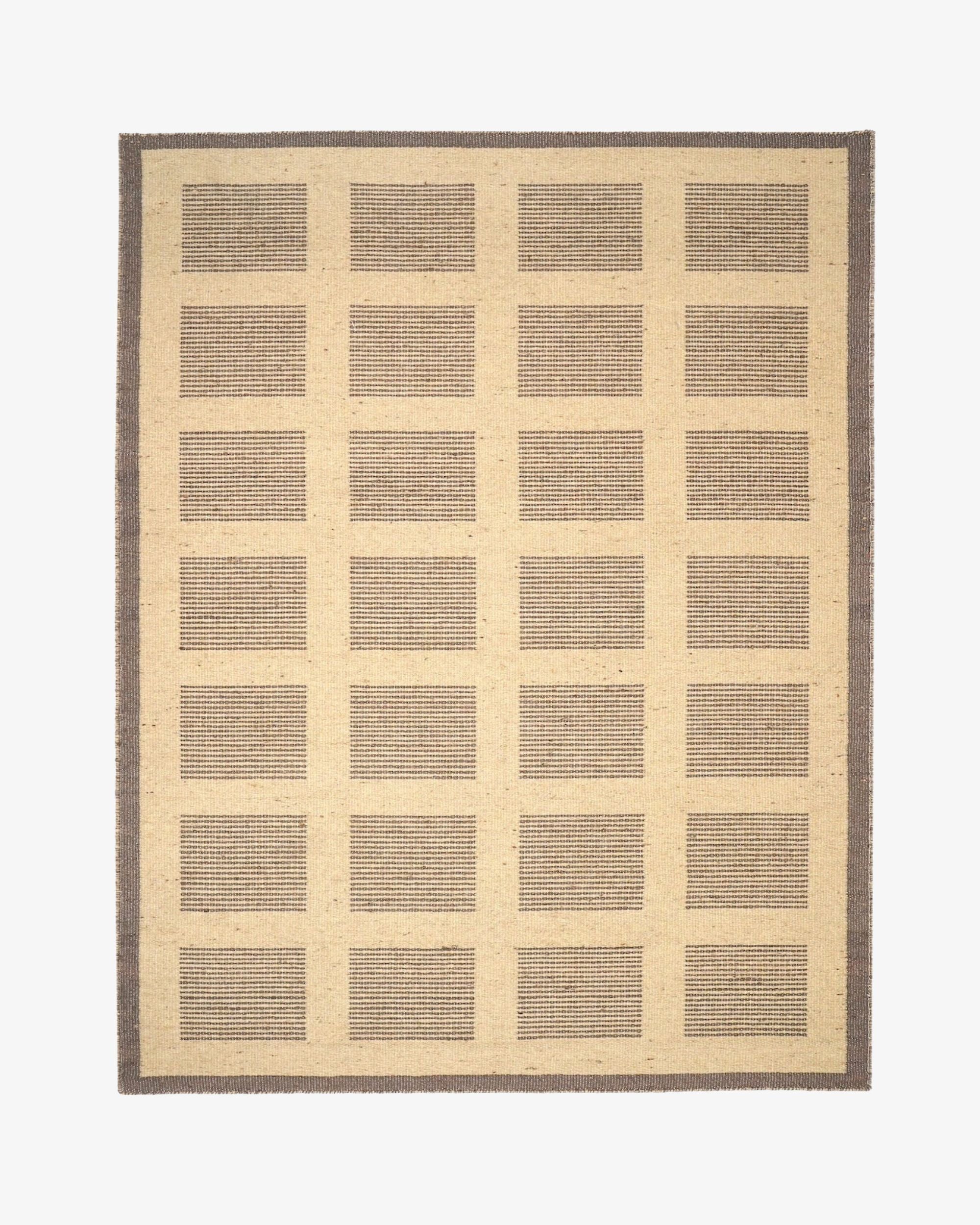
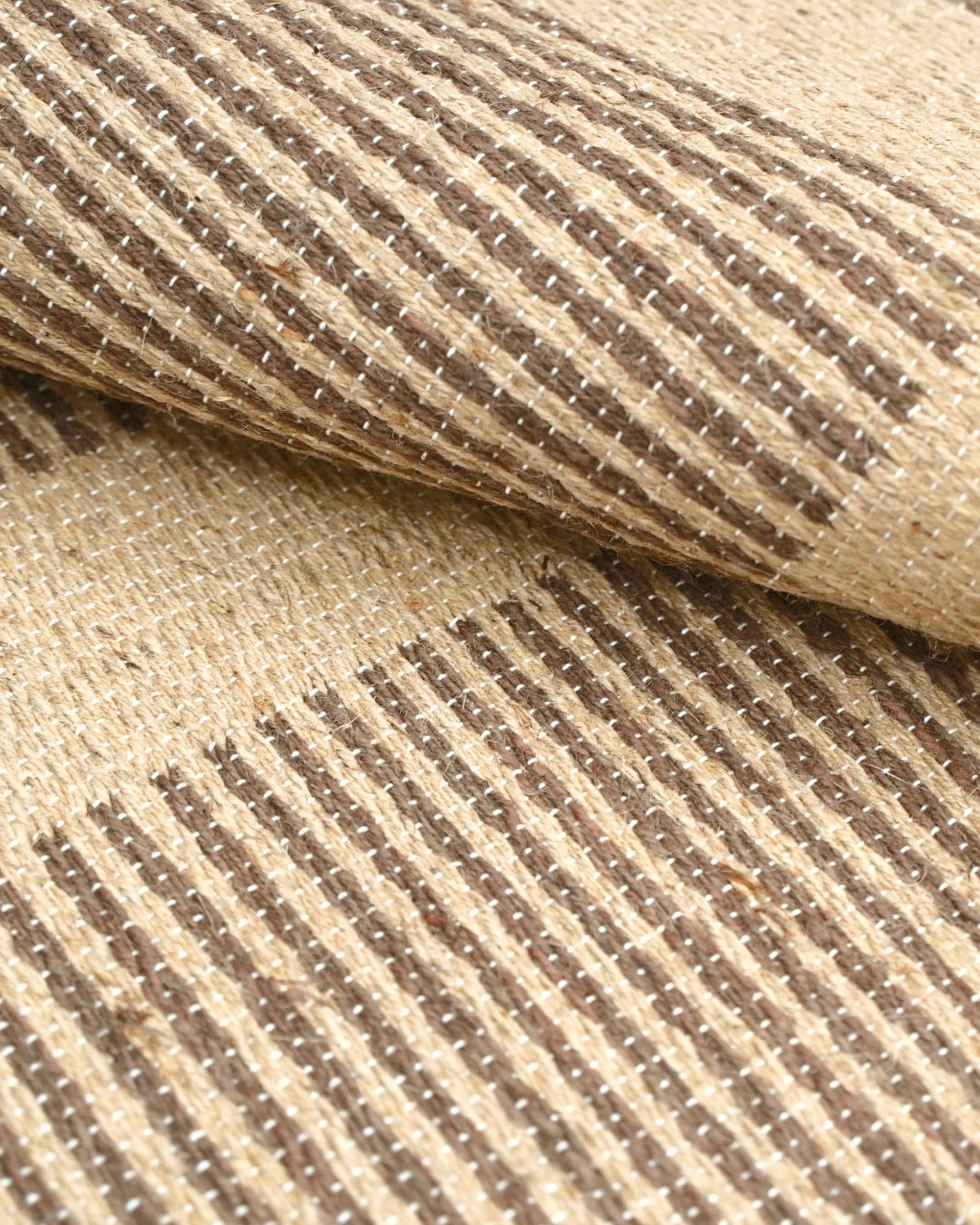
The Grain Wool Rug in Umber is handloom woven in New Zealand wool at 12 to 14 mm, a close, low surface in a deep earthy brown that forgives dust and the odd drop of water. Its regular price is ₹37,000 for 5x8 ft and ₹51,000 for 6x9 ft, ex GST at the time of writing.
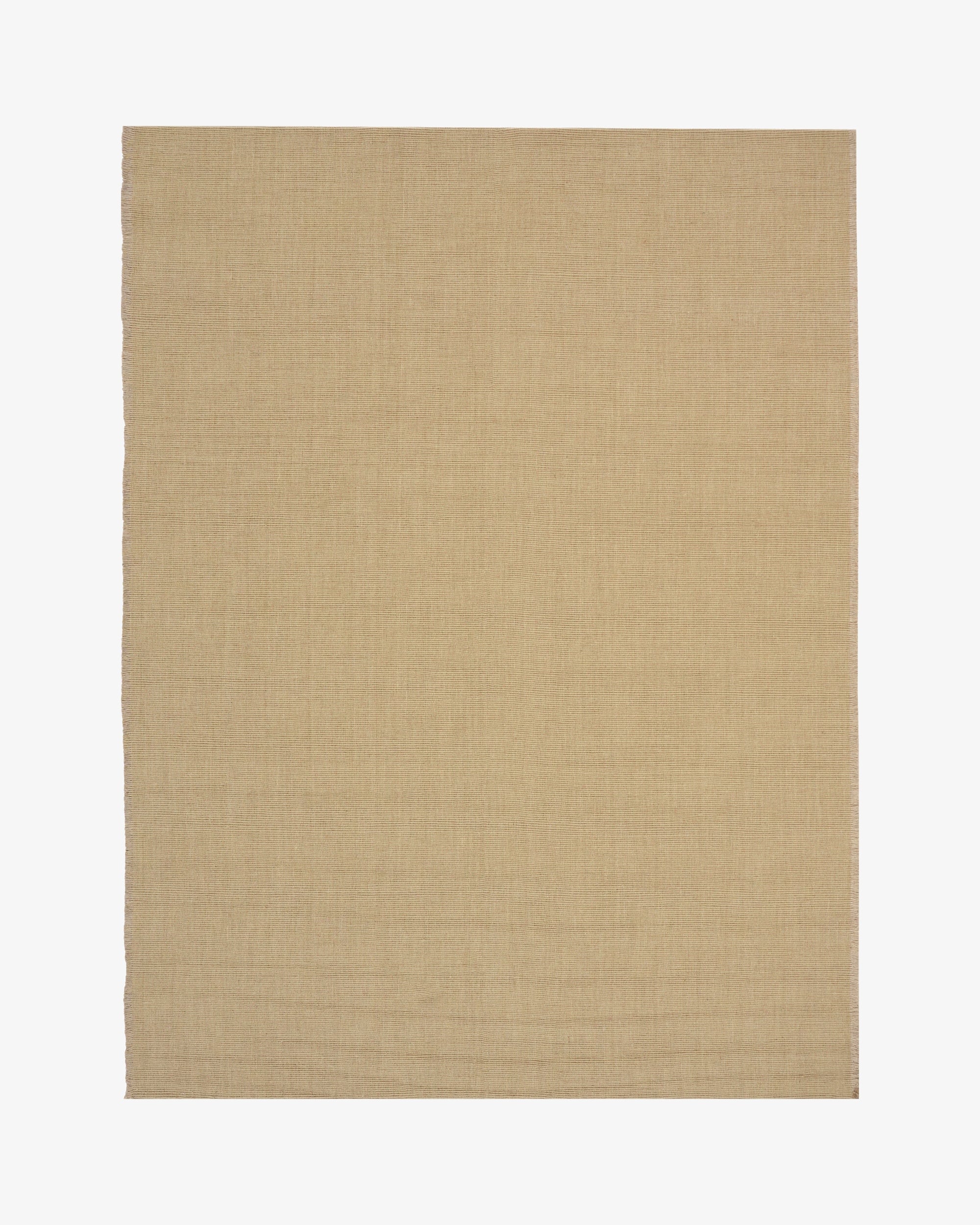
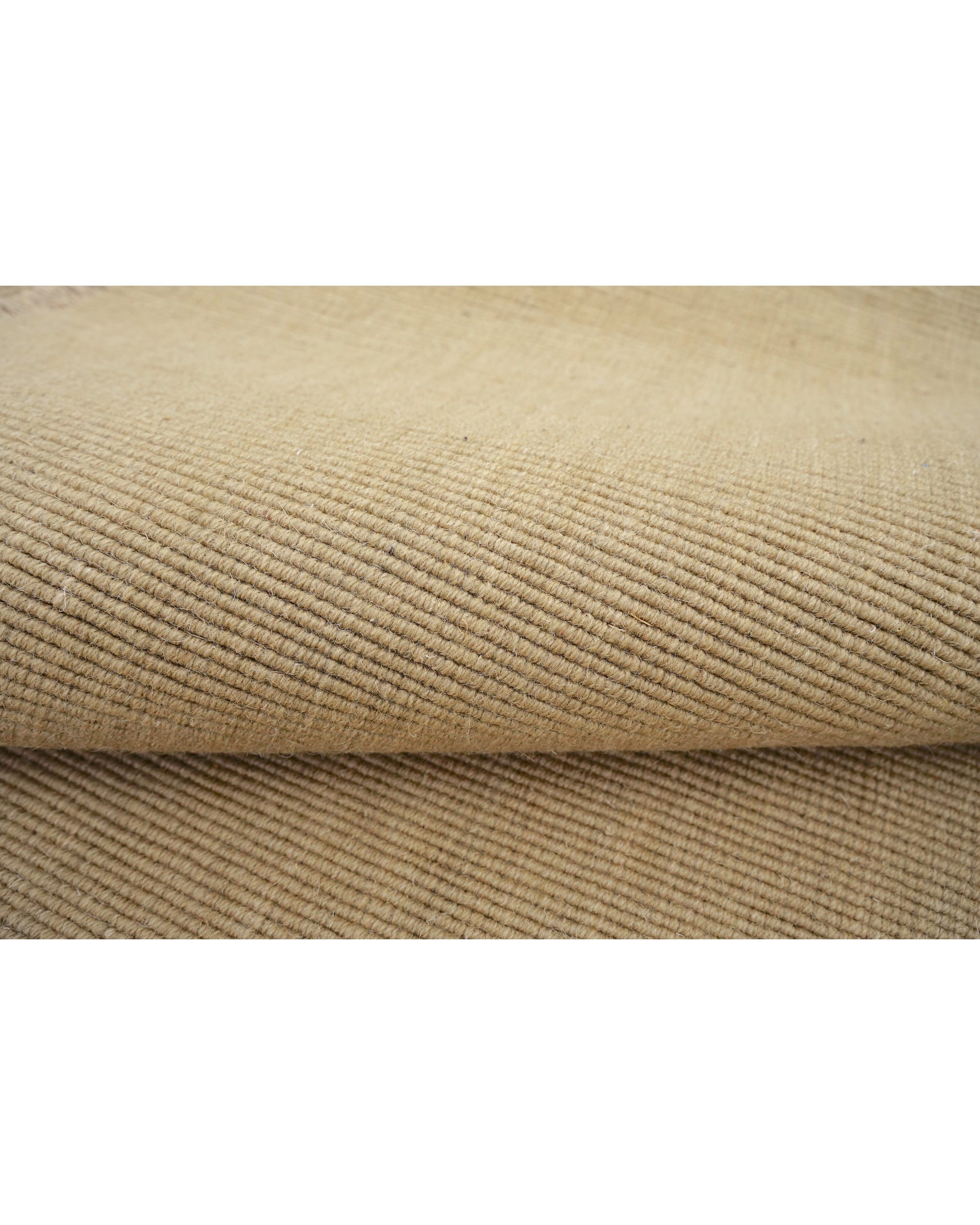
The Cabra Wool & Jute Rug in Sand is firmer still, a handloom weave at 7 to 8 mm. Under a yoga mat it gives the stability of the floor with a little warmth, and its regular price is ₹34,000 for 5x8 ft and ₹45,900 for 6x9 ft, ex GST at the time of writing.
Natural jute is the firmest of all. The Kora Jute Rug is handwoven at 10 mm and costs ₹28,000 for 5x8 ft, ex GST at the time of writing. It is lovely in a dry, air conditioned room, but it feels coarse to lie on directly and marks if sweat or water sits on it, so always use a mat or towel on top.
If you want a softer rug for floor stretches and rest rather than standing poses, the Moss Wool Rug is hand tufted in New Zealand wool at 14 to 16 mm in a soft green with long carved lines. Its regular price is ₹35,000 for 5x8 ft and ₹47,000 for 6x9 ft, ex GST at the time of writing. Keep it for the cool down corner rather than under a mat.
How do you protect a rug from sweat in a home gym?
Protect a rug from sweat by always working on a yoga mat or a towel on top of it, never directly on the pile. Sweat carries salt and oils that dull wool over time and can mark jute.


Wool handles a little moisture well, because the fibre absorbs it and releases it again as it dries. What it does not like is repeated wetting in the same spot. Move your mat a little each session so the same patch is not under your feet every day.
Air the rug after a heavy session by switching on the fan for half an hour. Once a week, vacuum it on a low setting without the beater bar, and once a month lift a corner to check the floor beneath is dry, especially in a basement or ground floor room in the monsoon. Our guide to preventing mould under rugs has more on damp rooms.
Shoes matter too. Gym shoes carry grit from outdoor runs, so take them off before stepping onto the rug, the same rule most Indian homes already keep at the front door.
How do you stop a rug slipping in a workout corner?
Stop a rug slipping in a workout corner with a full size felt and rubber underlay cut 2 inches smaller than the rug on each side. On vitrified tile or polished stone, the underlay is not optional in a room where you move quickly.
Check that no edge curls before each session, and never let the rug overlap rubber gym tiles, because a rug edge on a raised tile creates a step that catches a foot. Leave a clear strip of floor between the two surfaces.
Our guide to rug pads on Indian floors explains which underlay grips which floor. For a room that also serves as a study or guest room, see our guide to a work from home study rug.
What colour rug suits a home gym?
Mid to deep earthy tones suit a home gym best: umber, olive, moss and sand. They hide dust, chalk and the faint marks of a mat, and they make an exercise room feel calm rather than clinical.


Ivory and very pale rugs look beautiful in photographs of yoga studios but show sweat and grey footprints quickly. Charcoal and black show white dust and talc. A soft green like Moss or a brown like Grain Umber sits between the two.
A workout room is a good place to bring the outdoors in. Rugberry's green rugs pair well with plants, a window and natural light, and turn a corner of hard equipment into a place to breathe. For spa and studio settings outside the home, see our note on rugs for spas and wellness studios.
Frequently asked questions
Can I use a wool rug as a gym mat?
A wool rug should not be used as a gym mat for weights, machines or jumping exercises. It is fine for stretching, yoga and rest, with a yoga mat or towel placed on top.
Can a treadmill go on a rug?
A treadmill should not go on a handmade rug. Its feet crush and tear the pile, and fibre can be drawn into the motor, so use a rubber equipment mat instead.
What is the best rug to put under a yoga mat?
The best rug under a yoga mat is low and firm, such as a handloom wool of 12 to 14 mm or a wool and jute weave of 7 to 8 mm. Deep pile rugs make balance poses wobbly.
What size rug do I need for a stretching area?
For one person, 5x8 ft; for two, or for a long mat with room around it, 6x9 ft. Keep a mat on top for floor work, and leave the rug well clear of weights and machines.
How do I keep a rug clean in a workout room?
Keep a workout room rug clean by always using a mat or towel on top, taking shoes off before stepping on it, airing it after heavy sessions and vacuuming it weekly on a low setting.
Keep the weights on rubber and the rest on wool. See Terra grade rugs and jute rugs. Material first.






Leave a comment
This site is protected by hCaptcha and the hCaptcha Privacy Policy and Terms of Service apply.