



Do You Need a Rug Pad on Indian Floors
Most rugs on Indian floors need a pad. On polished marble, vitrified tile and granite, an underlay stops the rug sliding, protects the floor's finish and adds a little cushioning, and on wood it stops the rug creeping and wearing unevenly.
In short
- A rug on polished marble, vitrified tile or granite should sit on a non-slip underlay, because these floors give a rug almost no grip.
- A rug pad should be about 1 inch, or 2 to 3 cm, smaller than the rug on every side, so the rug's edges lie flat on the floor and hide the pad.
- Flat weaves such as Rugberry's Cabra Wool & Jute Rug at 7 to 8 mm slide most easily and benefit most from a pad.
- A felt and natural rubber underlay suits most Indian homes, giving grip and a little cushioning without marking polished stone.
Why do rugs slide so much on Indian floors?
Rugs slide on Indian floors because polished marble, vitrified tile and granite are among the smoothest floor surfaces there are, and a rug's back has little to grip. Add a fan, a child running or a dog skidding, and a loose rug moves.


The trend in Indian apartments has made it more of an issue. Large format vitrified tiles of 2x4 ft and bigger, polished to a mirror finish, now run through most new homes in Pune, Hyderabad and Gurugram. They are easy to mop and very hard for a rug to hold on to.
A sliding rug is a safety issue first. Rucked edges and slipping corners are a common cause of trips and falls, especially for grandparents and toddlers. Rugberry's guide to rugs for marble and tile floors covers the wider question of which rugs suit stone.
A pad also matters for the rug itself. A rug that shifts every day rubs its back against the floor, which wears the backing and loosens the edges. A rug that stays still wears evenly and keeps its shape.
What kinds of rug pad are there?
There are four common kinds of rug pad: felt, natural rubber, felt bonded to rubber, and open PVC mesh. Each balances grip, cushioning and floor safety differently.
| Pad type | Grip | Cushioning | Thickness | On polished stone | Verdict |
|---|---|---|---|---|---|
| Felt only | Low | Good | 5 to 10 mm | Safe, but slides on its own | Best under a large, heavy rug held by furniture |
| Natural rubber | High | Low | 2 to 3 mm | Good grip, check the label for floor safety | Good under flat weaves near doors |
| Felt with rubber backing | High | Good | 6 to 8 mm | Grips well, cushions well | The best all round choice for Indian homes |
| PVC mesh | Medium when new | Very low | 1 to 2 mm | Can stick to or mark some finishes and break down in heat | Short term only |
For most Indian homes, choose a felt pad with a natural rubber backing over cheap PVC mesh, because it grips polished stone, adds cushioning, and keeps its shape through hot summers. Mesh pads are cheap for a reason and often crumble within a few seasons.
Always check the label of a rubber backed pad for the floor types it is made for. Some rubber compounds can react with sealed wood or certain stone sealers, and a good pad says clearly where it is safe.
Which pad suits marble, vitrified tile, granite and wood?
Marble, vitrified tile and granite need grip first, so a rubber backed pad suits them best, while wood needs gentle grip and protection for its finish. The floor decides the pad more than the rug does.
- Italian or Indian marble: marble is soft and porous compared with tile, and it marks. Choose a felt and natural rubber pad labelled safe for natural stone, and lift the rug before any marble polishing.
- Vitrified tile: the most slippery floor in most Indian apartments. A felt and rubber pad, or a thin rubber pad under a flat weave, holds the rug firmly.
- Granite: hard, dense and often cooler underfoot. A felt and rubber pad adds both grip and a softer, warmer feel. Rugberry's guide to rugs on granite floors covers colour and contrast on dark stone.
- Engineered wood or hardwood: grip is less of a problem, but the finish scratches. Choose a pad marked safe for finished wood, and avoid cheap mesh. Rugberry's guide to rugs on wooden floors has more on wood.
- Athangudi or red oxide floors: these traditional finishes can be sensitive. Test a small piece of pad in a hidden corner for a week before laying the rug.
Underfloor heating is rare in Indian homes, but if your floor has it, choose a thin pad so heat can pass through.
Which rugs need a pad most, and which can do without?
Flat weaves and small rugs need a pad most, and large rugs anchored by heavy furniture need one least. Weight and size decide how much a rug wants to move.


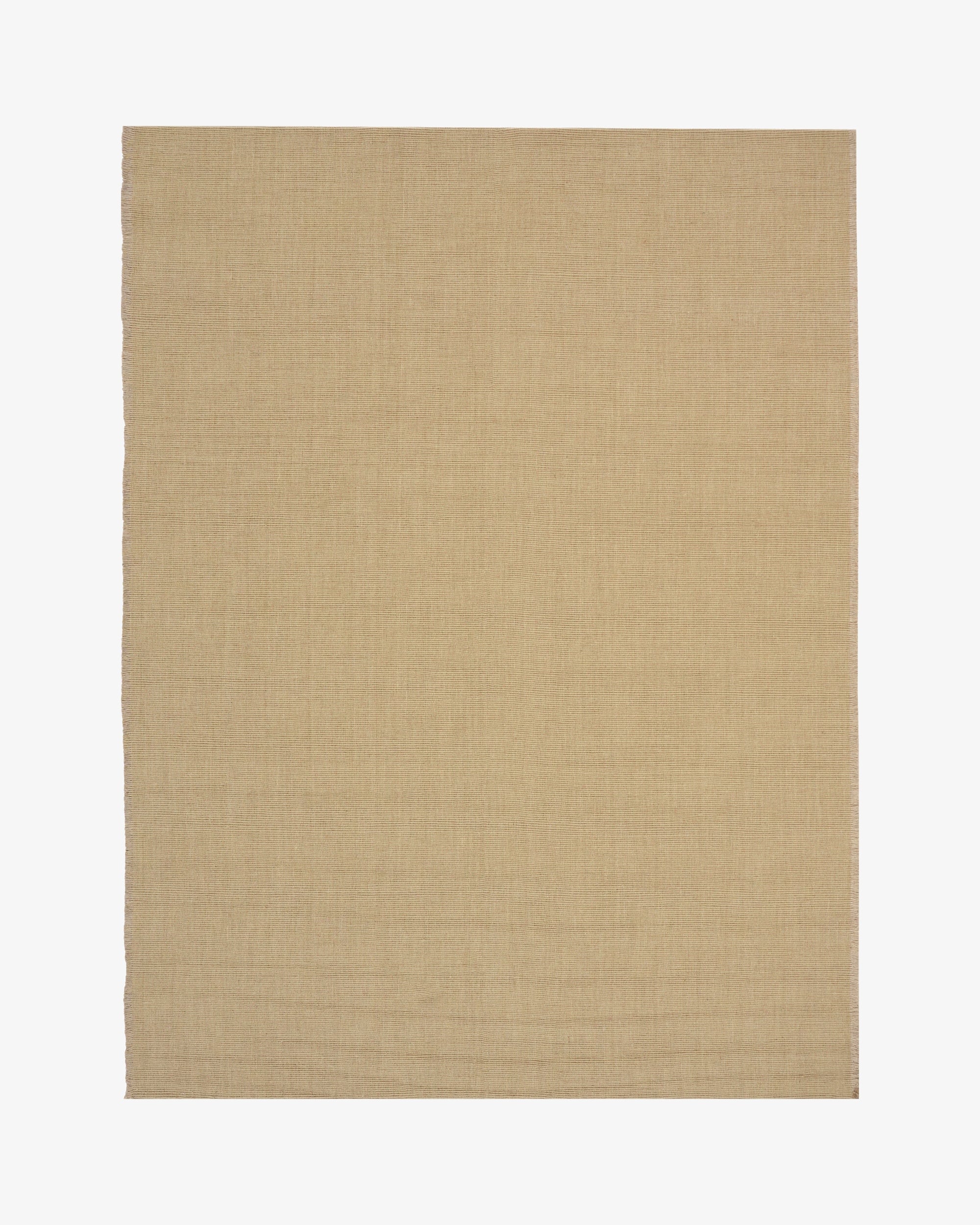
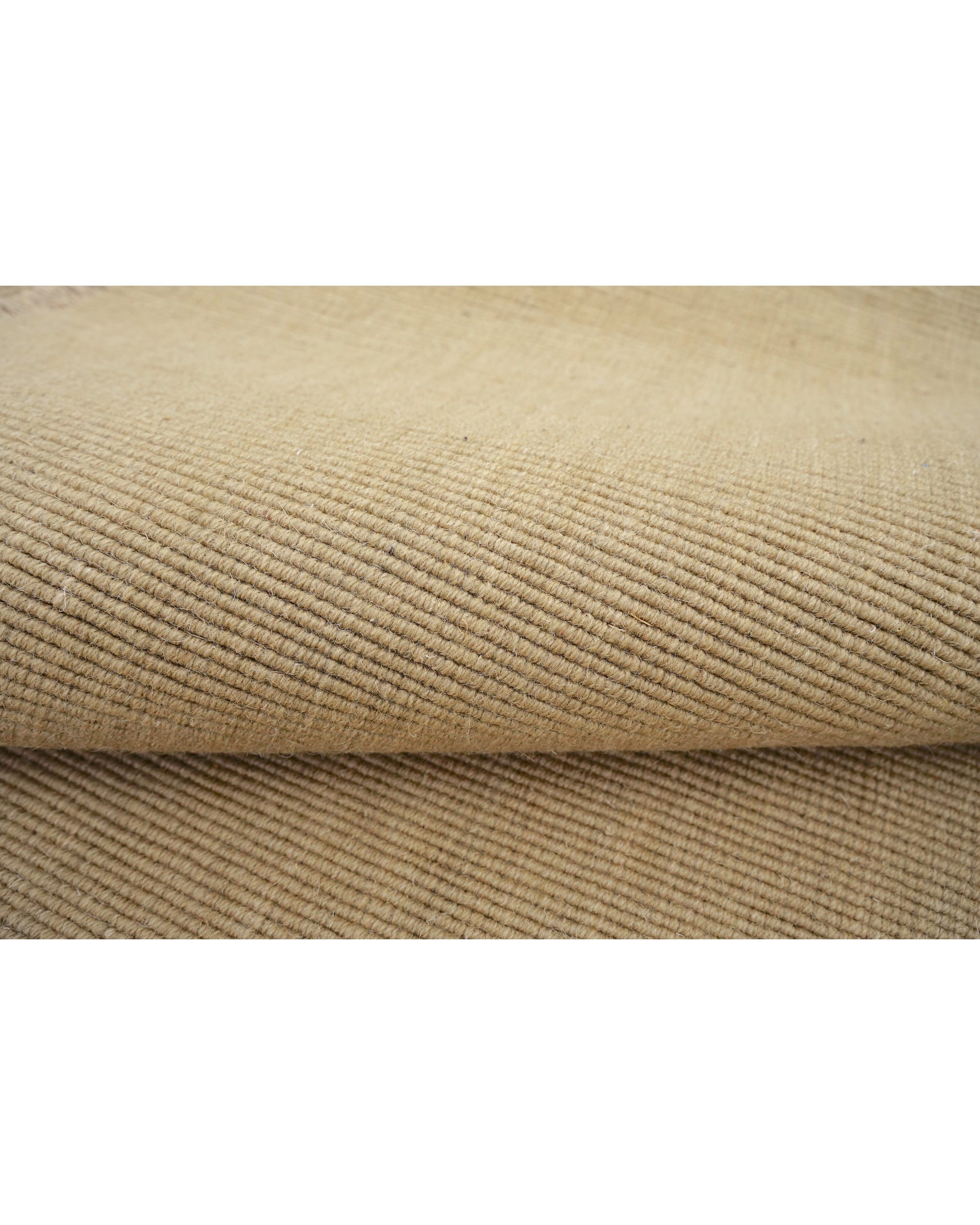
A flat handloom weave such as the Cabra Wool & Jute Rug in Sand at 7 to 8 mm is light and smooth backed, so on vitrified tile it can slide with every step. A thin rubber backed pad holds it in place and keeps the corners from lifting, which matters most in a foyer or a passage.
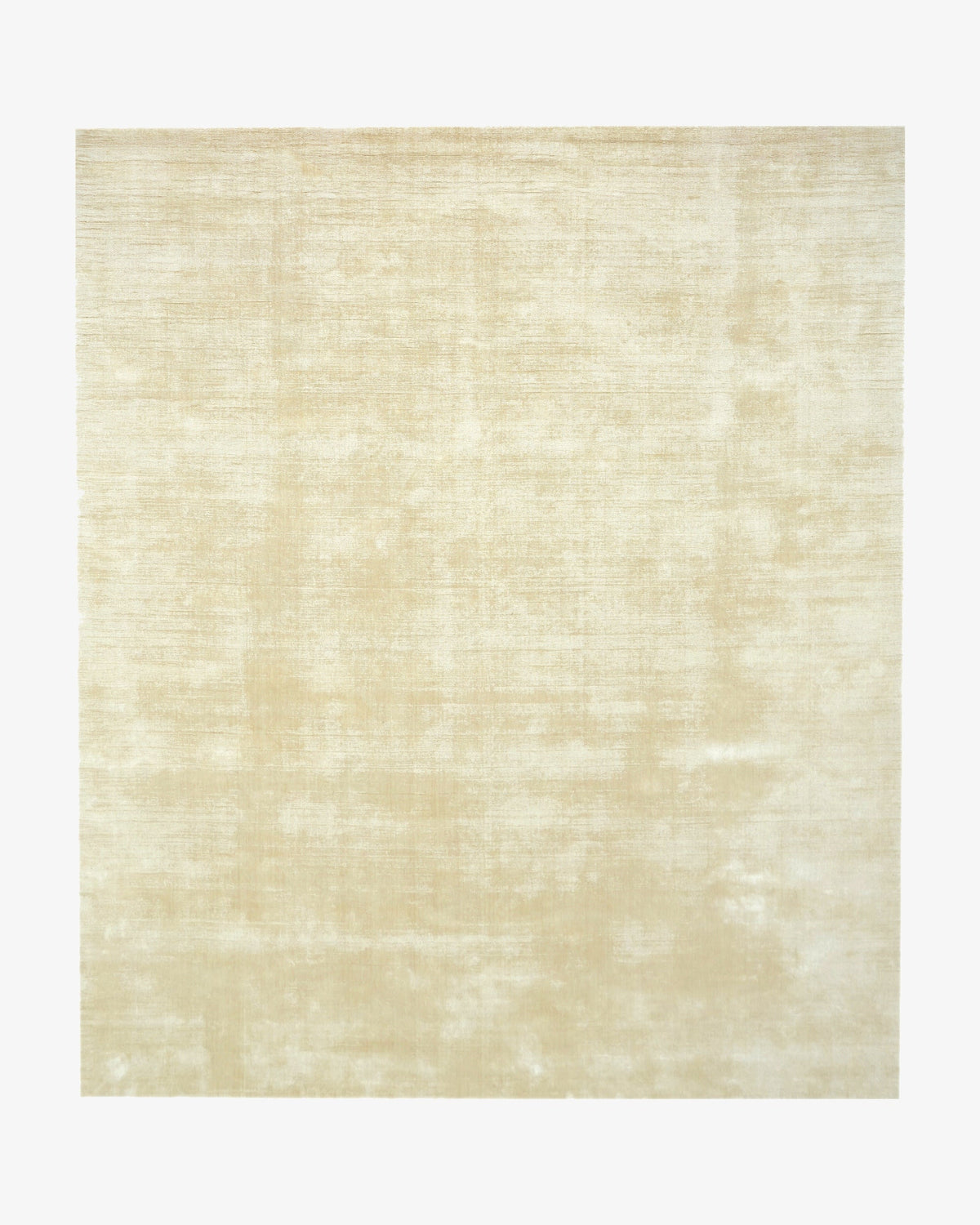
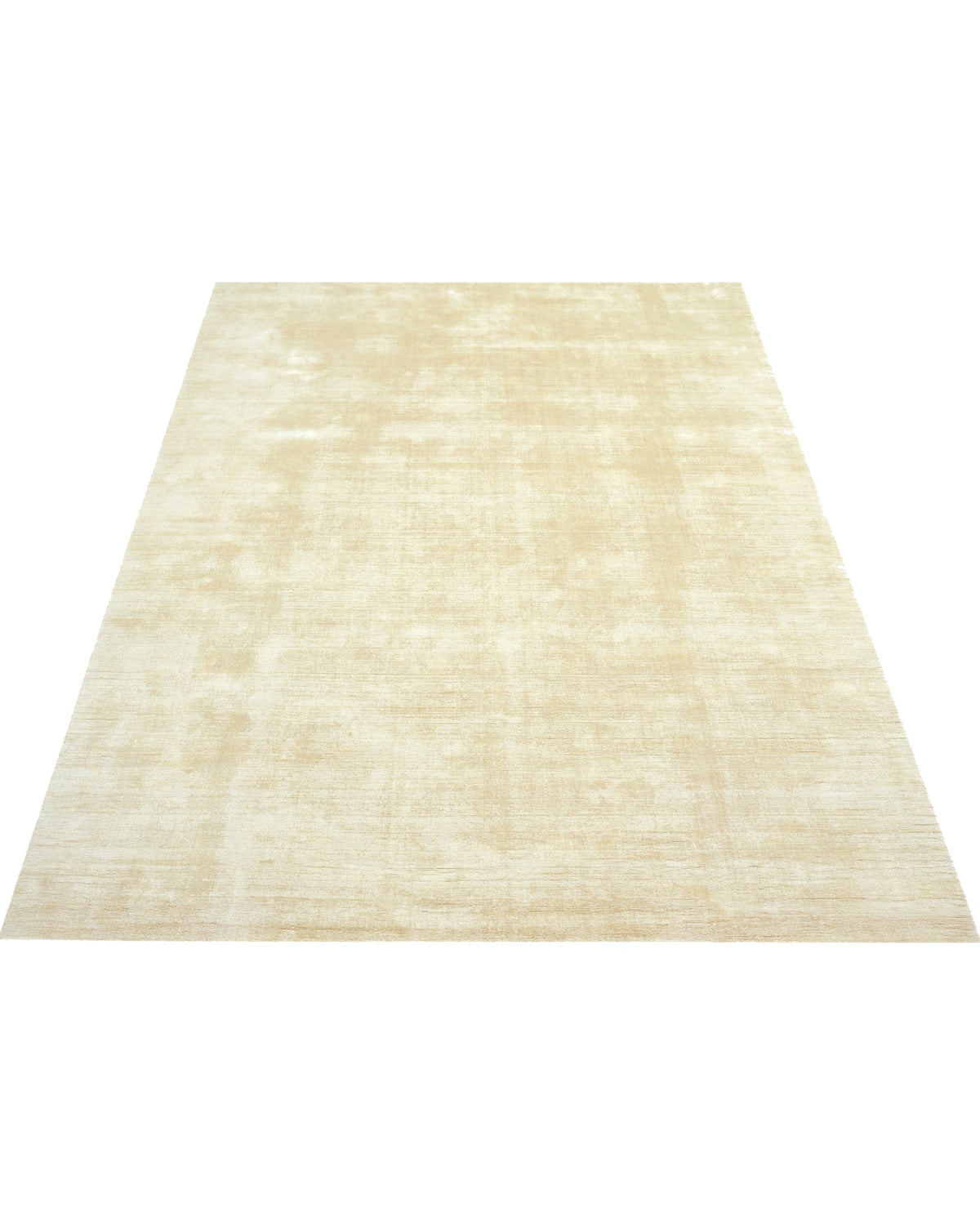
A low pile rug such as the Nuva Silk Rug in Beige, handloom Botanical Silk at 10 mm, also benefits from a pad. Botanical Silk is smooth and fine, and a felt and rubber underlay adds the cushioning a low rug lacks while keeping it flat.
A heavier rug such as the Grain Wool Rug in Tan, handloom New Zealand wool at 12 to 14 mm, slides less, and an 8x10 ft or larger rug held by a sofa and chairs barely moves. Under these, a felt pad is for comfort and floor protection rather than grip.
The flatter and smaller the rug, the more it needs a pad. The heavier and larger, the more the pad becomes comfort.
Prices in this post are regular prices from the product pages, ex GST, at the time of writing: Cabra from ₹34,000, Grain from ₹37,000 and Nuva from ₹40,000 for 5x8 ft. A seasonal sale may show lower figures on the product page.
How big should a rug pad be?
A rug pad should be about 1 inch, or 2 to 3 cm, smaller than the rug on every side. The rug's edges then lie flat on the floor and the pad stays out of sight.

So a 5x8 ft rug wants a pad of about 4 ft 10 in by 7 ft 10 in. An 8x10 ft rug wants about 7 ft 10 in by 9 ft 10 in. Most good pads come in standard rug sizes and can be trimmed with sharp scissors to fit exactly.
Thickness matters as much as size. Under a flat weave near a door, keep the pad to 2 or 3 mm so the door still clears the rug. Under a living room rug, a pad of 6 to 8 mm adds real comfort without making the rug feel unstable underfoot.
There is a quick test for whether you need a pad at all. Stand on one corner of the rug and twist your foot as if turning. If the rug moves on the floor, it needs a pad, and if it stays put, the pad is for comfort only.
Never let a pad stick out beyond the rug. An exposed edge is a trip line and collects dust. If the pad is slightly too large, trim it rather than folding it under.
Under a round rug, cut the pad into a circle about 1 inch smaller in radius. Under a runner, keep the pad continuous rather than using two short pieces, which can separate and create a ridge. Rugberry's rug placement guide shows where each rug size usually sits.
How do you look after the pad and the floor under it?
You look after the pad and the floor by lifting the rug every two or three months, vacuuming the pad and cleaning the floor beneath it. Dust and moisture trapped between the layers are what cause problems.

- Vacuum the pad: fine dust passes through a rug and settles on the pad. A quick vacuum keeps it from grinding into the floor.
- Mop and dry the floor: mop the floor beneath and let it dry fully before laying the pad and rug back.
- Watch the monsoon: in Mumbai, Chennai and Kochi, check under the pad for damp after heavy rain. Rugberry's guide to preventing mould under rugs covers the signs to look for.
- Replace when tired: a pad that has gone flat, crumbly or sticky has stopped working. Most good pads last several years.
- Check the back of the rug: Rugberry's guide to the back of a rug explains what a healthy rug back looks like.
When you order a rug, ask the Rugberry team about a suitable underlay for your rug and floor. They will advise on the type and size that suit the piece.
You can browse every handloom rug, flat or pile, in Rugberry's handloom rugs collection, or the whole range in all rugs.
Frequently asked questions
Is a rug pad necessary on vitrified tiles?
A rug pad is necessary on vitrified tiles for most rugs, because polished tile gives a rug almost no grip. A felt pad with a natural rubber backing stops sliding and adds a little cushioning underfoot.
Can a rug pad damage a marble floor?
A good rug pad labelled safe for natural stone will not damage a marble floor, but cheap PVC mesh or some rubber compounds can stick to or mark a finish. Lift the rug every few months to clean and dry the floor beneath.
What size should a rug pad be?
Slightly smaller than the rug, so the edge can lie down on the floor and nobody trips on a visible pad. Take an inch or two off each side; for 5x8 ft, a pad close to 4 ft 10 in by 7 ft 10 in.
Do large rugs need a rug pad?
Large rugs held in place by a sofa and chairs need a pad less for grip and more for comfort and floor protection. A felt pad under an 8x10 ft rug adds cushioning and protects the floor from grit.
Which Rugberry rugs need an underlay most?
Flat weaves such as the Rugberry Cabra Wool & Jute Rug at 7 to 8 mm need an underlay most, because they are light and slide easily on tile. Low rugs such as Nuva in Botanical Silk also benefit from the cushioning an underlay adds.
A still rug wears evenly and keeps everyone on their feet. Material first.




Leave a comment
This site is protected by hCaptcha and the hCaptcha Privacy Policy and Terms of Service apply.