



Rug Colours That Hold Up in Sun Filled Rooms
In a sun filled Indian room, mid tone and natural colours such as sand, sage, flax and cashew show fading least, while deep saturated colours and bright accents show it most. Every dyed fibre softens in strong sun, so the aim is a colour where that softening is hard to see.
In short
- Sand, flax, sage, cashew and other natural mid tones show sun fading least, because the colour they soften towards is close to the colour they already are.
- Deep navy, charcoal, rust and saturated brights show sun fading most, often as a pale band where the sun falls every afternoon.
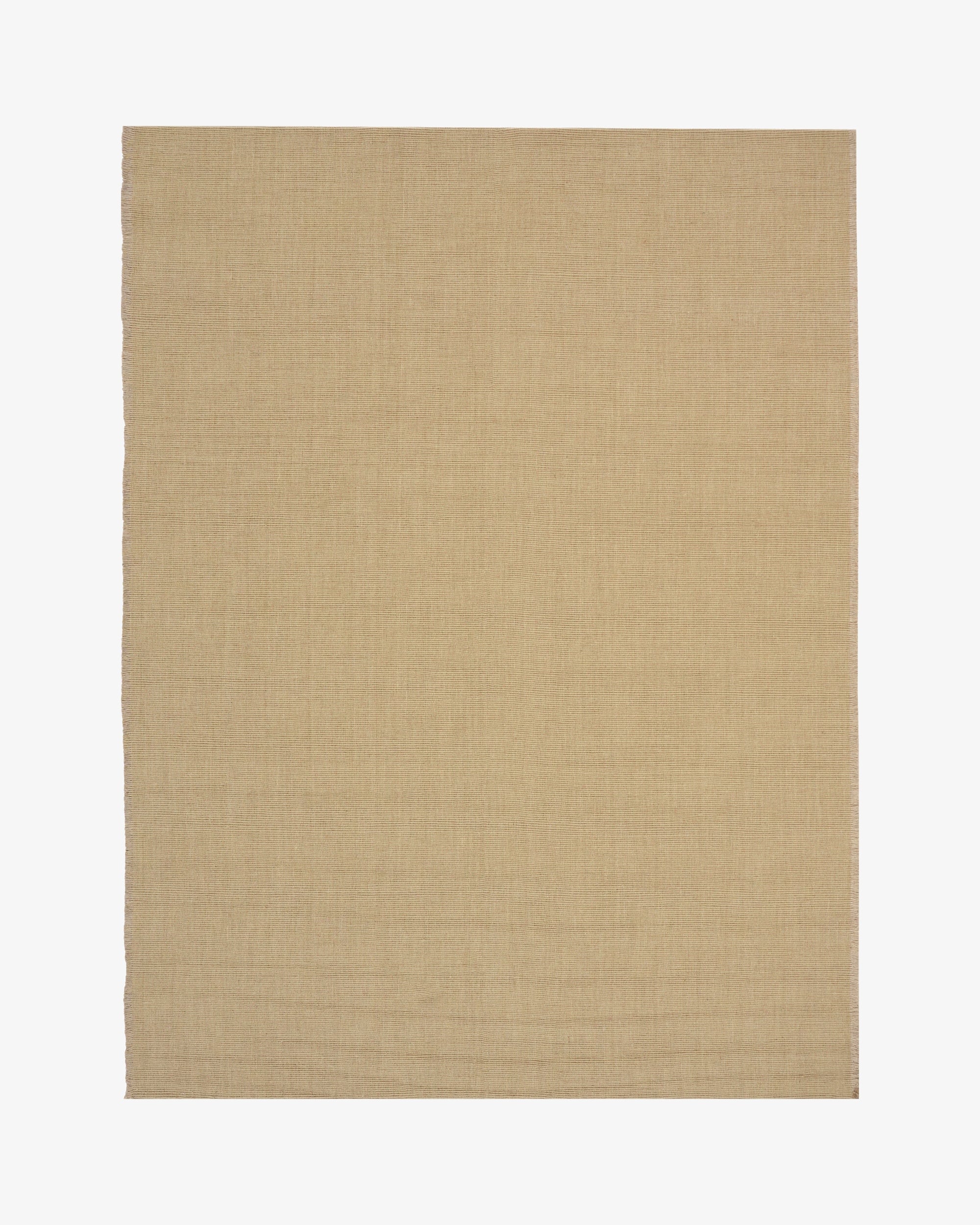
- Sage is a mid tone that ages gently in strong light, which makes the Grain Wool Rug in Sage (handloom New Zealand wool, 12 to 14 mm) a safe pick for a bright room; 5x8 ft is a regular ₹37,000 ex GST at the time of writing.
- Turning a rug end to end every three months is the single most effective way to keep sun fading even.
Which rug colours show sun fading least?
Light to mid natural colours show sun fading least: sand, flax, oatmeal, sage, cashew and soft greige. When strong light softens them, they move towards a paler version of themselves, and the eye rarely notices.


Fading is easiest to see as contrast. A deep colour next to a paler patch, or a bright accent beside a faded one, draws the eye at once. A rug that starts close to the colour of light itself has less distance to travel and less contrast to reveal.
Texture and mottling help a great deal. A surface that already holds two or three tones, like the rows of Grain or the flecks of Cabra, hides a gradual change far better than a flat single colour. Rugberry's post on rug colour variation explains why natural variation is part of a handmade rug.
So for a bright room, the best palette is the one the sun already favours: warm neutrals, greens with grey in them, and earthy mid browns.
Why do west facing rooms fade rugs faster?
West facing rooms fade rugs faster because the afternoon sun is low, hot and strong, and it falls deep into the room across the floor for hours. East light is softer and gone by late morning, and north light rarely touches the floor at all.
Across most of India, a west facing living room in April or May takes three to four hours of direct afternoon sun on the same patch of floor. Large sliding glass doors to a balcony, common in new apartments in Hyderabad, Pune and Ahmedabad, make it stronger still.
Ordinary window glass reduces some of the light that fades colour but does not stop all of it. A rug behind glass in direct sun will still change over the years, just more slowly than one on an open verandah.
Season changes the picture too. In winter the sun sits lower and reaches further into the room, so a rug that stays in shade in June may sit in a long strip of light in December. Plan for the season when the light reaches furthest.
Height and floor matter less than people expect. A rug on a high floor of a Mumbai tower and one on a ground floor in Chandigarh face the same problem if both take direct afternoon sun. What decides fading is the hours of direct light on the same patch, not the city.
Before choosing a rug, watch the room for one afternoon. Note where the sun lands at 2 pm, 4 pm and 6 pm, and how long it stays. Rugberry's guide to rug colour in natural light shows how the same rug looks in each direction of light.
Do wool and jute behave differently in strong sun?
Wool and jute both change in strong sun, but in different ways. Dyed wool softens in colour, while natural jute shifts gently in tone, which on a natural or cashew jute often reads as patina rather than fading.


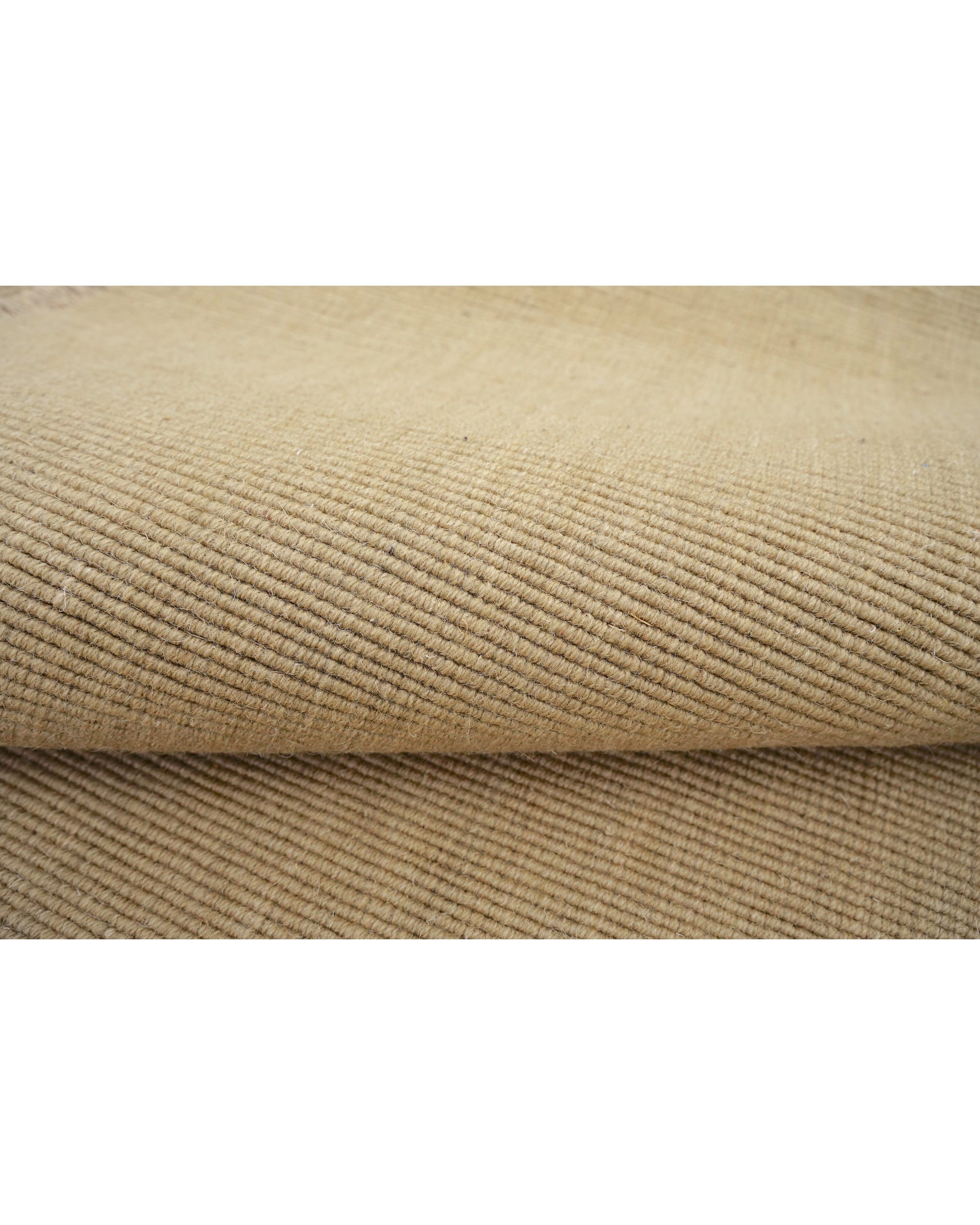
New Zealand wool takes dye deeply and holds it well, and in a mid tone like sage the softening is slow and even. The Grain Wool Rug in Sage is a strong choice for a bright living room: the colour is already muted, and its closely textured surface hides gradual change.
Jute is a plant fibre, and the product pages describe it as better looking as it ages. The Savannah Jute Rug in Cashew, hand knotted jute at 15 to 16 mm, and the Cabra Wool & Jute Rug in Sand, handloom wool and jute at 7 to 8 mm, sit in exactly the colour range where change is gentle.
Botanical Silk and deep coloured rugs are better kept out of strong direct sun. Their beauty is a clear colour and a moving sheen, and both are what long hours of sun dull first. Rugberry's guide to lighting and sheen explains why sheen rugs prefer indirect light.
In a bright room, choose the colour the sun is already moving towards.
How do colour families compare in a sunny room?
Natural neutrals and soft greens compare best in a sunny room, earthy mid browns come next, and deep or saturated colours compare worst. The table below sets out how each family behaves over the years.

| Colour family | How fading shows | Rugberry examples | Verdict for a west facing room |
|---|---|---|---|
| Sand, flax, oatmeal | Barely visible, softens towards paler sand | Grain Flax, Grain Sandstone, Cabra Sand | Best choice |
| Sage, olive, soft green | Slow, even softening | Grain Sage, Cabra Olive | Very good |
| Natural jute, cashew | Gentle tonal shift, reads as patina | Savannah Cashew, Kora | Very good, keep dry |
| Mid brown, mochaccino, tan | Gradual, visible only beside a shaded area | Grain Mochaccino, Grain Tan | Good with rotation |
| Rust, terracotta, copper | Noticeable softening of warmth | Grain Russet, Cabra Rust, Plush Copper | Use where sun is partial |
| Charcoal, navy, black | Pale band where the sun falls | Luma Charcoal, Clique Pitch Black | Avoid in direct sun |
| Bright accents in a pattern | Brights fade first, pattern loses balance | Multi colour designs | Avoid in direct sun |
For a west facing living room, choose a sand or sage rug over a charcoal or rust one, because a pale natural colour softens towards itself while a deep colour shows a pale band. Save the deep colours for the bedroom or the north facing study.
Prices in this post are regular prices from the product pages, ex GST, at the time of writing: Grain from ₹37,000, Cabra from ₹34,000 and Savannah from ₹41,000 for 5x8 ft. A seasonal sale may show lower figures on the product page.
How do you protect a rug in a sunny room?
You protect a rug in a sunny room by turning it every three months, filtering the strongest sun with sheers or blinds, and keeping furniture from shading the same patch year round. None of these is difficult, and together they keep the colour even.
- Turn the rug. Rotate it 180 degrees every three months, so each end spends equal time in the light. This is the one habit that matters most.
- Filter the afternoon. Sheer linen curtains drawn from 1 pm to 5 pm in summer cut the harshest light without darkening the room.
- Consider film on the glass. A clear film on large west facing glass doors reduces the light that fades colour. Ask your glazier which film suits your glass.
- Move the shadows. A sofa or a cabinet that never moves leaves a darker patch beneath it. Shift small pieces a little each season.
- Vacuum regularly. Dust dulls colour too, and a clean rug reads brighter for longer.
Rugberry's guide to rugs and sun fading goes deeper into fading over time, and the guide to choosing a rug colour covers colour in every room.
What if the sun falls on only part of the rug?
When the sun falls on only part of a rug, the risk is a visible line between the lit and shaded sections, so rotation and colour choice matter even more. A rug that fades evenly looks lived in, while a rug with a sharp line looks damaged.

This is common in Indian homes with a deep balcony overhang or a field of sun through one window. A strip of light crosses one end of the rug for months while the other end stays in shade under the sofa.
Two habits fix most of it. Turn the rug so the lit end changes every three months, and choose a textured or mottled surface that hides a gradual difference. Rugberry's guide to earth tone rugs shows palettes that sit well in bright rooms.
A pale rug border is the other place to watch. On a rug with a darker border, the part of the border nearest the window tends to change first, so the turn every three months matters even more on bordered designs.
If you love a deep colour in a bright room, place it where the sun reaches least, such as under the dining table or beside the bed. You can browse every low, closely textured wool colour in Rugberry's Grain Collection and every jute piece in the natural jute rugs collection.
Frequently asked questions
What rug colour fades least in sunlight?
Natural mid tones such as sand, flax, sage and cashew fade least visibly in sunlight, because the colour they soften towards is close to the colour they already are. Rugberry's Grain Wool Rug in Sage or Flax suits a bright, west facing room.
Do wool rugs fade in the sun?
Wool rugs soften in colour after long exposure to strong direct sun, like every dyed fibre. New Zealand wool holds dye well, and turning the rug every three months keeps any change slow and even.
Is a jute rug good for a sunny room?
A jute rug is a good choice for a sunny room, because natural jute shifts gently in tone and that change reads as patina rather than fading. Jute must be kept dry, so avoid placing it by a balcony door that lets rain in.
How often should I rotate a rug in a sunny room?
A rug in a sunny room should be rotated 180 degrees every three months. That spreads the light evenly across both ends and prevents a visible line between lit and shaded areas.
Should I avoid dark rugs in a west facing room?
Dark rugs such as charcoal, navy or black are best kept out of direct afternoon sun in a west facing room, because fading shows as a pale band on deep colours. Place a dark rug where the sun reaches least, or choose a mid tone instead.
Let the light choose the colour, and the rug will keep it. Material first.




Leave a comment
This site is protected by hCaptcha and the hCaptcha Privacy Policy and Terms of Service apply.