



New Zealand Wool Rugs: Why the Fibre Matters
A New Zealand wool label tells you where the fibre in a rug was grown, and that it belongs to a family of wools prized by rug makers for strength, brightness and spring. It does not tell you the construction, the pile or the price, so read it as the first line of a specification, not the whole of it.
In short
- New Zealand wool is the fibre named on most Rugberry wool rugs, including the hand tufted Cadence Wool Rug, the handloom Grain Wool Rug and the hand knotted Stratum Knotted Rug.
- New Zealand rug wool is valued for a bright, even colour that takes dye cleanly, and for a springy fibre that recovers after it is pressed.
- A New Zealand wool label names the fibre only. The construction, pile height and finish decide how the rug feels and wears.
- In Indian homes, a New Zealand wool rug suits living rooms and bedrooms on marble or vitrified floors, and it copes with monsoon humidity better than jute or silk.
What does New Zealand wool on a rug label mean?
It means the wool fibre in the yarn was shorn in New Zealand, then scoured, spun and dyed into rug yarn. At Rugberry the label appears on the product page under Made of, word for word, and we only use it where that is what the rug contains. New Zealand wool sits in Rugberry's Terra grade, and our guide to the Terra, Fina and Rara fibre grades shows how it compares with merino, cashmere and the rarer fibres.
The label is about the raw fibre. Two rugs can both say New Zealand wool and still feel very different, because one is tufted with a dense cut pile and the other is woven flat and low on a handloom.
Why do rug makers value New Zealand wool?
Rug makers value New Zealand wool because it is a strong, springy fibre with a bright, fairly white base colour. A white base matters: a pale ivory stays clean in tone, and deeper colours dye true rather than muddy.


Rug wool is a different grade from the soft wool in a sweater. It is thicker per fibre, which is exactly what a floor needs, since a thicker fibre bends back after a sofa leg or a footstep instead of staying flat.
- Brightness. A clean base colour gives a wider, truer range of dyed shades.
- Spring. The natural crimp, the fine wave along each fibre, helps a pile recover its height.
- Length. A longer staple spins into a smoother yarn that sheds less over the life of the rug.
See crimp and staple length in our glossary if those terms are new.
How does New Zealand wool behave in an Indian home?
It behaves calmly: wool absorbs moisture from humid air and gives it back as the air dries, so the rug stays comfortable through a monsoon. On a cold marble or vitrified floor it adds warmth underfoot in winter without feeling heavy in summer, especially in a low pile.

Wool also holds dry dust near the surface of the pile rather than letting it sink, which is useful in cities where windows bring in fine grit. A weekly vacuum with the beater bar off or raised lifts most of it.
For a home with children and daily spills, choose New Zealand wool over silk, because wool forgives water and recovers from wear far better.
A New Zealand wool label names the fibre. The construction decides how the rug feels and how it wears.
Which Rugberry rugs use New Zealand wool?
Most of the Rugberry wool range is New Zealand wool, worked in three different constructions. Three pieces show the spread well:


| Rug | Construction | Feel | From |
|---|---|---|---|
| Cadence Wool Rug | Hand tufted | Soft and even, a dense pile that holds its shape | about ₹40,000 in 5x8 ft |
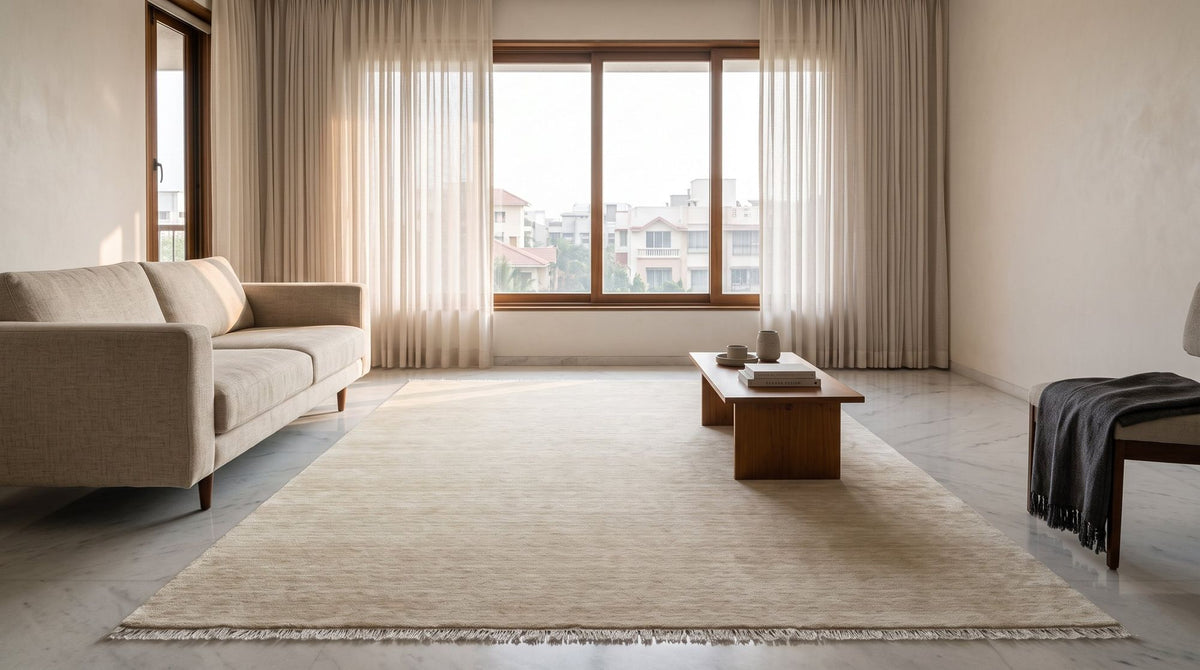
| Grain Wool Rug / Flax | Handloom | Low and closely textured, the weave visible underfoot | about ₹37,000 in 5x8 ft |
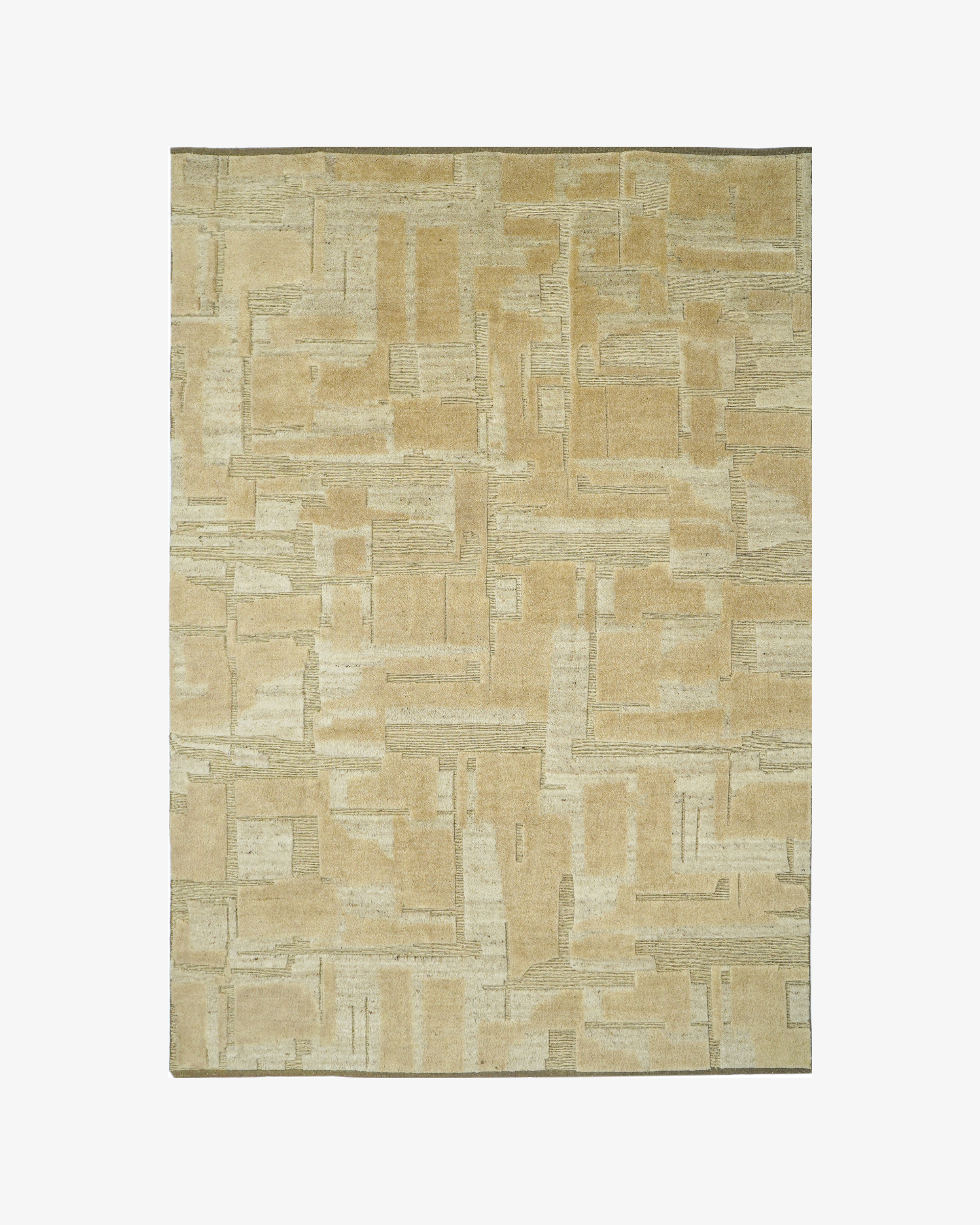
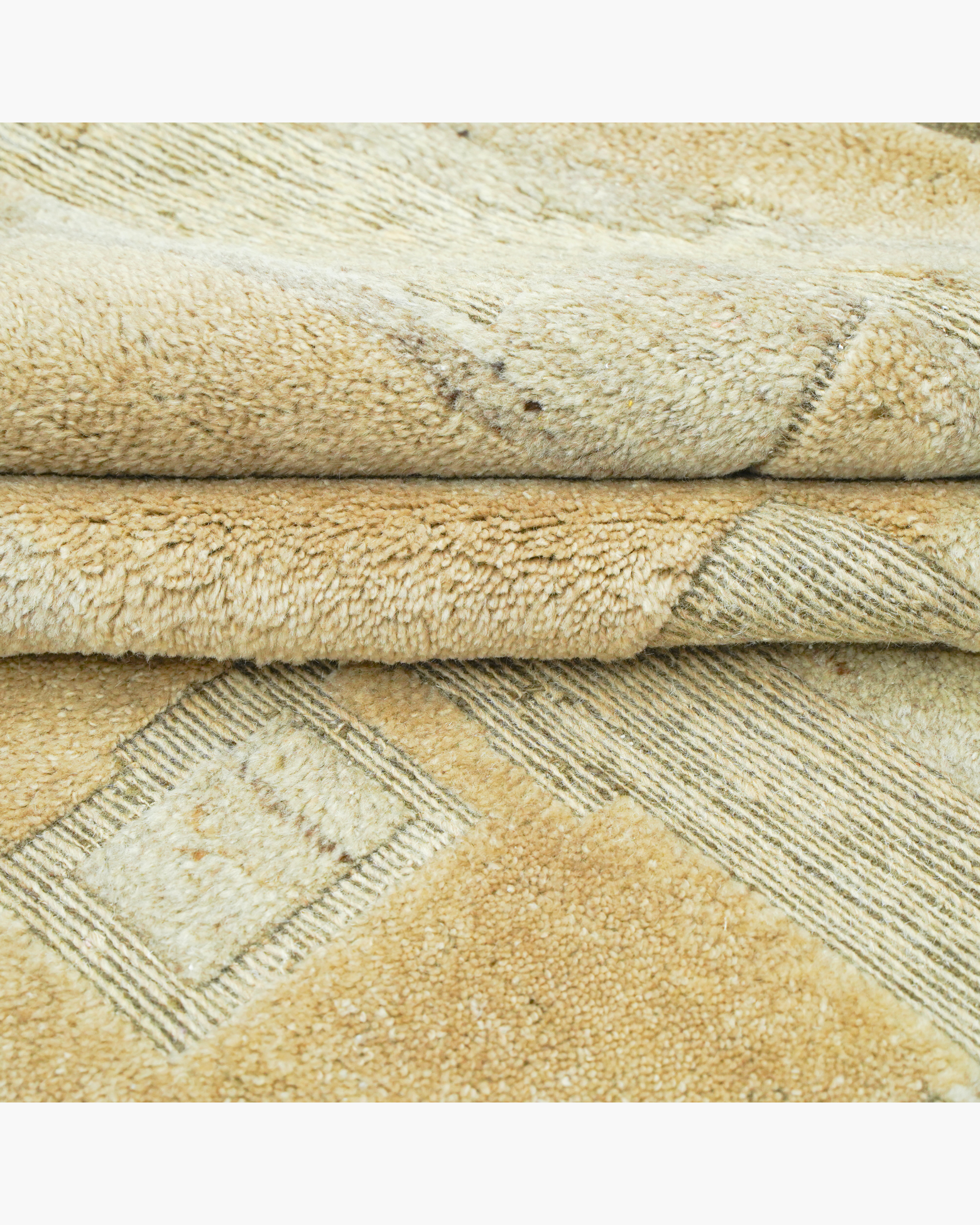
| Stratum Knotted Rug / Dune | Hand knotted | Dense and fine, the most durable way a rug can be made | about ₹1.75 lakh in 9x12 ft |
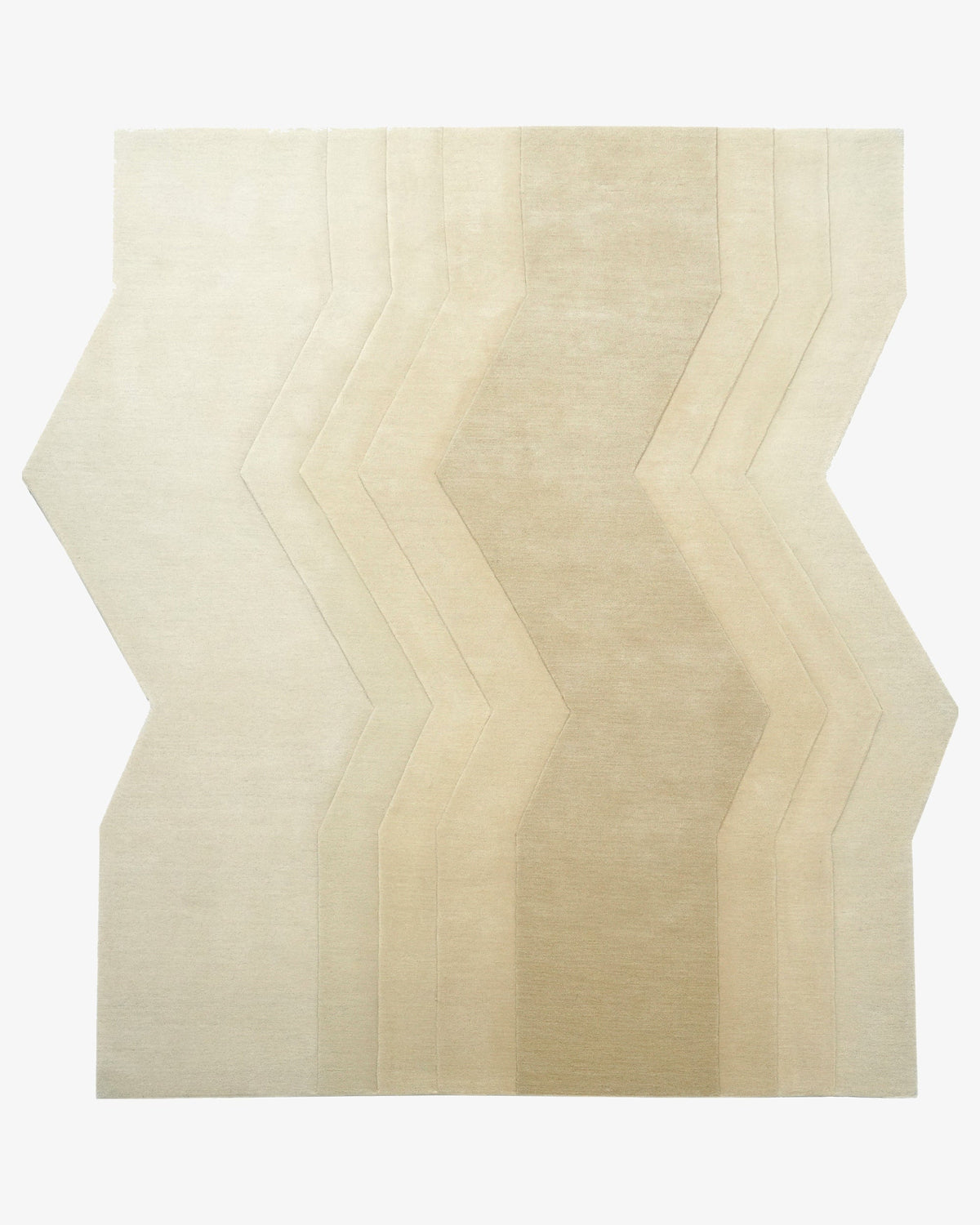
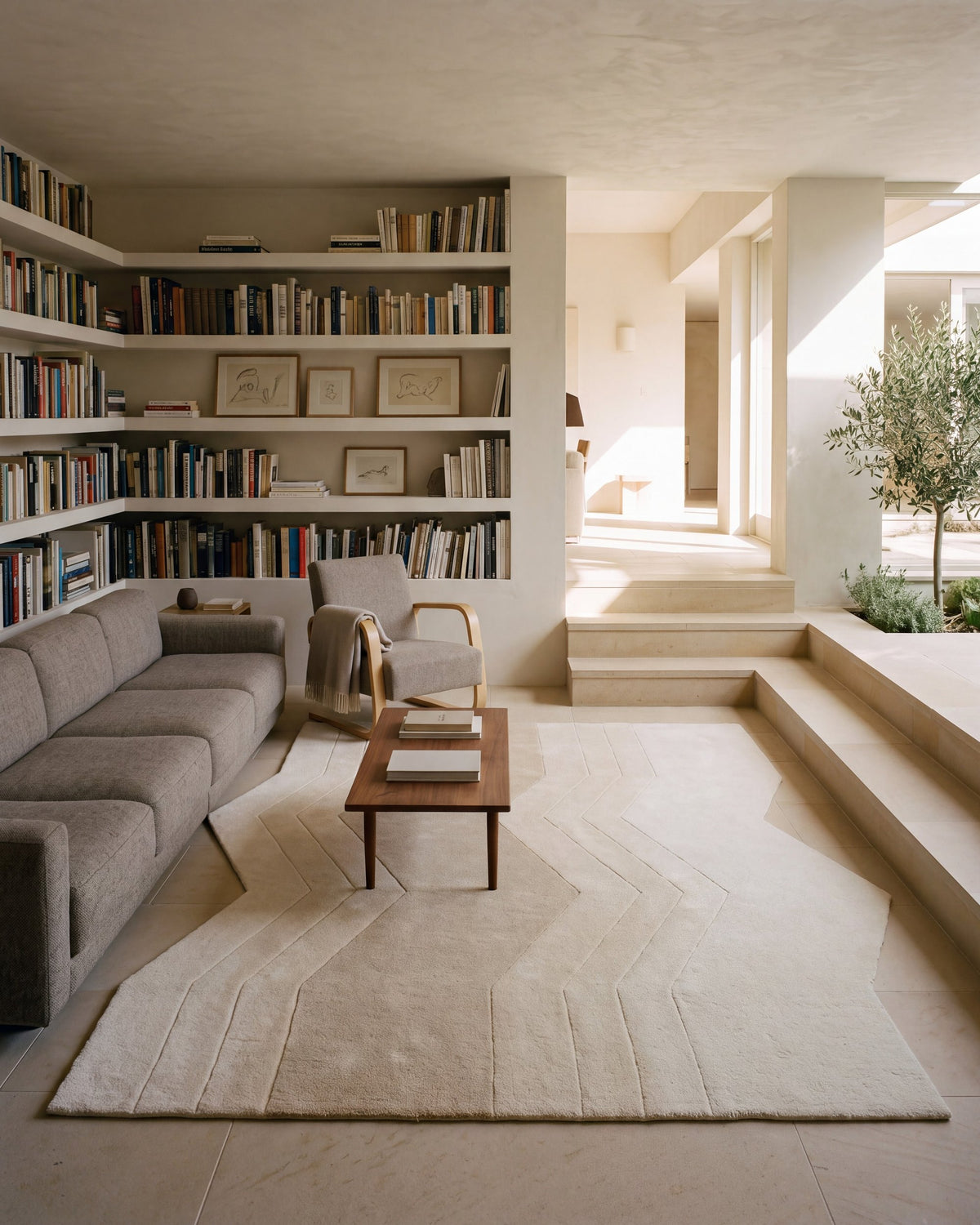
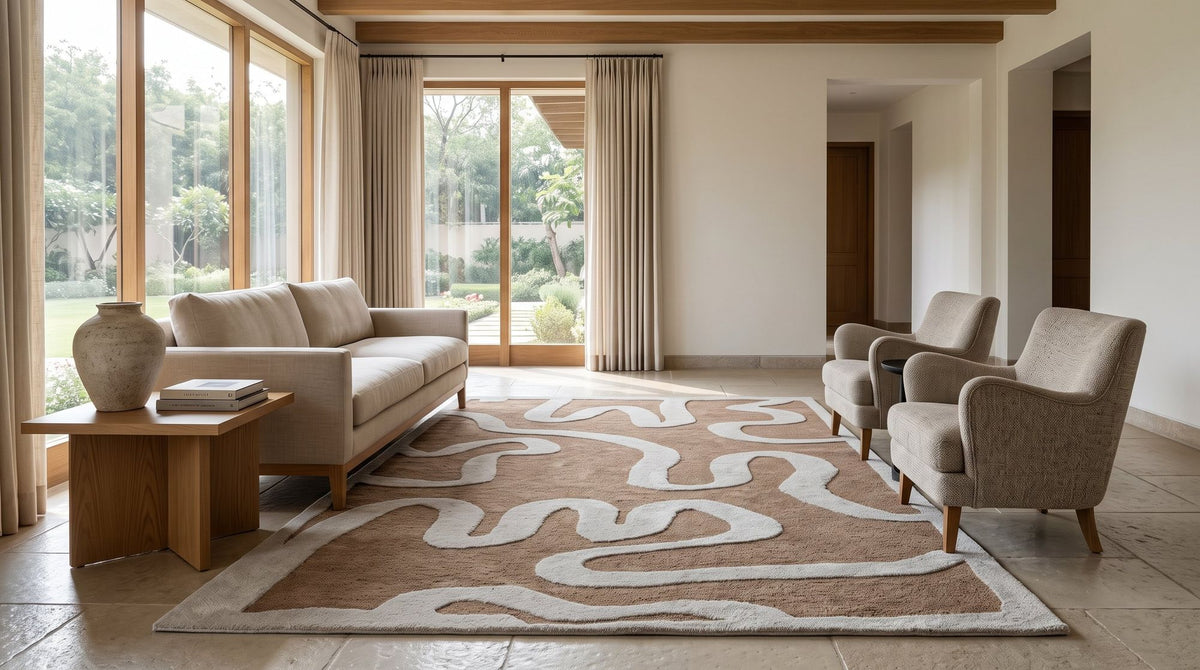
The Cadence Wool Rug uses stepped bands that shift tone across the rug. The Grain Wool Rug in flax is woven flat and low, so dining chairs slide over it, while the Stratum Knotted Rug in dune is knotted for the longest life.
What can a wool label not tell you?
A wool label cannot tell you the yarn thickness, the pile density or how carefully the rug was finished. Those come from the construction line and from handling the rug or a swatch yourself.

- Read the construction: hand tufted, handloom or hand knotted.
- Read the feel line, which tells you whether the pile is deep, low or flat.
- Ask for a swatch, so you can press it, rub it and see the colour in your own light.
Our guide to buying wool rugs in India goes through each construction in more detail.
How do you check the wool when your rug arrives?
Check it with three quick tests in the first week. Press a palm flat into the pile for ten seconds and lift it: good rug wool rises back within a minute or two.

Next, rub a dark cotton cloth across the surface. A few loose fibres are normal in the first months of a new pile rug, but the cloth should not come away heavy with fluff. Last, smell the rug close up: a faint, clean wool scent is normal and fades with airing.
Frequently asked questions
Is New Zealand wool better than Indian wool for a rug?
Not by rule. Both are used in good rugs, and the grade, spinning and construction matter as much as the country. New Zealand wool is widely chosen for its bright base colour and its spring, which suit pale and evenly dyed rugs.
Are all Rugberry wool rugs made of New Zealand wool?
Most Rugberry wool rugs are labelled New Zealand wool on their product pages, but read the Made of line for the rug you choose. Blends such as wool and silk or wool and cashmere name both fibres.
Does a New Zealand wool rug suit a humid city like Mumbai or Chennai?
Yes. Wool takes up moisture from humid air and releases it as the air dries, so it copes with coastal humidity well. Keep the rug off a floor that stays damp, and air it on dry days during the monsoon.
Read the fibre, then the construction, then feel a swatch. See the fine wool rugs. Material first.





Leave a comment
This site is protected by hCaptcha and the hCaptcha Privacy Policy and Terms of Service apply.