





Oil, Ghee and Food Stains on a Rug
Oil and ghee are lifted from a rug in two stages: first draw the grease out with a dry powder, then wash away the thin film that remains with a little mild detergent and plenty of rinsing. Water alone cannot touch grease, and heat only helps it travel deeper.
In short
- Oil and ghee on a rug are absorbed first, with cornflour or talc left on the spot for several hours, and only then treated with liquid.
- Ghee that has gone solid on a cool floor should be lifted off with a blunt knife before any powder goes down, because melting it spreads the grease.
- The film left after an oil spill is removed with a few drops of mild dish liquid in cool water, followed by repeated plain water rinses, since soap left in the pile attracts dirt.
- Coloured oils such as achaar, tadka and curry are two stains in one, so Rugberry suggests treating the grease first and the colour second.
Why is oil harder to get out of a rug than a water based spill?
Oil is harder to remove because it does not evaporate or dissolve in water, so it stays in the pile and coats each fibre in a thin film. A glass of water spilled on a rug dries and is gone; a spoon of ghee is still there next month, quietly collecting dust.
Grease also travels. While it is liquid it creeps down the yarn and sideways through the base, so a spot the size of a coin can become the size of a palm by morning. That is why speed matters more with oil than with almost any other food spill.
Wool has its own natural grease, lanolin, and oil feels at home on it. Plant fibres such as jute soak oil up like a wick, which makes the mark darker and harder to draw back out.
What should you do with a fresh oil or ghee spill?
With a fresh spill, lift the food, blot the free oil and cover the spot with an absorbent powder, then leave it alone for several hours. Patience at this stage does more than any cleaner will.

- Scoop up puris, pakoras or anything solid with a spoon, lifting rather than wiping.
- Press a folded paper towel or old cotton cloth onto the spot and hold it there, changing it as it darkens. Do not rub.
- Cover the spot with a thick layer of cornflour or plain unscented talc, about 3 to 5 mm deep and a little wider than the stain.
- Leave it for at least four hours, ideally overnight, with a bowl turned upside down over it so nobody steps through.
- Vacuum the powder with suction only. If the powder came up yellow or greasy, repeat once.
Multani mitti, fuller's earth, also absorbs grease well and is in many Indian homes already. Being a clay, it can leave a faint tint on ivory or pale wool, so test it on a hidden corner first and vacuum thoroughly afterwards.
With oil, the powder does the cleaning. Your job is to wait and then vacuum.
What if the ghee or butter has already gone solid?
If ghee, butter or makhan has set on a cool floor, lift the solid part off first with the back of a blunt knife or a spoon, before any powder or liquid. Solid fat is easy to pick up; melted fat is not.
In winter, ghee often hardens within minutes on marble and vitrified tile, which is good news for a rug. Work from the outside of the spot inward, lifting small flakes rather than pressing down, and let the area cool further if the fat is soft.
Do not warm it with a hair dryer or an iron to speed things up. Heat turns a neat lump of fat back into oil, which then soaks into clean pile around it, and you are back to the slower powder method with a bigger stain.
How do you remove the greasy film the powder leaves behind?
Remove the remaining film with a few drops of mild, clear dish liquid in a cup of cool water, dabbed on and blotted off, then rinse several times with plain water. Dish liquid is made to break up grease, and a tiny amount goes a long way on a rug.


- Test the mix on a hidden corner of the rug first, and check a white cloth for colour after ten minutes.
- Dab, do not pour. Press the damp cloth onto the spot, then blot with a dry one.
- Rinse at least three times with plain cool water, blotting hard between each.
- Dry the spot under a towel weighted with a book, then under a fan, and raise the pile with your fingers.
The rinsing is what most people skip, and it is why oil stains seem to come back. Detergent left in the pile is sticky, so the spot attracts fresh dirt and looks darker within a fortnight than it did on the day of the spill.
How do you treat achaar, tadka and curry with oil in them?
Treat a coloured oily spill as two stains: draw out the oil first with powder, then deal with the colour that remains. Achaar, chilli oil, tadka, butter chicken gravy and sambar with a layer of oil on top all carry pigment as well as fat.

If you go straight to water and detergent, the oil keeps the colour locked in the fibre and the mark spreads. Once the powder has taken most of the grease, the coloured part responds much better to blotting with cool water.
Many of these foods carry haldi, and its colour shifts toward red when it meets alkaline cleaners such as washing soda, baking soda or strong soaps. Keep any detergent mild and neutral on these spills, and if a yellow or red shadow stays after two rounds, stop and ask a professional cleaner rather than scrubbing.
What about hair oil, massage oil and body lotion?
Hair oil, massage oil and body lotion are slow, invisible spills that build up over weeks, so they need prevention more than rescue. A champi on the bedroom floor or a baby's oil massage on the living room rug leaves a little oil every time, and the patch only shows when it has turned grey with dust.
Coconut, almond and mustard oil behave like cooking oil on a rug, and mustard oil also leaves its smell. Spread an old cotton sheet or a folded bedsheet under anyone being oiled, and keep hair oil bottles off the rug, where a knocked bottle empties into the pile.
If a patch has already darkened, it is usually years of thin films rather than one spill. A professional clean deals with it far better than home treatment, because the whole area needs degreasing evenly, not one spot at a time.
Which rug fibres hold grease worst?
Jute and plant fibres hold grease worst, because they absorb oil deep into the fibre, while wool holds it nearer the surface and gives up more of it to powder. Botanical Silk is in between, but it cannot be treated with liquid at home, so its outcome depends on the first blot.


| Fibre and Rugberry example | What oil does | First step | Avoid | Likely outcome |
|---|---|---|---|---|
| Wool, low handloom (Grain) | Sits near the surface of a low, tight pile | Blot, then cornflour or talc overnight | Heat, solvent, washing soda | Fresh spills usually lift well |
| Wool, hand tufted cut pile | Runs down the deeper pile toward the backing | Blot hard, then powder worked gently between the tufts | Soaking, which wets the latex backing | Good if caught early, a shadow if left |
| Wool and jute (Cabra) | The jute yarns wick oil and darken | Blot, then powder, then a barely damp cloth | Pouring water or detergent onto jute | A faint darker patch may remain |
| Jute (Kora, Masai, Pampas, Savannah) | Soaks in and spreads along the fibre | Blot at once, powder, vacuum, repeat | Any wet cleaning | Often a permanent darker area |
| Botanical Silk (Nuva, Concept) | Spreads into smooth yarn and dulls the sheen | Blot with a dry cloth only | Powder rubbed in, any liquid | Call a professional cleaner |
Verdict: for a dining room or a floor where the family eats, choose a low wool rug over jute or Botanical Silk, because wool releases oil to a powder and survives careful rinsing, while jute keeps the mark.
How do you set up a dining room so oil stays off the rug?
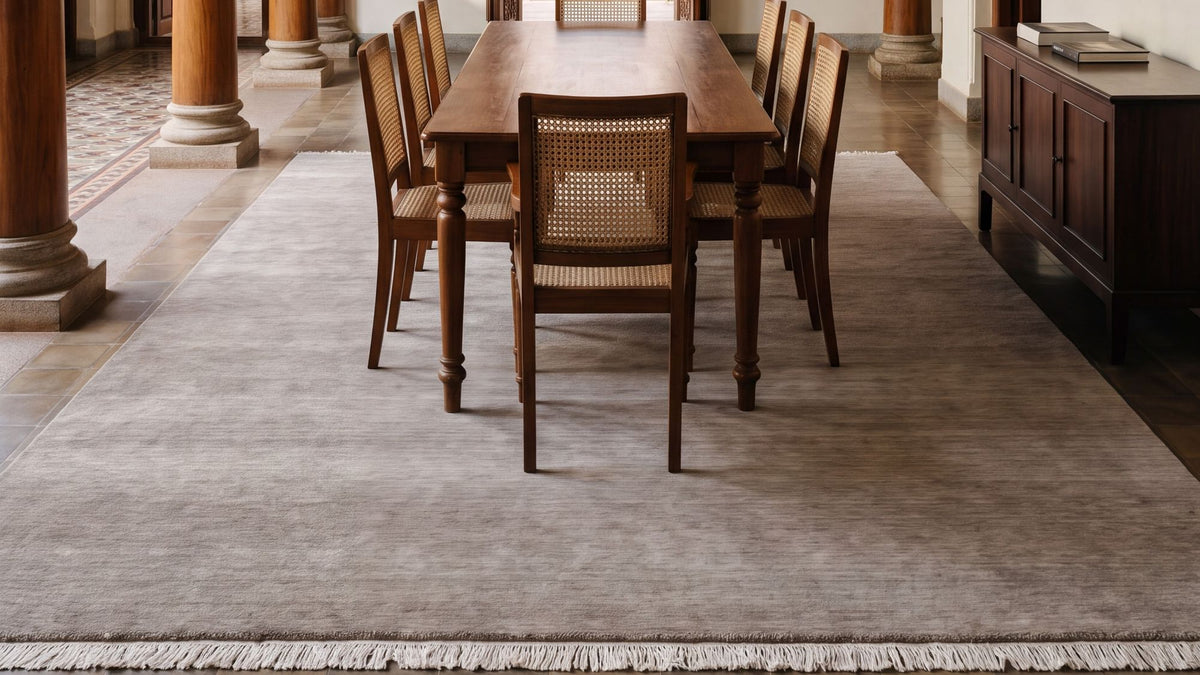
Set up the dining room so that plates, serving bowls and chairs stay over the rug only where they must. Most oil reaches a rug from serving dishes passed across the table, children eating at the edge, and chairs dragged back with food still on laps.

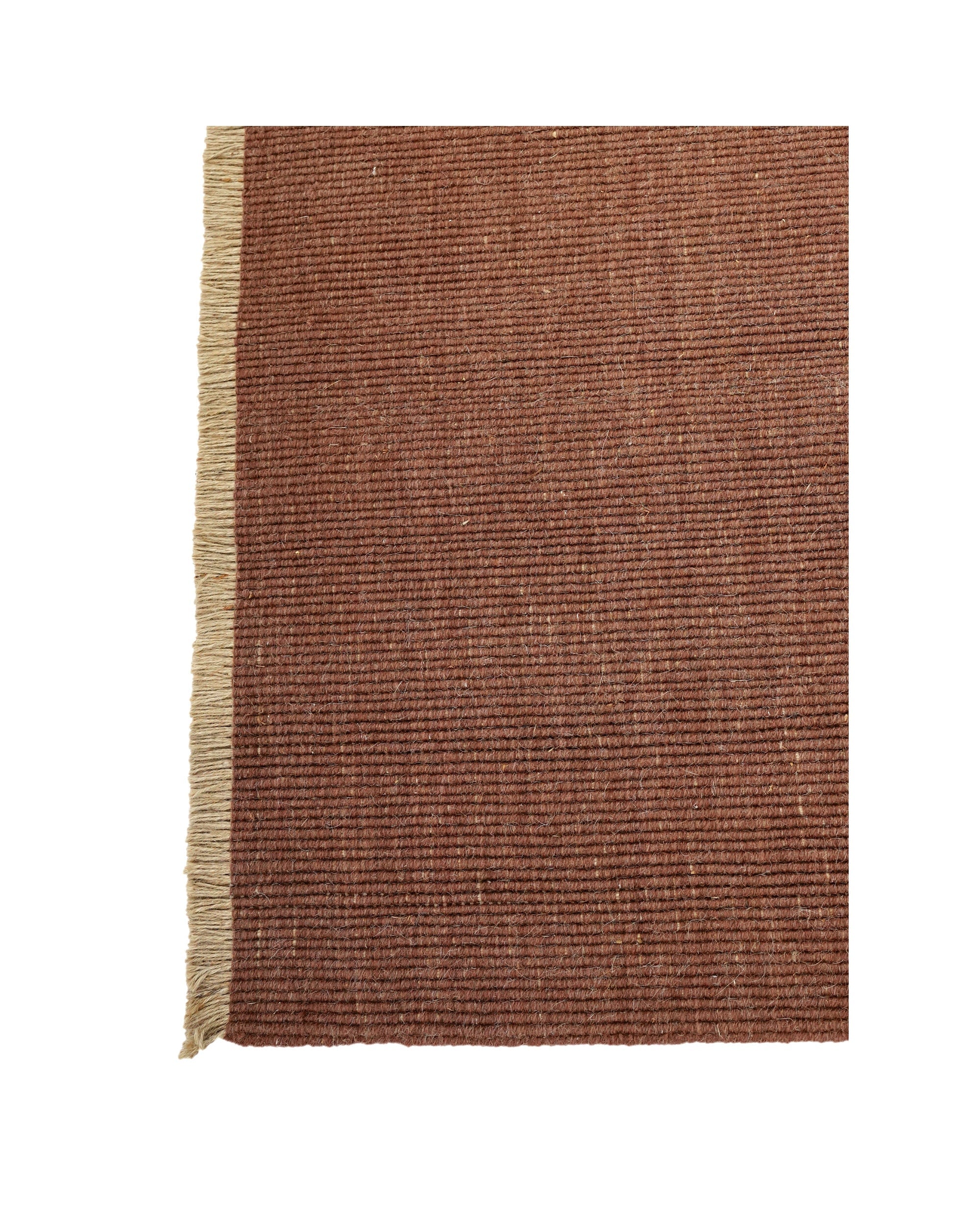
Size the rug so all chairs stay on it when pulled out, usually 60 to 75 cm beyond the table on each side, so legs do not catch the edge and tip plates. A low, closely worked surface such as the Grain Wool Rug in Umber, handloom woven in New Zealand wool, lets chairs slide and puts any spill within reach of a towel; it is listed from about ₹31,080, inclusive of GST at the time of writing. The Mochaccino colourway, a little lighter, sits well under pale wood.
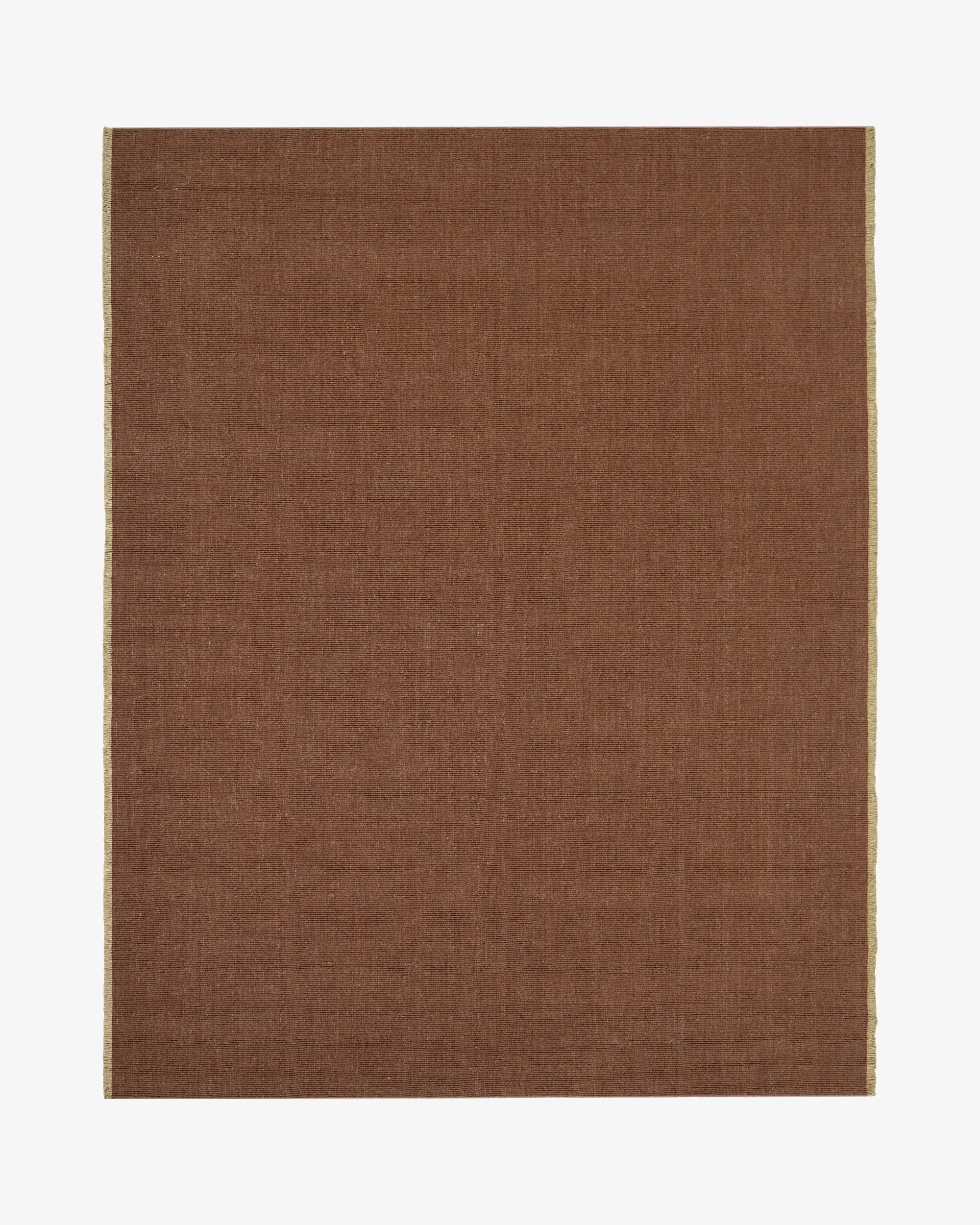
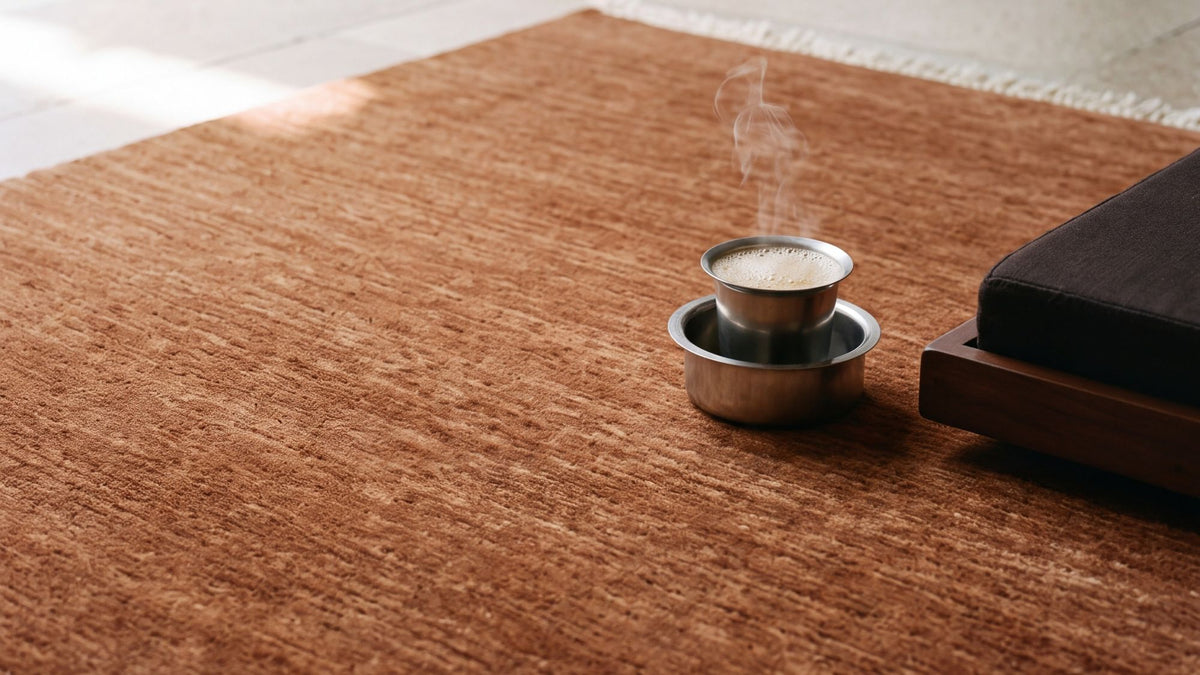
For meals on the floor, at a festival or a family lunch, lay a sheet or a dastarkhwan over the rug first. A textured weave such as the Cabra Wool & Jute Rug in Rust, handloom woven at 7 to 8 mm and listed from about ₹28,560 inclusive of GST at the time of writing, hides everyday crumbs well but should still be kept away from oily serving. Our dining room rug ideas cover size and shape in more depth, and the guide to chai, coffee and wine stains deals with the drinks.
Frequently asked questions
Can I use baking soda on an oil stain on my rug?
Baking soda absorbs a little oil, but cornflour and talc absorb more and are gentler. Baking soda is alkaline, so it can shift the colour of haldi in curries and some rug dyes, which makes it a poor choice for Indian food stains.
Will an oil stain on a wool rug come back after cleaning?
It can, if oil remains deep in the pile or detergent was left behind. Draw the oil up with a second round of powder, rinse more thoroughly with plain water and dry the spot under a weighted towel so nothing wicks back to the surface.
Is petrol or kerosene safe for removing grease from a rug?
No. They are flammable, they leave a strong smell, and they can dissolve the latex that holds the backing of a hand tufted rug. Leave solvent degreasing to a professional rug cleaner.
How do I get ghee out of a jute rug?
Lift any solid ghee with a spoon, blot, then cover the spot with cornflour overnight and vacuum. Jute absorbs fat deeply, so a darker patch may remain, and water or detergent will make the area brown further.
Should a rug go under the dining table at all in an Indian home?
Yes, if it is the right rug and size. A low wool rug large enough for chairs to stay on it is easy to clean and protects the floor, while a deep pile, pale or jute rug under a dining table will hold every spill.
Powder first, patience second, rinse last. The Grain collection is the Rugberry range built for rooms where people eat. Material first.



Leave a comment
This site is protected by hCaptcha and the hCaptcha Privacy Policy and Terms of Service apply.