






Chai, Coffee and Wine Stains on a Rug
Chai, coffee and red wine all stain a rug through tannins, plant compounds that bind to fibre and darken as they dry, so the goal is to dilute and lift them before they set. Blot, add cool water in small amounts, blot again, and dry the spot from above so no brown ring wicks back.
In short
- Tea, coffee and red wine stains on a rug are tannin stains, which bind to fibre as they dry and darken with time and heat.
- Chai leaves three layers on a rug, tannin from the leaf, protein from the milk and sugar, and each needs removing or the spot turns grey again later.
- A tannin stain on wool is lifted with cool water and a few drops of wool safe detergent, while a Botanical Silk rug should only be blotted and then handed to a professional.
- Most brown rings that appear after cleaning come from wicking, when deeper liquid rises to the tips as the rug dries, so every Rugberry care routine finishes by drying under weight.
Why do tea, coffee and wine stain a rug so stubbornly?
They stain stubbornly because tannins act like a weak dye: they cling to fibre, and they oxidise and darken as they dry. Black tea, filter kaapi decoction, strong instant coffee, kahwa and red wine are all rich in them, which is why the same brown or purple shadow appears whatever the drink.

Heat makes it worse. A cup of chai or coffee usually lands hot, which opens the fibre and helps the colour in, and a spill left overnight has hours to oxidise into the pile. That is why a fresh spill and a morning after spill are almost two different stains.
Red wine adds a stronger pigment than tea or coffee, and white wine, gin and clear spirits add almost none, so they are mainly a sugar and water problem. Sweet drinks of every kind leave a sticky film behind, which catches dust and turns grey weeks after the spill looked gone.
What should you do in the first five minutes?
In the first five minutes, lift the liquid out before you add anything, using a thick dry towel pressed straight down. Every drop you remove dry is a drop that never reaches the base of the pile, where it is hardest to rinse.


- Pick up the cup and any broken pieces, and keep people from walking through the wet patch.
- Fold a white towel into a thick pad and press it onto the spill with the flat of your hand, or stand on it. Swap to a dry part of the towel each time it darkens.
- Pour about a tablespoon of cool water onto the spot from a cup, not a bucket, so it dilutes the drink without spreading it.
- Blot again from the outside of the patch toward the centre, so the edge does not grow.
- Repeat the small pour and the blot until the towel shows only a faint tint.
Do not rub, scrub or brush across a wet wool pile, because friction pushes the tannin in and frays the yarn tips into a fuzzy halo. Keep salt, talc and baking soda away from wine and tea stains too, as they do nothing for tannin and leave grit behind.
A tannin stain is a race against drying. Keep it diluted and it stays lifted.
Is chai treated differently from black coffee or wine?
Yes: chai needs one more step than black coffee or wine, because milk and sugar stay behind after the colour has gone. Black coffee and red wine are mostly a colour problem, while chai, cold coffee and milky kaapi are a colour, protein and sugar problem.

Milk protein can sour and smell if left in the pile, especially in humid months, and sugar turns tacky. After the tannin has lifted, dab the area with plain cool water two or three more times and blot hard each time, so nothing sticky is left for dust to grip.
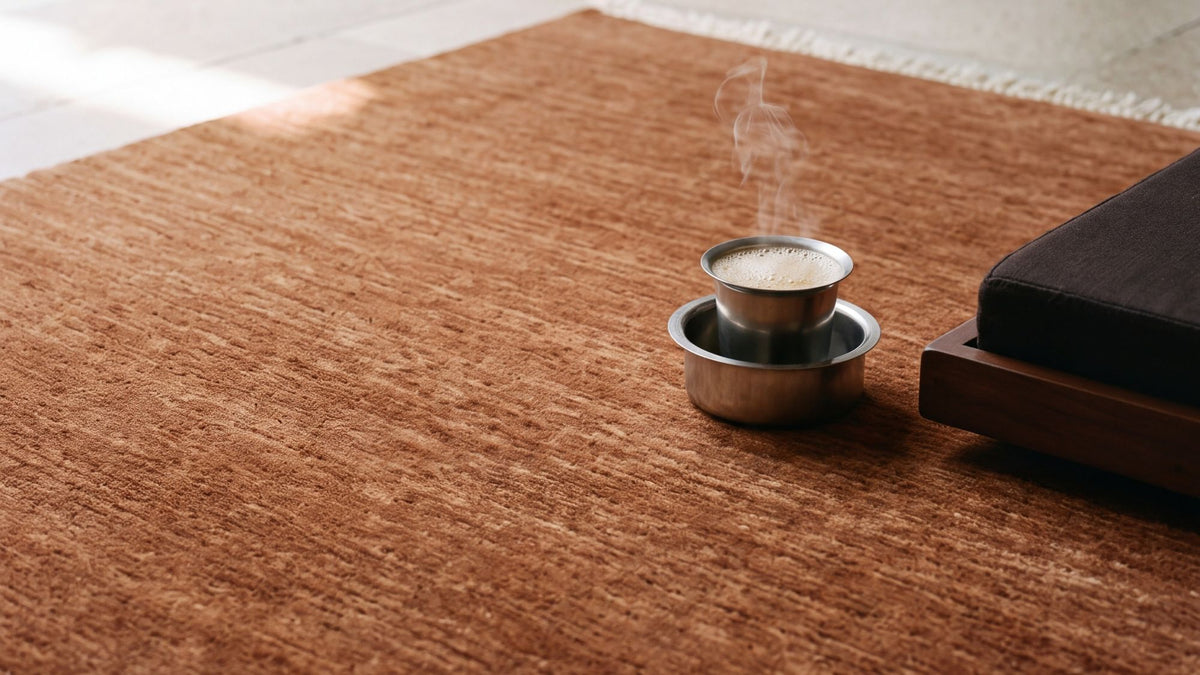
For red wine, work quickly with cool water before reaching for any product, and expect a pale pink shadow on ivory wool if the wine sat for long. On a deep coloured rug such as the Grain Wool Rug in Russet, handloom woven in New Zealand wool with a low, closely worked surface, that last trace is often lost in the colour of the yarn itself.
How do you lift a tea or coffee stain from a wool rug?
Lift a tea or coffee stain from wool with cool water and a few drops of a wool safe, pH neutral detergent, applied with a cloth and blotted away, then rinsed with plain water. Wool tolerates gentle, slightly acidic to neutral cleaning well, and it is far more forgiving than its reputation.
- Mix three or four drops of wool detergent into a mug of cool water and test it on a hidden corner, checking a white cloth for any colour after ten minutes.
- Dampen a cloth, press it onto the stain for a few seconds and blot with a dry towel. Repeat, turning both cloths to clean areas.
- If a light brown trace remains, a weak mix of white vinegar in cool water dabbed on and blotted off often shifts the last of the tannin from wool.
- Rinse by dabbing plain cool water and blotting, at least twice, until the cloth comes up clear.
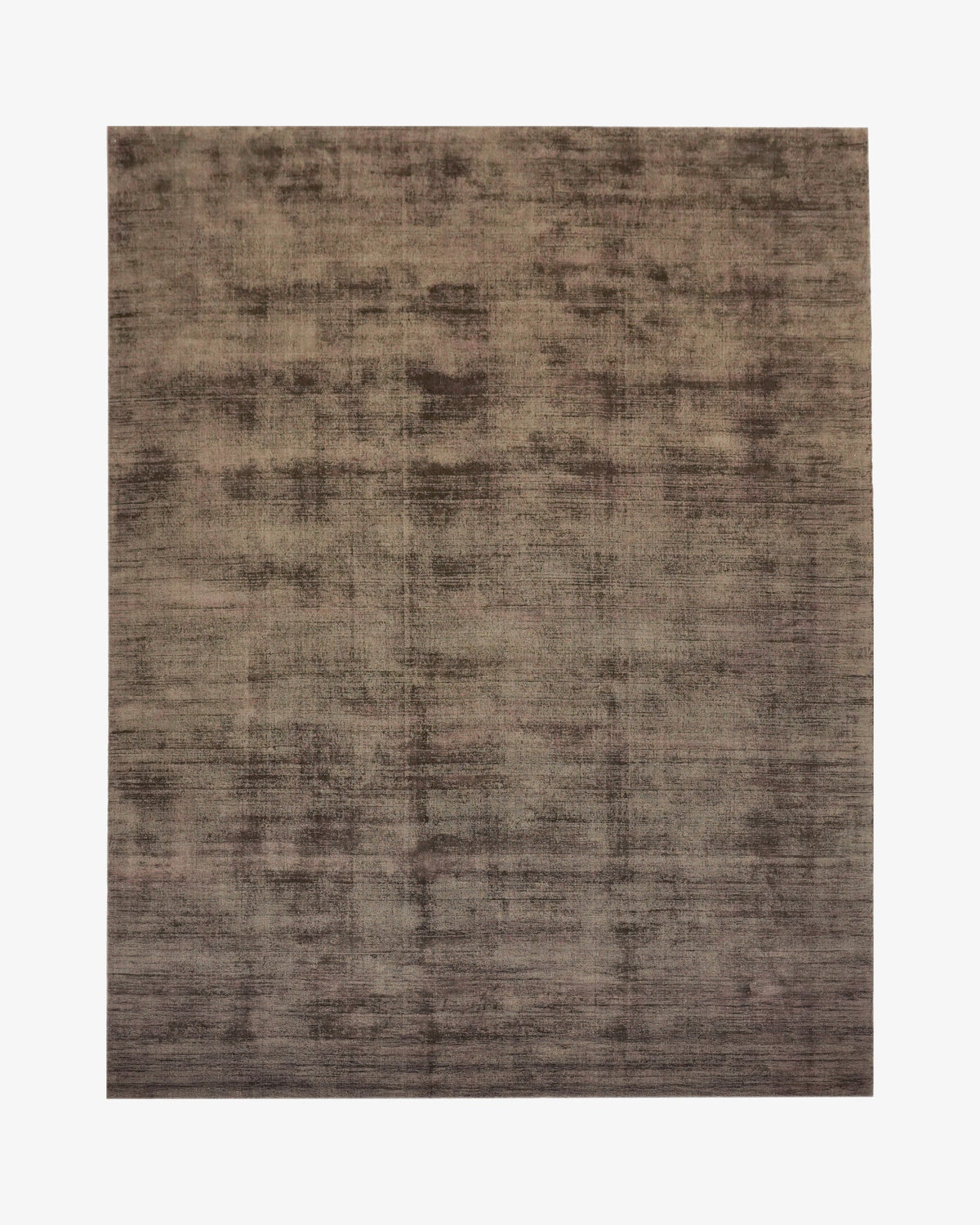
Low, closely worked surfaces are the easiest to rescue, because the spill sits nearer the top. The Rugberry Grain Wool Rug in Mochaccino, handloom woven at 12 to 14 mm, is the colour of milky coffee by name, and it is listed from about ₹31,080, inclusive of GST at the time of writing.
How should each fibre be treated for a tannin stain?
Each fibre needs a different amount of water and a different stopping point, from wool, which tolerates careful dabbing, to Botanical Silk, which should only be blotted dry. The table sets out the treatment for the fibres in the Rugberry range.


| Fibre and example | What tannin does | What to use | Never use | Stop and call a cleaner when |
|---|---|---|---|---|
| Wool, such as Grain | Sits in the pile for a minute before sinking, darkens as it dries | Cool water, wool detergent, a weak vinegar rinse, plain water rinse | Hot water, bleach, oxygen powders, scrubbing | The cloth picks up rug dye, or two rounds leave a clear mark |
| Wool and Botanical Silk, such as Cabella | The wool behaves as above; the Botanical Silk areas mark with water | Wool areas as above; Botanical Silk areas blotted dry only | Vinegar or detergent on the Botanical Silk strokes, rubbing | The spill crossed the Botanical Silk areas |
| Botanical Silk, such as Nuva | Spreads quickly and can leave a water mark as well as a stain | A dry towel, pressed straight down | Any liquid cleaner, a hair dryer, rubbing | Straight after blotting, for anything larger than a few drops |
| Jute and wool with jute, such as Cabra | Sinks fast; the water itself can brown jute | Dry towel, then a barely damp cloth, then a fan | Pouring water, soaking, steam | A brown ring appears or the spot stays damp after a few hours |
Verdict: for a home where chai is carried through the living room every day, choose a low wool rug over Botanical Silk or jute, because wool lets you dilute and rinse a tannin stain while the other two do not.
What if the rug has Botanical Silk in it?
If the rug has Botanical Silk in it, blot the spill dry and do nothing else on those areas, because water and rubbing can leave a mark that shows more than the drink did. Botanical Silk is a plant based fibre with a soft sheen, and that sheen comes from smooth, aligned yarn that distorts and dulls when it is wet and worked.

On a blend such as the Cabella Wool & Silk Rug in Latte, hand tufted in New Zealand wool and Botanical Silk with a low sheen, you can treat the wool ground as described above and simply blot the Botanical Silk strokes. On a rug made entirely of Botanical Silk, such as the Nuva Silk Rug in Chocolate, blot and call a professional cleaner the same week.
A darker colour hides the occasional cup far better than a pale one. Our guide to Botanical Silk rug care through the Indian year covers the rest of its routine, and rug colours that forgive spills helps when choosing a rug for a tea drinking household.
What can you do about an old or set tea stain?
An old tea or coffee stain on wool can often be lightened but rarely removed completely at home, because the tannin has oxidised into the fibre. Rehydrate it gently with cool water and a little wool detergent, blot, rinse, and accept that a faint shadow may stay.

Before you start, check that the mark is a stain and not soil stuck to dried sugar. If the patch feels stiff or tacky, the sugar is the main culprit, and two or three plain water rinses with firm blotting may brighten it more than any product would.
Do not try bleach, hydrogen peroxide or the oxygen powders sold for clothes on a coloured wool rug. They can lighten the rug's own dye and leave a pale halo, which is permanent and much harder to live with than a light brown mark.
Why does a brown ring come back after the rug dries?
A brown ring comes back because of wicking: liquid that soaked deep into the pile or the backing rises to the yarn tips as the surface dries, carrying dissolved tannin with it. It is the most common reason a well cleaned spot reappears the next morning.
The fix is to dry the spot from above, fast. After the last rinse, lay a folded dry towel over the area, put a heavy book or a pot on top for half an hour, then change the towel and repeat. Finish with a fan pointed across the spot, and brush the pile upright with your fingers once it is dry.
Using less water in the first place helps most. Small pours and frequent blotting keep the liquid in the upper pile, where the towel can reach it, which is a rule worth teaching everyone in the house who carries a cup. Our daily rug routine for busy households adds the habits that keep spills rare.
Frequently asked questions
Does salt remove red wine from a rug?
Salt is an old trick that does little on a wool rug. It can absorb a small amount of liquid, but it leaves grit in the pile and does nothing to the wine pigment, so blotting and cool water are the better first response.
Can I use hot water on a coffee stain to dissolve it faster?
No. Hot water helps tannin and milk protein bond into wool and can make the mark permanent. Cool water keeps the stain loose enough to be blotted out.
Why does my rug smell sour after a chai spill?
A sour smell usually means milk was left in the pile and has begun to spoil, often in humid weather. Rinse the spot several more times with plain cool water, blot firmly and dry it fast under a fan, and call a cleaner if the smell stays.
Is it safe to use a stain removal spray on a wool rug?
Many household sprays are made for synthetic carpet and can strip dye or weaken wool. If you use one at all, choose a product labelled safe for wool and test it on a hidden corner first.
Will a tea stain come out of a jute rug?
A small fresh tea spill on jute can usually be blotted out if you act within seconds and use as little water as possible. Larger or older spills often leave a brown mark, because jute browns when it stays wet, so dry the spot with a fan straight away.
Carry the cup, not the worry, and keep a white towel where the chai is made. For everyday rugs that take this kind of life well, look at the Grain collection. Material first.




Leave a comment
This site is protected by hCaptcha and the hCaptcha Privacy Policy and Terms of Service apply.