



Rug Colours and Textures That Forgive Spills
The rug colours that forgive spills best are mid tones with some variation in them, such as russet, rust, caramel, olive and warm grey, on a surface with visible texture. A plain pale rug or a flat black one shows everything, while a mottled, textured mid tone hides daily marks between cleans.
In short
- Mid tone rugs in russet, rust, caramel, olive or warm grey hide everyday spills better than ivory, white or solid black rugs.
- A rug with colour variation in the yarn, called mottling or melange, breaks up the outline of a stain so the eye does not catch it.
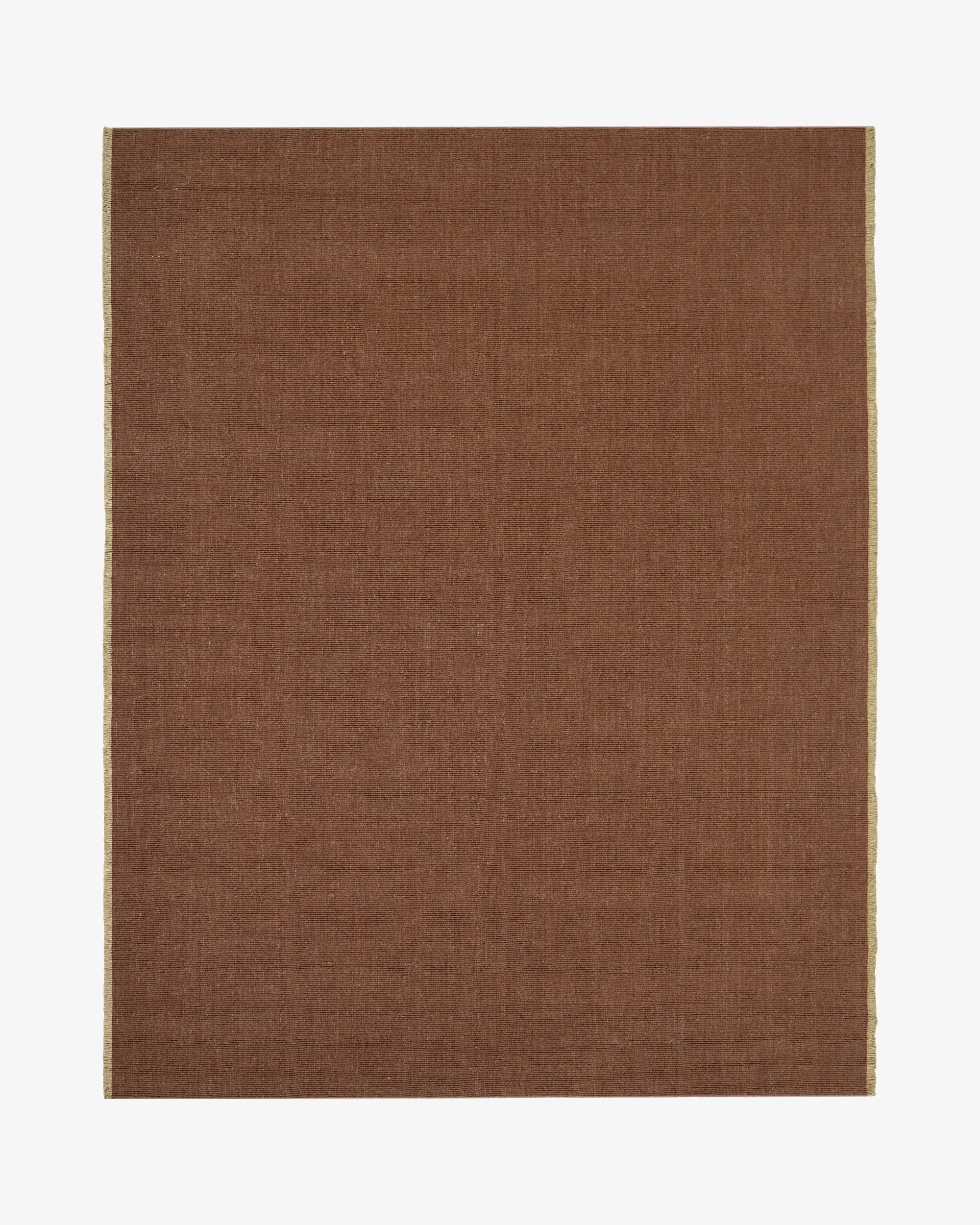
- Rugberry's Grain Wool Rug in Russet, handloom New Zealand wool at 12 to 14 mm, is one of the most forgiving rugs for a family living room, at a regular price of ₹37,000 for 5x8 ft ex GST at the time of writing.
- No colour stops a stain from setting, so every spill should still be blotted at once, from the outside in, with a dry white cloth.
Which rug colours hide stains best?
The rug colours that hide stains best are warm mid tones close to the colour of the things that usually spill: chai, dal, turmeric, soil and dust. Russet, rust, caramel, tobacco, olive and warm grey all sit in that range.


A stain is visible because of contrast. A drop of chai on ivory is a dark spot on a light ground, and the same drop on black dries to a pale ring. On a russet or caramel rug the colour of the spill is close to the colour of the rug, so the edge disappears.
| Rug colour | Hides chai and dal | Hides turmeric | Hides dust and hair | Verdict for a family room |
|---|---|---|---|---|
| Ivory, white, bone | Poor | Poor | Shows grey dust | Best kept for adult bedrooms |
| Sand, flax, beige | Fair | Poor | Good for light dust | Workable with shoes off |
| Russet, rust, copper | Very good | Very good | Good | The most forgiving choice |
| Caramel, tobacco, mid brown | Very good | Good | Very good | Excellent for living rooms |
| Olive, sage, mid grey | Good | Fair | Very good | Good, cooler in feel |
| Charcoal, black | Fair, shows pale rings | Fair | Poor, shows lint and dust | Handsome but demanding |
For a living room where children eat on the floor and guests arrive with chai, choose russet or caramel over ivory, because the mid tone keeps looking clean between professional cleans. Rugberry's post on the rust rug shows how well these warm colours sit with teak, cane and lime plaster.
Dark rugs are often chosen as the safe option and then disappoint. A charcoal or black rug hides a dark spill but shows every crumb, lint thread, pale dust patch and dried water ring, especially in daylight.
Why does texture matter as much as colour?
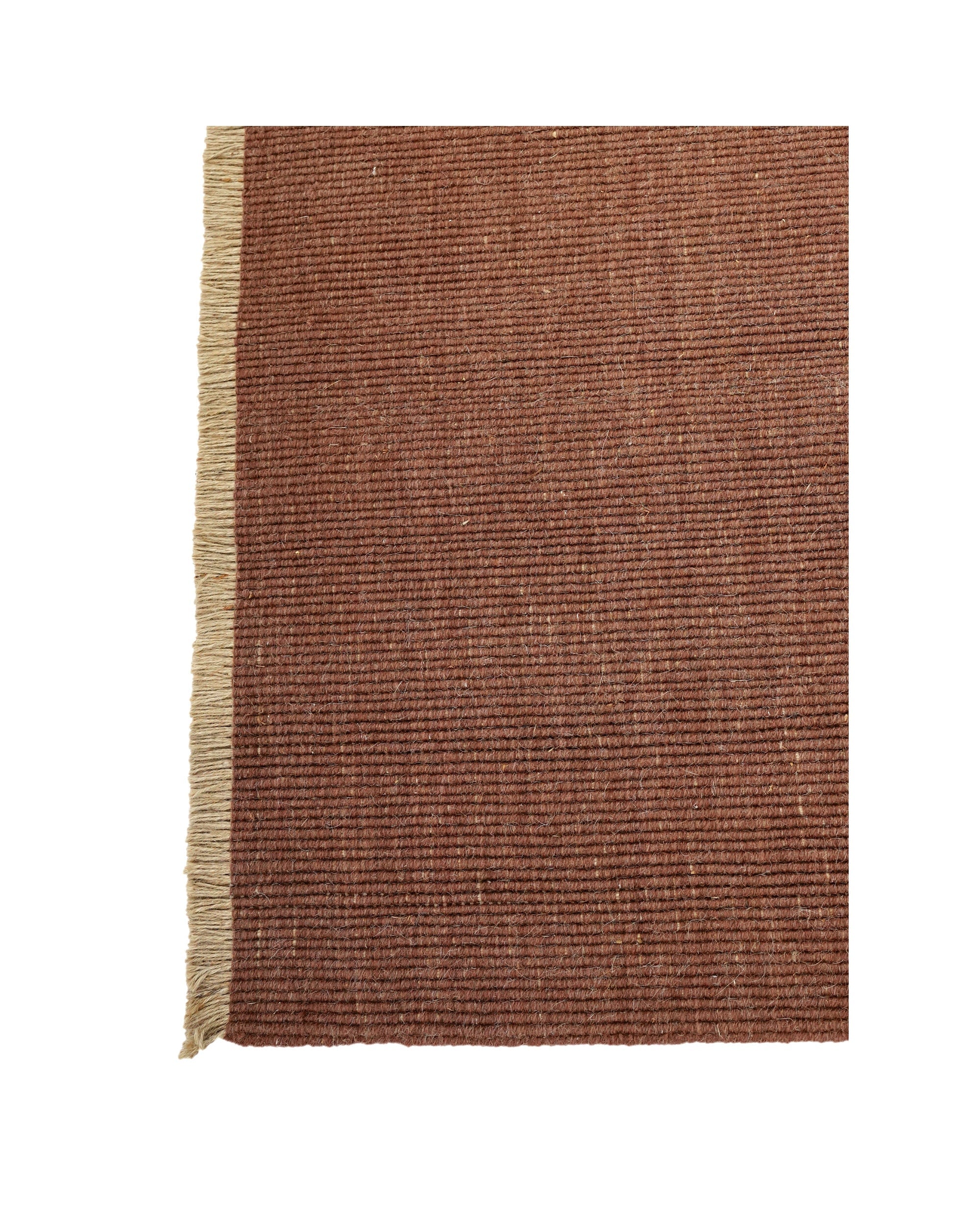
Texture matters as much as colour because a surface with ridges, rows or flecks scatters light and breaks the outline of a mark. A perfectly smooth, even surface shows a stain as a clean shape, while a textured surface hides it in the pattern of the weave.
Look closely at a handloom rug and you will see the rows of the weave catching light differently. That irregularity is the rug's best defence against the small marks of family life.
Three textures forgive the most:
- Low, closely worked handloom wool: the Grain Collection, where the weave is visible underfoot and the surface moves between lighter and darker rows.
- Wool and jute weaves: the Cabra Wool & Jute Rug, where flecks of jute run through the wool and hide dust and small spots.
- Jute with threads of Botanical Silk: the Meraki Jute & Silk Rug, where the sheen of the Botanical Silk moves across a firm jute ground.
Rugberry's guide to two colour mottling explains how two shades twisted into one yarn give a surface that reads as one colour from across the room and many colours up close. A mottled yarn is the most forgiving of all.
A forgiving rug is not a dark rug. It is a mid tone with some movement in it.
Which Rugberry rugs are the most forgiving?
The most forgiving Rugberry rugs for a busy home are the Grain Wool Rug in Russet, the Cabra Wool & Jute Rug in Rust and the Meraki Jute & Silk Rug in Caramel. Each combines a warm mid tone with a textured, low surface that is easy to vacuum.


They suit different rooms, so it helps to know how each one behaves.
Grain Wool Rug in Russet
The Grain Wool Rug in Russet is handloom New Zealand wool at 12 to 14 mm, low and closely textured, with the weave visible underfoot. It is the best choice for a family living room or dining room, because wool lifts many spills before they soak in and the russet tone absorbs the rest.
The regular price is ₹37,000 for 5x8 ft and ₹74,000 for 8x10 ft, ex GST at the time of writing.
Cabra Wool & Jute Rug in Rust
The Cabra Wool & Jute Rug in Rust is handloom New Zealand wool and jute at 7 to 8 mm, firm underfoot with flecks of fibre through the colour. It is the most forgiving choice for an entrance, a passage or a room where shoes come in, as long as it stays dry, since the care note says to blot spills at once and keep dry.
The regular price is ₹34,000 for 5x8 ft and ₹68,000 for 8x10 ft, ex GST at the time of writing.
Meraki Jute & Silk Rug in Caramel
The Meraki Jute & Silk Rug in Caramel is handloom jute lifted with threads of Botanical Silk at 12 to 14 mm. It forgives dust and the look of daily wear well, and suits a living room where food is kept to the dining table, because jute and Botanical Silk both prefer to stay dry.
The regular price is ₹38,000 for 5x8 ft, ex GST at the time of writing. Prices in this post are regular prices from the product pages, ex GST, at the time of writing, and a seasonal sale may show lower figures on the product page.
More warm tones are gathered in the rust and copper rugs collection, and the full low pile range is in the Grain Collection.
Which fibre makes spills easiest to clean?
New Zealand wool makes spills easiest to clean, because its natural lanolin slows the moment a liquid soaks into the fibre, giving you time to blot. Jute and Botanical Silk are more sensitive to water, so on those fibres the colour has to do more of the forgiving.

The fibre decides what happens in the first minute after a spill. On wool, a cup of chai often sits on the surface long enough to be blotted up with little trace.
On jute, water can leave a darker or lighter ring as it dries, which is why every Rugberry jute rug carries the note to blot spills at once and keep dry. Rugberry's guide to the easiest rug fibres to clean compares wool, jute, cotton and Botanical Silk side by side.
The verdict for a home with young children: choose wool for the room where they eat and play, and keep jute and Botanical Silk for rooms where food rarely reaches the floor.
What should you do in the first minute after a spill?
In the first minute after a spill, blot with a dry white cloth from the outside of the mark towards the centre, pressing rather than rubbing. Rubbing pushes the liquid deeper and spreads the edge, which is exactly what a forgiving colour cannot hide.
- Lift solids first: scoop dal, rice or sabzi with a spoon, never a cloth.
- Blot liquids: press a folded white cotton cloth onto the spot, change to a clean part, press again.
- Work inward: start at the outer edge so the mark gets smaller, not wider.
- Use as little water as possible: on wool, a few drops of cool water on the cloth can help lift the last of a light spill. On jute and Botanical Silk, keep it dry and stop at blotting.
- Dry it: run a fan over the spot so it dries evenly and does not leave a tidemark.
Turmeric and haldi deserve their own warning, because the colour binds quickly to fibre. Lift what you can dry, blot with a clean cloth, and do not reach for bleach or strong household cleaners, which can strip the dye around the stain and leave a pale patch that no colour will hide.
For festival stains, Rugberry's guides to mehendi on a rug and Holi colours on a rug walk through those specific cases. For anything that stays after blotting and drying, professional cleaning is the right next step.
How do you choose a forgiving rug that still looks designed?
You choose a forgiving rug that still looks designed by picking the colour from the room's fixed materials, such as the wood, the stone and the sofa, and then choosing the mid tone within that family. A forgiving rug should look chosen, not chosen to hide things.

In a room with teak furniture and a cream sofa, russet or caramel sits naturally between the two. In a room of grey stone and black metal, olive or a warm grey keeps the same forgiving quality in a cooler key.
Pattern helps as well. A rug with a soft pattern in two or three mid tones hides marks even better than a plain one, because the eye reads the pattern and not the spot.
Rugberry's guide to choosing a rug colour sets out the method room by room. For homes with dogs or cats, the sibling post on designer rugs that live with pets adds hair and claws to the picture.
If a pale rug is what the room needs, it can work, as the post on living with an ivory rug in India explains. Give it the quietest room in the house and a forgiving mid tone where the family gathers.
Frequently asked questions
What colour rug hides stains best?
Warm mid tones such as russet, rust, caramel and tobacco hide stains best, because they sit close to the colours of chai, dal, turmeric and soil. A mottled or textured surface in one of these tones hides marks better still.
Is a dark rug better for a home with children?
A dark rug hides dark spills but shows crumbs, lint, pale dust and dried water rings, so it is often less forgiving than expected. A mid tone rug in wool, such as the Rugberry Grain Wool Rug in Russet, is usually the better choice for a family room.
Which rug fibre is best for spills?
New Zealand wool is the best rug fibre for spills, because its natural lanolin slows liquids from soaking in and gives time to blot. Jute and Botanical Silk are more sensitive to water and should be kept dry.
Can turmeric be removed from a wool rug?
Turmeric binds to fibre quickly, so lift any solid at once, blot with a dry white cloth and avoid bleach or strong cleaners. If a mark remains once the spot is dry, a professional rug cleaner is the safest next step.
Does a patterned rug hide stains better than a plain one?
A patterned rug in two or three mid tones usually hides stains better than a plain rug, because the eye reads the pattern rather than the mark. A plain rug can be just as forgiving if its yarn is mottled and its surface textured.
Choose the colour from the room, the tone from the family, and let the wool do the rest.




Leave a comment
This site is protected by hCaptcha and the hCaptcha Privacy Policy and Terms of Service apply.