






Ink, Crayon and Marker on a Rug
Most children's art stains come out of a wool rug if you know what the mark is made of: water based markers and poster colour need cool water, crayon needs scraping and cold, and ballpoint needs a dab of rubbing alcohol. Permanent marker, acrylic paint and anything on Botanical Silk belong with a professional.
In short
- Washable markers, sketch pens, watercolour and poster colour on a wool rug usually lift with cool water and blotting, because they are made to rinse out.
- Crayon on a rug is wax and pigment, so it is chilled and scraped off first, and the coloured trace is treated afterwards with a drop of wool detergent.
- Ballpoint ink on wool can be lightened with a cotton bud barely moistened with rubbing alcohol, after a test on a hidden corner, but no solvent should ever touch Botanical Silk.
- Rugberry suggests calling a professional for permanent marker, dried acrylic paint and any ink on Botanical Silk, because home attempts spread these marks.
Which art stains come out of a rug, and which do not?
Stains made to wash off children's hands and clothes, such as washable markers, sketch pens and poster colour, usually come out of a wool rug. Stains made to last, such as permanent marker, acrylic paint and some gel inks, often do not, at least not completely.
The quickest way to judge a mark is to read the pen or the packet. Words such as washable, water based or non toxic school colour point to an easy job; permanent, waterproof, alcohol based, fabric or acrylic point to a hard one.
The rug matters as much as the mark. A wool pile gives you time and tolerates careful cleaning; a Botanical Silk pile, a jute weave and the latex backing of a hand tufted rug each set their own limits, which the table further down sets out.
How do you get crayon out of a rug?
Get crayon out of a rug by making the wax cold and brittle, scraping it off, and then lifting the coloured trace with a little wool detergent in cool water. Crayon is mostly wax with pigment mixed in, so the wax comes away easily but the colour can stay behind on the fibre.


- Hold a zip bag of ice on the mark for five minutes. Do not let melt water touch the rug.
- Scrape the hardened wax with the edge of a spoon, lifting flakes outward and away from clean pile.
- Vacuum the flakes with suction only.
- Mix a few drops of wool detergent into a mug of cool water, dab it onto the coloured trace with a white cloth, and blot. Rinse with plain water and blot again.
Avoid the iron and paper method people use for candle wax. With crayon, heat melts the pigment along with the wax, and a stroke of red can spread into a pink smudge twice the size.
Oil pastels are a different material: they are pigment in oil rather than wax. Scrape what you can, then treat the mark like a cooking oil spill, with cornflour first, as our guide to oil and ghee stains on a rug explains.
How do you treat washable markers, sketch pens and poster colour?
Treat washable markers, sketch pens, watercolour and poster colour with cool water and patient blotting, then a drop of wool detergent if a trace remains. These colours are water based, so the aim is simply to dilute them and lift them before they dry into the fibre.
- Blot fresh paint or ink with a dry cloth first, pressing straight down.
- Dab with a cloth dampened in cool water, then blot dry. Repeat, moving to clean parts of both cloths.
- If colour remains, use three or four drops of wool detergent in a mug of cool water, then rinse with plain water.
- For dried poster colour, let it dry fully, break the crust gently with a soft brush and vacuum before using any water.
Glitter, sequins and dried glue flakes come out with a vacuum and a stiff brush once dry. For wet craft glue and slime, a weak vinegar solution helps, and our older guide to mehendi, ink and hair dye on rugs covers school ink in short form.
What about ballpoint, gel pen and fountain pen ink?
Ballpoint ink on a wool rug can usually be lightened with a cotton bud barely moistened with isopropyl rubbing alcohol, dabbed on the mark and blotted at once. Ballpoint ink is carried in oil and dye, which water cannot move but alcohol can.

Work on a small area only, change the cotton bud as soon as it picks up colour, and blot with a dry white cloth after every dab. Test the alcohol on a hidden corner first and wait a few minutes to check that the rug's own dye does not move.
Fountain pen ink is mostly water based, so cool water and blotting come first. Gel pens use fine pigment and are less predictable: try water, then a very light touch of alcohol, and stop if the mark spreads rather than lightens.
Read the pen before you treat the rug. Washable, water based and permanent need three different answers.
What about permanent marker, whiteboard marker and acrylic paint?
Permanent marker and dried acrylic paint rarely come out of a rug at home, and trying usually spreads them, so blot what you can and call a professional cleaner. Whiteboard markers are easier, as their ink is alcohol based and made to wipe off.
For a whiteboard marker, a cotton bud lightly dampened with rubbing alcohol often lifts the mark from wool, worked dab by dab as for ballpoint. Permanent markers are built to resist exactly that, and stronger solvents that might move them can strip the rug's dye or attack its backing.
Acrylic and fabric paint are water based while wet and plastic once dry. If the paint is still wet, blot and rinse with cool water at once; if it has dried, do not pick or cut at it, because the film is bonded to the fibre and a restorer has better tools to soften it.
Which cleaners are safe on wool, and which damage Botanical Silk and backings?
Cool water and a wool safe detergent are safe on wool, rubbing alcohol is safe on wool only in small careful dabs, and acetone, bleach and hairspray are best kept away from every rug. Botanical Silk and the latex backing of a hand tufted rug are the most sensitive, as the table shows.

| Cleaner | Wool pile | Botanical Silk | Jute | Hand tufted backing |
|---|---|---|---|---|
| Cool water and blotting | Safe | Blot only, water can mark | Barely damp only | Safe if the water stays in the pile |
| Wool safe detergent, a few drops | Safe after a test | Not at home | Not advised | Safe in small amounts, rinse well |
| Isopropyl rubbing alcohol on a cotton bud | Small dabs, after a test | Never | Not advised | Keep it out of the backing |
| Acetone or nail polish remover | Can strip dye | Never | Never | Can dissolve the latex |
| Hairspray, an old ink trick | Leaves sticky resin | Never | Never | No benefit |
| Bleach or hydrogen peroxide | Weakens wool and leaves pale patches | Never | Never | Never |
Verdict: for a drawing corner, choose a hand tufted or handloom wool rug over Botanical Silk or jute, because wool is the only one of the three that tolerates water, detergent and a careful dab of alcohol.
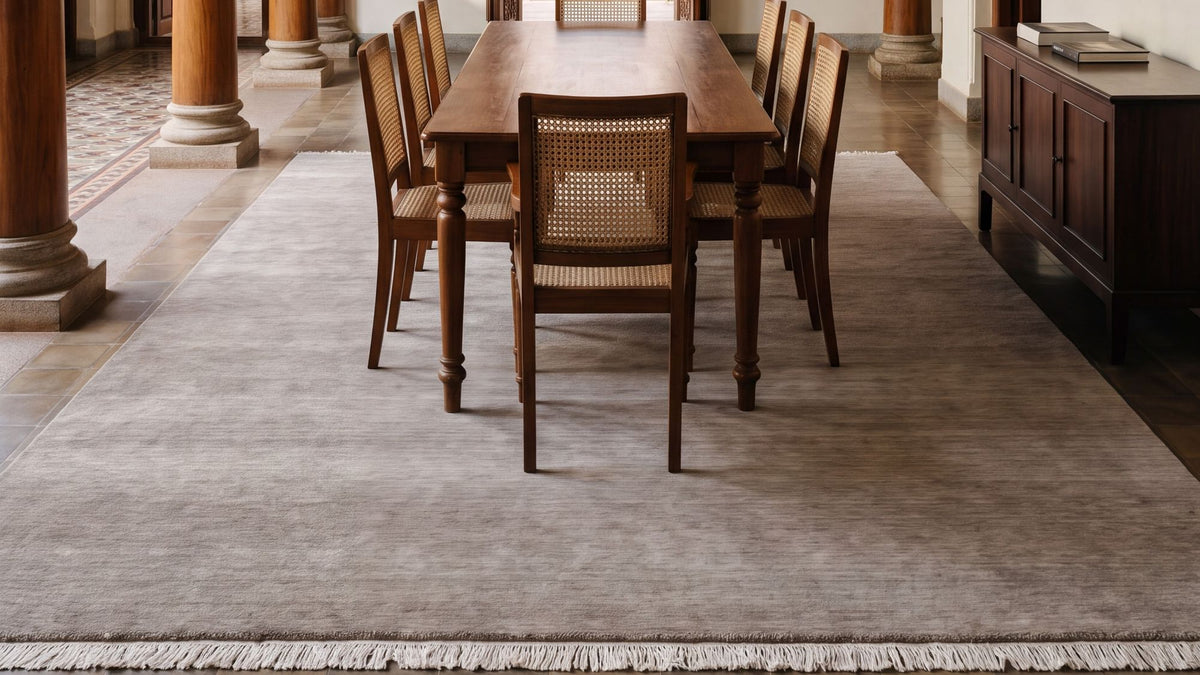
A rug such as the Rugberry Concept Silk Rug, hand tufted in Botanical Silk with a sheen that shifts as the light moves, is lovely in a quiet sitting room but should be kept well away from markers. If ink reaches it, blot with a dry cloth and call a professional the same week.
When should a mark be trimmed, or sent to a restorer?
A mark sitting only on the very tips of a cut pile wool rug can sometimes be trimmed away with small, sharp scissors, while anything deeper or larger belongs with a rug restorer. Trimming works because the colour often stays at the surface where the pen touched, leaving the lower pile clean.
Snip a few tips at a time, holding the scissors parallel to the surface, and stop well before the pile looks lower than its neighbours. Never trim a loop pile, a flatweave, jute or Botanical Silk, where cutting opens the structure rather than shortening a tuft.
For a large permanent marker drawing, a restorer can assess whether the area can be cleaned or, on a hand tufted rug, re-tufted in matching yarn. Photograph the mark and note the rug's name and colour before you call, as it helps the restorer judge the job.
How do you set up a drawing corner on a good rug?
Set up a drawing corner with a small washable mat or an old bedsheet under the table, so pens, paint and glue land on something that can go in the machine. A good wool rug can sit around it, but the art itself should happen on a surface you are happy to wash.


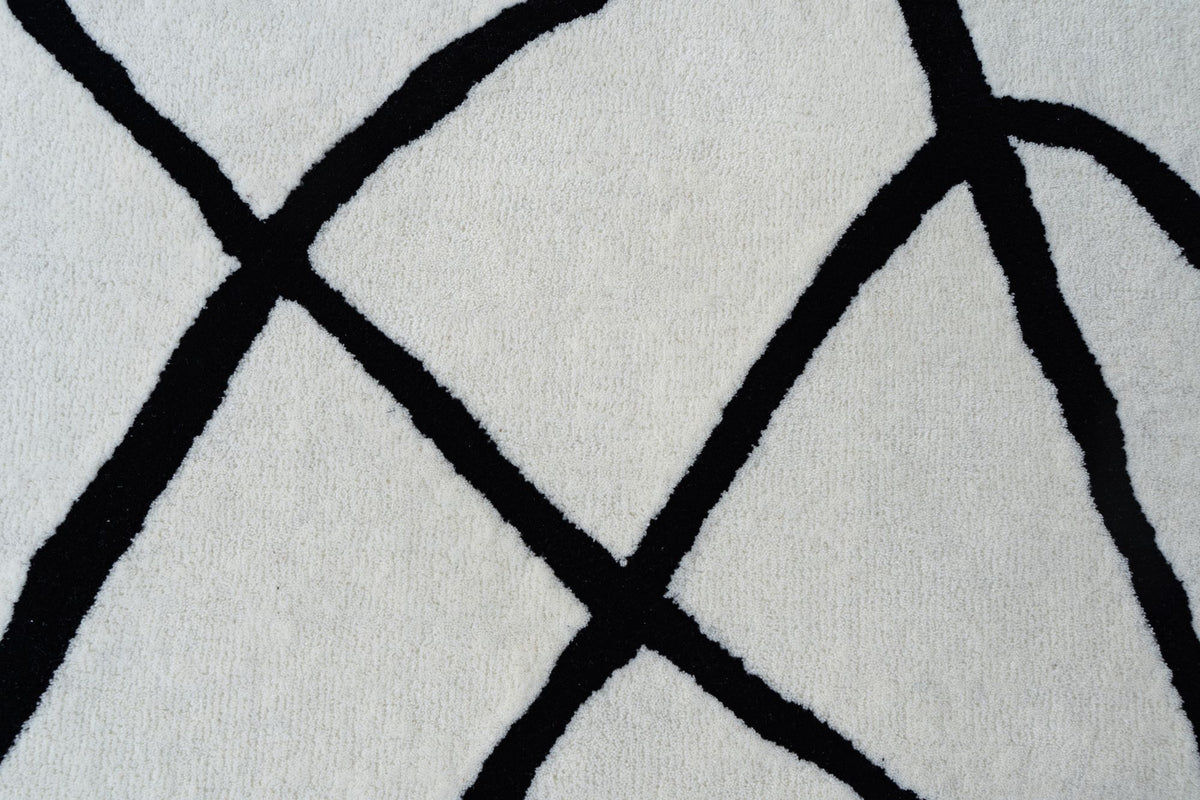
Pattern and colour also help. A rug with drawn lines across a light field, such as the Tinker Wool Rug, hand tufted in New Zealand wool with small deliberate marks, forgives an odd stray line far better than a plain ivory field; it is listed from about ₹31,080, inclusive of GST at the time of writing. The Arctic Wool Rug, also hand tufted, scatters black marks across an ivory ground, so a stray dot of ink has company.
Keep caps on, and teach the house rule that permanent markers and acrylics live at the desk, never on the floor. For more on rooms where children make things, see modern rugs for kids' rooms and rugs for a home art studio.
Frequently asked questions
Does hand sanitiser remove ink from a rug?
Hand sanitiser contains alcohol, but also gels, scent and moisturisers that leave a sticky residue in the pile. Plain isopropyl rubbing alcohol on a cotton bud is cleaner and easier to control on wool.
How do I get crayon off the side of a sofa leg and the rug together?
Deal with the rug first while the wax is cold: chill it, scrape it and vacuum. Then clean the furniture separately with a product made for its finish, so no cleaner drips onto the rug.
Will a permanent marker stain on a wool rug ever fade?
Permanent marker is made to resist water and light, so it rarely fades on its own. A professional cleaner may lighten it, and on cut pile a stain on the tips can sometimes be trimmed.
Can I use nail polish remover on a pen mark on my rug?
It is best avoided. Acetone can strip the rug's dye, weaken fibre and dissolve the latex that holds the backing of a hand tufted rug, so the result can be worse than the ink.
Is a wool rug or a jute rug better for a child's study corner?
A wool rug is better, because wool can be dabbed with water, detergent and, carefully, alcohol when ink or paint lands on it. Jute browns with water and cannot be treated the same way, so stains on it tend to stay.
Know the pen, choose the right cloth, and stop before the stain wins. The pattern rugs at Rugberry are a good place to start for rooms where people draw. Material first.




Leave a comment
This site is protected by hCaptcha and the hCaptcha Privacy Policy and Terms of Service apply.